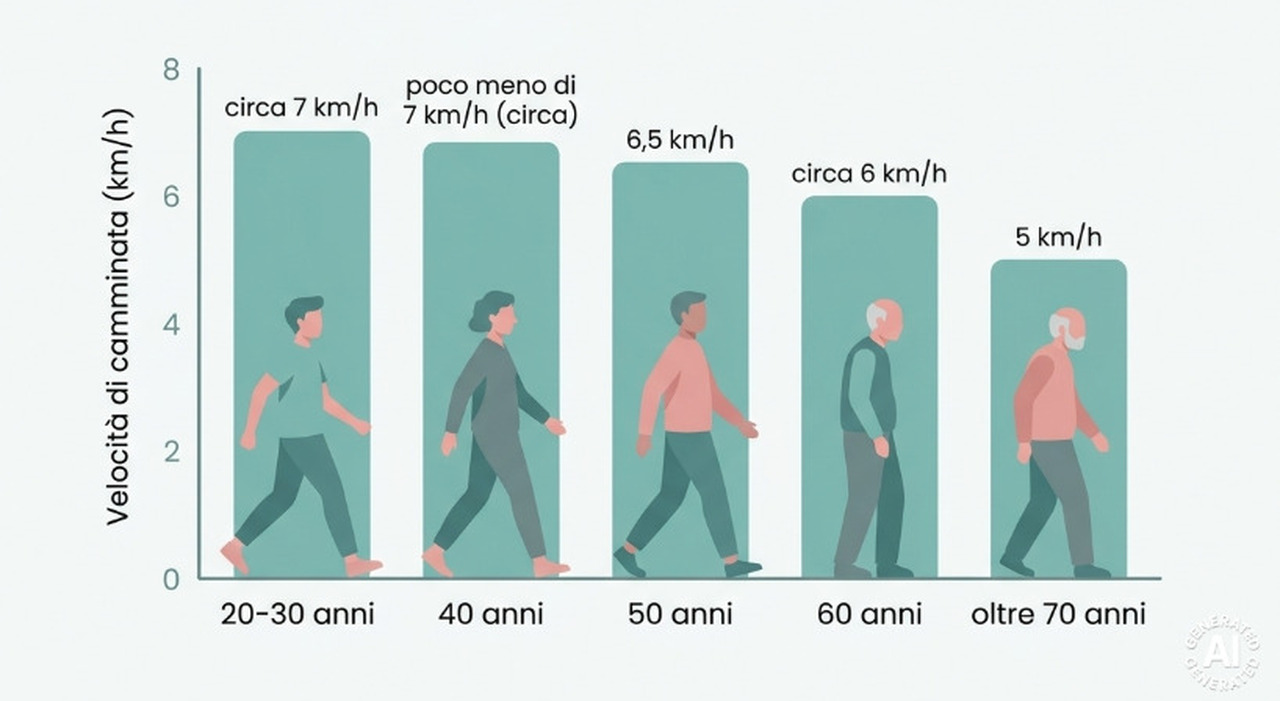
There is a long list of benefits people can reap from just a simple walk. Beyond getting your heart rate up and your metabolism firing, the simple habit of walking has been linked to better cognitive health, a lower risk of heart disease and improved emotional well-being.But perhaps more important than time spent on the pavement, experts say, is walking speed. And depending on your age, there are certain benchmarks you should be able to hit.Elizabeth Vogstrom, a physician assistant at EVOyouthful in Chicago specializing in longevity-focused care, told the Daily Mail that gait speed is a key indicator of general health as a person ages.‘When I see patients experiencing declines in energy, mobility, muscle mass, or overall fitness, walking ability and walking tolerance are often among the first functional measures that begin to change,’ Vogstrom told the Daily Mail.‘A person can have normal laboratory values and still be experiencing declines in strength, endurance, mobility, balance, or cardiovascular fitness,’ she said. ‘Walking speed often reveals those changes before they become obvious in daily life.’As a general rule, in your 20s and 30s you should be able to walk a mile in 13 to 19 minutes at a brisk pace of about 4.6 mph, Vogstrum said, citing a 2022 report in the Journal of Sports Sciences that indicated benchmark 'brisk' walking speeds for different ages. In your 40s, aim to walk a mile in 14 to 16 minutes at a pace of 4.3 mph. In your 50s, the goal is a mile in 15 to 17 minutes at 4 mph. A brisk walk can add years to your life. Experts recommend aiming for a 13- to 15-minute mile in your 20s and 30s, and a 20-minute mile by your 70s (stock)
How fast you should be able to walk a mile at every decade of life
Walking speed is a vital sign of health that predicts biological aging, chronic disease risk, and longevity, with age-specific mile targets helping you gauge whether your pace is on track.
1,036 words~5 min read