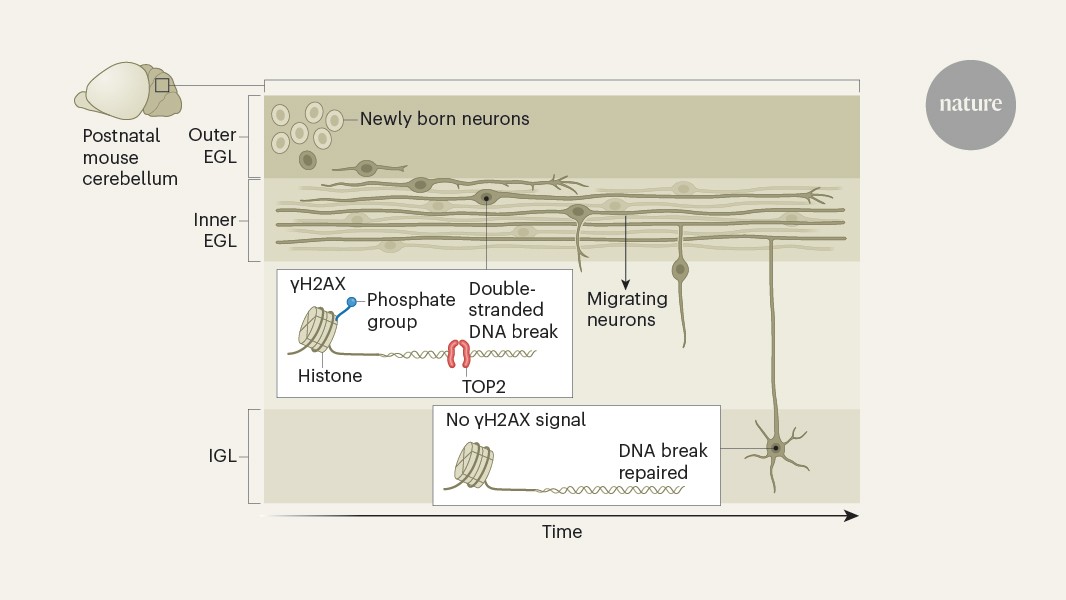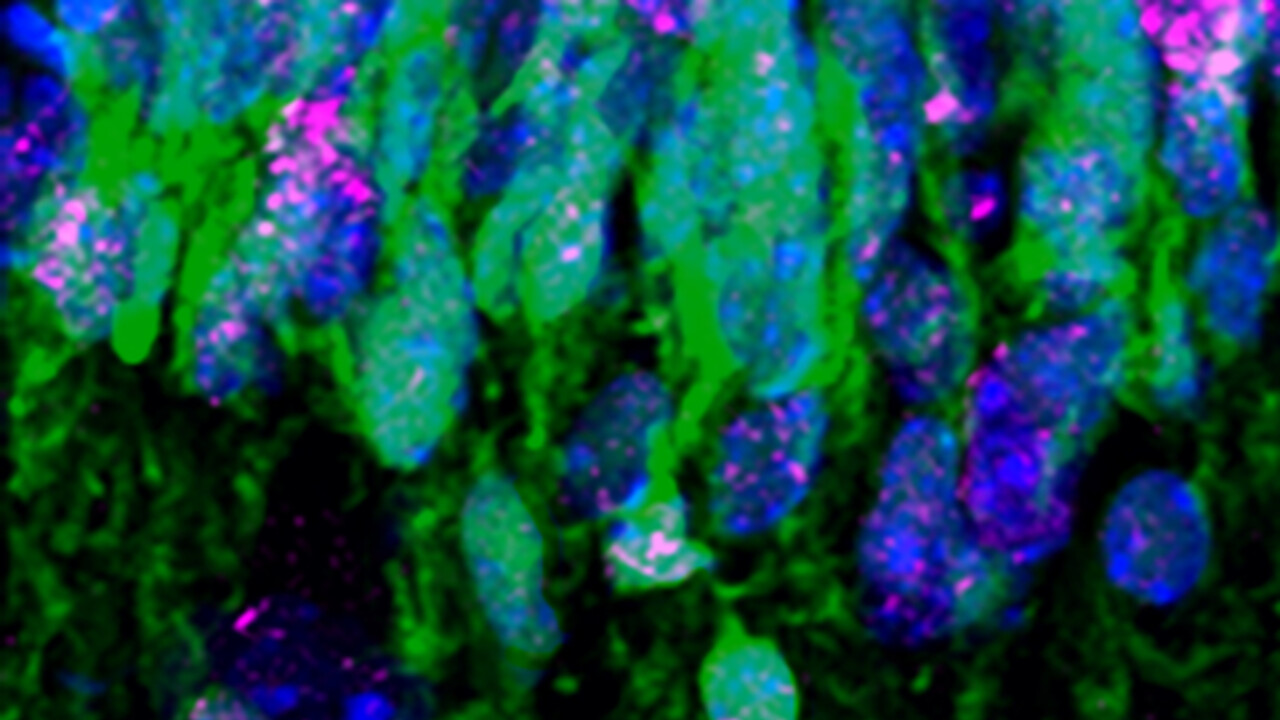
As the brain develops, newly formed neurons must travel through tightly packed tissue to reach their final destinations in the cerebral cortex, where they become part of the brain's communication network. This journey forces the cells through narrow gaps between fibers and neighboring cells.
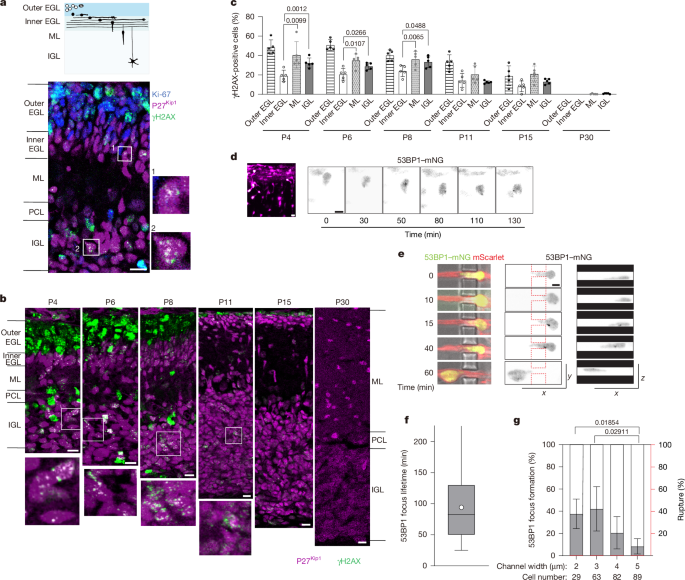
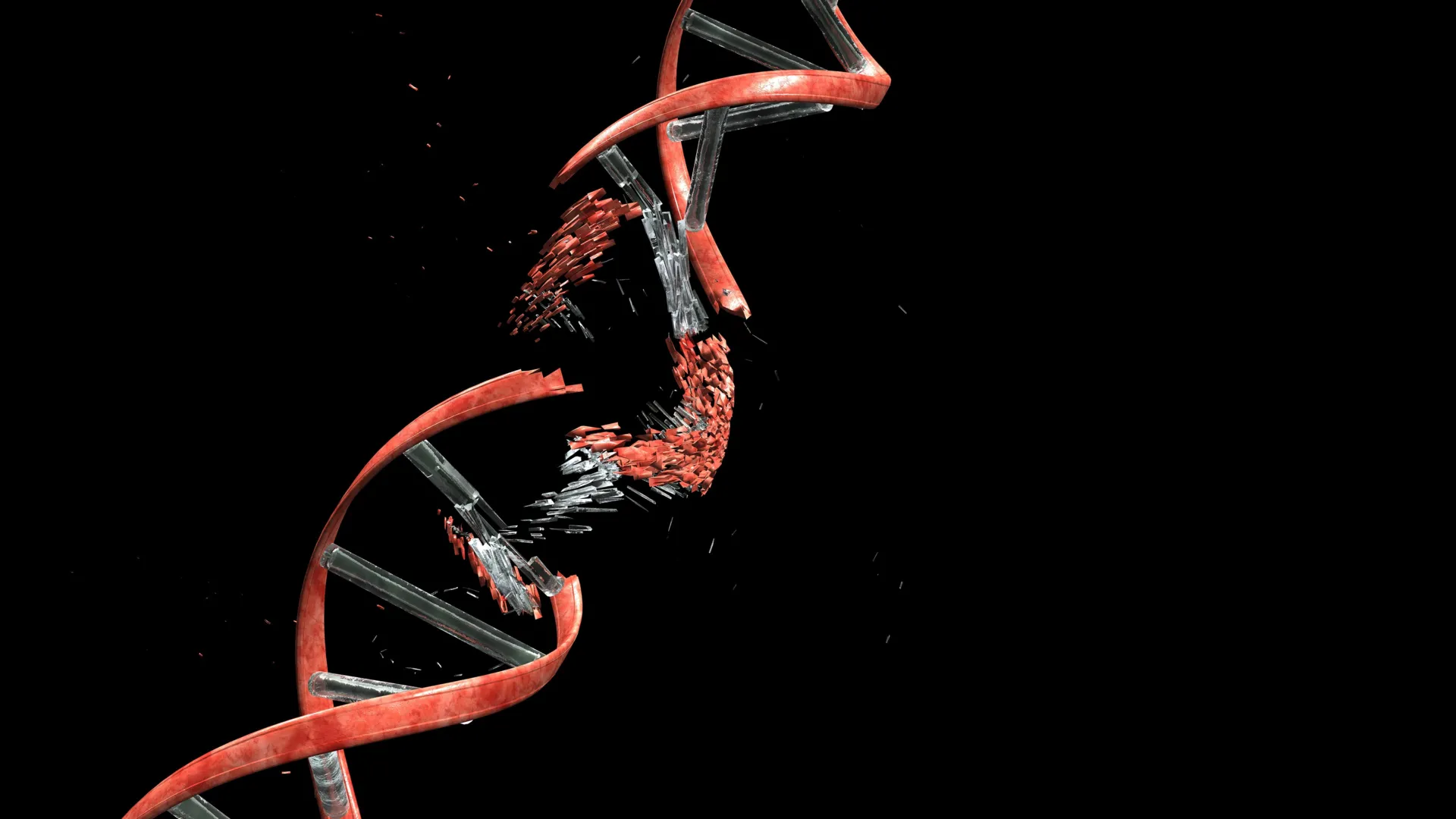
A new study published in Nature has revealed an unexpected consequence of that process. Researchers from Kyoto University's Institute for Integrated Cell-Material Sciences (WPI-iCeMS) and collaborating institutions found that migrating neurons routinely experience significant DNA damage. Specifically, the cells develop double-strand breaks, a severe form of DNA damage in which both strands of the DNA double helix are cut.
Although double-strand breaks are typically associated with mutations, cell dysfunction, and even cell death, the researchers discovered that they are a normal part of brain cortex development. In healthy brains, the damage is rapidly repaired before it can cause lasting problems.
"The developing brain appears to have evolved to tolerate and repair the neuronal damage efficiently," says Professor Mineko Kengaku, of WPI-iCeMS, who led the study. "But understanding the limits of that tolerance -- and what happens when repair is incomplete -- brings us closer to understanding a range of neurological conditions."