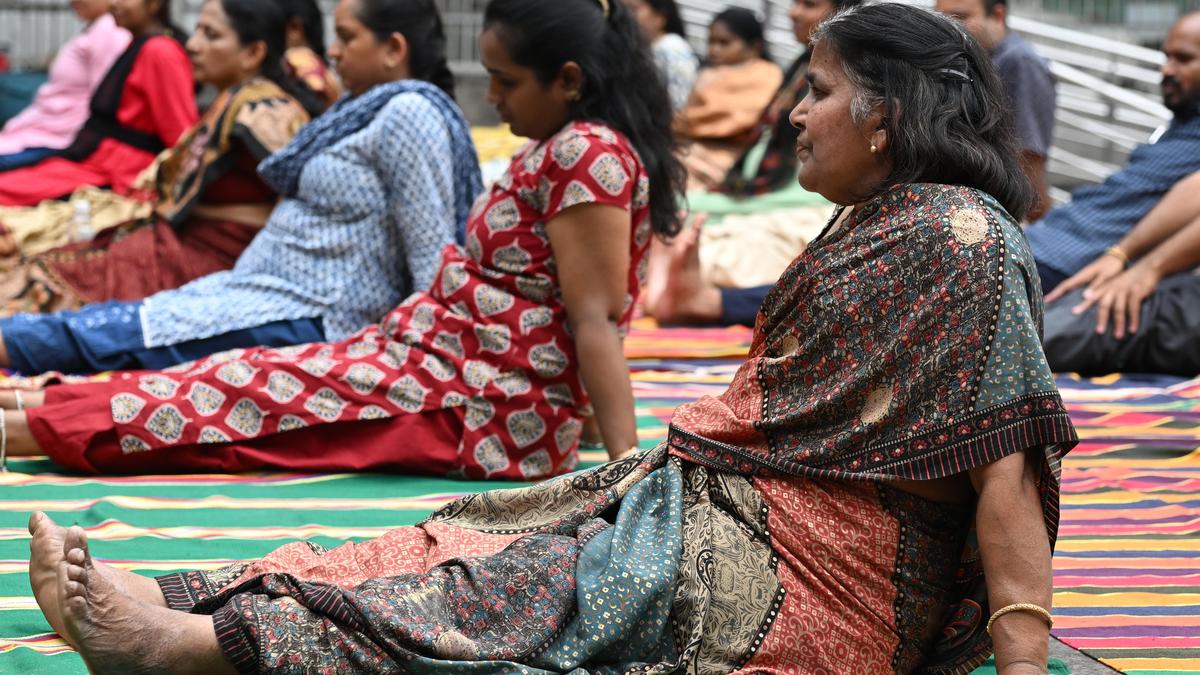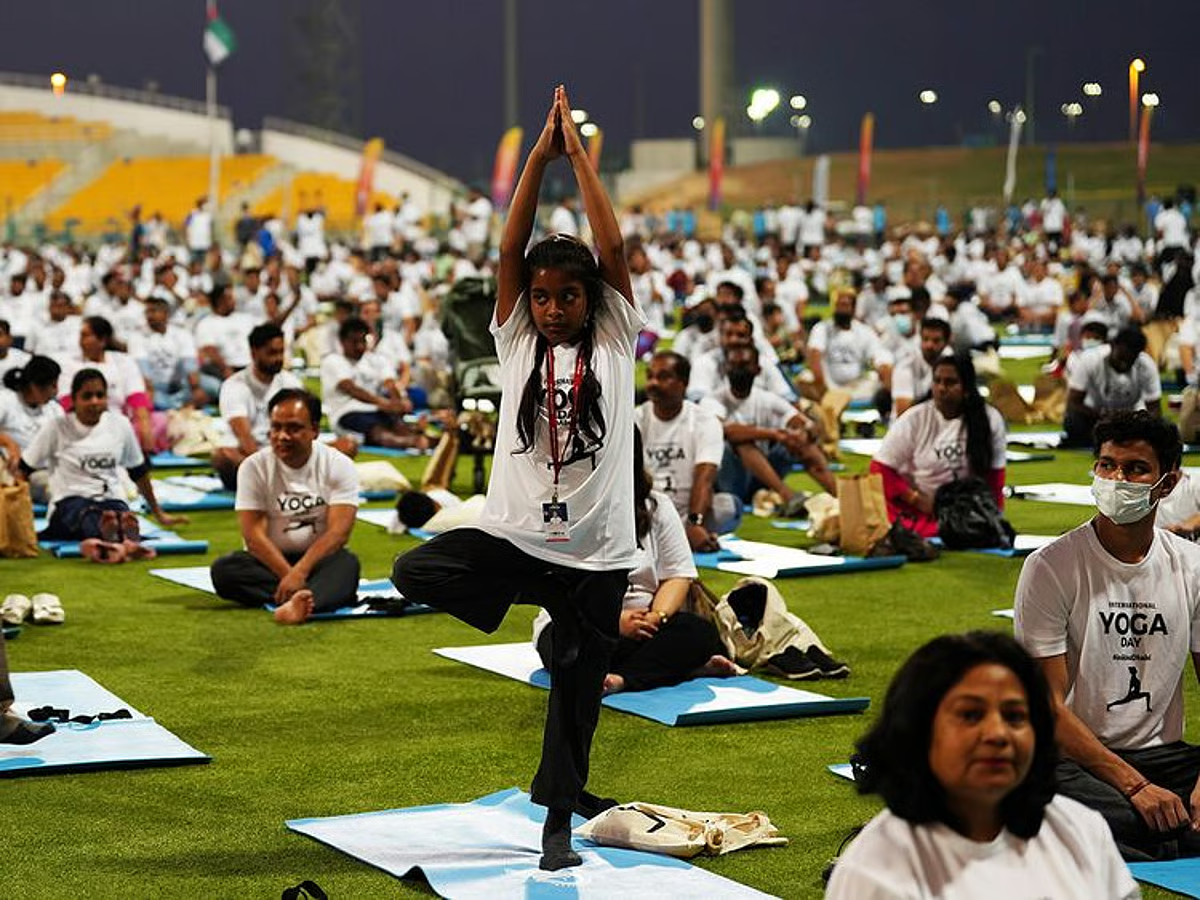
Ancient wisdom and modern science converge in a practice that helps calm nervous systemLast updated: June 21, 2026 | 04:583 MIN READMass free yoga events have gained a large following in the UAE.Gulf News archivesImagine a prescription that instantly lowers your heart rate, flushes stress hormones from your blood, costs absolutely nothing, and comes with zero negative side effects. If it was invented today, it would be a multi-billion-dollar medical breakthrough. Instead, it’s an ancient practice that’s been waiting for you all along.Historically, yoga was never conceived as a physical workout. The ancient lineages developed physical postures for a very specific, practical reason: to wring out the physical restlessness of the body so the mind could finally sit still enough to meditate for long hours.Get updated faster and for FREE: Download the Gulf News app now - simply click here.But why? How did an ancient practice seamlessly transition into the fast-paced reality of the 21st century? The answer lies in yoga’s unique ability to heal the one thing that modern life consistently disrupts - our nervous system. The science of the stretchMost of us spend our days trapped in the Sympathetic Nervous System, our primitive ‘fight-or-flight’ survival mode. When deadlines pile up, your heart rate climbs, and your breathing becomes shallow and restricted. Your body genuinely believes it is under attack.On the mat, yoga consciously uses an off-switch for this alarm system. By pairing deliberate physical movement with deep, rhythmic nasal breathing (Pranayama), it manually shifts the body into the Parasympathetic Nervous System, the ‘rest and digest’ state.When you bring focus to your exhales and maintain slow, controlled breathing, you directly stimulate the vagus nerve. The moment that nerve is activated, it sends an immediate signal straight to your brain that says, “You are safe.” Your heart rate slows down, your muscles let go of their defensive gripping, and stress melts away on a cellular level.I have also heard students in class say that they feel an intense wave of emotion or feel like crying during a deep hip-opener class. It’s because we do not just experience stress in our minds; we physically store our emotional trauma and tension in our tissues. When life gets overwhelming, we unconsciously clench our jaws, shrug our shoulders toward our ears, and tighten our hips. Yoga’s gentle stretches and twists release this stored tension, creating a sense of lightness and ease.The adaptability of the practiceWhat I love most about yoga is its adaptability. It doesn’t demand that you change your life to fit its mould; it meets you exactly where you are. Whether you are an ancient sage meditating in the Himalayas or a modern professional squeezing in a 30-minute practice between meetings, yoga fits. This adaptability is the exact reason it has survived 5,000 years.Every single day, students step onto their mats carrying the heavy, invisible baggage of modern life. When they sit down, the questions I hear most frequently are:“My mind won’t shut up for five minutes. Is yoga even right for me?“My body is so stiff, do I need to be flexible before I start?”“Can a quick 10 minute flow really do anything?”The answer is always the same: Yoga isn’t a reward for the calm and bendy. It’s the medicine for the stiff and the scattered. Saying you’re too restless or inflexible for yoga is like saying you’re too hungry to eat. The very thing you think disqualifies you is exactly why you need it.How you can begin todayThe beauty of yoga lies in its accessibility. You don’t need expensive equipment, a gym membership, or innate athletic ability. Here’s how to start:1. Begin with just ten minutes. Consistency matters far more than duration. A short daily practice yields better neurological results than an occasional, heavy hour-long session.2. Master simple breathing first. Try this: inhale slowly for four counts, hold for four, and exhale for six. Repeat five times. This alone can shift you from panic to peace in minutes.3. Learn a few foundational poses. Start with gentle shapes like Child’s Pose, Cat Cow, Seated twists, and a relaxed forward bend. These release spinal tension without strain.4. Practice at the same time daily. Early mornings energise you for the day ahead; evenings help you unwind and give you better sleep.5. Be patient with yourself. Yoga is not about touching your toes or achieving a perfect aesthetic. It’s entirely about how you feel on the inside, not how you look from the outside.The takeawayYoga reconnects us to our breath, grounds us in the present moment, and fundamentally rewires our nervous system for peace. As long as humans experience stress, this ancient practice will remain our most reliable, timeless remedy.Adhipa Kalany is an RYT 500 Yoga & Mobility Specialist and a Yoga Alliance Continuing Education Provider (YACEP) who specialises in creative Vinyasa flows and functional alignmentRelated Topics:Get Updates on Topics You ChooseUp Next
Why ancient yoga is the modern stress buster
Discover how ancient yoga calms the nervous system, eases stored tension and offers a free, science-backed remedy for modern stress and burnout.
809 words~4 min read