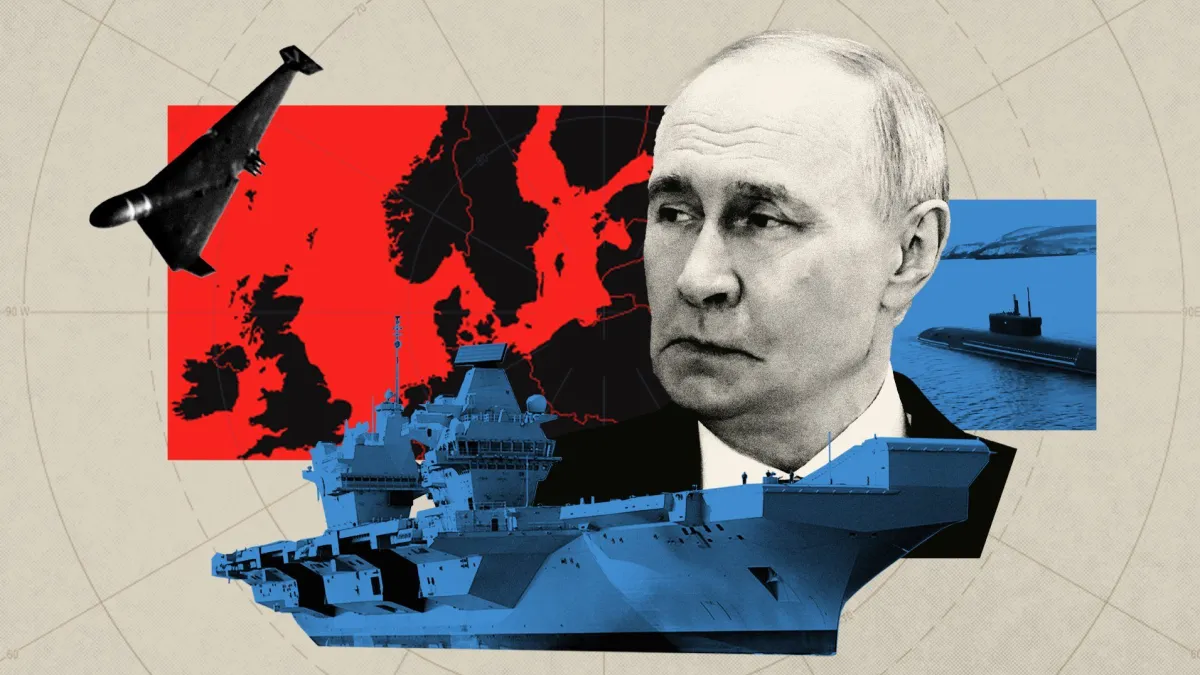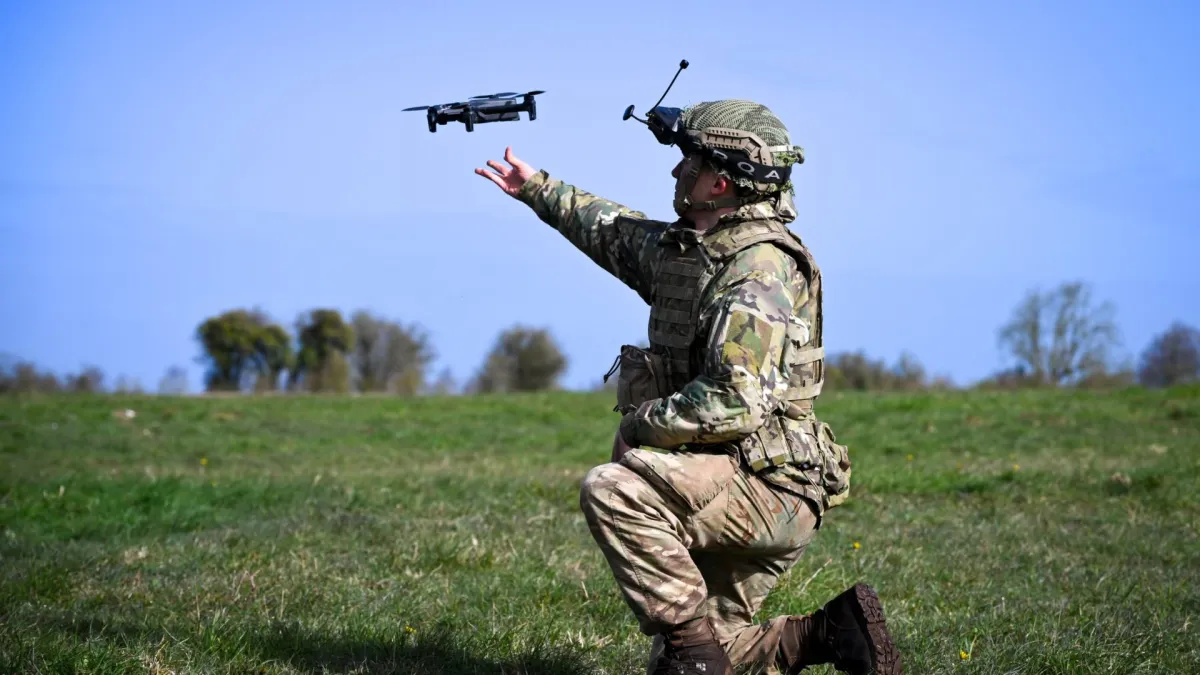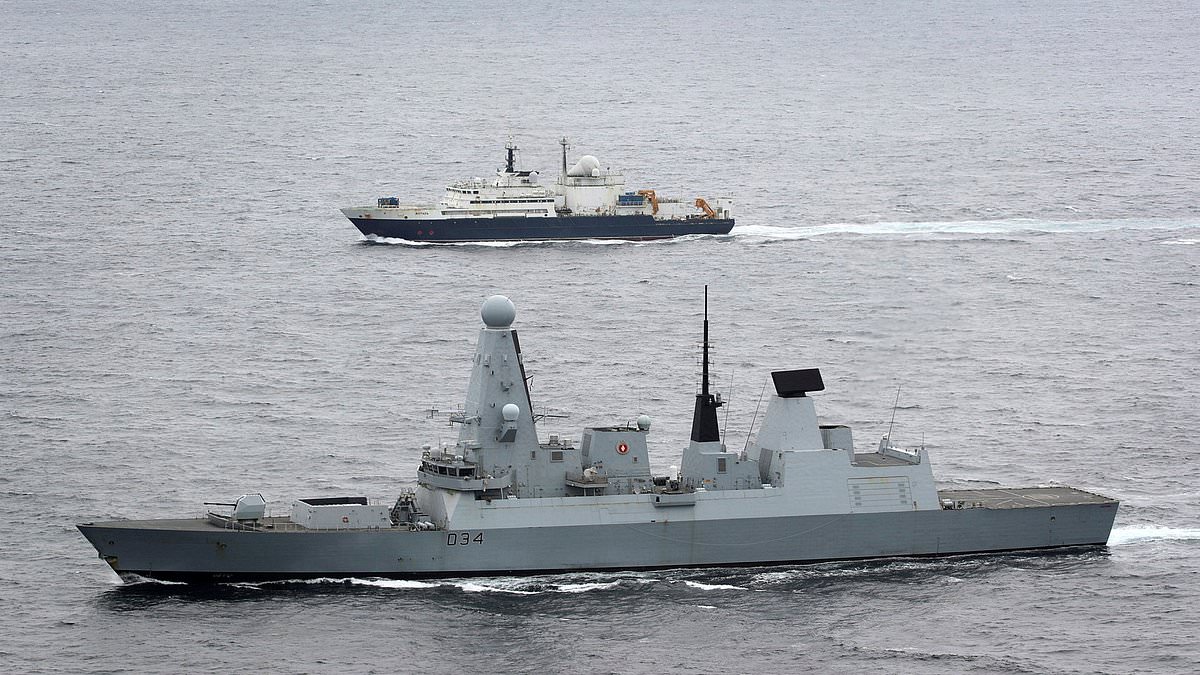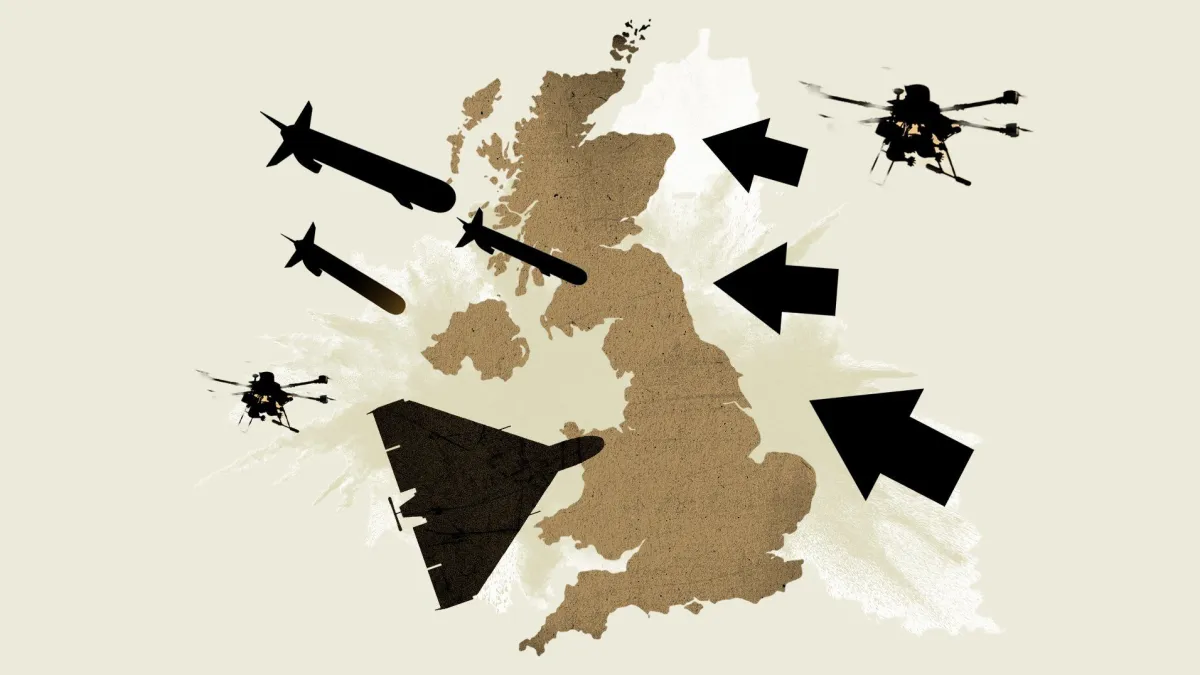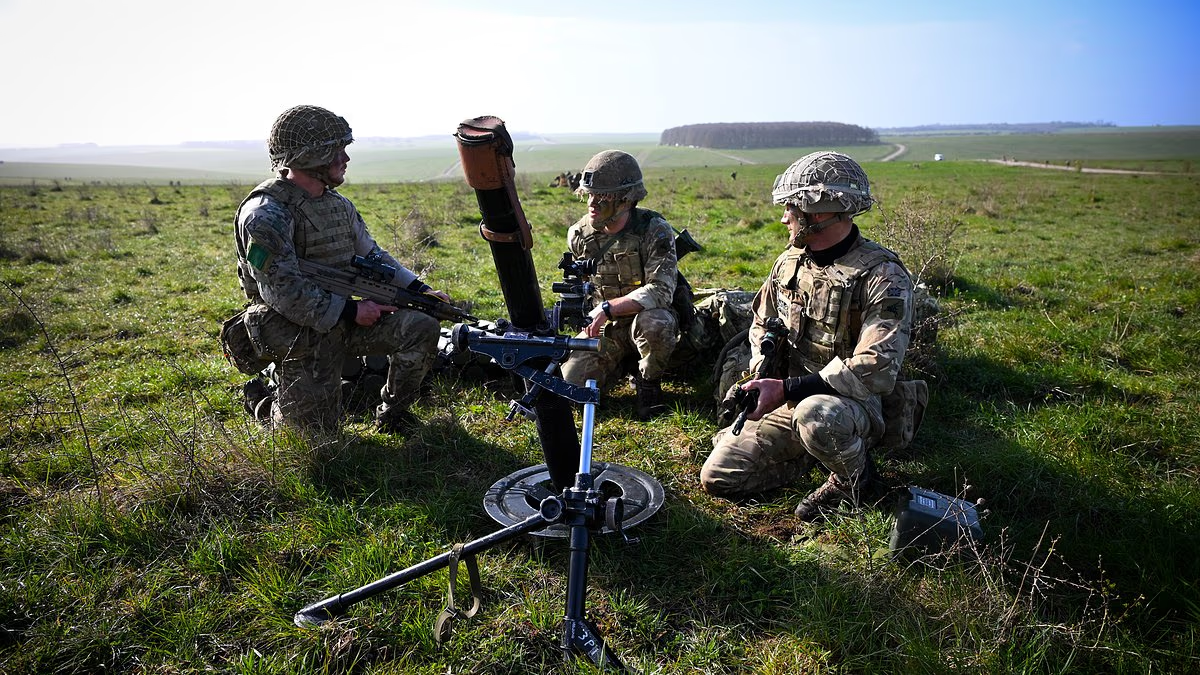
The threats to Britain are legion.We are an island nation and our life support system in the form of seabed fibre optic cables and natural gas pipelines is at the mercy of our enemies.If, as reported, a team of divers from Ukraine can destroy the Nord Stream 2 energy pipeline running from Russia to Germany – as it appears that they did in 2022 – then imagine the chaos that Putin’s vast naval resources could wreak on Britain.The Kremlin’s recklessness was laid bare last week at the Old Bailey, which found two goons – allegedly hired by a Russian diplomat – guilty of setting fire to property and a car connected to Keir Starmer.One of the homes torched had been rented out to the Prime Minister’s sister-in-law.Imagine if the perpetrators had bungled their amateur operation even more, and unwittingly a relative of the Prime Minister or the PM himself had been harmed or worse.An assassination is an act of war and Britain’s response would surely bring forward by some years the 2025 assessment of Nato chiefs that the military alliance will be in a state of direct conflict with Russia by 2030.Until recently, as head of Scotland Yard’s SO15 Counter Terrorism Command, I was responsible for overseeing Britain’s operational response to hostile acts by foreign states against our country. Dominic Murphy was formerly the head of Scotland Yard's SO15 counter-terrorism commandI saw first-hand how our adversaries, particularly Russia, became increasingly brazen in targeting the UK through espionage, sabotage and assassination plots.Some of these crimes were already familiar to me before I took charge of SO15 in 2023, not least because I had led the investigation into the 2018 Salisbury attacks.In that case, Russian spies acting on the Kremlin’s orders used a nerve agent in an attempt to assassinate Sergei Skripal and his daughter.The attack failed in its primary objective but claimed the life of an innocent member of the public.The Salisbury poisonings gave us a glimpse of the disruption that could ensue from a hostile act.We had to close streets and shutter businesses as we tried to keep the public safe and determine where the nerve agent had been present.This predated the Covid pandemic, which saw on a national scale the restrictions imposed in Salisbury.But were the country to experience another crisis or any of these doom-laden scenarios, how prepared would we be?If we are lucky, we may have a bar of signal on our phones to call loved ones.But if our networks were rendered useless, what then? Have you agreed a safe place to convene with your family?Similarly, how would we cope in a power blackout lasting days?In the depths of winter, keeping warm without electricity could prove a life-or-death struggle for some of the most vulnerable. Britain faces a legion of threats, including significant dangers from adversaries such as Putin's Russia, writes Dominic MurphyWithout refrigerator power, do you have enough non-perishable food in your house to last until it is safe to go outside again?These are questions that have not troubled us as a nation since the Cold War.Then, the threat of a nuclear attack was painfully real, and governments issued public information campaigns.One of these was Protect And Survive, designed to guide the public in the event of a nuclear fallout. Its most memorable advice was how to erect a lean-to shelter in your home.Now the advice may sound quaintly outdated, but at least the public were informed, which is more than can be said of today.We have become less aware of what to do in an attack and our governments are not filling the void with sensible and proportionate advice.Perhaps they fear an open and honest conversation with the public about civil defence would lead to panic.Or perhaps they fear looking inadequate. After all, it’s not easy telling a population that has become addicted to state provision how to fend for themselves.Yet other nations have crossed a threshold in public communication that Britain has not. Roman Lavrynovych (left) and Stanislav Carpiuc, the two men jailed last week after a series of reportedly Russian-backed arson attacks on two houses in London and a car linked to Sir Keir StarmerSweden is perhaps the most striking example. Citizens are explicitly told they may need to cope without state support in crisis or conflict.The Netherlands speaks plainly about the potential loss of essential services, including electricity, water and supply chains.Germany and Belgium are direct: Emergency services cannot reach everyone simultaneously and households should be capable of managing independently for defined periods.In Britain, the heads of GCHQ and MI5, among others, have warned of the persistent state threats we face, but have done so without describing what it means to people if it happens and how they should respond.In Salisbury, I learned public trust is not built on reassurance alone. It rests on whether people believe they are being levelled with.The communities affected by that attack, the officials who communicated under extreme uncertainty, the agencies who had to co-ordinate publicly while protecting sensitive intelligence, all faced the same question: How much truth can the public take?My experience, consistently, is that people handle truth better than we expect.This is not an argument for alarmism. It is an argument for a more honest conversation with the public, one that respects their capacity to handle reality. Two Russian agents used the nerve agent Novichok as part of a failed assassination attempt in Salisbury in 2018First, the Government should define the disruption scenarios.What happens to power, water, communications and transport in a cyber-attack or a serious supply chain disruption? Citizens and businesses cannot prepare for an outcome they have never been asked to consider.Government should publish that scenario in plain language.Its 2022 Resilience Framework and the 2025 Resilience Action Plan are sophisticated documents. But they are drafted for officials, not the public.Second, set explicit expectations for citizens and for businesses. What does a prepared household and a resilient firm actually look like?Third, recruit more credible voices to carry the message. It needs to be embedded in how business leaders, local authorities, community networks and individuals think about risk.Other countries have built those coalitions. We have not.Currently, there is debate on the future of defence spending, but a number will eventually be agreed, a minister may or may not survive, the cycle will move on.But the question of whether Britain is prepared, whether our institutions trust the public with the truth and whether the public trusts them in return will remain.And it will matter considerably more, when the moment comes, than how many billions we spent getting there.Dominic Murphy is co-founder and CEO of risk consultants Taverner Risk.
Britain must teach civilians what to do in war: DOMINIC MURPHY
The threats to Britain are legion. Were the country to experience another crisis or any of these doom-laden scenarios, how prepared would we be?
TL;DRAI
Ex UK spy chief: government must teach crisis response (blackouts, sabotage) as Russian threats escalate—unlike other NATO nations. Tech leaders: infrastructure resilience becomes national governance priority; cyber attacks on power/comms shift from IT SLA to board contingency planning.
1,102 words~5 min read