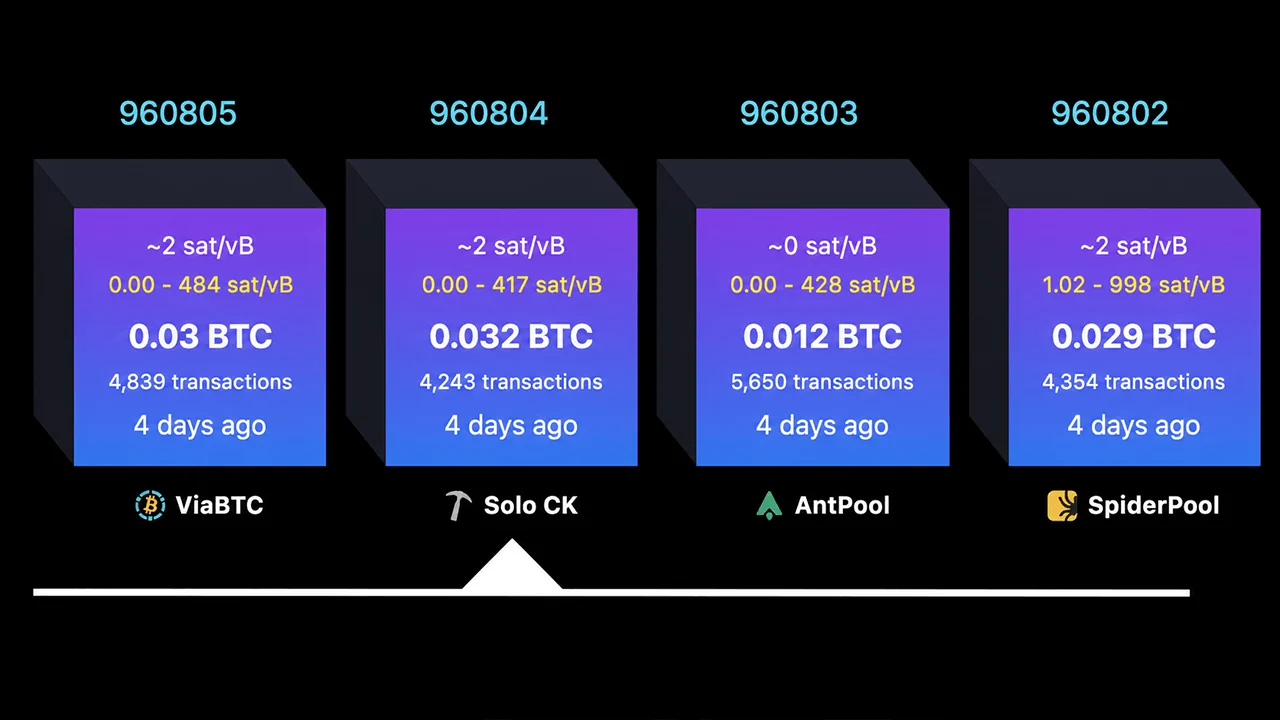
SpiderPool pushed a Bitcoin block through the network on June 19, 2026, with essentially nothing in it. Block 954,352, mined around 04:27 UTC, contained only the mandatory coinbase transaction, the automatic reward payment to the miner, and zero user transactions.
The block weighed in at just 1.16 kWU. For context, a typical Bitcoin block can hold up to 4,000 kWU of data. That makes this one roughly 0.03% full.
Why a mining pool would deliberately skip transaction fees
When a new block gets found on the Bitcoin network, pools need time to validate all the transactions in their pending queue and build a fresh template. During that window, they can pause and wait for a complete template with full transactions, or immediately start hashing on a minimal template containing only the coinbase transaction.
SpiderPool chose option two. The gap between block 954,352 and the previous block was just 62 seconds, a notably short interval that helps explain the decision. Rather than waste those seconds waiting for transaction data to propagate, the pool kept its hashrate working on a bare-bones template and got lucky, finding a valid block before a fuller template was ready.