Story audio is generated using AI
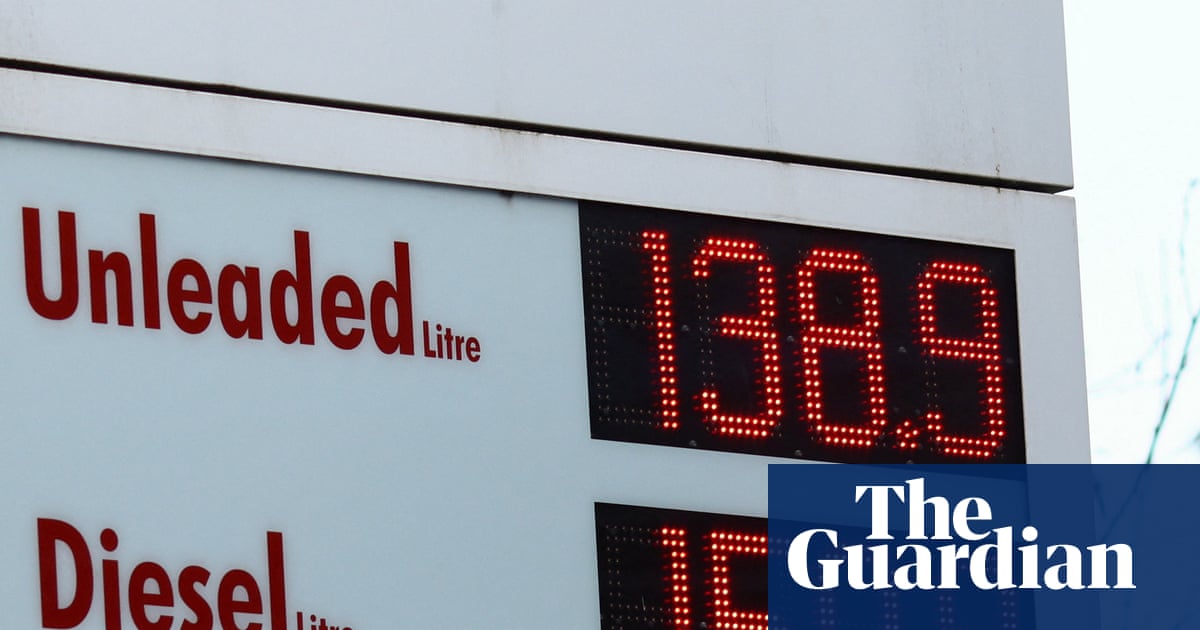
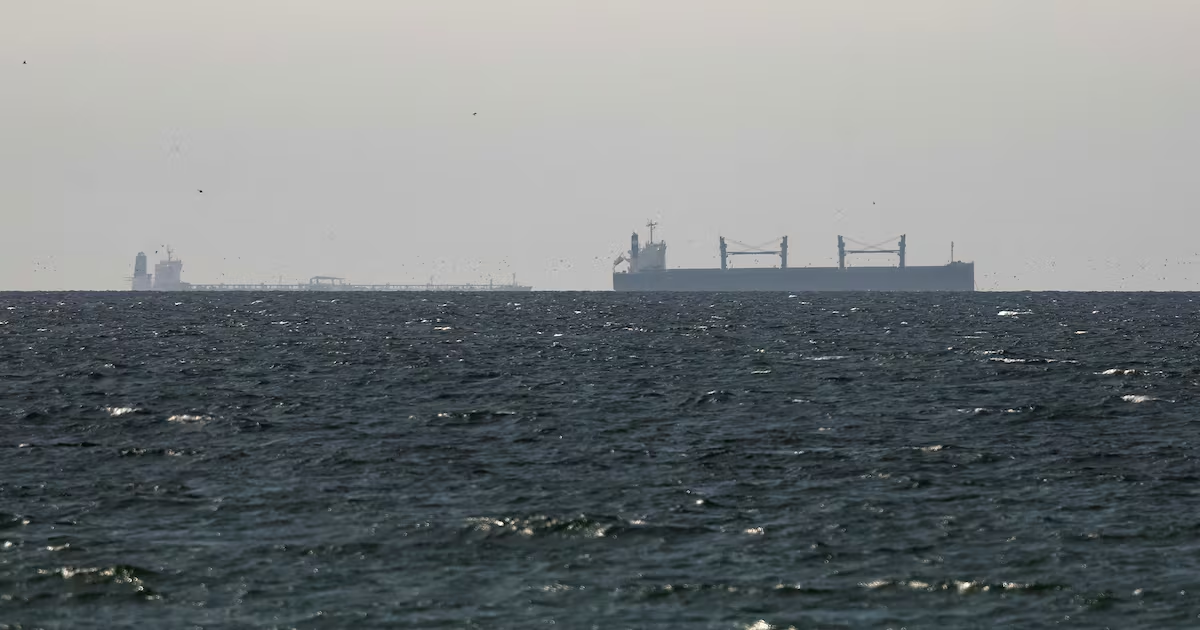
Heads of the global management consulting firm Kearney have poured cold water on expectations that inflation without fuel will peak next year, saying geopolitical tensions and their pressure on the fuel price and supply chains have proved to be substantial.Theo Sibiya, partner and MD for Kearney in Africa, told Business Times that inflationary pressures triggered by the US-Israel war on Iran were such that there was no guarantee of inflation peaking at any point soon, with or without fuel inflation priced in.“In my humble opinion, I don’t think it’s even very helpful to exclude fuel,” he said. “Energy is a core part of how any economy functions, so when you look at these numbers, I think it’s a little bit misleading to exclude fuel.“My starting point would be to say one should include fuel when one looks at inflationary pressure. My concern is it’s a little bit of crystal ball gazing at this point in time, because no one can tell you …how far-reaching the consequences are going to be.”Stats SA announced that inflation rose to 4.5% in May, with fuel prices contributing greatly to the overall CPI print. A deal aimed at ending the war was signed this week, stipulating that the blockade in the Strait of Hormuz must be ended within 30 days.Sibiya said that during the war and the closure of the strait, markets have been tapping into fuel reserves, so the inflationary pressures of limited oil access have not transmitted fully, and neither have the downstream inflationary effects on food prices.Earlier this month, South African Reserve Bank Governor Lesetja Kganyago told Business Day that inflation excluding fuel prices was indeed rising and was expected to peak in the first quarter of next year.“If we exclude fuel prices from overall inflation, prices are beginning to rise, and we expect that they will continue to rise and peak in the first quarter of next year. And that is what monetary policy has to address,” he said.Claudio Campanini, Kearney’s Middle East and Africa regional chair, said in a Kearney report that in all scenarios that have broadly been accounted for there was going to be a peak in inflation in the second part of the year, by definition.“Hopefully, if we get a stabilisation between now and the next two to three months, then by the second quarter of 2027 the inflation will turn under control, more than what it is now, because right now the price of oil is having a huge impact on some of our inflation dynamics,” he said.Campanini said the supply of key materials was also affected by the closure of the Strait of Hormuz. The Kearney report says the global economy must position the Gulf Co-operation Council as the most reliable and open connector across Asia, Europe, Africa and the wider Middle East.The report says that in the Middle East and Africa, political and security dynamics are directly shaping economic outcomes. The region is to be treated as high-opportunity, high-risk, and investors should stage investments that maintain optionality, as well as protect workforce, assets and operations.“Inflation is accelerating across all scenarios, becoming more volatile. Average yearly inflation could reach as high as 7.0%, well above earlier baseline projections pre-conflict of 3.2%. Energy costs are feeding directly into consumer prices, especially in import-dependent economies. Higher inflation risks delaying monetary easing, extending tight financial conditions.”The report says cost pressures are building across industrial value chains and that global producer prices could rise as high as 6.2% year-on-year, well above the pre-conflict baseline of 1.2% for the second quarters of 2026 and 2027.“Higher energy costs are increasing production, transport, and input costs. Cost pass-through is driving downstream price pressure across sectors. Demand is weakening as households absorb higher costs.“Consumption growth could fall to 0.6% under the worst-case scenario. Higher essential costs are eroding discretionary spending – market volatility further suppresses household wealth and confidence.”The report says growth is slowing across sectors, undercutting demand. Consumer goods, retail, food and beverages, and textiles are facing volume pressures, while industrial output and export growth continue to weaken.Meanwhile, in a written reply to a question from MK Party MP Musawenkosi Gasa, South Africa’s minister of mineral & petroleum resources, Gwede Mantashe, said petroleum pricing globally has been affected negatively because of the conflict.“Crude oil is a globally traded commodity whose pricing is based on global benchmarks such as Brent and West Texas Intermediate. South Africa’s oil and gas upstream potential needs to be unlocked. This is one of the best ways of insulating the country against oil shocks,” Mantashe said.Stats SA’s head of price statistics, Patrick Kelly, said inflation had seen its highest rate of increase since July 2024, when it was 4.6%.“The inflation surge was largely driven by fuel price increases,” Kelly said. “The fuel index recorded its second consecutive large monthly increase, leaping by 14.3% to reach an annual rise of 28.7%. Over the past 12 months, prices for petrol increased by 24.8% and diesel by 53.8%.”He said the impact of fuel prices on overall inflation was illustrated by the index of inflation excluding fuel.