Wednesday 17 June 2026 11:00 am
Food inflation is still on the horizon, industry claims (Yui Mok/PA Wire)
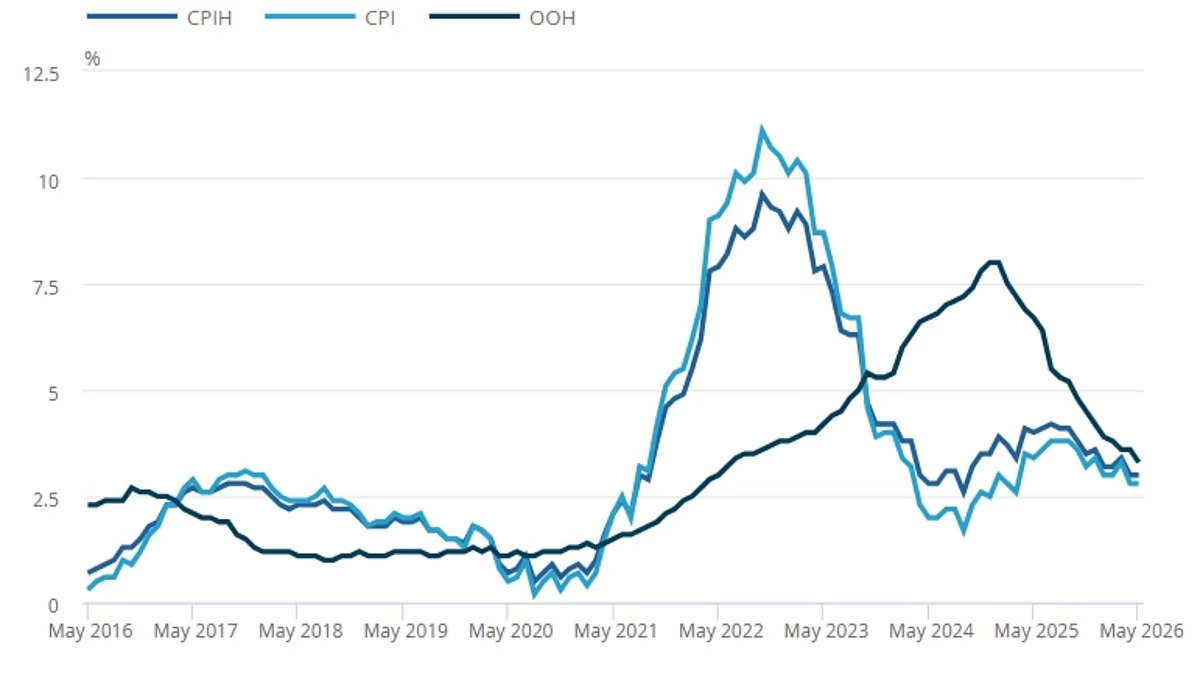
The surprise drop in food and drink inflation seen in May is likely to be short-lived, as the impacts of the war in Iran are due to take hold, leading industry figures to warn.The rate of inflation of food and non-alcoholic drinks fell from three per cent in April to 2.2 per cent in May, the Office for National Statistics (ONS) revealed on Wednesday. This dip in food inflation was a key force keeping the UK’s headline inflation rate steady at 2.8 per cent, holding back swift petrol price rises.While the effective closure of the Strait of Hormuz sent petrol pump prices soaring almost immediately, food and drink industry leaders warn that the conflict will have a delayed impact on food prices, which have not yet kicked in.Prices fell the fastest for flour (-6.1 per cent), olive oil (-4.2 per cent) and jam (-3.0 per cent), while beef (9.4 per cent), offal (9.2 per cent) and preserved fruit (9.0 per cent) prevented this inflation figure from falling furtherEarlier this year, the Food and Drink Federation (FDF) warned that food inflation was set to soar to between nine and 10 per cent by the end of this year.Prices ‘yet to reflect Iran chaos’The trade body, which represents the UK’s 1,200 food and drink manufacturers, claims that the Iran war will have a delayed effect on food prices. This will be similar to the fallout from Russia’s invasion of Ukraine in February 2022, it argues, when food inflation initially lagged behind headline inflation before soaring to 19 per cent in March 2023.Karen Betts, the FDF’s chief executive, responded to Wednesday’s figures: “It’s good to see an easing of food inflation in May, but consumer prices still don’t reflect the inflation caused by the closure of the Strait of Hormuz.”She said it takes several months for the increased costs borne by farmers, processors and manufacturers to reach supermarket shelves. “This makes it all the more important that [the] government acts where it can – to prioritise food manufacturers for energy support and by prioritising and rationalising regulation,” she added.A new forecast has claimed that food inflation may not reach the worst-case scenario but will extend into 2028, far longer than previously thought.Households brace for £200 higher grocery billThe Institute of Grocery Distribution (IGD) said it expects food inflation to peak in the second half of this year, averaging between 3.7 and 4.7 per cent across the 12 months.Households with children will need to fork out an extra £203 for groceries later this year and an extra £207 next year, the institute warned.Responding to Wednesday’s inflation figures, IGD’s chief economist James Walton told City AM that it is “important to remember that food prices are still increasing, just at a slower rate”.“The impact of geopolitical conflict and higher energy prices usually takes time to filter through to raised food prices and therefore, we expect the impact to emerge later this year,” he added.Harvir Dhillon, economist at the British Retail Consortium (BRC), said food inflation has fallen thanks to “fierce competition” between supermarkets.“To ensure prices can remain competitive for consumers in the long-term, the Government must take pragmatic steps to reduce the cost of doing business,” he said.Trade bodies like the FDF and the BRC are urging the government to slash so-called policy costs on supermarkets’ and manufacturers’ energy bills, and to ditch red tape, including new healthy food regulation.