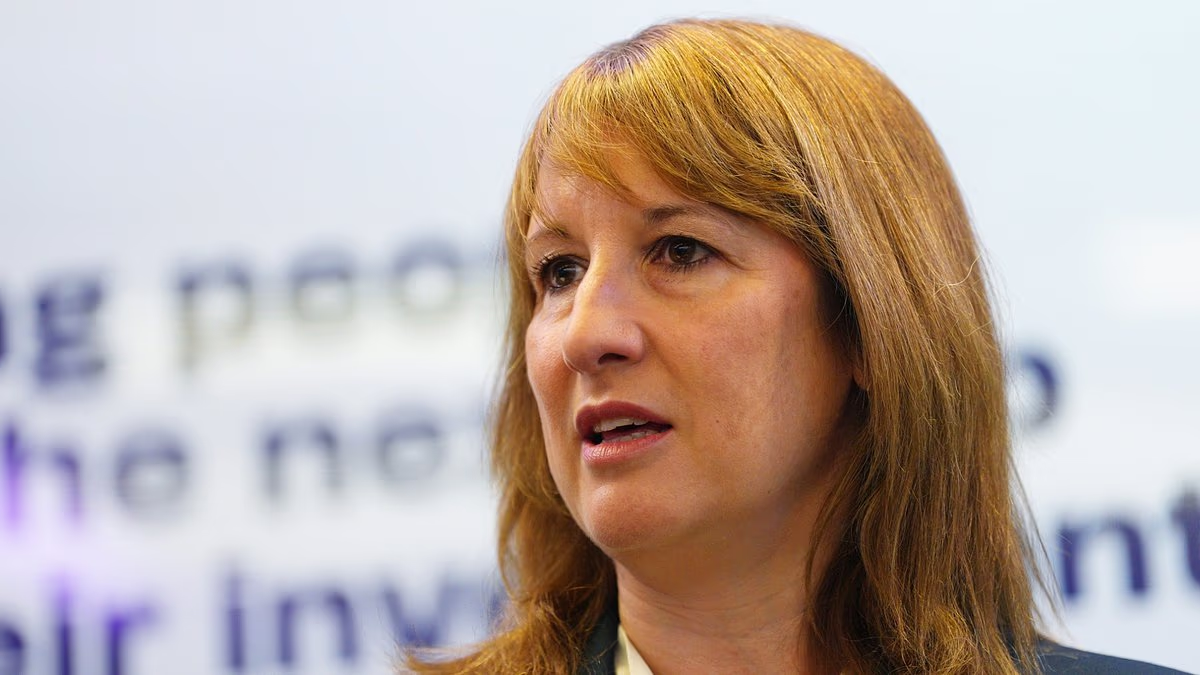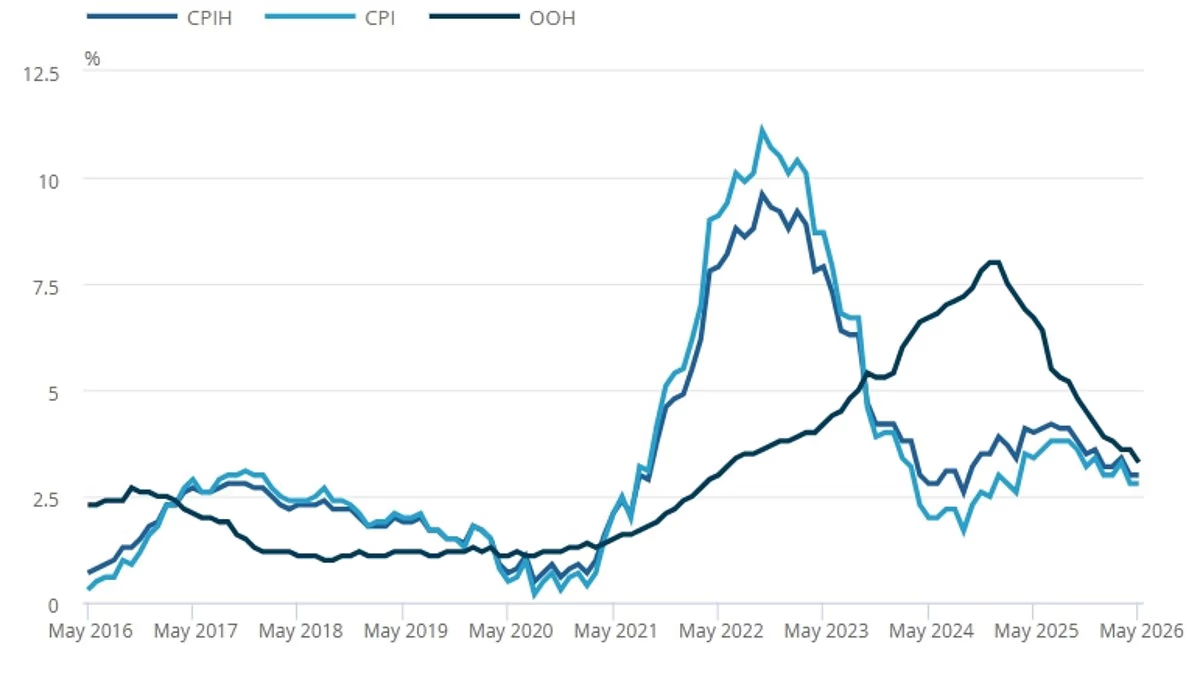
Brits were given much-needed respite today as inflation defied fears of a fresh Iran war spike.The headline CPI rate held at 2.8 per cent in May, instead of ticking up to 3 per cent as many analysts had expected.Soaring air fares and petrol prices were largely offset by a slowdown in food prices over the month, according to the Office for National Statistics (ONS).Inflation is still almost a percentage point higher than the Bank of England forecast from January, before the Middle East crisis erupted. Some experts warned that the worst of the price pressures are still to come.But Chancellor Rachel Reeves will have been breathing a sigh of relief as she insisted the Government has the 'right economic plan'.The numbers also ease the impetus on the BoE to increase interest rates when the Monetary Policy Committee meets tomorrow - something that would have caused more misery for mortgage-payers.
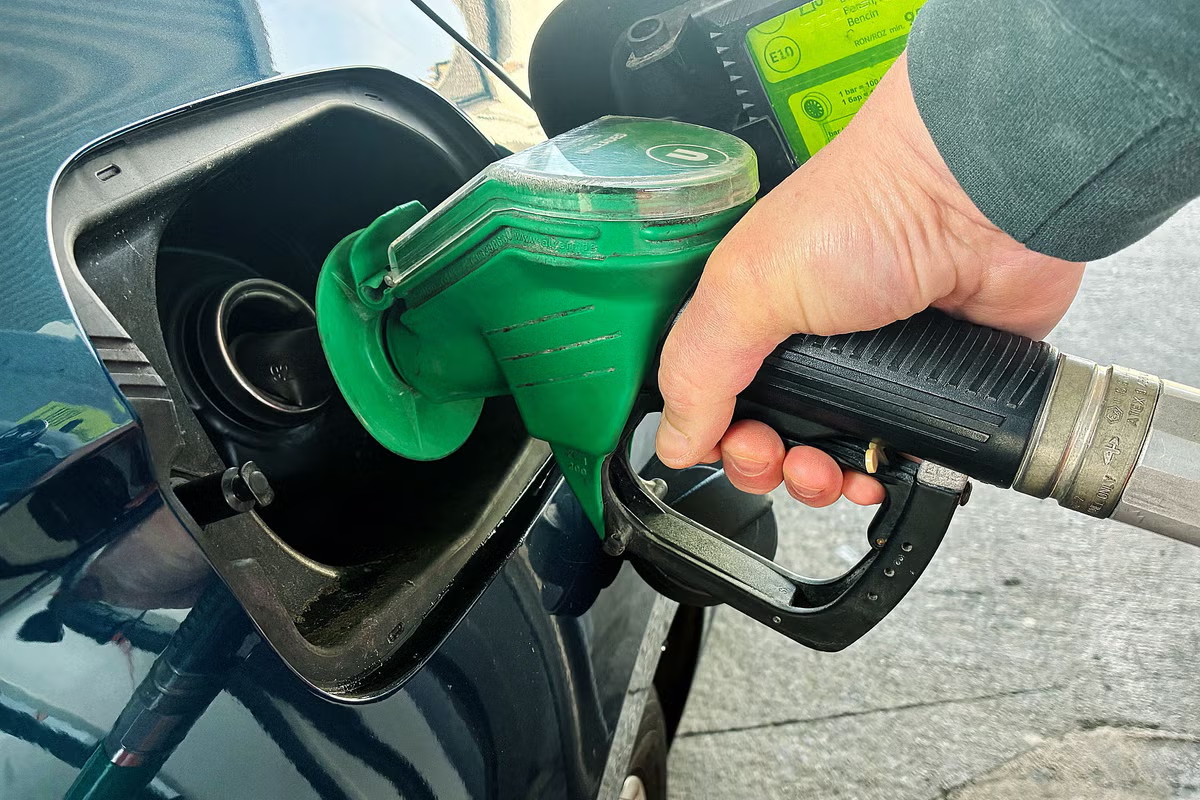
The ONS said the transport costs annual inflation rate soared to 6.8 per cent - its highest since December 2022 and a big rise the 4.5 per cent rate in the year to April. The petrol and diesel rate stood at 24.6 per cent, the highest since September 2022.However, the rate of food and non-alcoholic inflation fell to 2.2 per cent in the year to May - down from 3.0 per cent. The latest rate was the lowest since December 2024.ONS chief economist Grant Fitzner said: 'After last month's slowdown, inflation held steady in May as various price movements offset each other. The main upward movement came from transport with airfares, vehicle taxes and petrol prices all pushing up inflation.'These were offset by lower food prices, with decreases in inflation seen across a range of meat, dairy and vegetable items compared to last month, as well as the cost of domestic heating oil, which fell back after climbing in recent month.'The annual cost of raw materials continued to increase, led by rises in the cost of chemicals, while the increase in the costs of goods leaving factories slowed, partly due to a drop in the cost of domestically produced cars.'Inflation had slowed to its lowest level for more than a year in April because of a decline in household energy prices for the month.Ofgem lowered its energy price cap from the start of April by 7 per cent, or £10 a month, for the average household using both electricity and gas, pushed lower by Government measures to reduce bills. It meant that inflation declined for April despite a jump in fuel costs caused by the impact of the conflict in the Middle East.Inflation has been widely expected to keep steadily increasing over the coming months, with most economists predicting that it will peak at between 3.5 per cent and 4 per cent in the second half of 2026.Bank of England forecasts from April predicted that inflation would average around 3.1 per cent in the second quarter of this year and peak at around 3.6 per cent in a more benign scenario related to the Iran war.Ms Reeves said: 'While the war in the Middle East pushes prices up globally, we have got the right economic plan and inflation has held steady.'We're protecting families and businesses from rising costs, with cuts in energy bills and freezes in fuel duty and rail fares.'This is the right economic plan to build a stronger more secure Britain.'But shadow chancellor Mel Stride responded: 'Prices are still rising too fast - and Labour still don't understand why.'Thanks to Labour's choices the UK went into the latest energy crisis with the highest inflation in the G7. Rachel Reeves has increased the deficit by 75 per cent and those lining up to replace Keir Starmer want to borrow even more. Contributions from housing and household services to CPIH was the smallest since June 2024 The annual contribution from owner occupiers' housing costs was its lowest since June 2022 The UK inflation rate has been compared to other countries - and was the same as France's The CPI goods inflation rate slowed in May 2026, while the CPI services and core rates rose Offsetting contributions led to unchanged CPI annual inflation, according to the ONS data The contribution from transport to the CPI inflation rate was the largest since November 2022'Reform promise the same irresponsible approach, announcing tens of billions in unfunded promises in their desperation to win the Makerfield by election.'Only the Conservatives have a leader with the backbone and strong team needed to build a stronger economy and get Britain working again.'Suren Thiru, ICAEW Chief Economist, said: 'While inflation was unexpectedly unchanged in May, aided by lower food costs, these figures have been surpassed somewhat by fresh hopes of easing inflation following the US-Iran peace deal.'Rising services inflation may well sharpen Bank of England fears that the Iran conflict has embedded price pressures more widely across the economy, though a deteriorating labour market will help curb any second-round effects.'Although the US-Iran peace deal has arrived too late to stop higher energy bills and food costs triggering a summer inflation spike, if oil prices continue sinking then a peak well below 4 per cent is becoming increasingly plausible.'Even with hostilities seemingly over, the UK faces a painful hangover from the Iran conflict, with energy and other supply chains likely to take months to normalise, delaying any meaningful easing in inflation until late 2026.'May's softer than expected data means an interest rate hold on Thursday is now nailed on, especially as the US–Iran peace agreement has raised hopes that, if the deal holds, inflation could ease without the need for further policy tightening.'Tomorrow, policymakers at the central bank will vote on whether to maintain interest rates at their current rate of 3.75 per cent or increase or decrease this rate.The Bank is expected to hold off an interest rate hike despite concerns that the Middle East conflict will push the cost of living higher.Inflation has been above the Bank's 2 per cent target for most of the past five years, and in April the Bank said it was likely to potentially exceed 6 per cent early next year under the most adverse of three scenarios. However, financial markets this week have drawn comfort from an apparent deal between the US and Iran which promises to reopen the Strait of Hormuz, a major corridor for oil exports. This is due to be signed in Switzerland on Friday.Britain has been more affected than most Western countries by the conflict due to its reliance on imported natural gas.Economists polled by Reuters expect the Bank's Monetary Policy Committee to vote 7-2 to keep rates on hold at 3.75 per cent.While Governor Andrew Bailey says the Bank has time to wait to assess the impact of the conflict, some policymakers worry businesses will use it to raise prices more broadly, or that it could dent households' confidence in the Bank inflation target.A quarterly Bank survey released last week showed the public's expectations for inflation in five years' time were the highest since the series began in 2009 at 3.9 per cent.