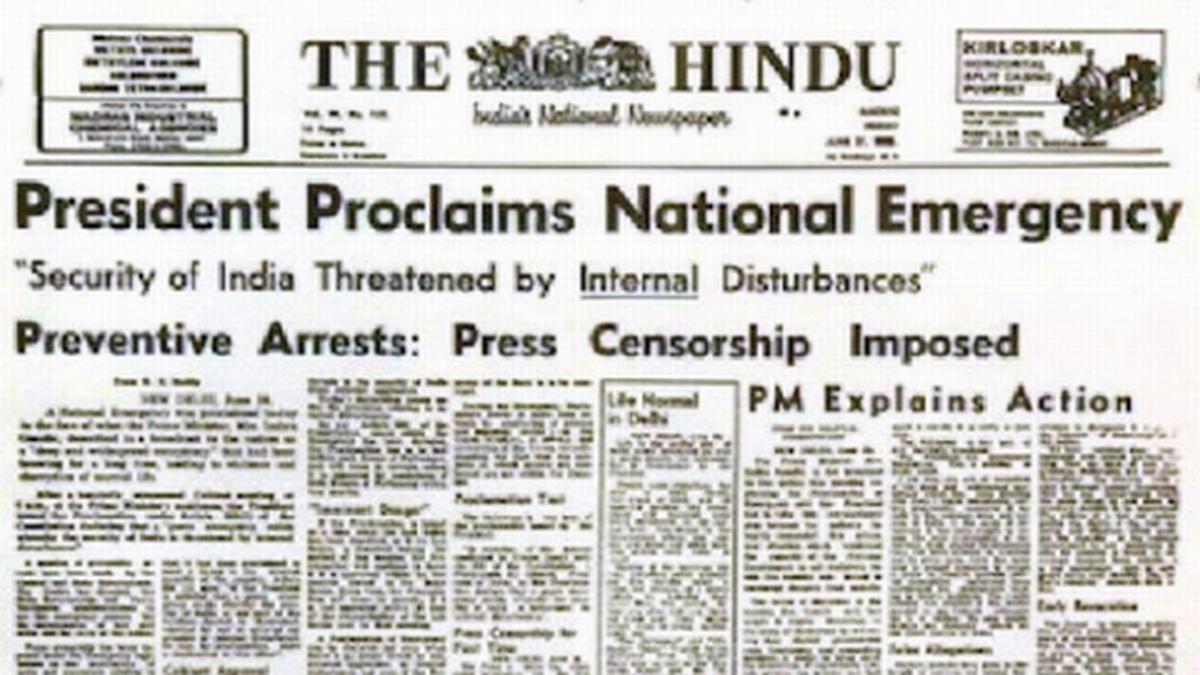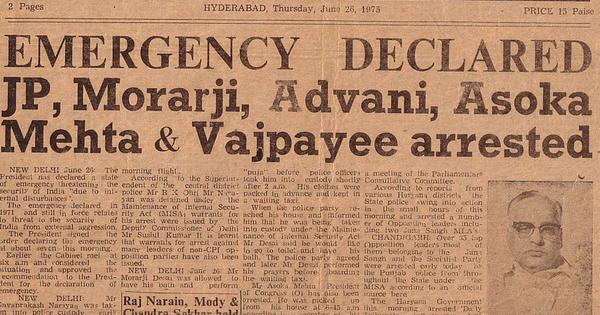
In October 1978, John Oliver Perry, a Professor of English at Tufts University, US, issued an advertisement in the Times of India and Hindustan Times calling for submissions of protest poems written in response to the Emergency. Voices of Emergency: An All India Anthology of Protest Poetry of the 1975-1977 Emergency, comprising 280 poems in 15 languages, came out five years later. It was a stupendous task that took the author four years, during which, “with a minimum of private American funding, I, … knowing no indigenous Indian languages, secured the cooperation of hundreds of Indian editors, translators, poets, academics, and social activists in pursuing this intercultural project.”The Emergency was officially declared by President Fakhruddin Ali Ahmed, on the advice of Prime Minister Indira Gandhi, under Article 352 of the Constitution, on June 25, 1975. It ended on March 21, 1977.Reacting against the EmergencyPerry provides his readers with a list of what he calls “the outstanding facts about the Emergency.” These include arresting thousands of social and political activists; press censorship; the banning of strikes, demonstrations and meetings that supposedly posed a threat to the internal security of the nation; and Constitutional amendments that curtailed the freedom of the judiciary, bureaucracy, trade unions, academia, and indeed, the general public.Perry defines protest poems as “the expression in verse of any feelings…reacting against Emergency measures, and the general social, political and personal atmosphere that those measures generated.” Although the range of attitudes and feelings expressed in the poems is wide, what they express is hostility towards an “oppressive regime,” that led to the downfall of the government in 1977. At the same time, Perry admits that the impact of protest poetry is “minuscule.” He calls it “a tiny drop in the river conveying a community’s feelings into history,” pointing out that protest poetry merely mirrors people’s feelings, but does not affect public events directly or indirectly.The criteria for collecting poems were narrowed down by first seeking all Emergency literature that was not merely political, social or journalistic reporting for purposes of propaganda. What Perry looked for was “written expressions of how people actually experienced the Emergency.” To achieve this, he felt it was best to let the poets themselves choose what affected them the most during the nineteen months of the Emergency. Inevitably, this meant shifting the focus from form to content. In Perry’s words, “In choosing poems…protest was clearly of more value than relatively slight differences in aesthetic impact.”Perry calls the submissions he received “underground poetry.” They sometimes made use of allegory, fable, symbolism, allusion and secret codes, all “stratagems” to evade censorship and jail. The underlying belief was that politics and poetry were intimately intertwined.Whom did Perry visualise as the audience for his anthology? This was “India’s small middle-class reading public” that comprised no more than 20% of the population. Yet, they were “extremely influential” in forming opinions.Coming to the poems themselves, Perry sounds apologetic when he confesses that some of them “lack formal or verbal inventiveness, philosophical or symbolic suggestiveness, or even moral sophistication, and political and social insight.” Some of the poets were first-time poets who had never attempted verse before.The most specific Emergency issue, according to Perry, was the invoking of special Constitutional power by Gandhi. Thus, several poems make personal attacks on her. In “The Lady,” Telugu poet Ismail says“The lady we are toldWhen a child, in fervour she burnt to ashes her darling fancy dollFor the sake of the motherland!No wonder –Now grown up, willingly she is burning to ashes the motherlandFor the sake of her darling living doll.”In “Madam, How’re You?” Kannada poet Ramjan A Darga addresses Gandhi as if he knows her personally:“Hello, madam, how are you? How’s your dog that feeds on biscuits? Is your car ‘in condition’? And did you move into your own bungalow? Pardon me, please don’t think I’m bombarding you with questions. No, it’s only a poem of mine That has nothing to do with politics.”Gandhi is also attacked for protecting her son Sanjay from prosecution in the Maruti scam, which some believe was a major motive for declaring the Emergency. In “Gall Nut,” K Ayyappa Paniker writes“Bite me not and beat me not, O hurt me not so hard. I’ll gulp this gall nut of yours, O mummy, I’ll gulp this gall nut of yours.”Many poems are triggered by the establishment’s abuse of authority and political chicanery. In “The Caravan,” Hindi poet Jai Narain writes“At the same instant, As our caravan was passing through, with sweet songs of a rosy future on our lips, They suddenly attacked us, And blindfolding our eyes, They changed the direction of the caravan To some unknown destination.”In “The Perfect Murder,” again in Hindi, Kunwar Narayan tells us“I went to the hospital, But it was not really a hospital I met the doctor Who was not really a doctor, Who said something to the nurse Only she was not really a nurse And then both of them disappeared within.”There are poems like “Who is the Enemy” by K Satchidanandan that blame not the powers that be but the common man for acquiescing in his own exploitation:“The dumb acquiescence of those Who created everything and Have nothing left – That is your enemy.You who stand and see this And don’t know what to do – You are your enemy.”Perry attributes this passivity to the “Hindu traditions of fatalistic acceptance” that lead to a camouflaging of feelings of protest, apathy, and slave mentality.Perry goes to the extent of saying that Dalit and Muslim poets are rarely “anti-Emergency,” for, Emergency or no Emergency, they have not experienced social change for generations. Chandrakant Pandhrinath Isai’s poem “Then and Now” proves this:“The same hut Where great-grandfather was born… The same hut Where grandfather was born… Where father was born… Where son… Grandson…The same hut The same gutter The same stink The same darkness…The slogan is the same Once we were slaves Now we are free!”Thus, in “Siddhartha Nagar,” Daya Pawar expresses faith not in Hindu-dominated political protest, but, like Ambedkar, turns instead to the Buddha for succour:“O! Siddhartha Be with us If we rise in unison in a violent rebellion With your understanding and compassion. Please, be with us.”Urdu poet Hassan Naeem’s “In Our Ranks” is only vaguely about the Emergency:“Not with the moon only, with the burning sun my madness makes friends; Though it is true, O Hassan Naeem, right now the sun is merciless.”Likewise, Jabir Husain’s Hindi poem “The Death of an Age” appears to be more anti-Hindu than anti-Emergency:“It is a quiet scene littered with dead bodies, Only some victorious heads wearing the castemark And some chests adorned with medallions Sneak in and out using the back doors.”Together we standThere are poems about life in jail, many of them by communists and Naxalite sympathisers who write in Bengali. In “The Light of a New Day,” Tridiv Ghosh Ray says“I was not afraid of the four walls in my prison for I was counting the hours until the dawn of the light of a new day.”In “Elegy for a Comrade,” Kalpana Bose writes“In the lone womb of darkness a fierce longing for freedom makes you claw in shackled fury mutilating the prison walls.”And in “Sweeter than Half an Apple,” Samir Roy laments“Out of prison, no friends, no one beside you, you’ve slept alone for five long years in your grave.”However, there is also a jail poem by Telugu poet Varavara Rao, who would many years later be re-arrested in the Elgar Parishad case, and would afterwards be released on permanent bail for health reasons:“This is prison – The voice muffled movements confined – But the hand still scribbles Nor does the torment of the heart cease.”In the English poem “Kilvenmani,” Navroz Mody writes:“But those of whom we speak now begin to ask – “Can this raga be sung no more by which all things are made bitter?” young minstrels, it is said, have risen in this land who with shattered tongues whisper this prophecy – that there is no end to such despair save the bloody undoing of its roots.”This poem, incidentally, sounds like the mantra of the Cockroach Janata Party.Voices of Emergency includes the work of politician-poets, of whom the two most prominent are Jayaprakash Narayan and Atal Bihari Vajpayee. However, in Perry’s view, their poems do not “exhibit more than an amateur’s skill.” In “Failures,” Jayaprakash Narayan, popularly known as JP, says“Ask history if I couldn’t have become The Prime Minister years ago! But for one like me committed To revolution, there had to be Some other ways, some other aims – Of sacrifice, service, creation, Struggle, total revolution.”In “Determination,” Atal Bihari Vajpayee, who would one day become Prime Minister, writes:“Darkness challenges us to the last; Daylight is going. If this torch falls It will break, but never bend.As the mythical Angad once more Plants his foot, Here we take our stand. The powers of darkness challenge us And we may break, but never bend.”Indian-English poets are generally believed to be insular, untouched and unaffected by the political goings-on in the country. Yet, several canonical Indian-English poets have written on the Emergency. They include Nissim Ezekiel, Jayanta Mahapatra, Kamala Das, Dilip Chitre, Eunice de Souza, Pritish Nandy, Melanie Silgardo and EV Ramakrishnan.In “Toast,” Nissim Ezekiel says, in a spirit of resignation:“To those in power beyond the law, and those in prison with no recourse to it, I drink a glass of this or that – it tastes like poisoned mud.”Kamala Das is apprehensive that“Tomorrow they may bind me with chains stronger than Those of my cowardice, rape me with bayonets and Hang me for my doubts.”One of the most moving poems in the anthology is EV Ramakrishnan’s “Where Were You When.” It shows how the Emergency emasculated poets beyond repair:“I had once asked my father, ‘Where were you when they fought for freedom?’ He said, ‘I did not particularly hate the British. Then there was your mother sick and dying. And I had my work in the temple that kept me busy.’ He was the local priest for fifty years. I might as well keep the answer ready for my son’s ‘Where were you when…’ ‘It felt good when the price of edible oils came down because I had too many mouths to feed. Then, you see, I had my work in the college that kept me busy.’ And he will know I was one of those who was simply frightened.Voices of Emergency, though shoddily brought out, is that rare collector’s item that needs to be reissued. It is amazing that a mere 19 months of the Emergency motivated so many poets to write against it in protest. If an official Emergency were to be declared in India today, can we expect a similar reaction? Or have our writers and poets grown so cynical and such victims of cancel culture that they would prefer not to open their mouths and speak out?R Raj Rao has written more than 25 books. He is the former head of the English department at Savitribai Phule Pune University, previously known as the University of Pune.
‘Voices of Emergency’: How an anthology of protest poetry spoke out against constitutional injustice
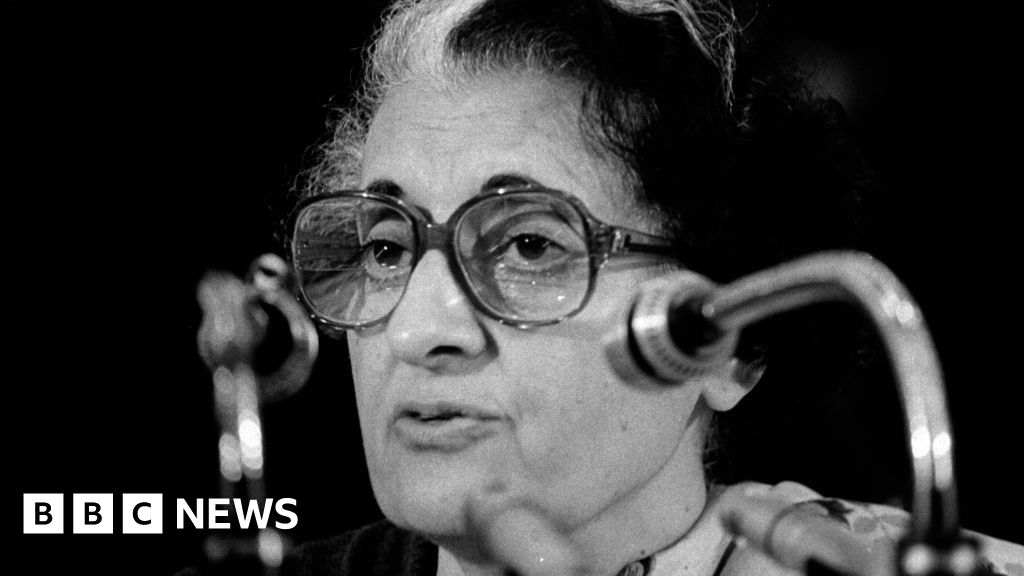
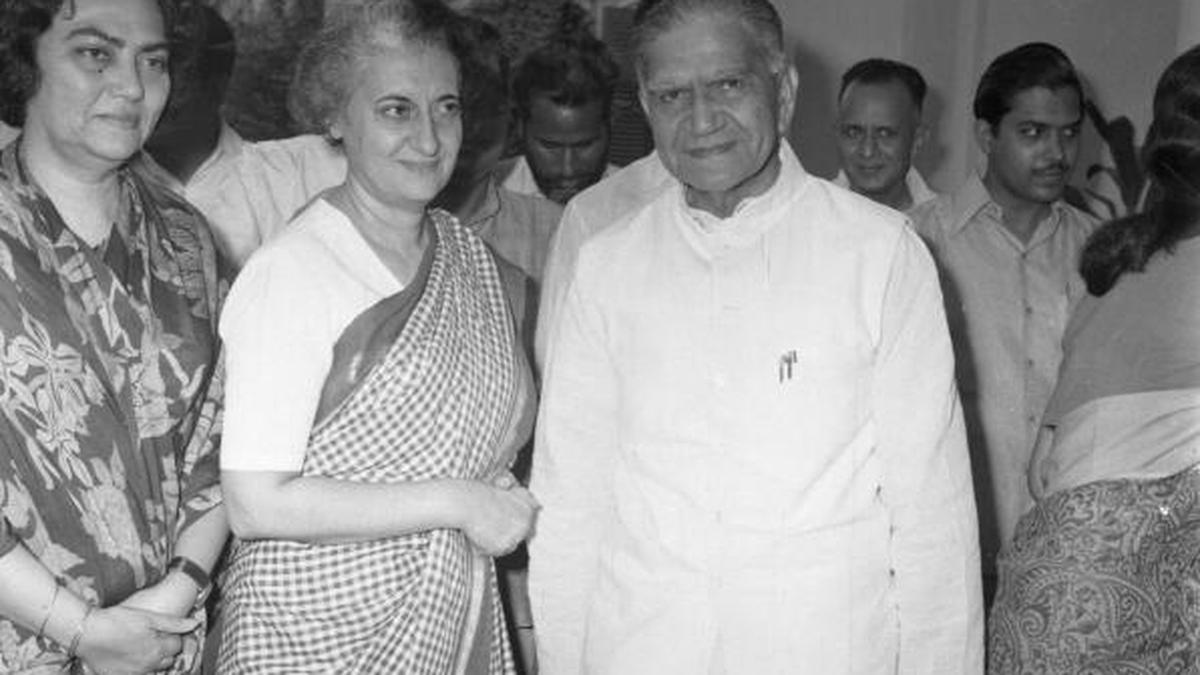
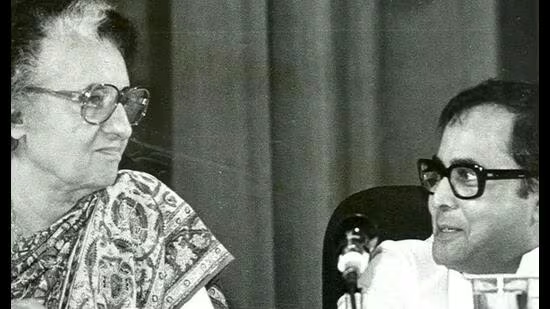
Prime Minister Indira Gandhi declared Emergency on June 25, 1975. This anthology comprises 280 poems in 15 languages against it.
1,858 words~8 min read