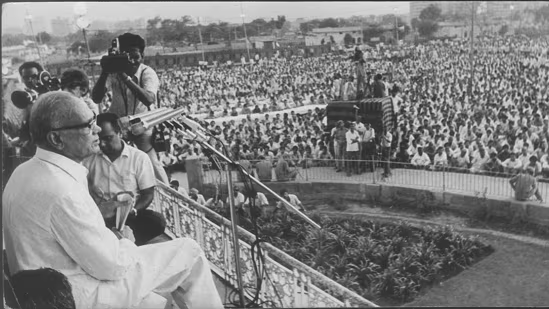
As we approach the 51st anniversary of the Proclamation of Emergency on 25th June, we must remember that, unlike China, the Indian state did not need an armed battalion and tanks to trample the basic liberties of its people; it only needed a signature from the President to declare an “emergency” on grounds as vague as “internal disturbance” under Article 352. Within hours, several prominent opposition leaders were in jail, newspapers had their electricity supply cut, and the largest democracy in the world learned how, in a matter of hours, a constitutional government could be taken over by power-hungry leaders.
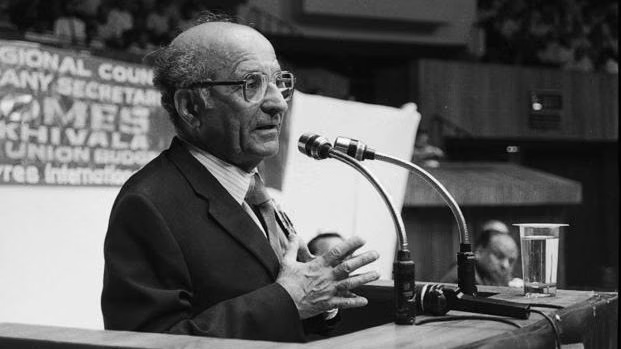
Nanabhoy “Nani” Ardeshir Palkhivala, who watched as the events unfolded, later made a claim that should unsettle everyone: Indians feared their own government more during those 21 months of the Emergency than at any point in time in the preceding two centuries of the British Raj. The turbulent period shaped how the Constitution operates in practice, and how its underlying ethos is understood and contested, while exposing the inherent dangers of concentrated and extraordinary state power.Conceived as safeguards for moments of crisis, the emergency provisions were borrowed from Germany’s Weimar Constitution, which Adolf Hitler abused in the interwar years. The emergency exposed the constitutional vulnerabilities of a newly formed republic. It was this assault on fundamental freedoms of the people and the unchecked expansion of state authority that alarmed Palkhivala. Among the foremost defenders of the constitutional spirit during the Emergency, he stood out not only as a brilliant lawyer but also as a public intellectual defending individual freedoms. As an erudite orator and scholar, he articulated the Constitution’s moral foundations and brought complex constitutional questions into public discourse.