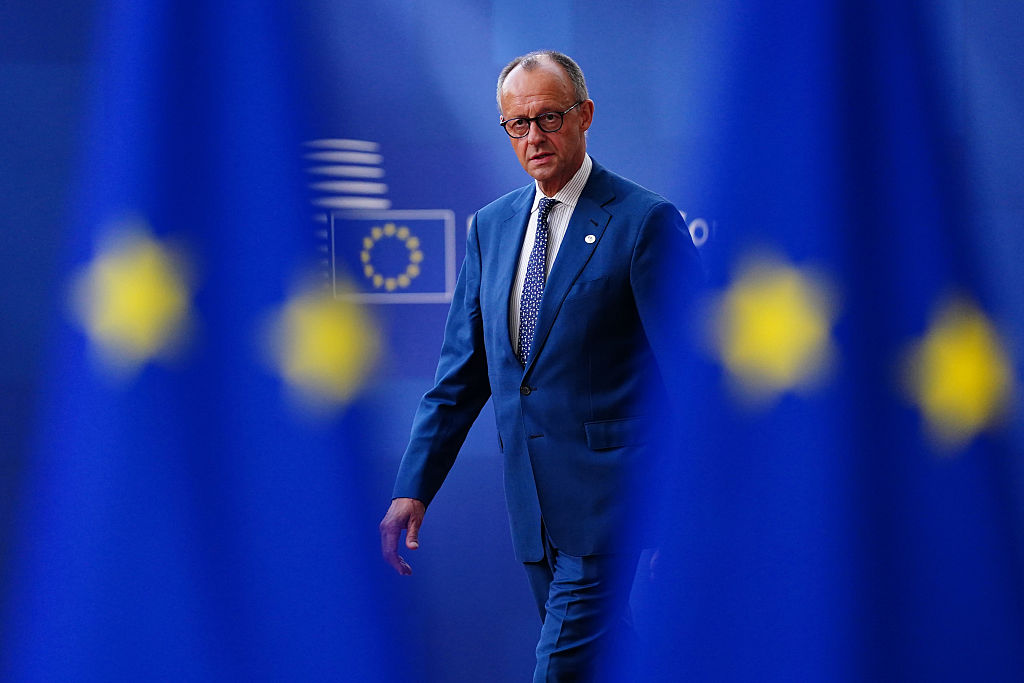
Economic and political power is ebbing away from Berlin. But where is it going?
Gottfried Leibniz argued that each individual substance mirrored the entire world. The great philosopher was proven wrong by modern science, but he may have been right about his native country’s economy: Germany’s current predicament, it seems, reflects Europe’s as a whole.
This is not just because, as the EU’s largest and most industrialised nation, Germany is especially vulnerable to the bloc’s present litany of ailments, including high energy prices, sweeping US tariffs, and fierce competition from Chinese manufacturers.
It is also because, much as the EU’s share of global output has declined in recent years, Germany’s proportion of the EU’s total GDP has fallen. Europe matters less in the world – but Germany also matters less within Europe.
According to the International Monetary Fund, the present 27 EU member states’ share of global output has halved since 1980, falling from 27.43% to just 13.99% in 2025. Germany’s decline has been especially precipitous, dropping from 6.98% to 2.94% over the same period – meaning that Berlin’s share of the EU’s output has fallen from more than a quarter to just over a fifth.