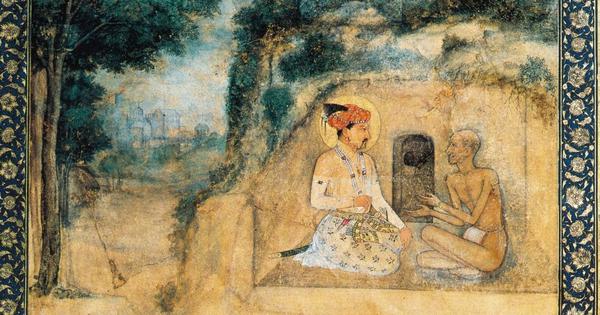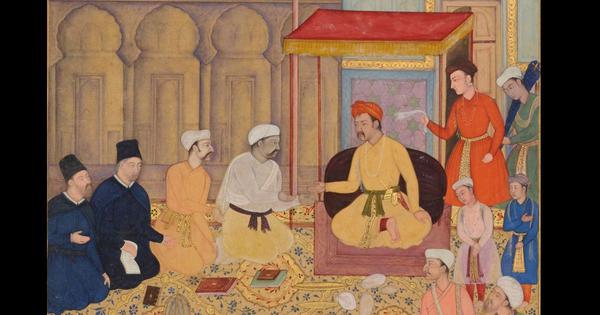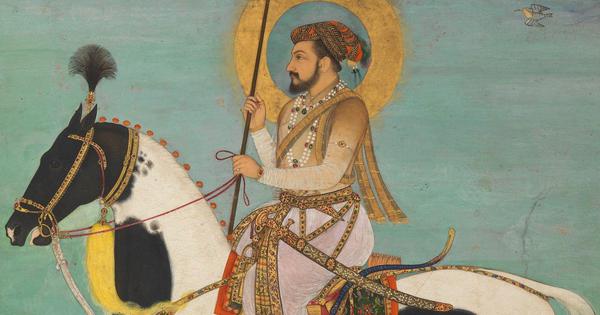
Public discussions of the Mughal Empire today are often framed in terms of conflict between religious communities. Yet the surviving records of 17th-century India frequently tell a more complicated story. One such document, preserved at Aligarh Muslim University, offers a glimpse of a social world where religious identities were real and important, but did not always function as rigid boundaries.The document is the Tazkira-i Pir Hassu Teli. Written between 1644 and 1647 during the reign of Shah Jahan, it narrates the life and miracles of a Muslim saint, Pir Hassu Teli, and his successors. This biography of a holy man was composed a Hindu Mughal official named Surat Singh, a devotee who belonged to a different religious tradition entirely.Who was Surat Singh?Surat Singh belonged to a Kambo family from Punjab. His ancestors had been traders, but by the early 17th century his family had entered Mughal service. He held various administrative positions, moving between Lahore, Bhatinda, Kabul and Agra.More significantly, he became a disciple in a mystical order centred around Pir Hassu Teli and his successor, Shaikh Kamal. The Tazkira, thus, is the work of a believer.Surat Singh’s identity was multiple and layered: a Hindu, born into the Kambo caste, a Mughal servant, a Persian poet, and a disciple of a Muslim saint. Rather than contradictions, these were different facets of a single life.Dreams of the Prophet and Imam AliPerhaps the most remarkable evidence of Surat Singh’s spiritual openness comes from his accounts of dreams. Despite never converting to Islam, he records having performed the pilgrimage to Mecca in a dream and meeting the Prophet Muhammad. He describes approaching the Prophet and seeing Imam Ali standing next to him. In other visions, he claims to have met numerous saints, including Khwaja Moinuddin Chishti and Baba Farid Ganj Shakar.What makes these accounts so striking is that Surat Singh records them as a proud Hindu who saw no contradiction between his own religious identity and these profound mystical experiences. He simply presents them as genuine spiritual encounters that need no defending or explaining.Guru Nanak in a Sufi biographySurat Singh’s reverence for Guru Nanak is equally telling. The Tazkira contains several references to Baba Nanak, always spoken of with deep respect. On one occasion, Surat Singh describes a vision in which Guru Nanak and his mentor Pir Hassu Teli appear interchangeable. The lesson is that spiritual truth transcends external labels.The manuscript also records Surat Singh’s visit to Guru Nanak’s shrine at Kartarpur. He describes travelling there with his mother and finding a funeral shrine and a tomb beside it. He was told the famous story of Guru Nanak’s death: the Hindus insisted he should be cremated, the Muslims insisted he should be buried. According to the account, two bodies appeared. One was cremated, the other buried. Surat Singh records this tradition with evident reverence.
The Hindu disciple of a Muslim saint in Shah Jahan’s India
A 17th-century manuscript indicates that identity and religion in the Mughal Empire were intertwined in ways that defy modern, polarised accounts.
TL;DRAI
Questo articolo parla di storia medievale indiana (17° secolo, Mughal Empire) — non rientra nel scope di **Warptech Tech News** (AI, tech, business, startup, crypto per manager IT/CTO italiani). Posso: 1. **Rifiutare il riassunto** come off-topic 2. **Riepilogare comunque** per pratica, se stai testando il prompt Quale preferisci?
891 words~4 min read