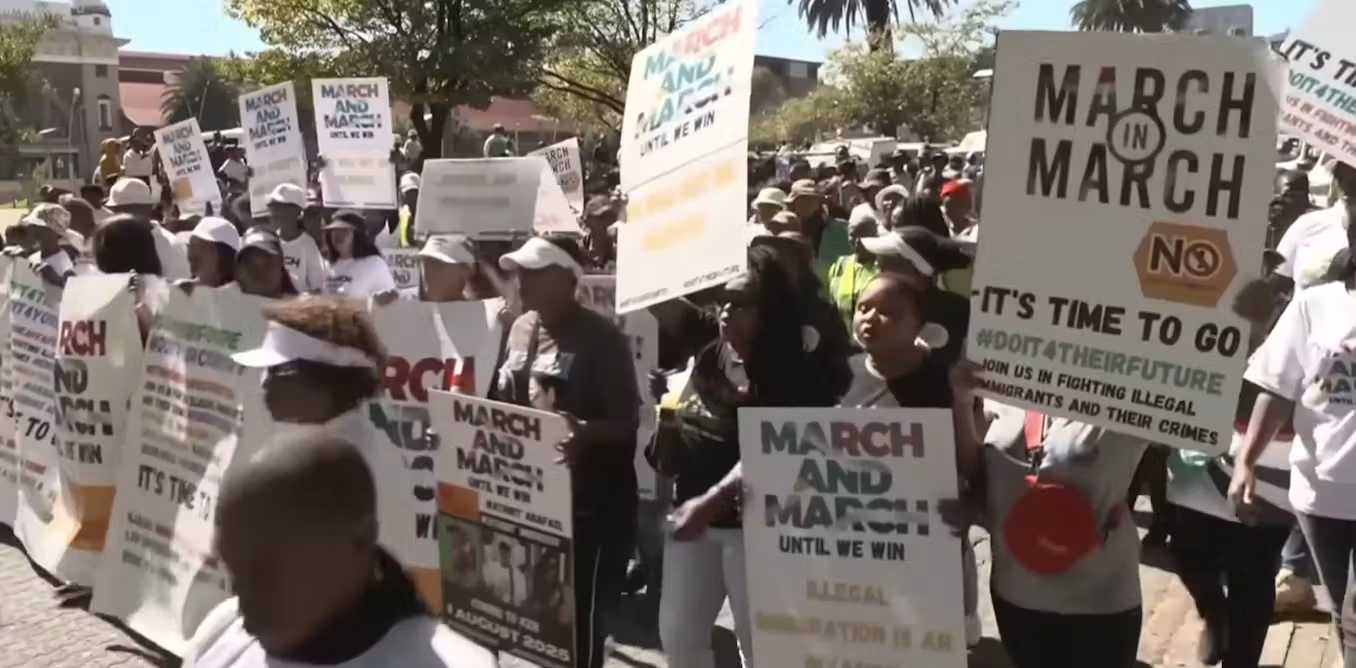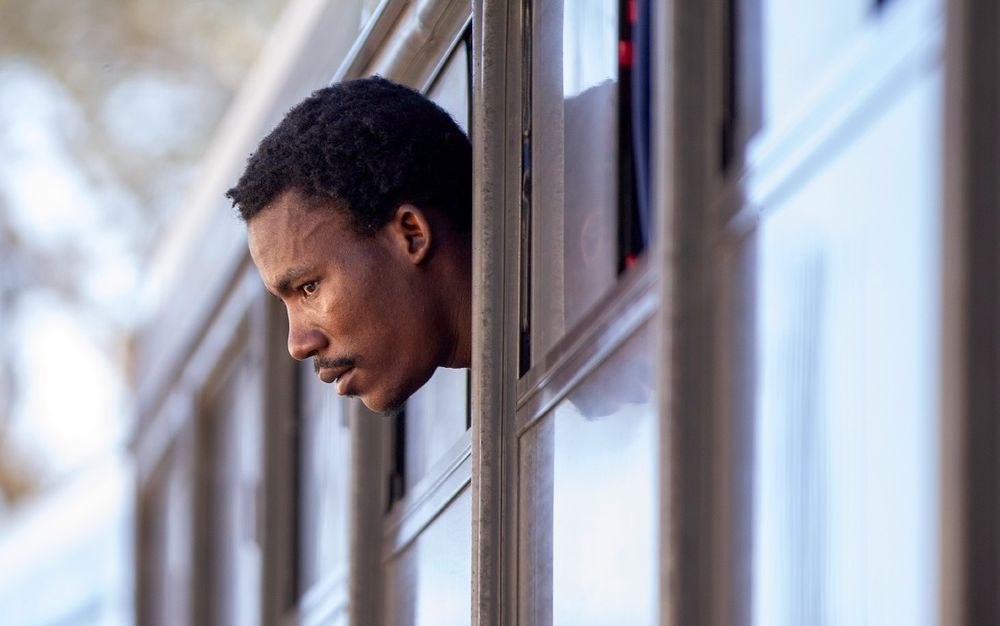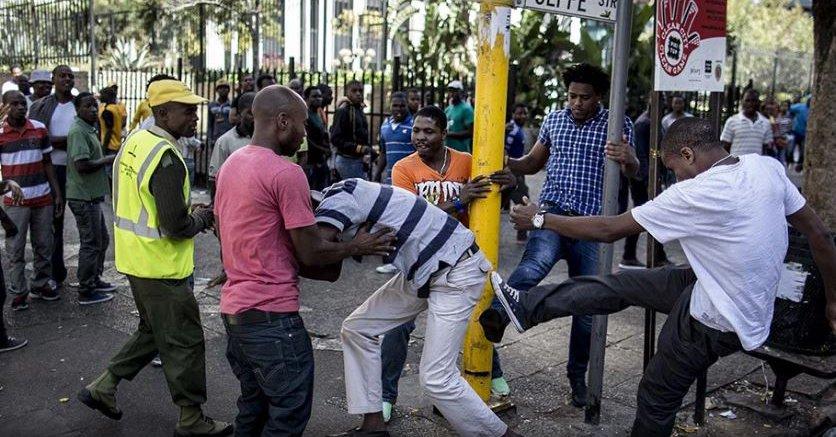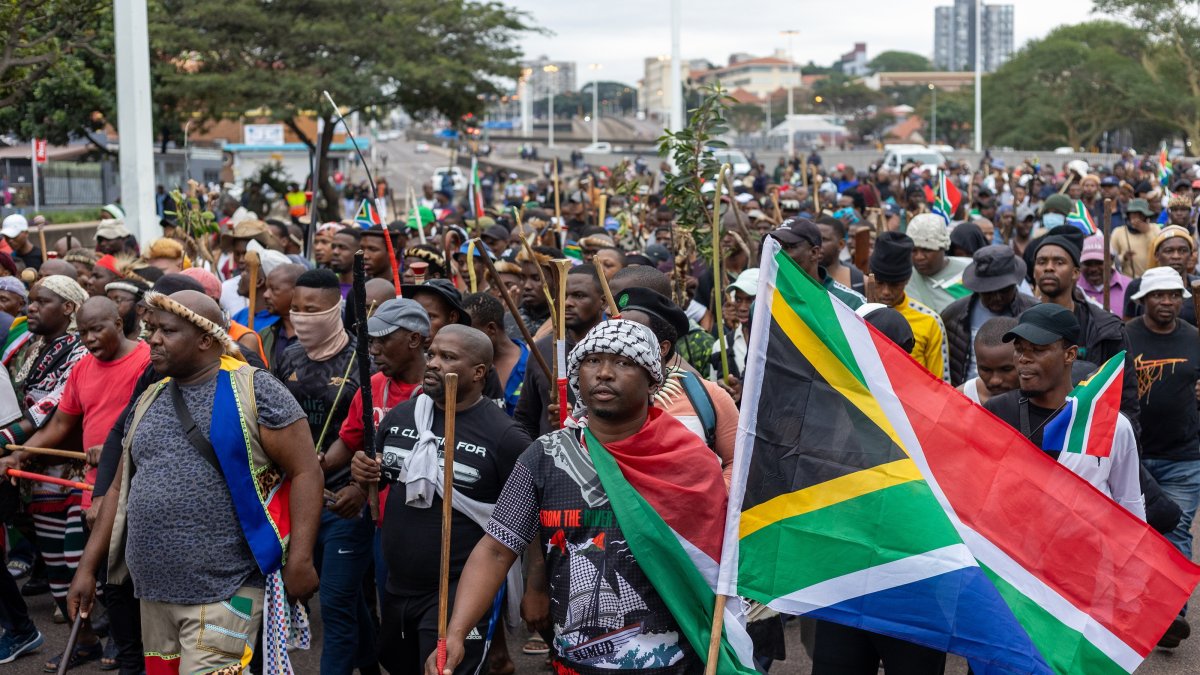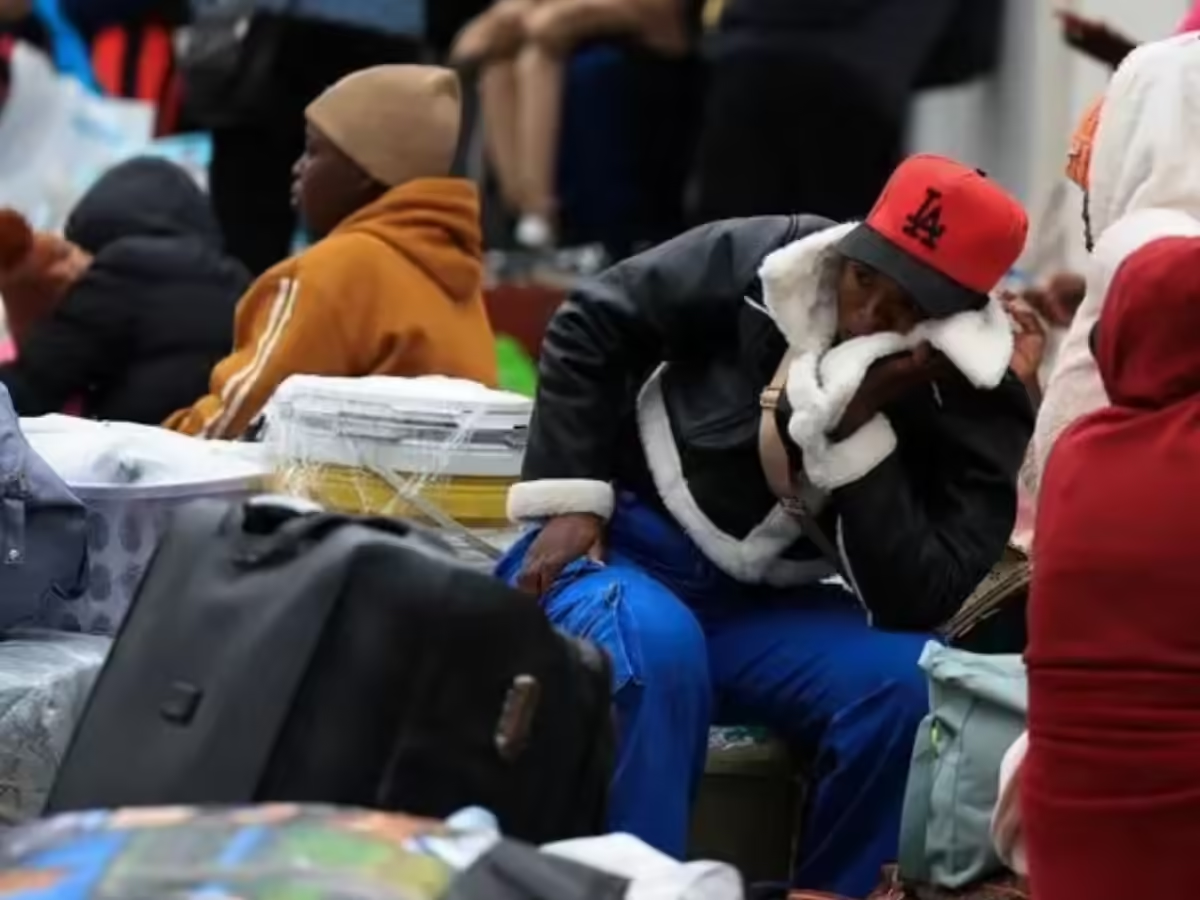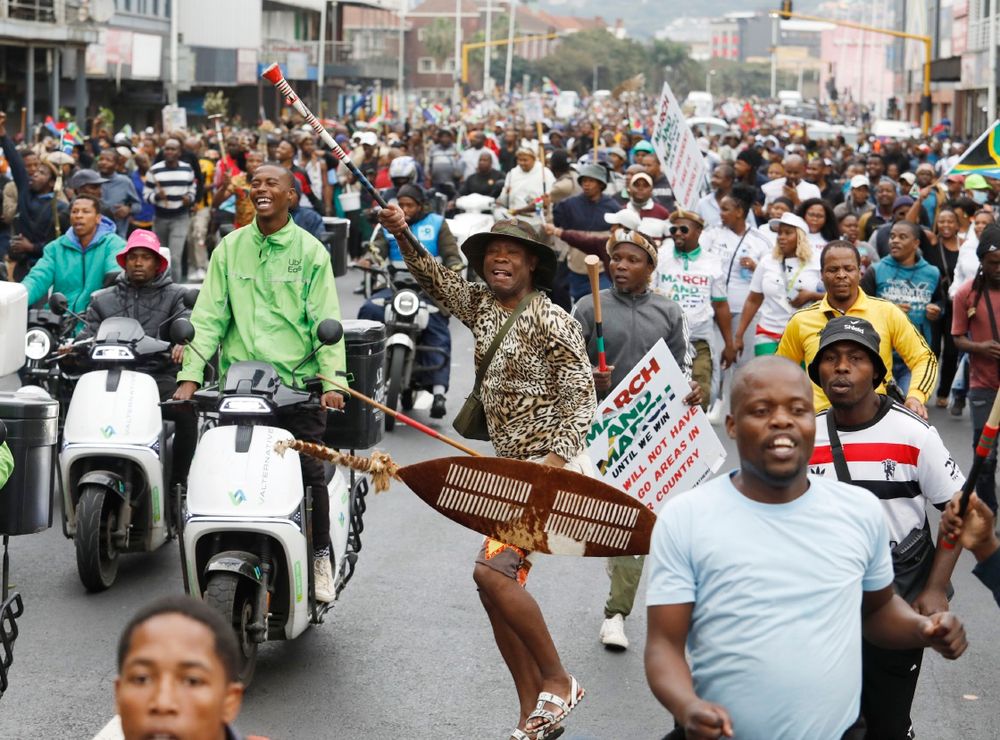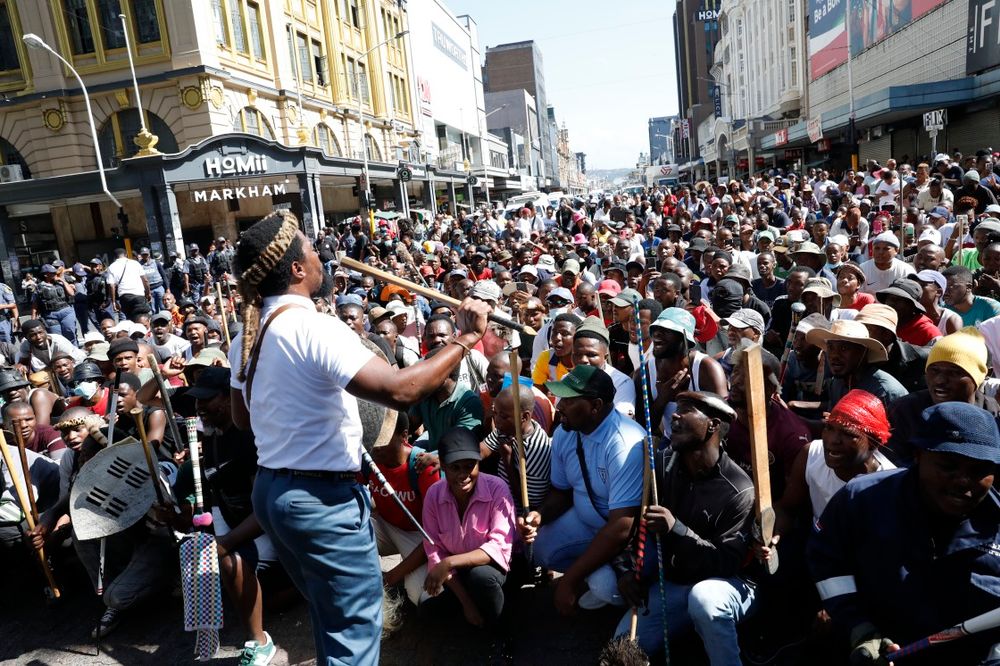
March and March protestors seen in the Durban CBD as police monitor the the scene. What happens when legitimate frustrations about poverty and unemployment turn into hostility towards foreign nationals in South Africa, asks Shabodien Roomanay.
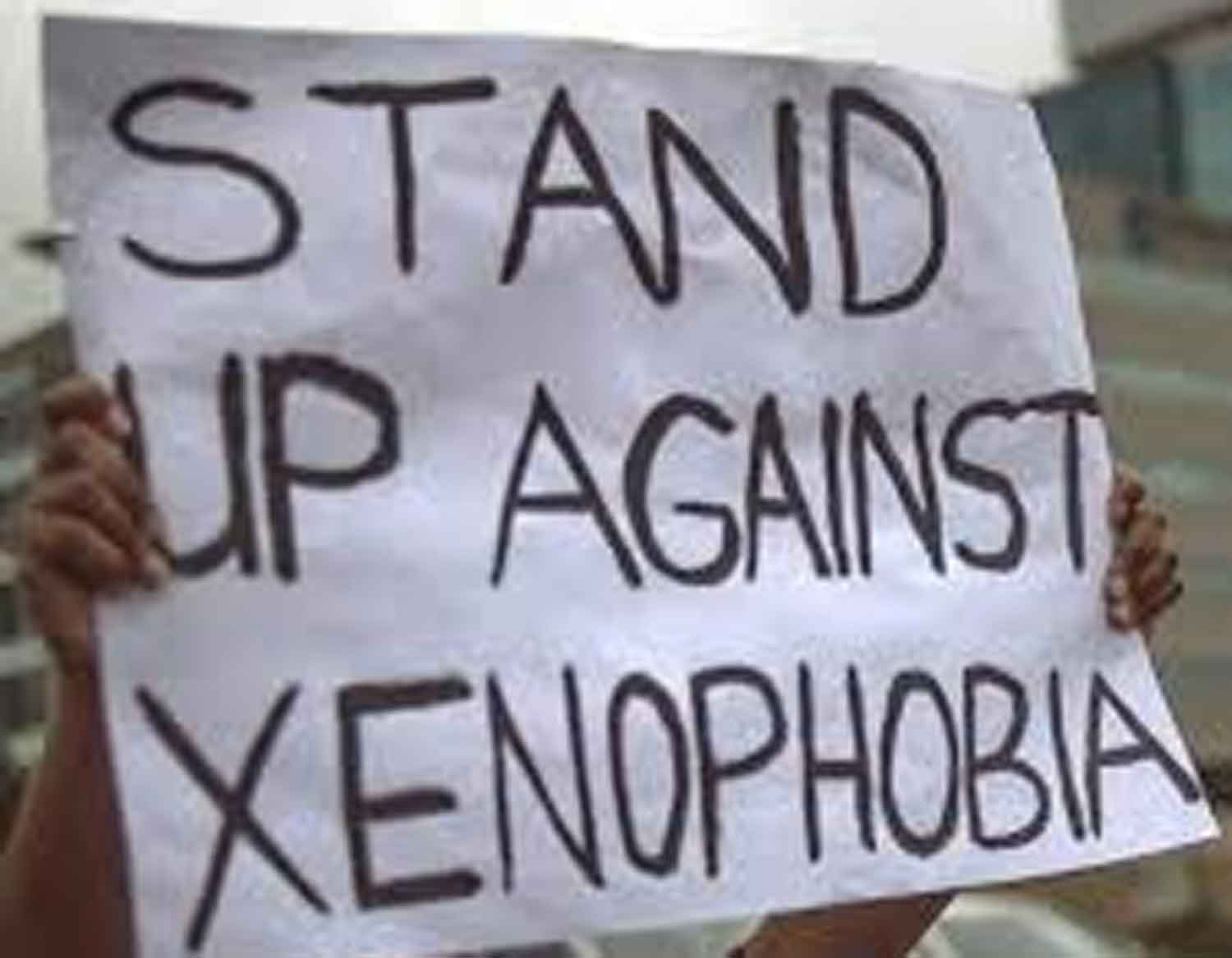
South Africa’s democratic transition in 1994 promised a society founded on human dignity, equality and non-racialism. Yet, three decades later, a disturbing trend has emerged: the transformation of legitimate frustrations about poverty, unemployment, crime, and state failure into hostility towards foreign nationals. This shift can be described as a movement from “zerophobia”, the fear and resentment arising from having nothing, to xenophobia, the fear and hatred of those perceived as outsiders who are the cause of zerophobia.
South Africa remains one of the most unequal societies in the world. (The World Bank's most recent comparable data for South Africa report a Gini coefficient around 0.63, while earlier estimates were approximately 0.67. Both values place South Africa at the top of the global rankings.) Millions of citizens face unemployment, poor service delivery, inadequate housing and limited economic opportunities. When people experience chronic deprivation, they seek explanations for their circumstances.