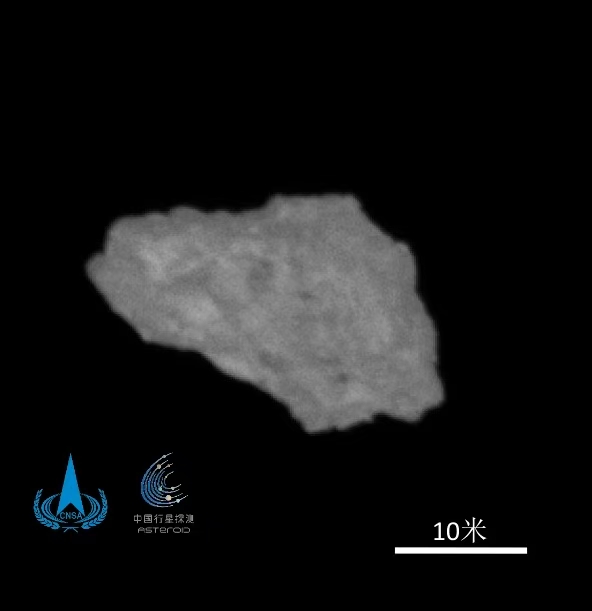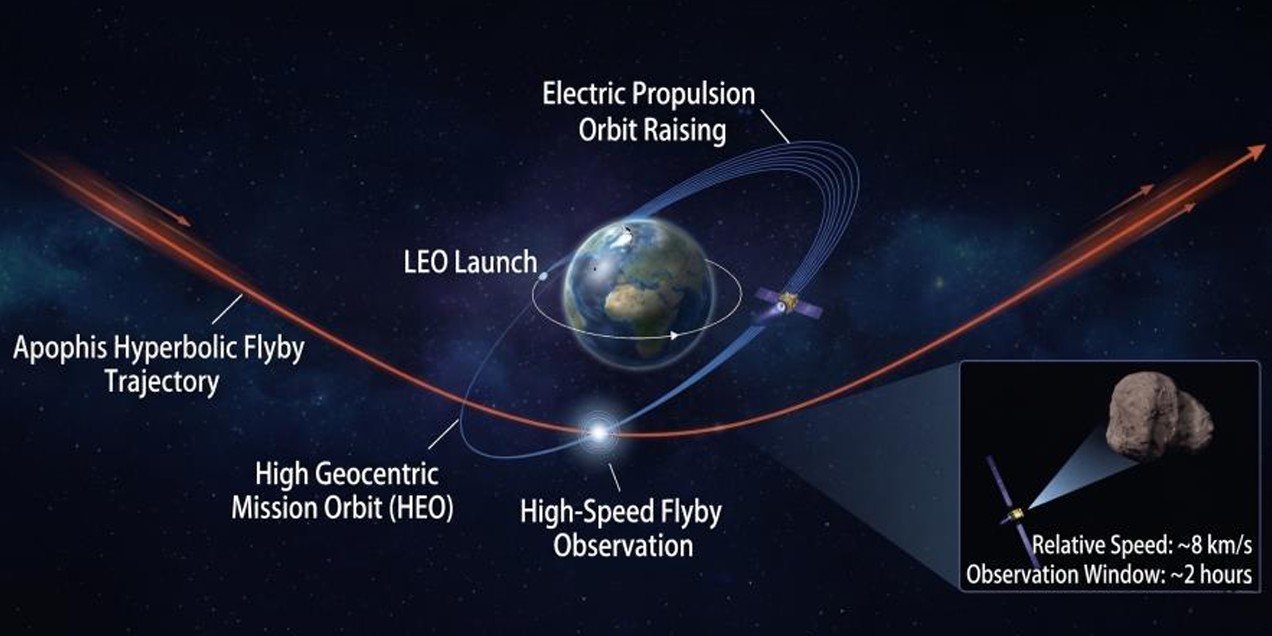
An overview of the START mission trajectory, showing the spacecraft's orbit-raising phase and high-speed flyby of Apophis at closest approach. Credit: START team/Tsinghua University
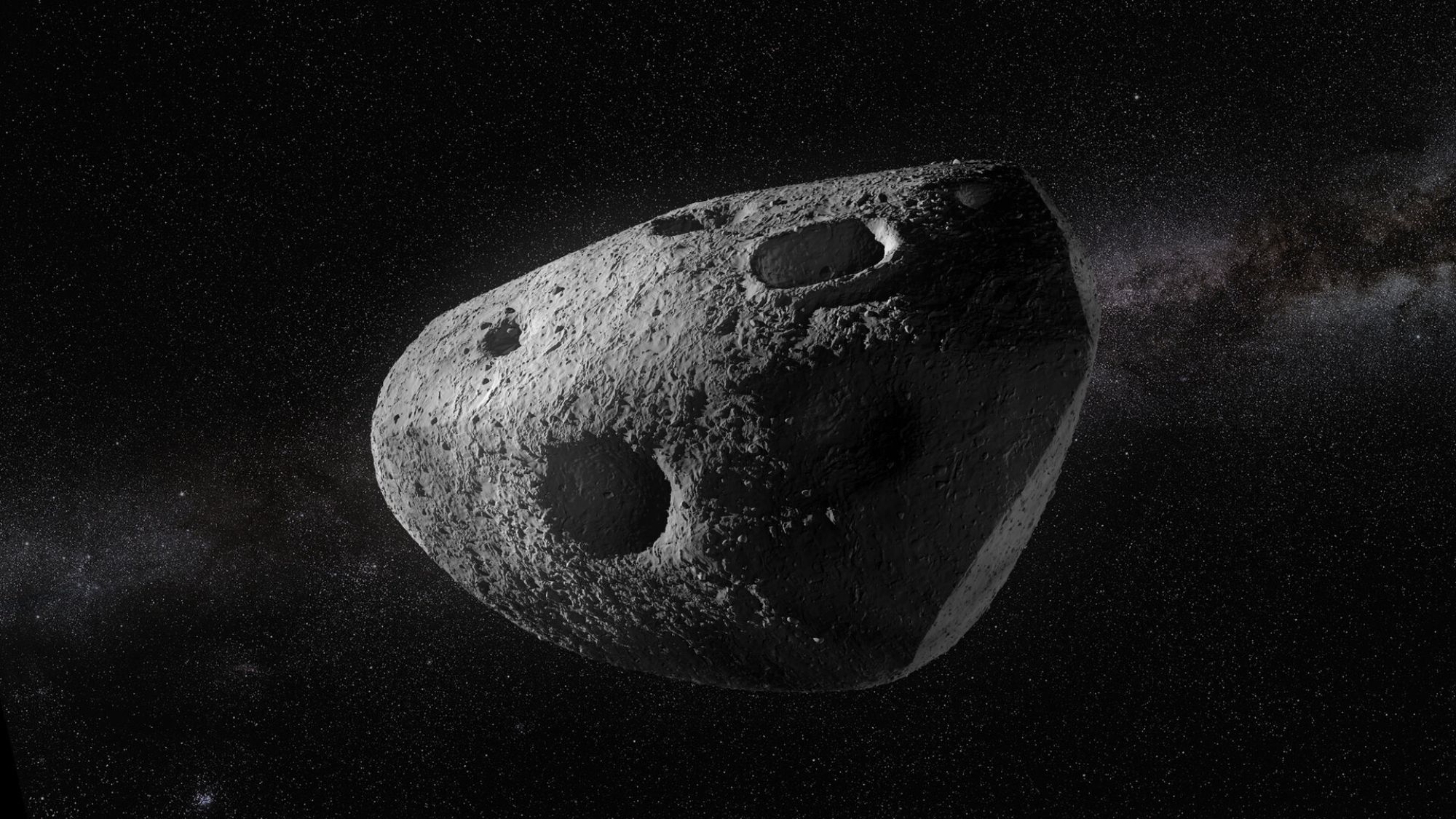
PADUA, Italy — A spacecraft developed by Tsinghua University is set to join international missions to study the asteroid Apophis during its close approach to Earth in 2029.
The Student-led Threatening Asteroid Reconnaissance of Tsinghua, or START, mission is a low-cost smallsat led by a team of more than 20 undergraduate students at Tsinghua University in Beijing. It aims to launch in early 2028 in preparation for when Apophis passes within 32,000 kilometers of Earth on April 13, 2029, bringing it closer to Earth than satellites in geostationary orbit.
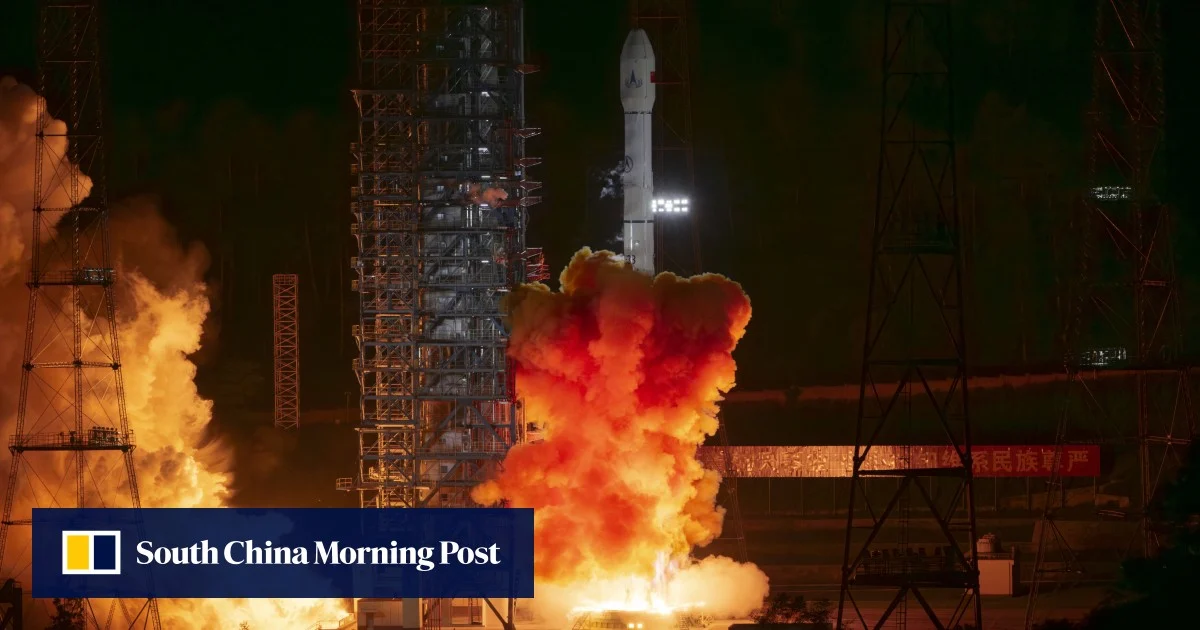
The 200-kilogram class spacecraft will launch on a Zhuque-3 rocket in early 2028 as a rideshare payload provided for free by Landspace, leaving START in a roughly 1,000-kilometer, 55 degrees inclined orbit. From there, the spacecraft will use its Xenon solar electric propulsion system to raise its orbit to 31,600 km over the course of 200 days to prepare for the arrival of Apophis.
“This is a ‘doorstep’ deep space target,” said Bin Cheng, the mission’s chief scientist, presenting remotely from Beijing at the Apophis T-3 workshop here. The approach removes the need for a multi-year interplanetary cruise, he said, cutting both cost and mission complexity.