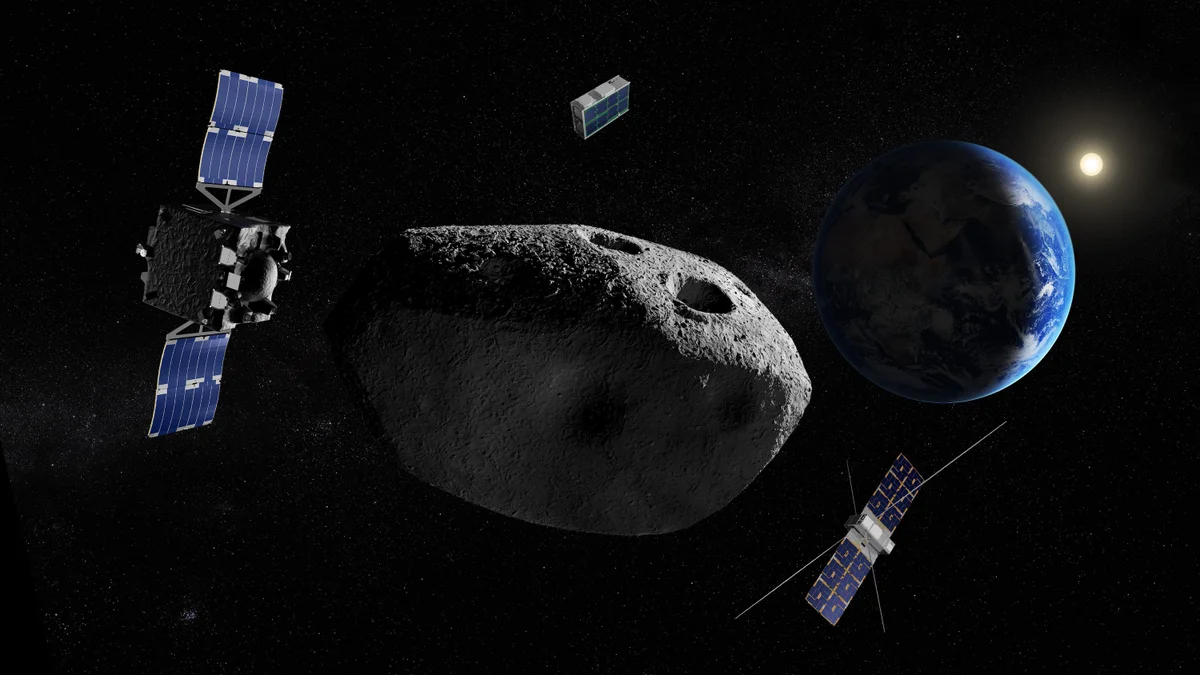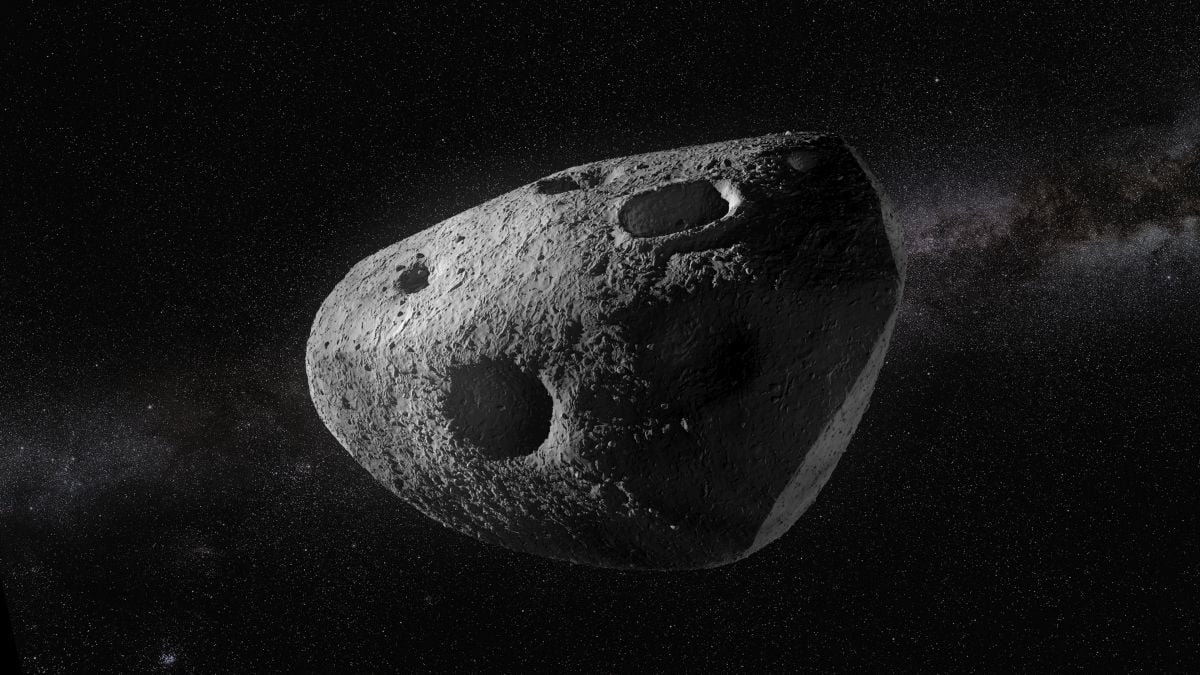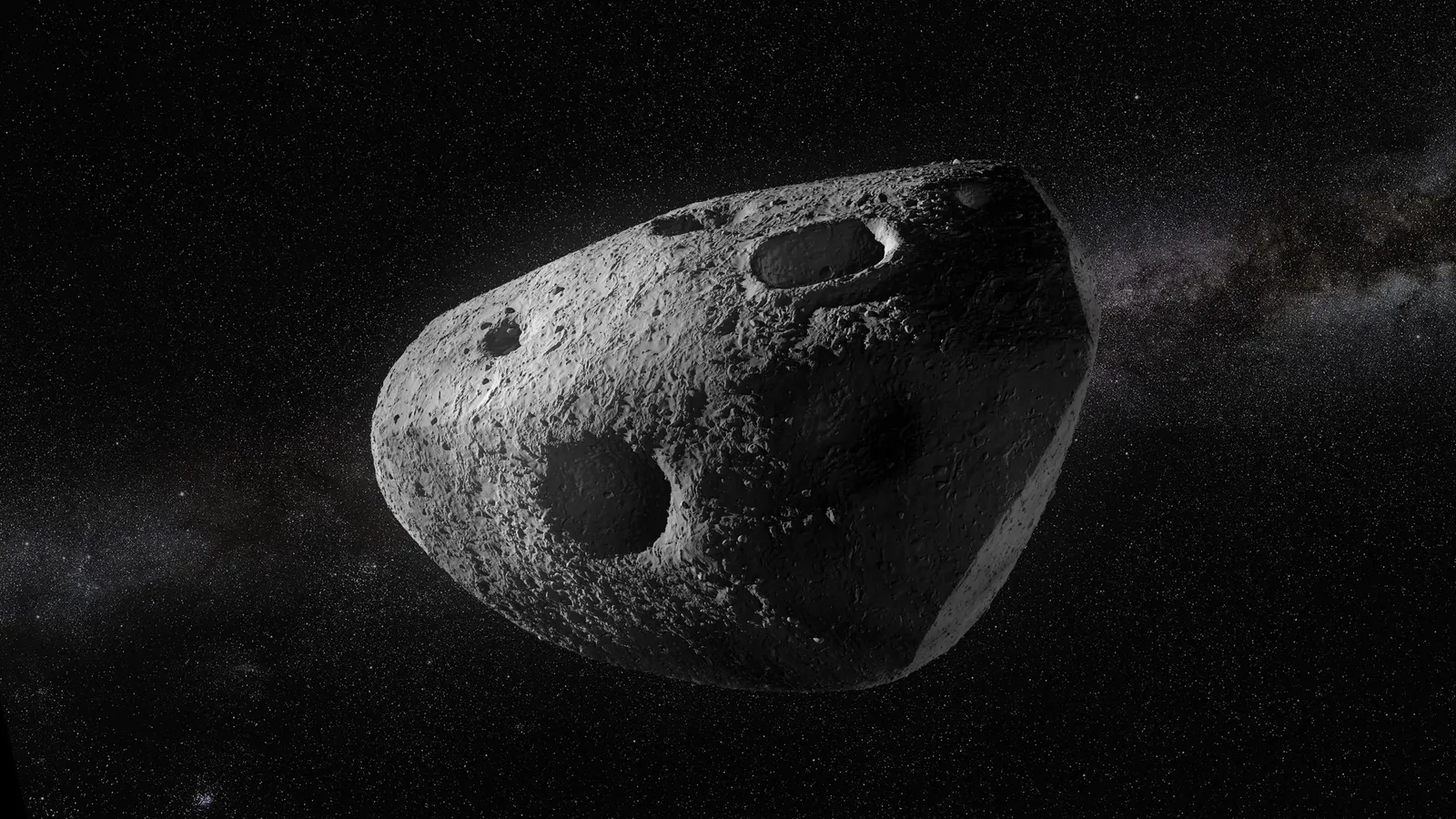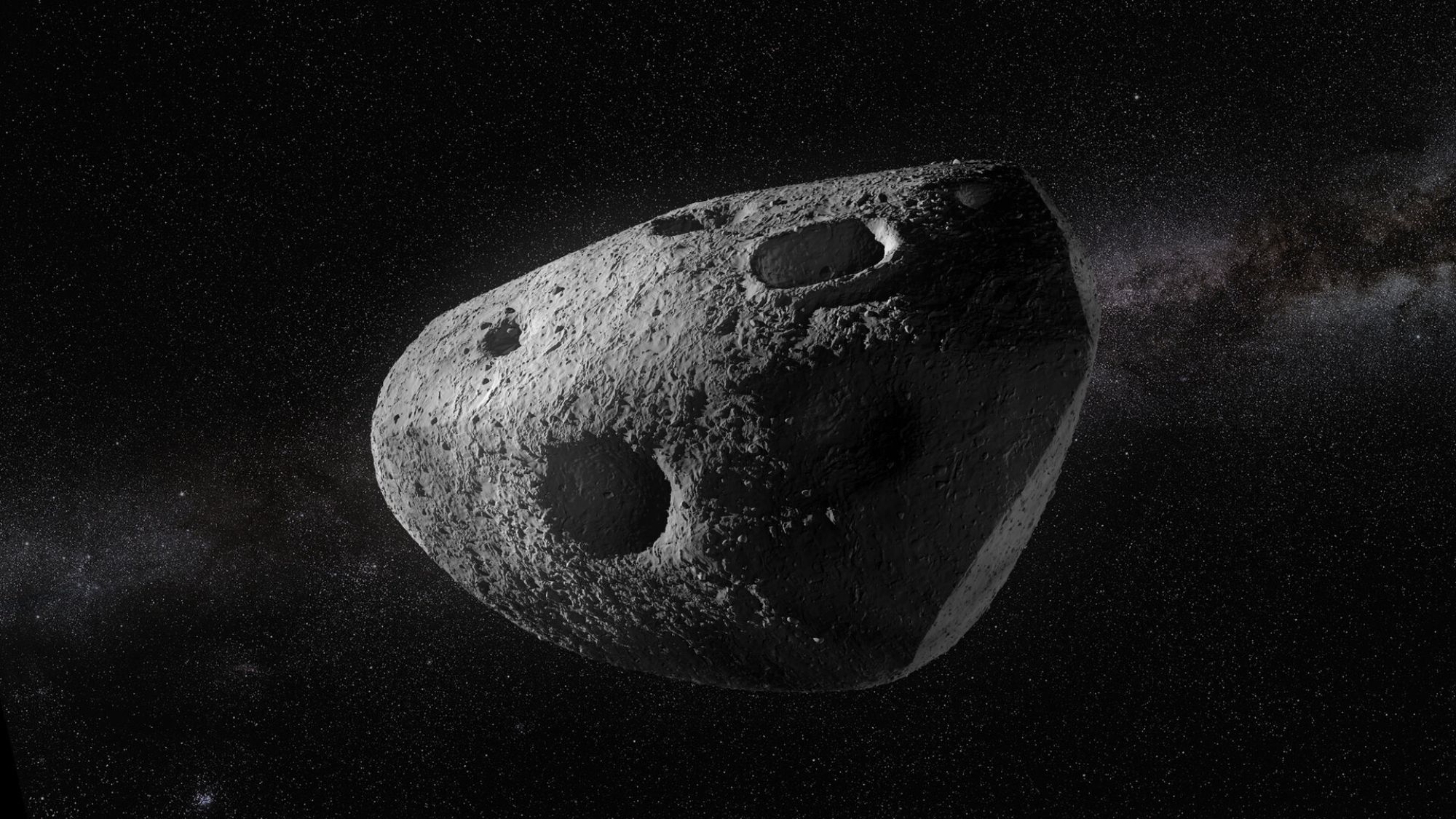
An artist's impression of the asteroid (99942) Apophis.
(Image credit: ESA-Science Office)
Three years before the skyscraper-size asteroid Apophis makes its very close (but safe) flyby of Earth, scientists have already begun charting exactly when and where billions of people can watch it sweep across the sky.Speaking at an "Apophis T-3 Years" workshop held earlier this month at the University of Padua in Italy, retired cartographer Michael Zeiler and astronomer Rick Fienberg shared detailed visibility maps charting the asteroid's passage across Earth's skies.According to their calculations, roughly 90% of the world's population — about 7.6 billion people — lives in regions where Apophis could, in principle, be seen with the naked eye on April 13, 2029. The actual viewing success will depend more on earthly considerations, however, including cloud cover and the extent of light pollution.Known formally as 99942 Apophis, the space rock will not resemble a blazing meteor tearing through the sky. Instead, scientists say it will appear as a point-like speck of light gliding steadily across, which, at its closest approach, will appear to move by about the apparent width of the full moon every minute."It will definitely be noticeable," Fienberg told Space.com. "It's going to be moving more slowly than a satellite — it will cross the sky in hours, rather than minutes, and it will just be a point."According to the new maps, the asteroid should remain visible to the naked eye for about seven hours, beginning over Australia at 11:00 a.m. EDT (15:00 UTC) and concluding over the North Atlantic at 6:00 p.m. EDT (22:00 UTC).At 4:35 p.m. EDT (20:35 UTC), Apophis is expected to reach its greatest apparent brightness as it passes over Cameroon, offering prime viewing to an estimated 3.9 billion people across Africa, Asia, eastern South America and parts of Europe.