This article is part of our “Chart of the Week” series.
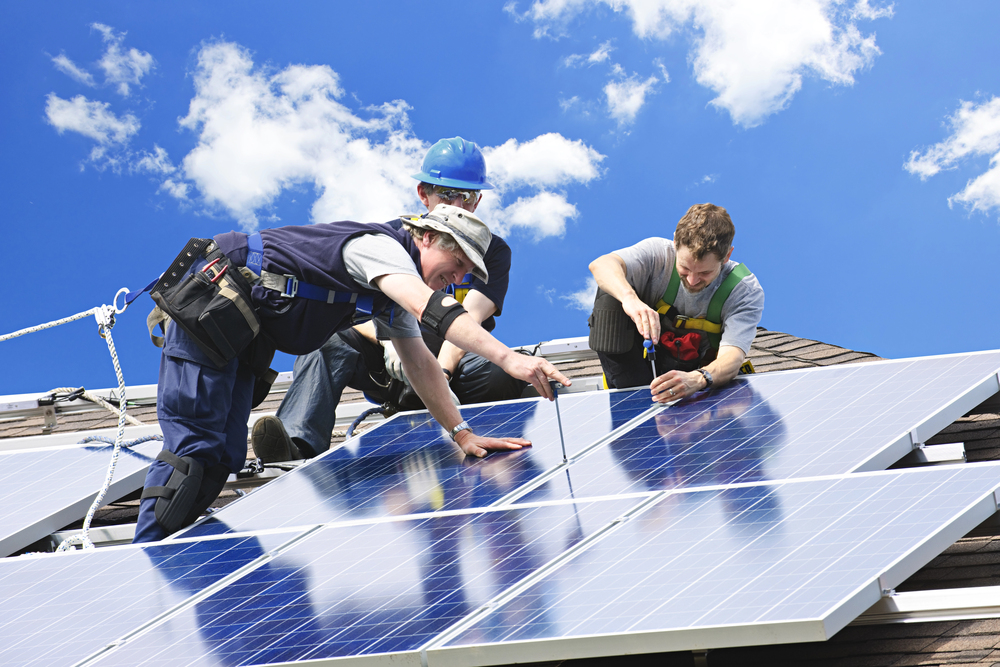
With solar panels getting cheaper each year and utility bills soaring, you might expect rooftop solar to be booming in the U.S. That’s not the case.
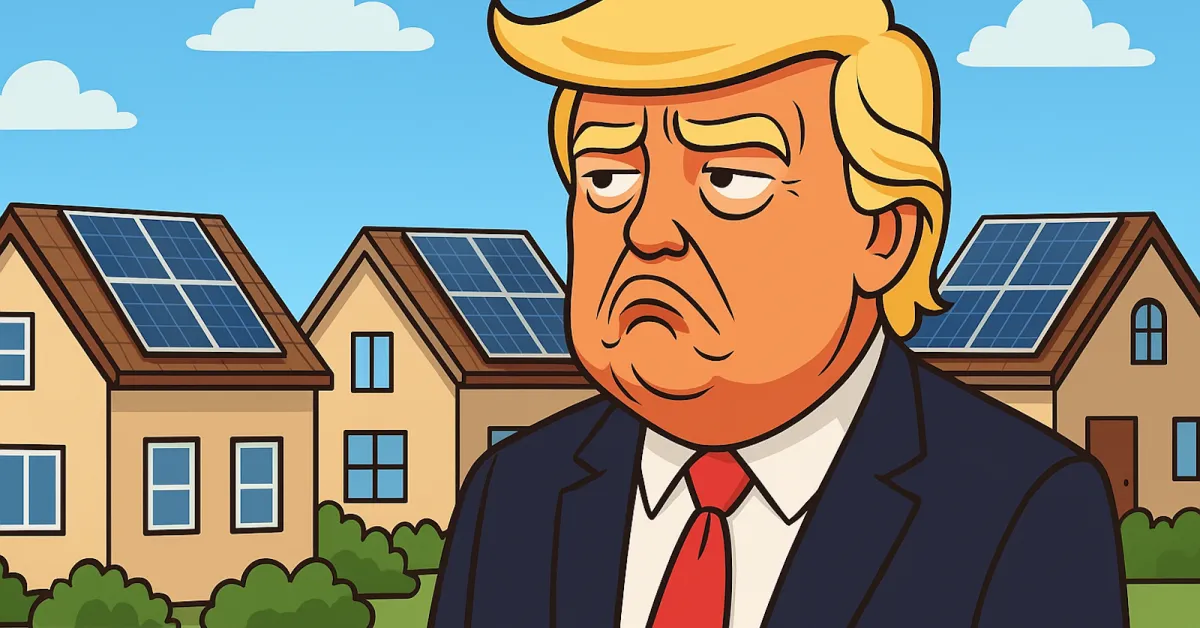
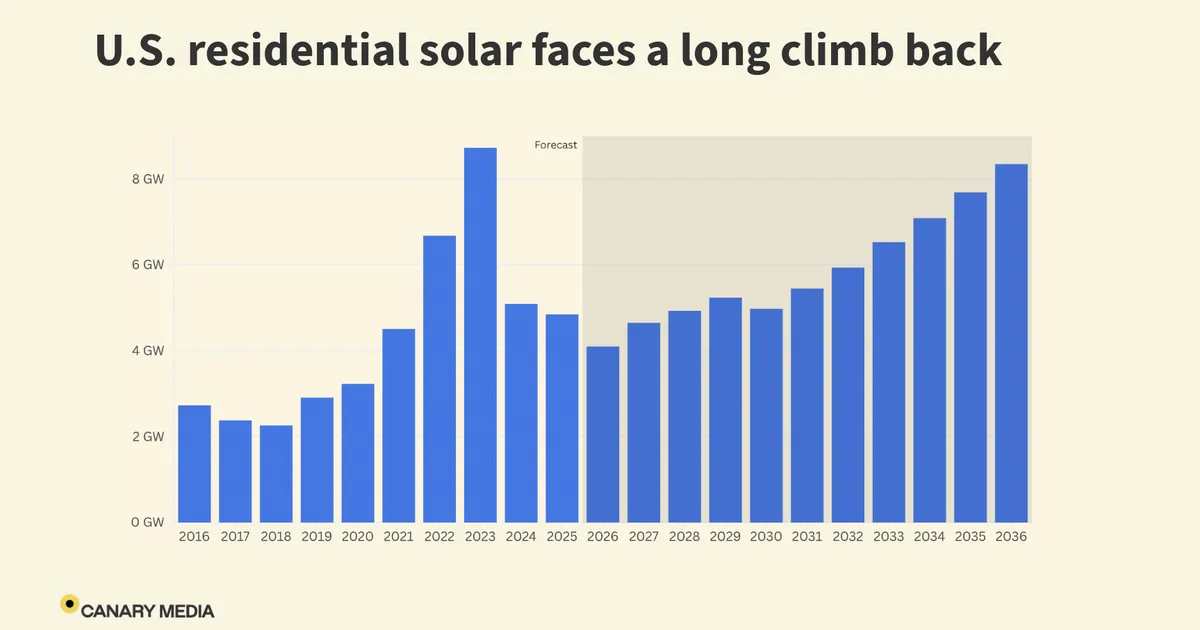
Instead, thanks in large part to the Trump administration’s revocation of federal tax incentives, residential rooftop solar installations in 2026 are expected to fall to their lowest level since 2020, per new BloombergNEF data.
Nearly one year ago, President Donald Trump signed the One Big Beautiful Bill Act into law and eliminated a 30% federal tax credit for rooftop solar systems. It was a major blow to an industry that was already struggling because of high interest rates, tariffs, and a seismic policy change in California, the state that has led the nation on rooftop solar adoption. The legislation also eliminated the 30% tax credit that applied to battery backup systems, which homeowners increasingly pair with photovoltaics.
Yanking away tax credits makes it costlier to install rooftop solar, so it’s no surprise the move dampened sales. People who buy rooftop solar systems are mainly looking for relief from high utility bills, and solar installations are already more expensive in the U.S. than in many other countries. Residential solar costs $2.58 per watt, on average, compared with around $1 per watt in Australia, a global leader in the space.