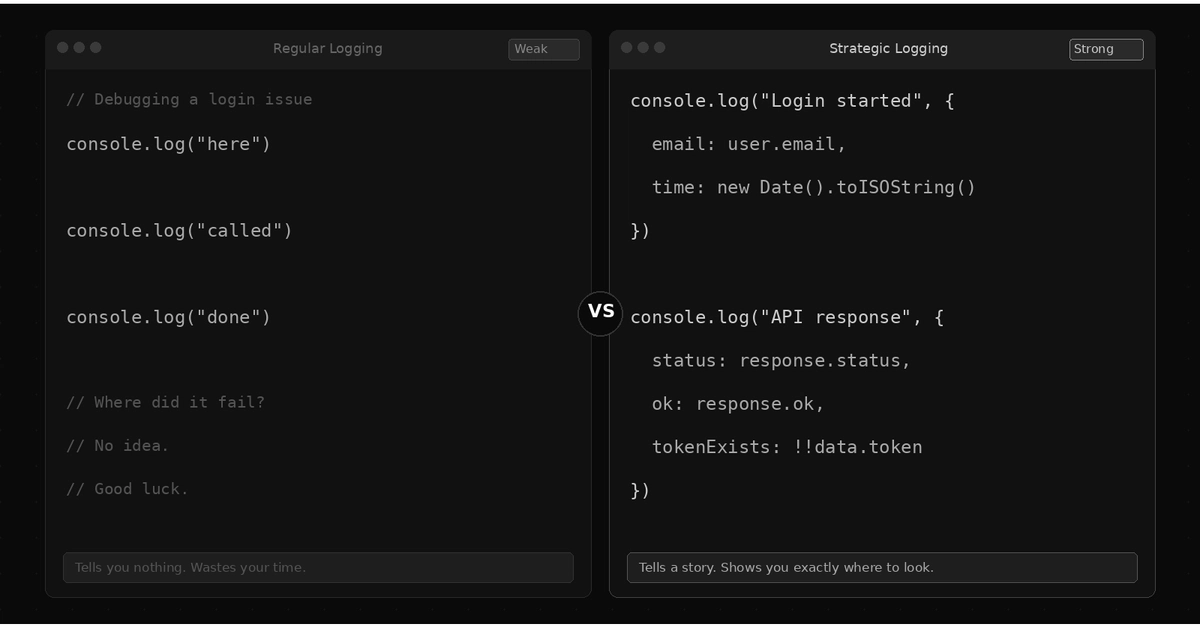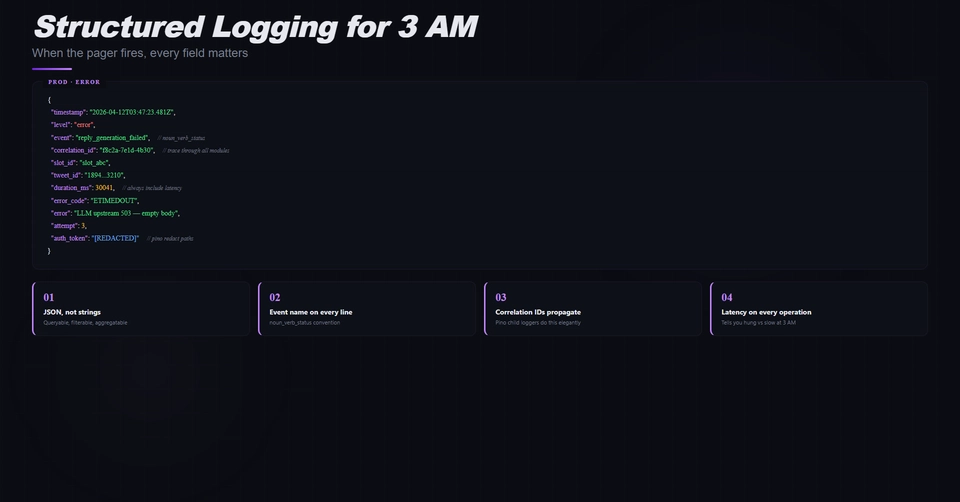
Most logging is written for the person who wrote the code. The author knows the system, knows what the messages mean, and can fill in context from memory. Then at 3 AM, an alert fires, and the person debugging is someone else — or it's the author at month six, who has forgotten everything.
Logs that work at 3 AM are different from logs that look good in a unit test. The difference is structure, context, and the discipline to leave breadcrumbs that the future-you will actually be able to follow.
We've had two real incidents on HelperX where this mattered. Both were resolved in under an hour because the logs were good. Both could have been multi-hour debugging sessions if the logs had been the typical console.log("error") slop.
This is the logging setup that actually helped, and the incident that shaped it.
The incident that taught us