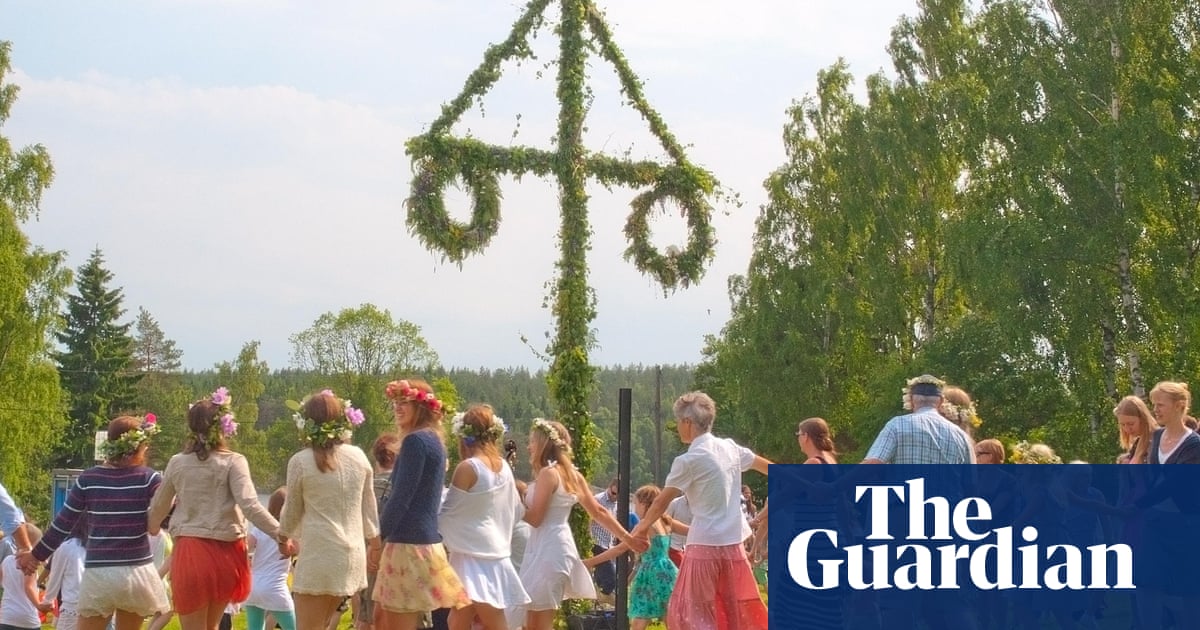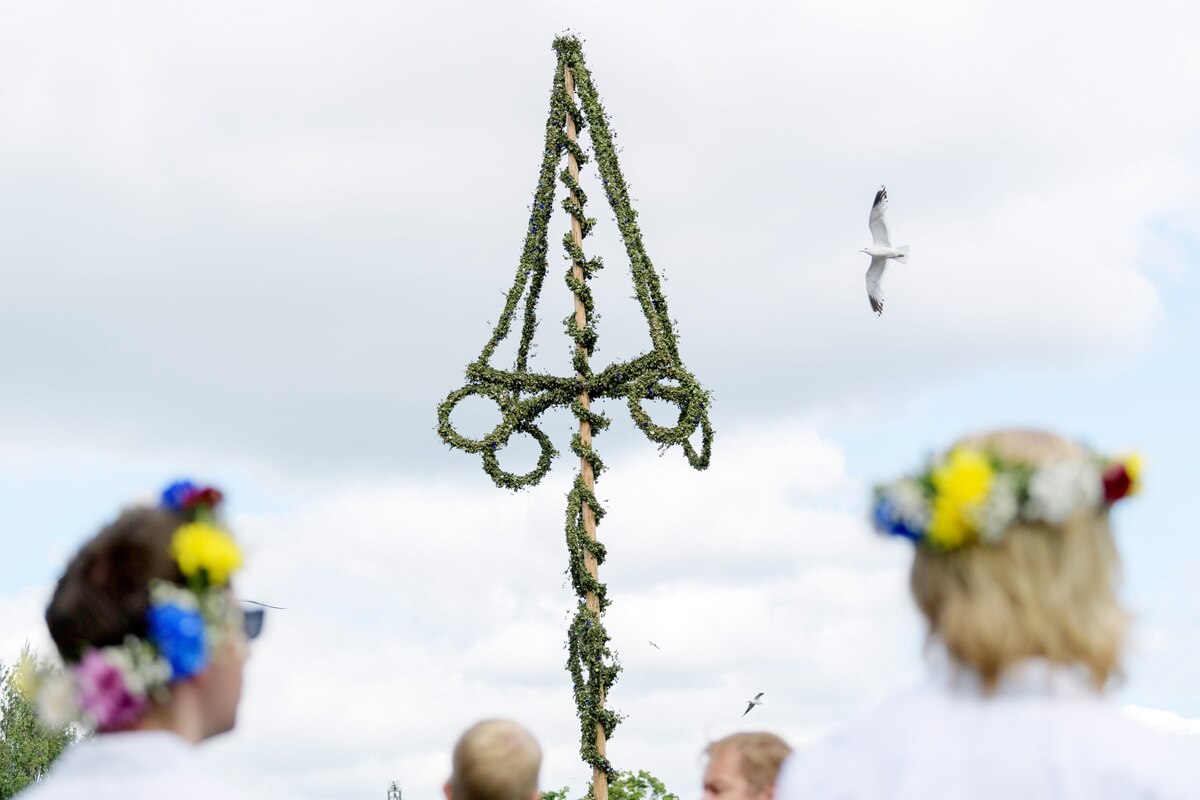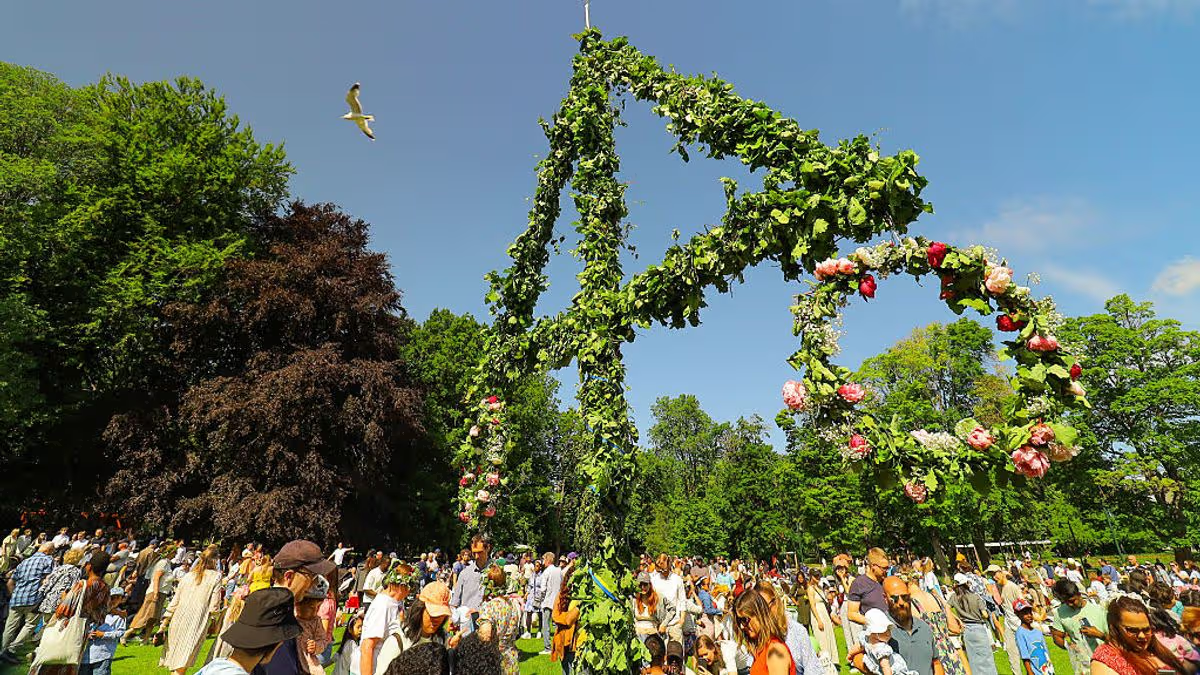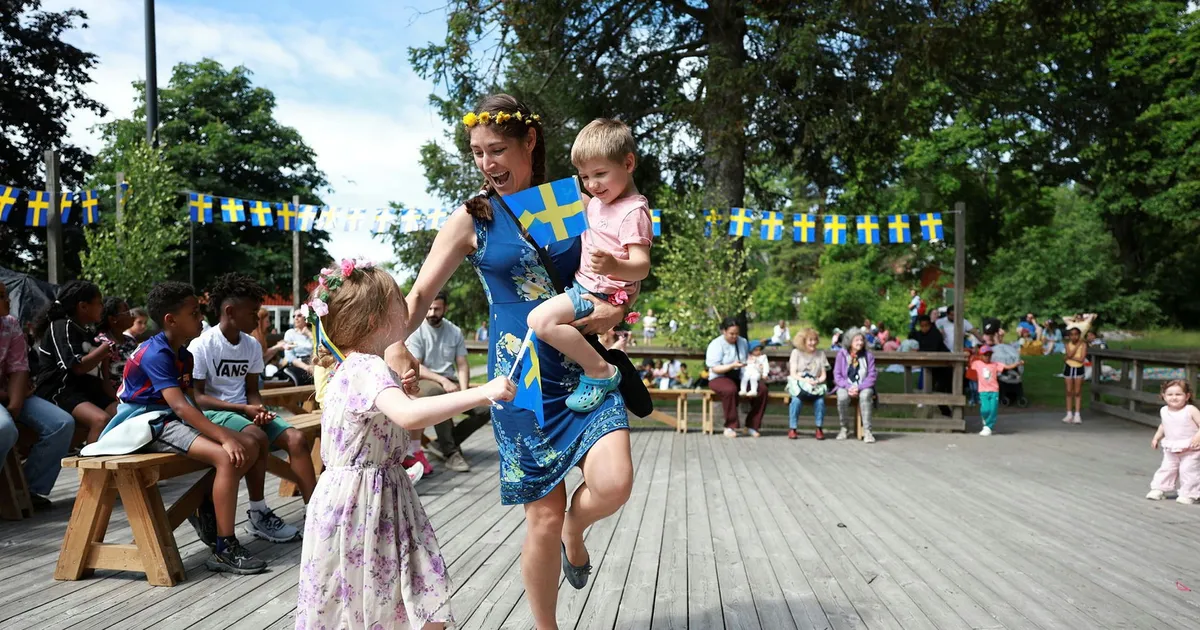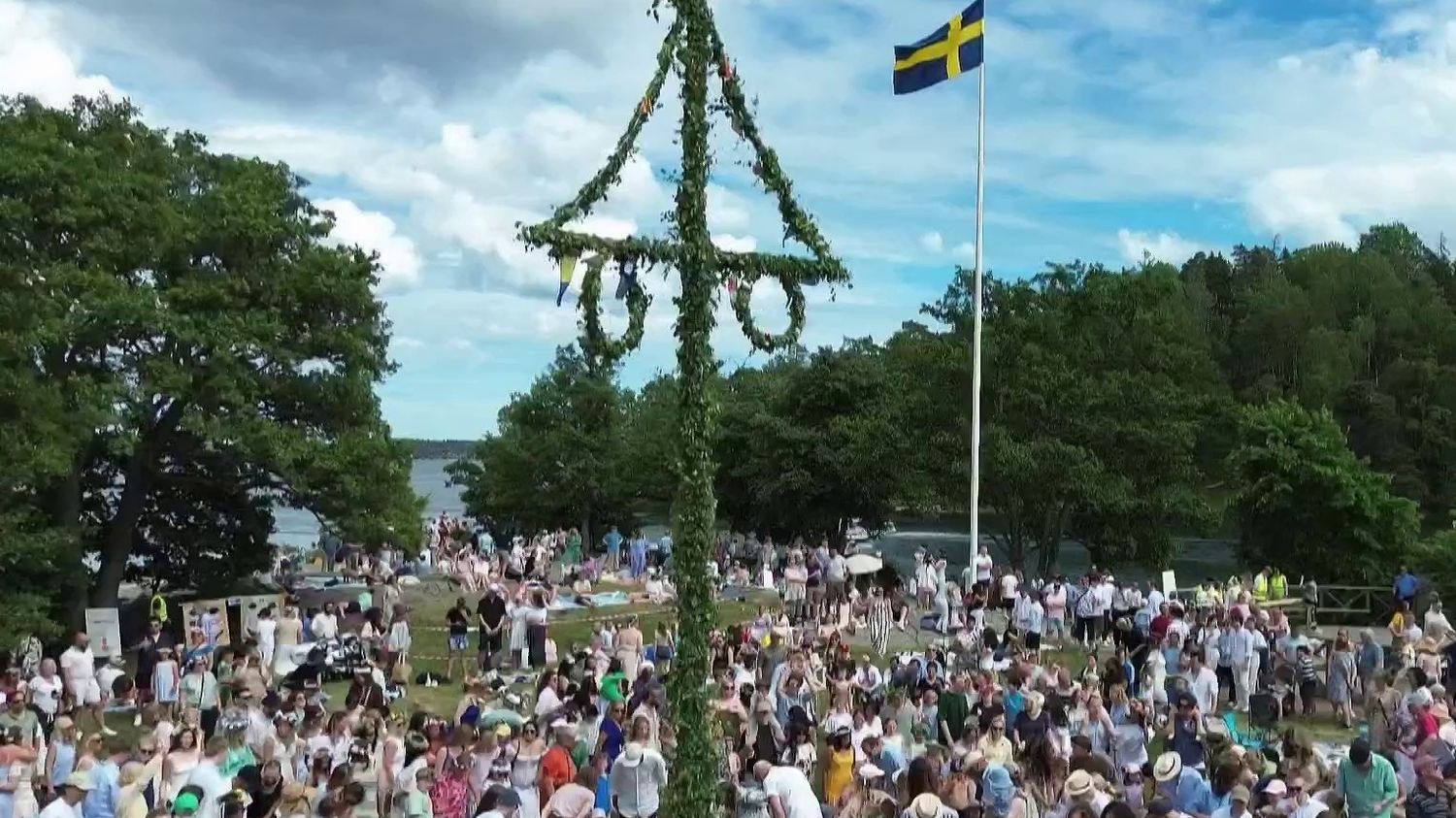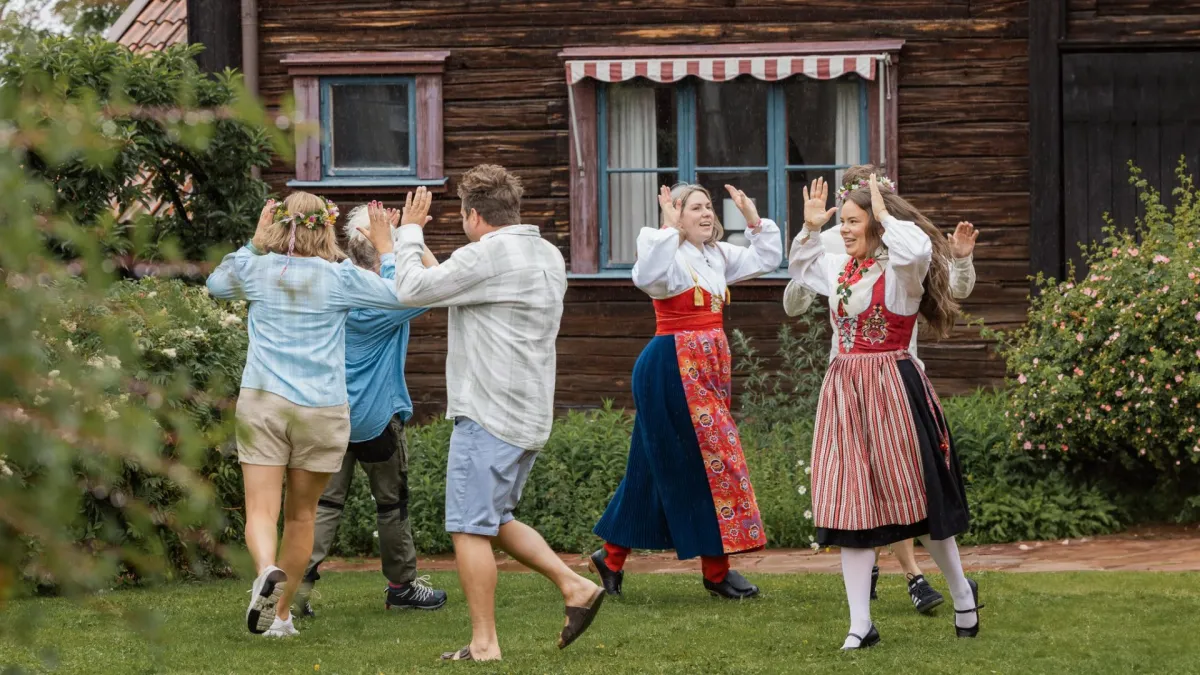
As if feeling left out, a robot lawn mower buzzes towards the maypole where four locals are putting me through my paces. Topped by a rooster for protection, the pole is decorated with rings representing the circle of life and the regional symbol, a cross.
First on the dance card is “The Little Frogs”, where hands alternate between symbolising a frog’s tail and its ears, as the music speeds up and we spin around the maypole. Then comes “Play the Instruments”, during which we mime playing a violin, cello and flute. Finally, it’s “The Rocket”, which requires us to dance in a ring before bringing our arms apart and together in unison, making a “whoosh” like a rocket.
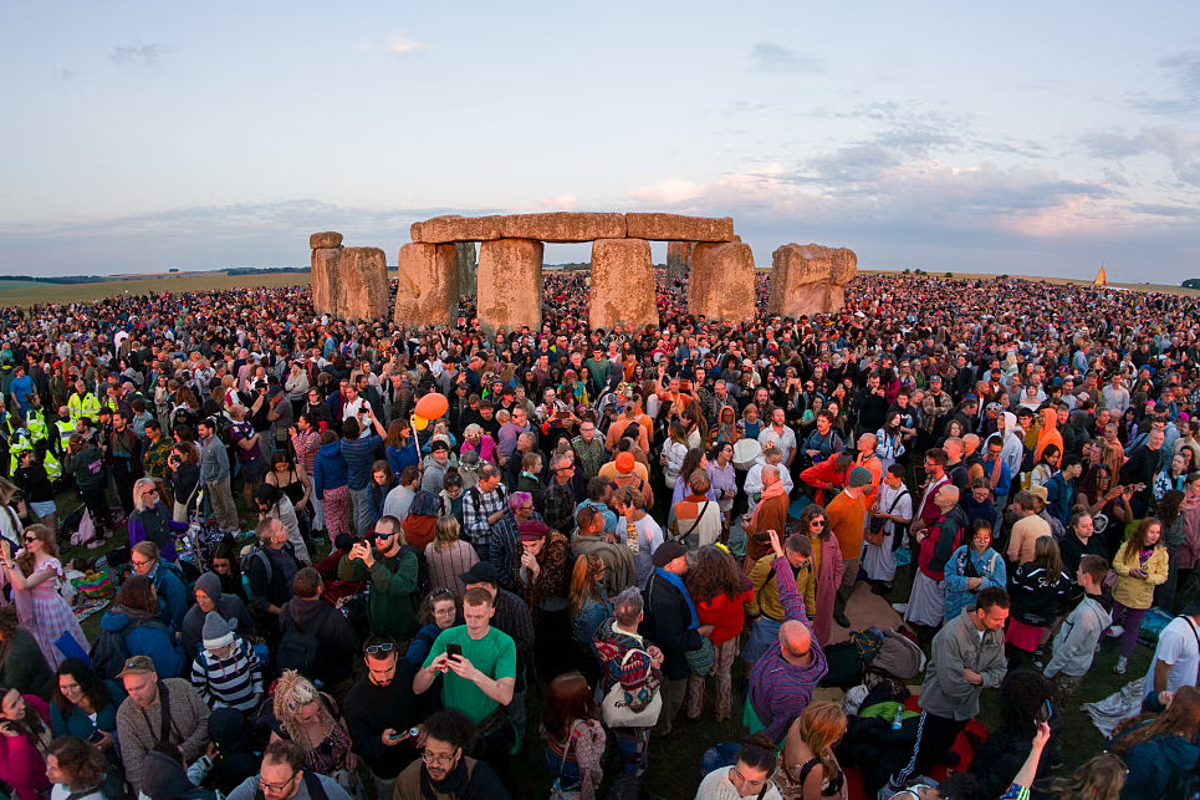
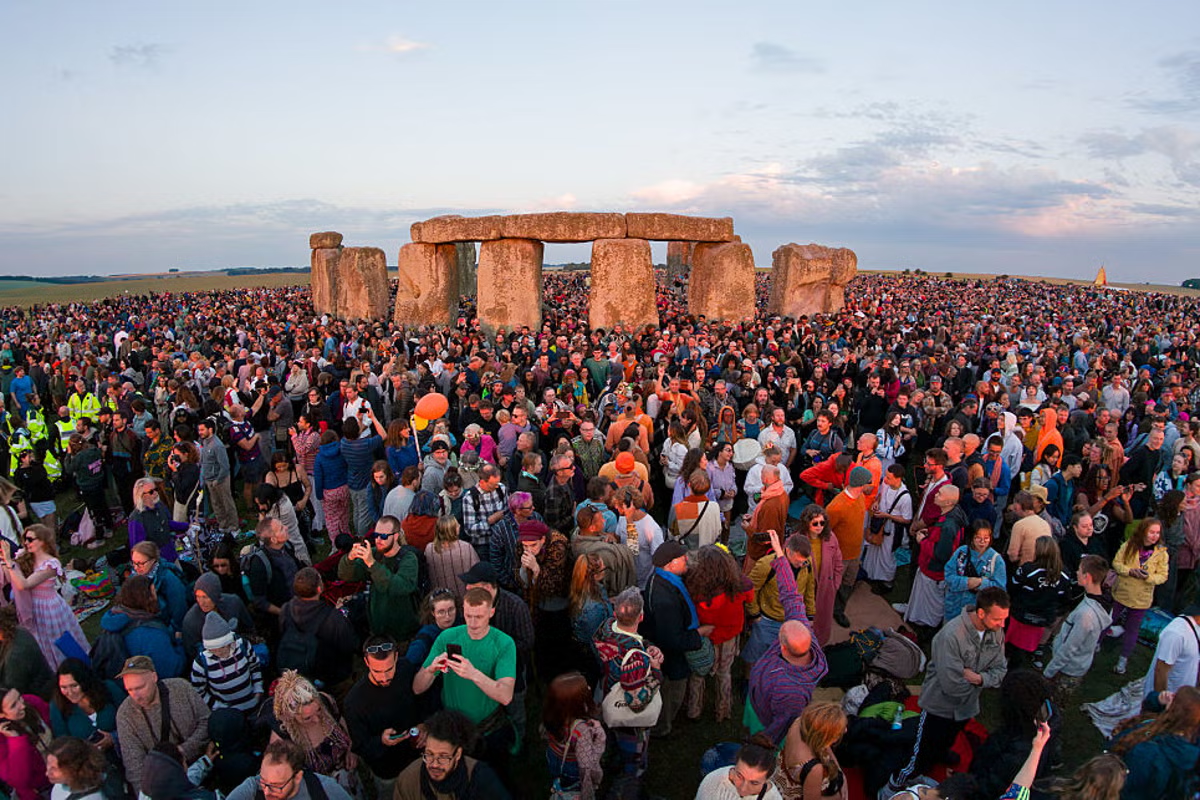
“Imagine doing this with 30,000 people,” says Staffan Malmqvist, dressed in a black, broad-brimmed hat and a frock coat with red piping and floral shoulder embroidery.
Shorts
Staffan is chief executive of the Hotel Klockargården in Tällberg, a village in the county of Dalarna, central Sweden. He is referring to the midsummer celebrations at Leksand, Tällberg’s southern neighbour on Lake Siljan, Sweden’s seventh-largest lake, covering an area of 280 square kilometres.