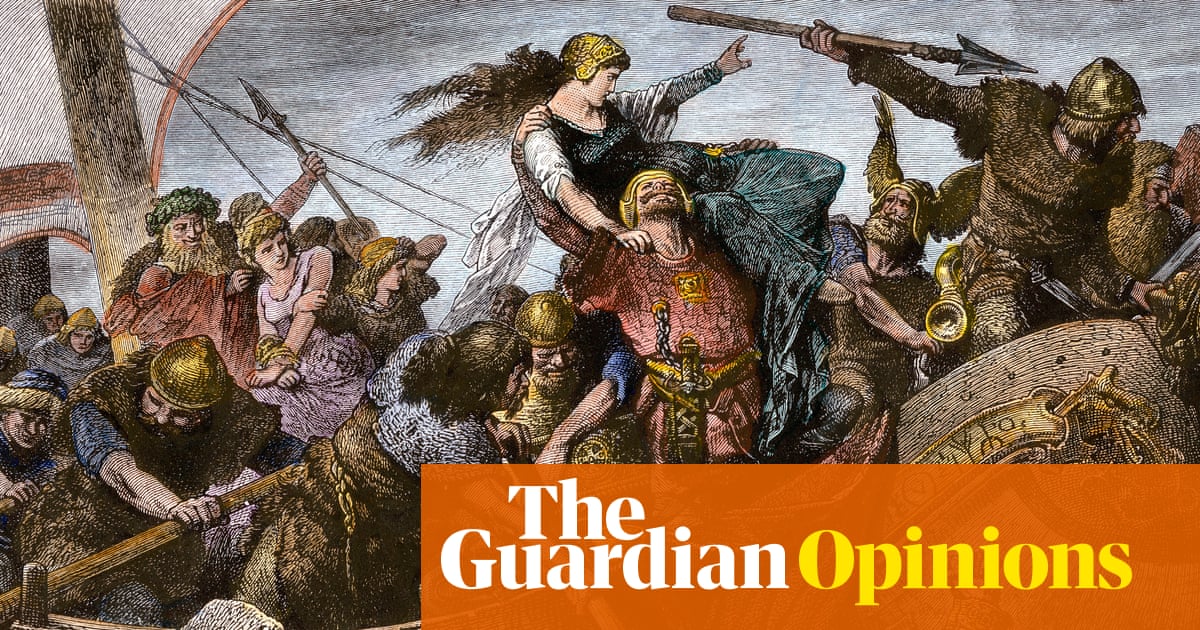
I joined a ‘sacrifice’ ritual outside Stockholm – and found that the revival of Norse paganism reflects broader battles over identity and climate anxiety
“H
ail Thor!” The priestess and her heathens, standing in a circle, raised their mead-filled horns. We were gathered in an unassuming spot in a pine forest outside Stockholm. This was our temple, and the large, mossy stone before us was our altar. I was relieved to see that the animal-based sacrificial offerings were long-dead and highly processed. A bearded man reached his tattooed arms into his backpack and raised a red, horseshoe-shaped sausage to the sky. A goth girl unboxed a plastic tub of hammer-shaped cookies. The priestess offered me a handful of flaxseeds to toss on the altar, which was overflowing with gifts, apples and bottles of homemade mead.
A dozen people had gathered for an autumn sacrifice to summon Thor, the hammer-wielding Norse god of harvests and storms. Many pleaded for him to bring rain, after a summer plagued with drought. Others asked for the strength to battle unemployment, or for the recovery of a sick mother. We all had our own reasons for being there. A middle-aged man, perspiring in his blue office shirt, seemed to be there to connect with his hippy-looking wife and teenage daughter.