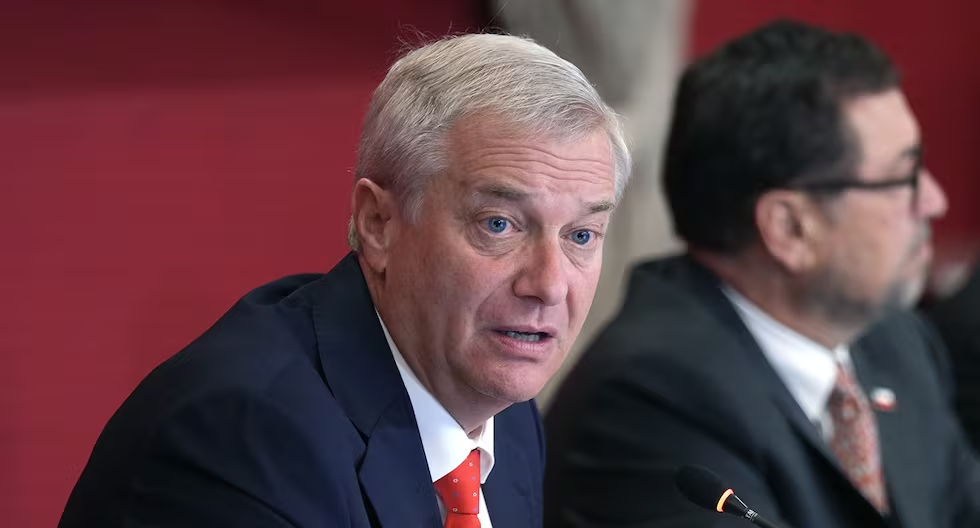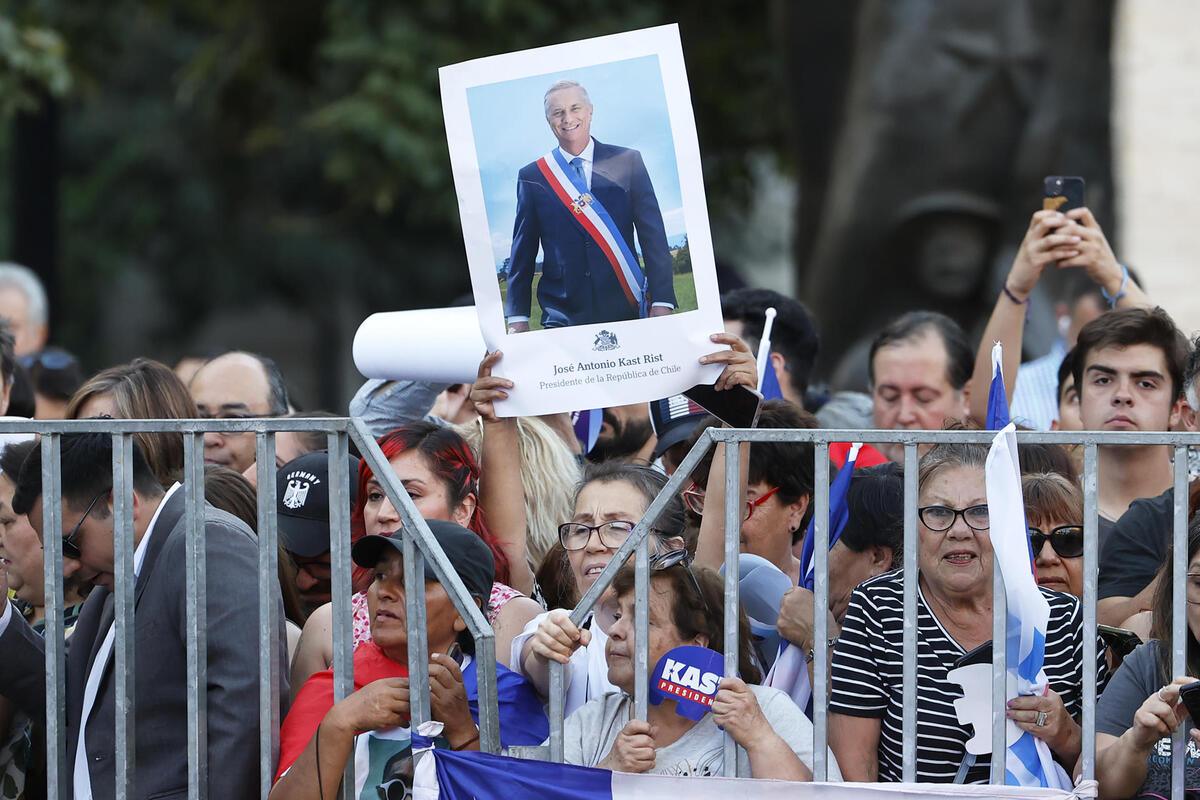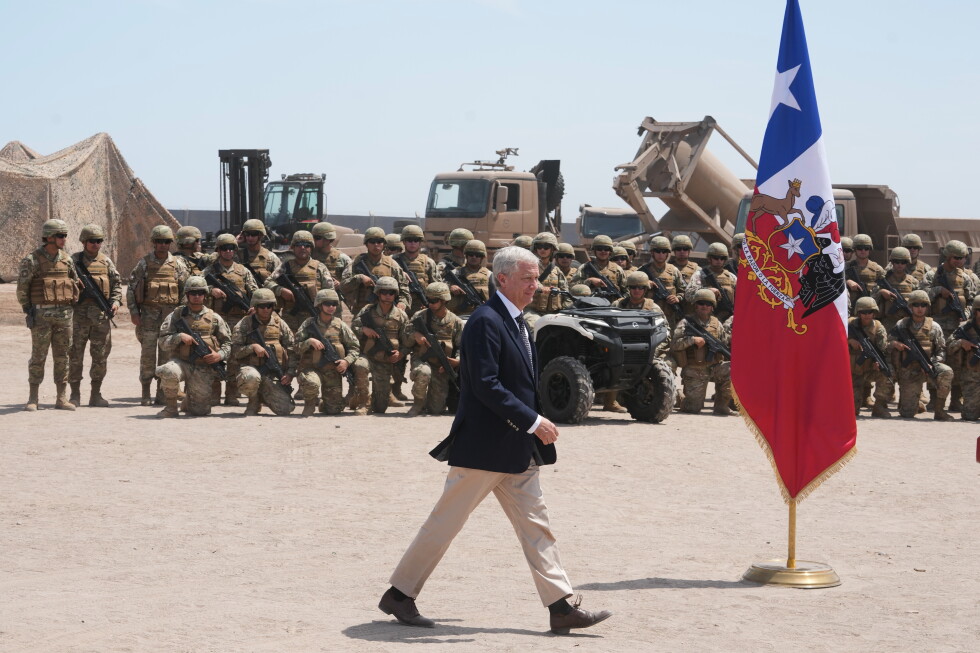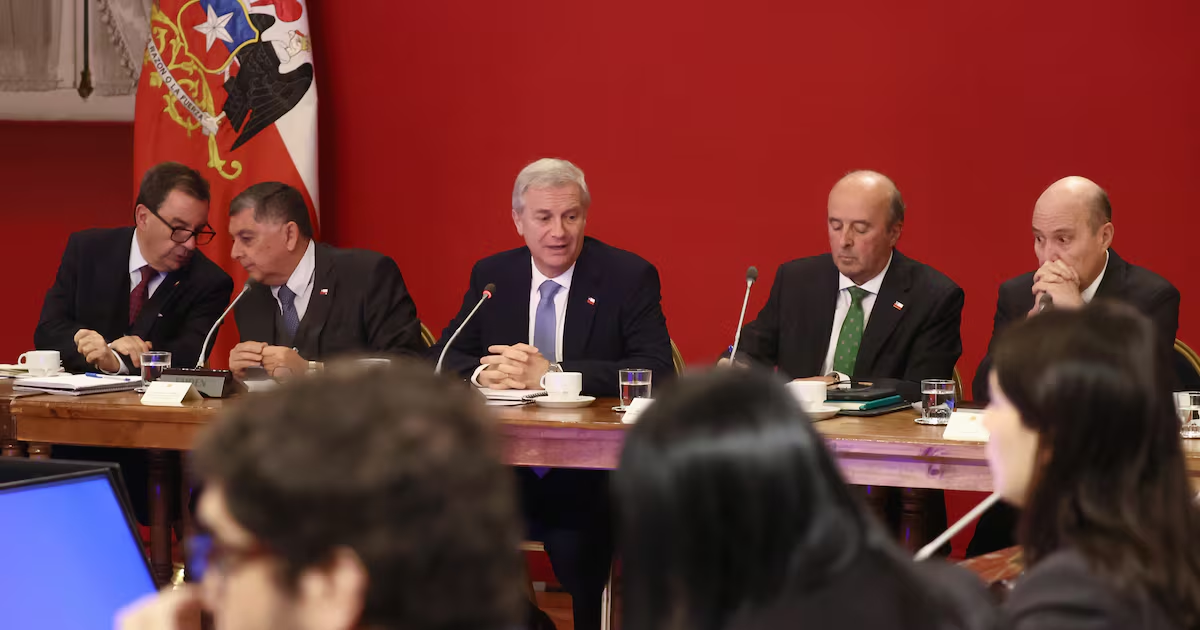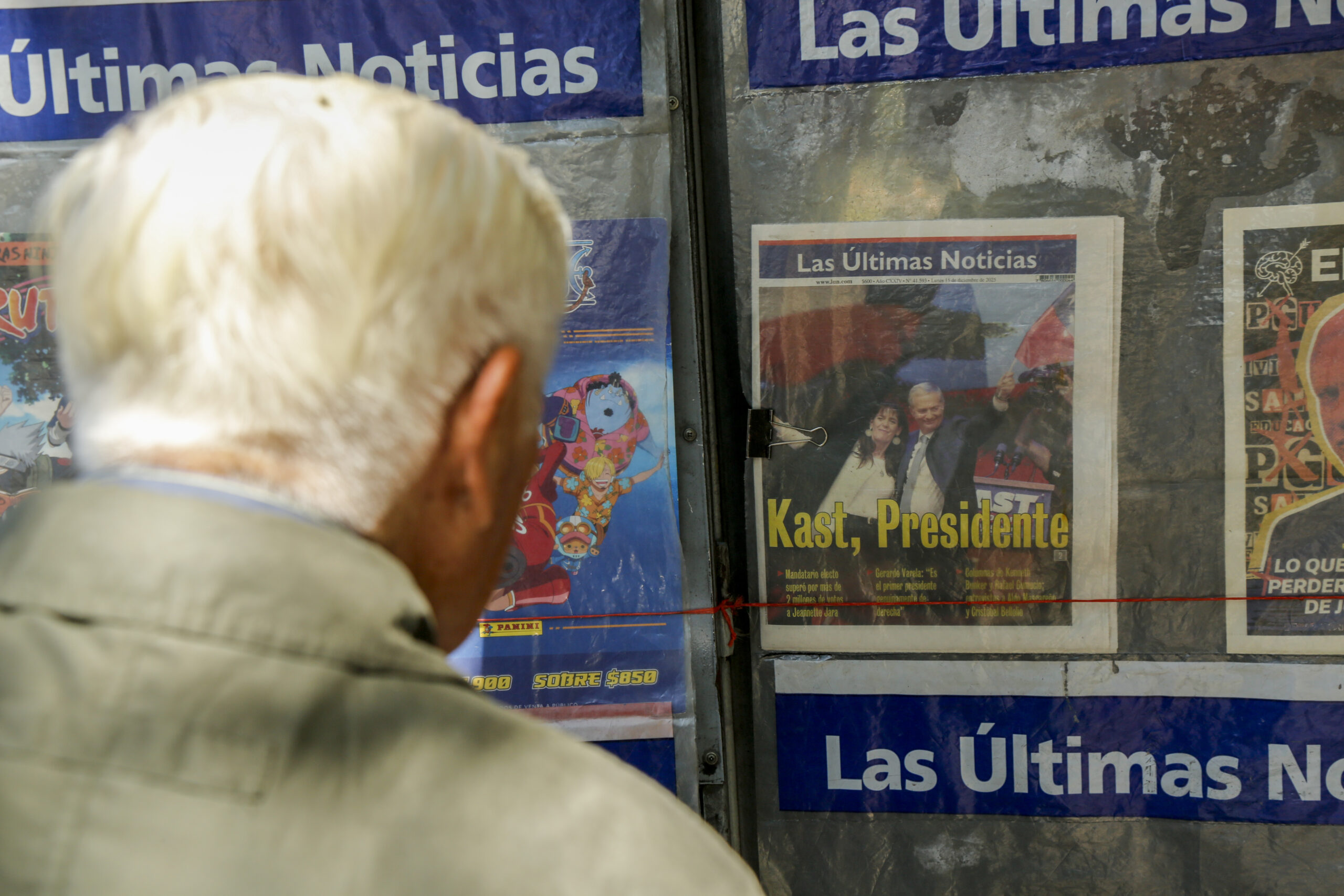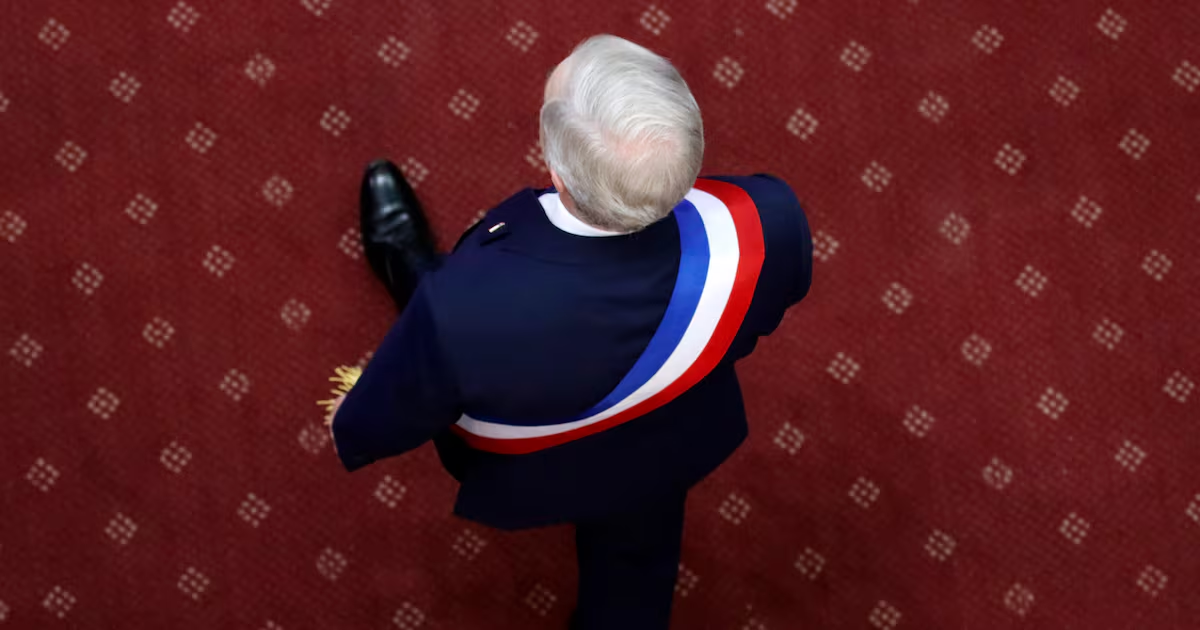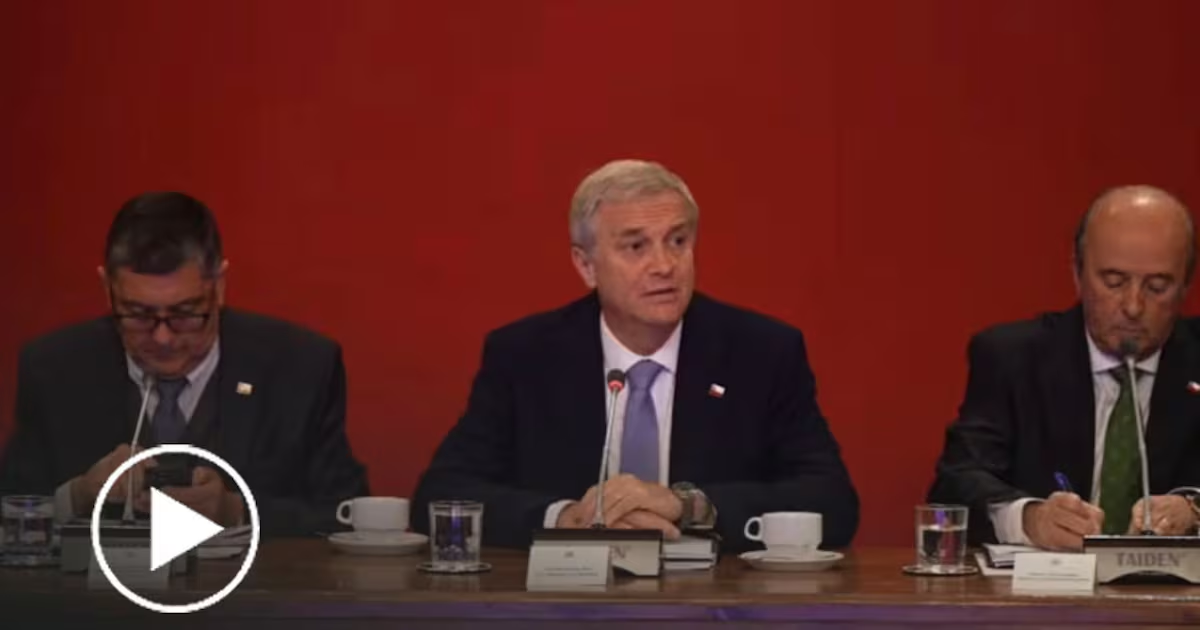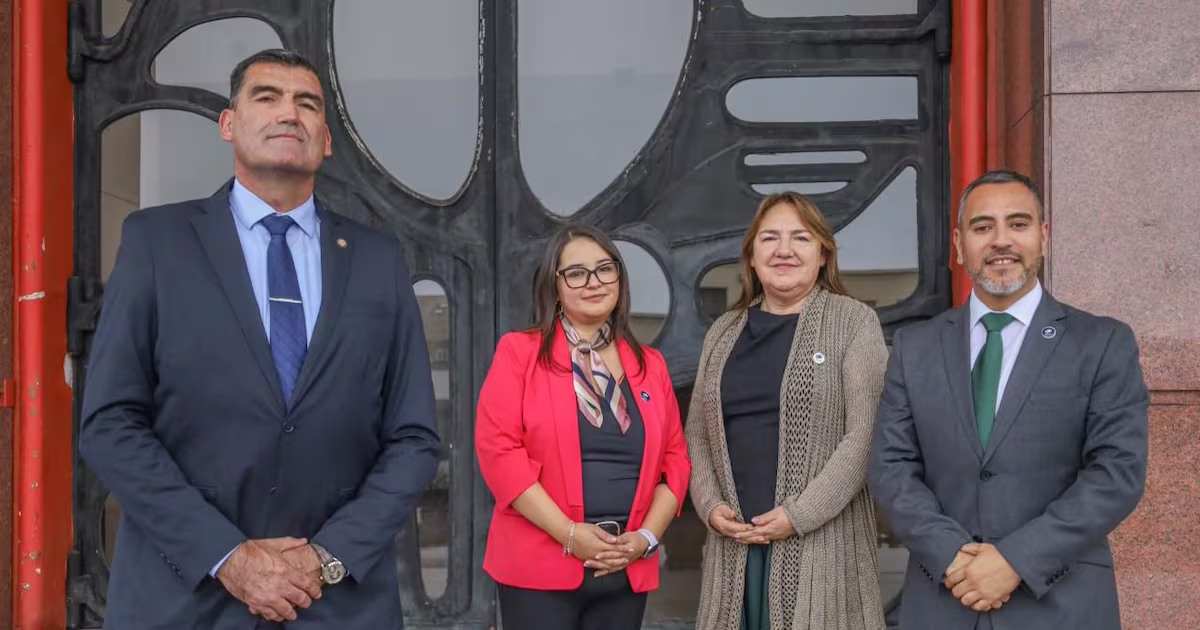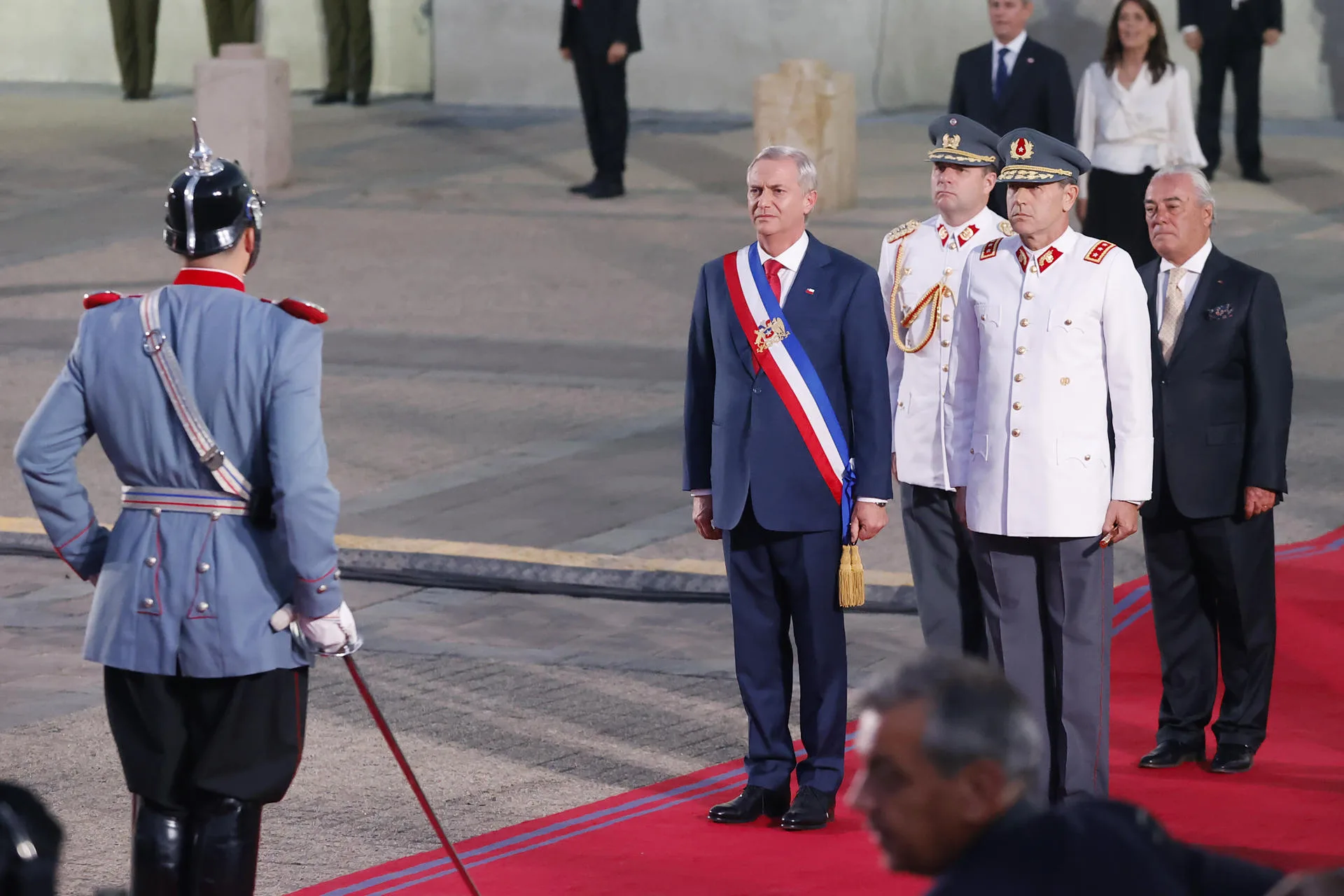
By María M. Mur Santiago, Chile, June 18 (EFE).- Chilean President José Antonio Kast has had a turbulent first 100 days in office, marked by unworkable promises, budget cuts, an unexpected cabinet reshuffle, a historic rise in fuel prices, and a sweeping reform package featuring significant tax cuts. Kast, 60, took office on March 11 amid high expectations, promising radical changes in economic and security policy, but a month later his approval rating began to fall, dropping to 30% at one point, in contrast to the 58% with which he was elected. “It’s the most challenging start in recent history,” Mario Herrera Muñoz of the University of Talca told EFE, comparing it only to the beginning of Sebastián Piñera’s first administration, days after the major 2010 earthquake, and to Patricio Aylwin’s rise to power in 1990, following 17 years of military dictatorship. “Without a doubt, it has been one of the most complex, but the president himself is to blame for appointing ministers to positions for which they were not prepared,” agreed Mireya Dávila of the University of Chile in statements to EFE. Little confidence in promises The leader of Chile’s Republican Party pledged during his campaign to address citizens’ main concerns, crime and economic stagnation, and promised, among other things, to deport over 330,000 undocumented migrants, to avoid taking on new debt, and to achieve a zero fiscal deficit by the end of his term, as well as 4% GDP growth by 2030. 100 days later, with no visible results, 67% of the public has little or no confidence that he will fulfill these promises, according to a recent CEP poll. Even the government has acknowledged that many of these goals are not feasible, as it is negotiating with Parliament to increase borrowing, and Kast has said that the mass deportation of migrants, mostly Venezuelans, was “hyperbole.” “I think he didn’t have a security plan, and that came back to haunt him very quickly. A percentage of his own electorate is turning away from him,” Claudio Fuentes of Diego Portales University told EFE. According to Herrera Muñoz, the decline in the president’s approval rating began to stabilize thanks to the Cabinet reshuffle on May 19, the fastest since Chile’s return to democracy. Kast dismissed his spokesperson and his security ministers and appointed one of his trusted aides, Martín Arrau, as security minister. ”Arrau’s arrival has been a success. He understood that he had to transform the issue of security into a state policy and met with representatives of the opposition,” added the scholar from Talca. The Mega-Reform Still Pending In addition to the lack of results on security, experts point to his austerity policy and the “benzinazo” (sharp increase in fuel prices) decreed in March amid the war in the Middle East as other factors explaining the drop in the polls. “While both may be related to external factors or inherited problems, they reveal a government that prioritizes fiscal policy over the most immediate needs of its citizens,” emphasized Herrera Muñoz. The massive cuts to public administration to balance the budget, nearly two billion dollars, and affect sensitive sectors such as education and health, sparked the first major protest of the Kast era in early June. “Reducing spending without affecting social benefits is a very complex equation,” noted Fuentes. Now that the symbolic 100-day mark has passed, the president’s efforts are focused on security with his new minister out in the field every day leading police operations, and on pushing through a controversial mega-tax and economic reform to boost growth. Considered Kast’s flagship economic project, the initiative is currently being debated in the Senate and includes a gradual reduction in the corporate tax rate from 27% to 23%, tax stability for large investments, and tax benefits for capital repatriation. The opposition claims that this plan benefits the wealthiest, and various independent organizations have warned of the risks it poses to tax revenue. According to Fuentes, if Kast wants to regain public support, he should “be open to compromise and pass the mega-reform not only with the votes of his coalition but with the support of other sectors.” “So far, he’s banking on the 50+1 majority; we’ll see if he builds bridges,” he added. EFE mmm/mcd
Kast's first 100 Days in Chile: Unrealistic promises, search for a security breakthrough - EFE
Chilean President José Antonio Kast has had a turbulent first 100 days in office, marked by unworkable promises and a reform package.
706 words~3 min read