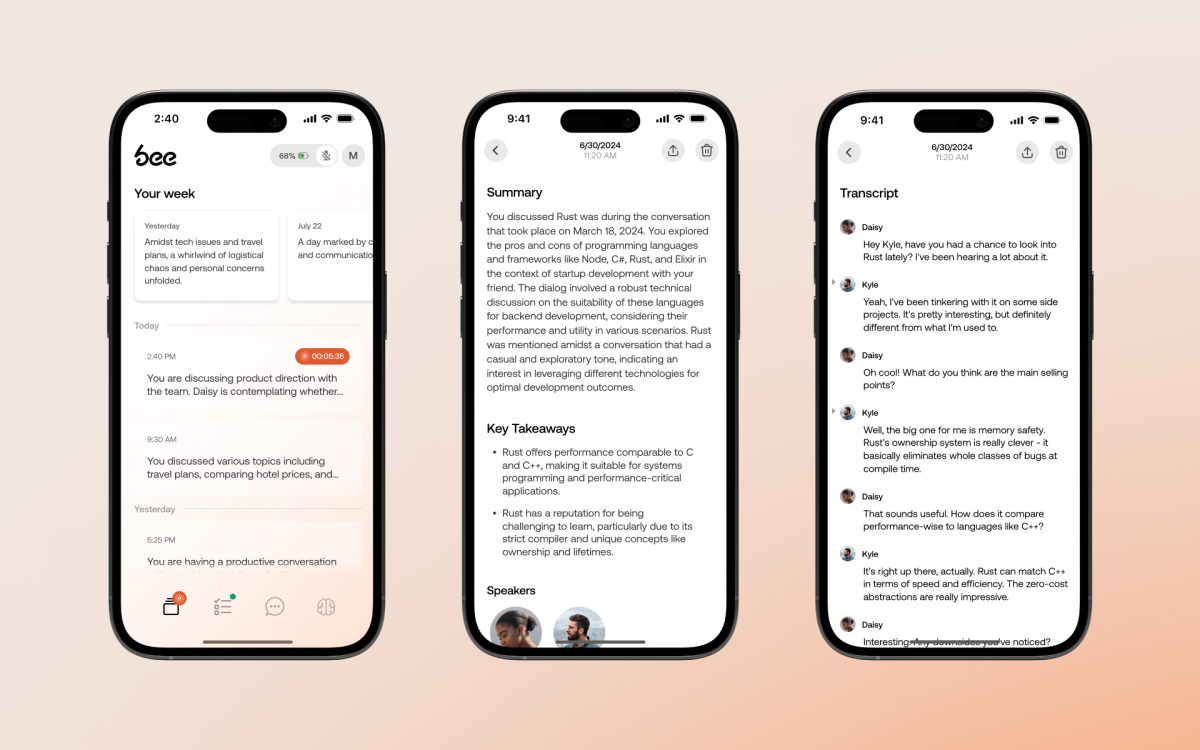
If you live long enough, you'll wake up one day and find that you're living in a world you no longer understand. Lately there are things happening with AI in a couple of disparate parts of Amazon that brought that lesson home in a big way. The first is that, late last year, they acquired Bee, an AI wearable that is distressingly, upsettingly good. The second, which I want to talk about today as I fly back from AWS's NYC Summit, is Quick Desktop. The best way to describe this is "Enterprise OpenClaw in a polished app." Yes, I know this sounds like I'm being blackmailed. Read on.
You work at Amazon, right?
Amazon has spent the last three years breathlessly telling us that they're a leader in AI, then shipping products which make it clear that they're unsure what leadership looks like. They've spent far longer building user interfaces that carry a design aesthetic of "complete crap." Even Amazon's website, where you buy everything from underpants to chainsaws to dog food to more underpants, is not a well-designed interface; we've all just learned to live with it. The single good interface to come from Bezos and Coo was the Kindle e-reader: push a button, the page turns. And then they removed the buttons. So yes; "We're launching a desktop AI assistant" is the exact opposite of encouraging coming from these folks. It started like you'd expect. You pop over to the download page and grab the download. On a Mac it's half a gigabyte because of course it is; this is totally normal and fine in 2026. Install it, fire it up, and ... wait a bit. It has to think, and gather its wherewithal before it can get to work. And then the hits start coming. I had talked to people who have used this and raved about it. The problem here is that all of these people work at Amazon, and the current state of the product reflects that. They have a single identity provider they use internally; external users see a confusing array of offerings, each with its own byzantine flows. The feeling is not dissimilar to waking up in the middle of a hedge maze, with no idea how you got there, and discovering that someone just set it on fire. At one point during my time using Quick Desktop, I was logged out and had to log back in. After guessing seven different identity providers, I gave up and emailed the service team for help with this. After some back and forth, I was able to get back in. (GitHub! Future Corey, if you find yourself in this situation, you authenticated via GitHub!) It's clear that the people building this service aren't living the external user experience. It's why I maintain that Amazon's internal AWS account management tool is the service that I hate the most; it separates the people building AWS from the customers using it. At the moment, other similar challenges show up. You'd never have more than one email account from the same provider, right? (Google Workspace in my case, provided it hasn't been deprecated by the time this article goes to print.) You'd never have business conversations via iMessage, or Signal, or LinkedIn DMs, or any number of other services, right? The point isn't the snark; it's that Quick Desktop only knows about the channels its connectors deign to support. Every deal I've ever closed in a LinkedIn DM, every favor traded over Signal, every "hey, quick question" that arrived via iMessage is simply invisible to it — but it makes its confident little suggestions anyway, blissfully unaware that a good chunk of my professional life happens in places it can't see. Here's a free hint to the product team: do you think I mentioned the Bee in the opening of this article because I'm making a fashion statement?