(Image credit: Feature Focus)
Artificial intelligence conversations usually fall into two camps: people who think AI will save the world and people who think AI will destroy it. Because I cover AI for a living, I try to keep an open mind. I read an incredibly scary book about superhuman AI by Eliezer Yudkowsky and Nate Soares called If Anyone Builds It, Everyone Dies, and I learned a lot about the real risks of AI. But nothing could prepare me for The AI Doc: Or How I Became an Apocaloptimist on Amazon Prime Video. I walked away feeling something much more uncomfortable: uncertainty.The documentary, directed by filmmaker David Borenstein, focuses on the unsettling reality that AI is already here, reshaping work, creativity, education, communication and even relationships faster than most people seem prepared for.But one statistic from the documentary stopped me cold.The startling statistic nobody is talking about
THE AI DOC: OR HOW I BECAME AN APOCALOPTIMIST - Official Trailer [HD] - Only In Theaters March 27 - YouTube
Watch On
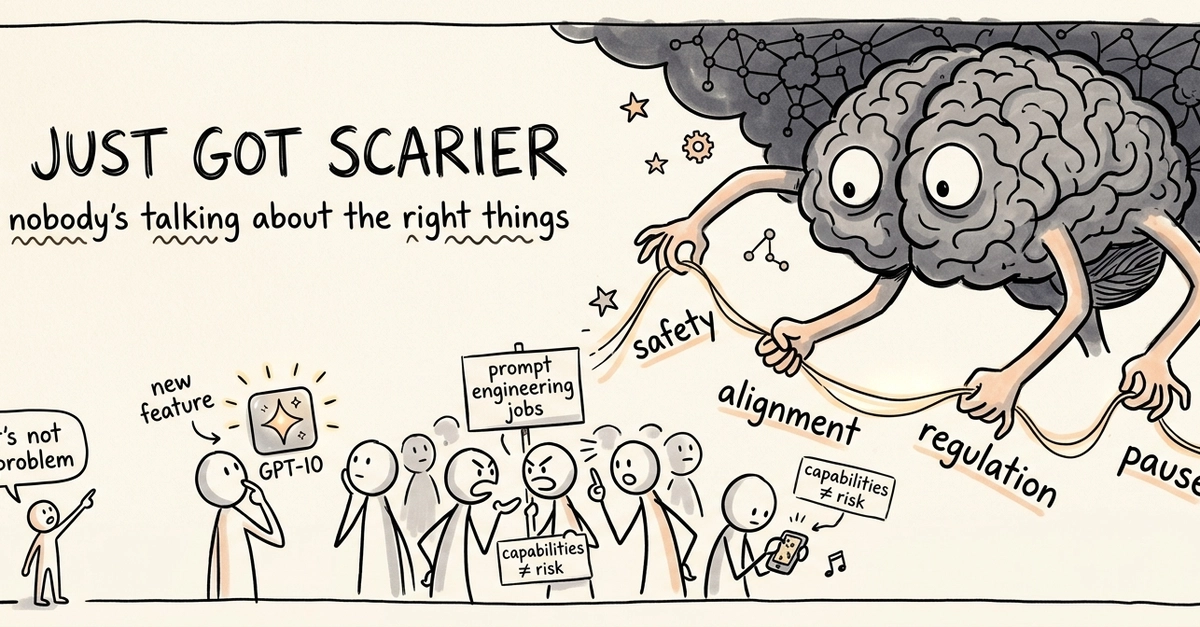
According to the film, more than 20,000 people are currently working on AGI — artificial general intelligence — while fewer than 200 are focused specifically on AI safety.Whether or not you believe AI will eventually surpass human intelligence, that imbalance is difficult to ignore. Just this week, Trump scrapped the executive order for additional AI safeguards. Because we are at a moment where the race to build AI feels faster feels more important than the race to understand it. But what makes the documentary effective is that it doesn’t frame AI researchers as villains. Many of the people featured genuinely believe AI could accelerate medical breakthroughs, solve scientific problems, improve education and even help humanity move faster than ever before. And sure, some of that already feels true.I use AI constantly for work. I use it for research, organization, brainstorming and productivity. Like millions of people, I’ve slowly integrated tools like OpenAI's ChatGPT into my daily life without thinking twice about it. That’s partly why the documentary hit so hard.Because the fear highlights how normal AI already feels. The film repeatedly returns to one uncomfortable reality: companies are racing to build increasingly powerful AI systems because the incentives to move quickly are enormous.Get instant access to breaking news, the hottest reviews, great deals and helpful tips.Whoever builds the best models first could dominate search, software, education, media, healthcare and eventually entire industries.The brutal reality is AI is not slowing downWatching the documentary reminded me a lot of the early days of social media. Platforms exploded globally long before anyone fully understood the consequences of misinformation, political manipulation, mental health concerns, doomscrolling or algorithm addiction.By the time governments and society started reacting, these platforms were already deeply embedded into everyday life. The documentary highlights why AI feels so similar — except potentially much faster.The documentary argues that society may already be using AI at massive scale before we fully understand the long-term implications of systems becoming more autonomous, persuasive and integrated into daily decision-making.And unlike social media, AI is advancing at a pace that feels difficult for regulation, education systems and even average users to keep up with.The scariest part isn’t AI doom — it’s uncertainty