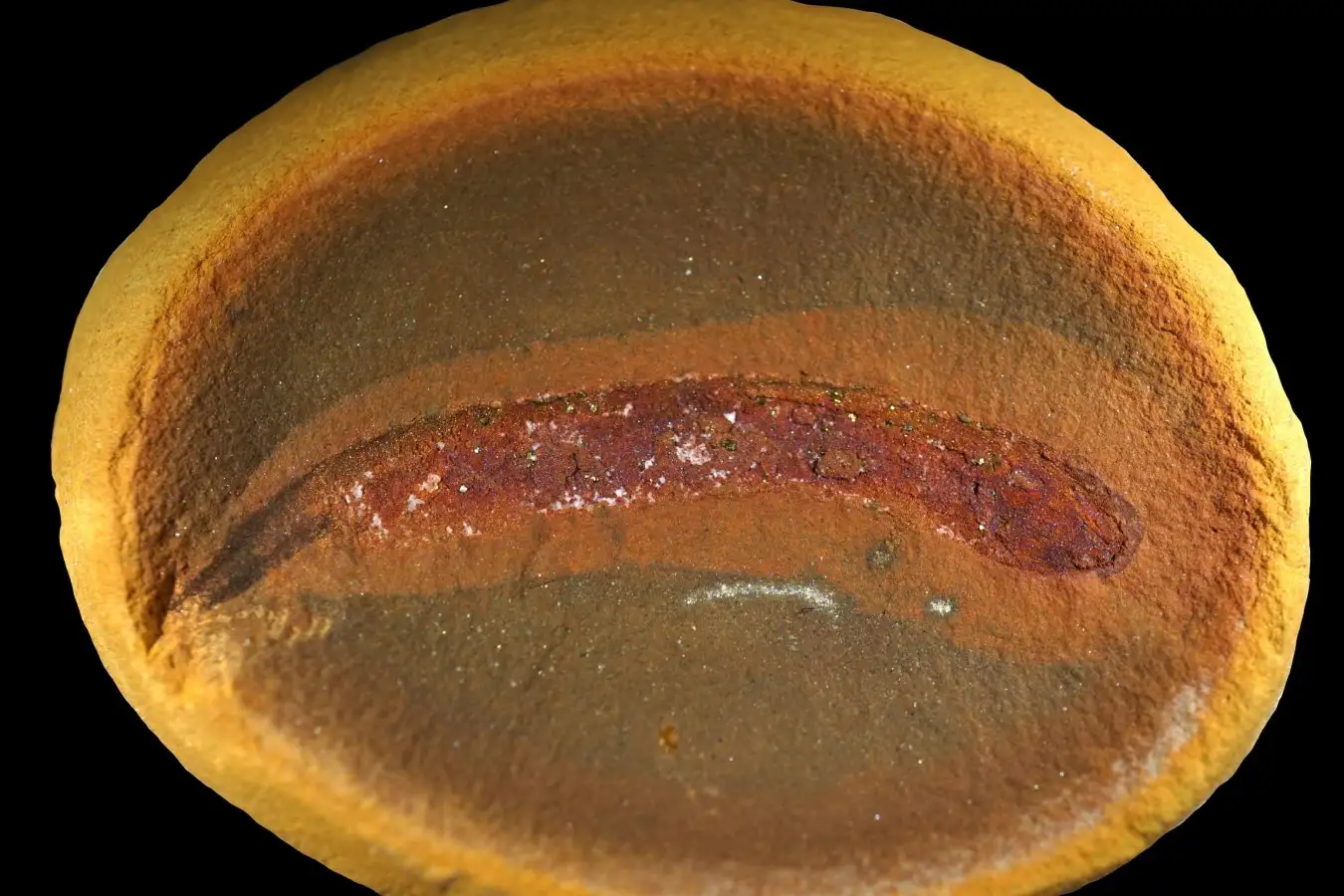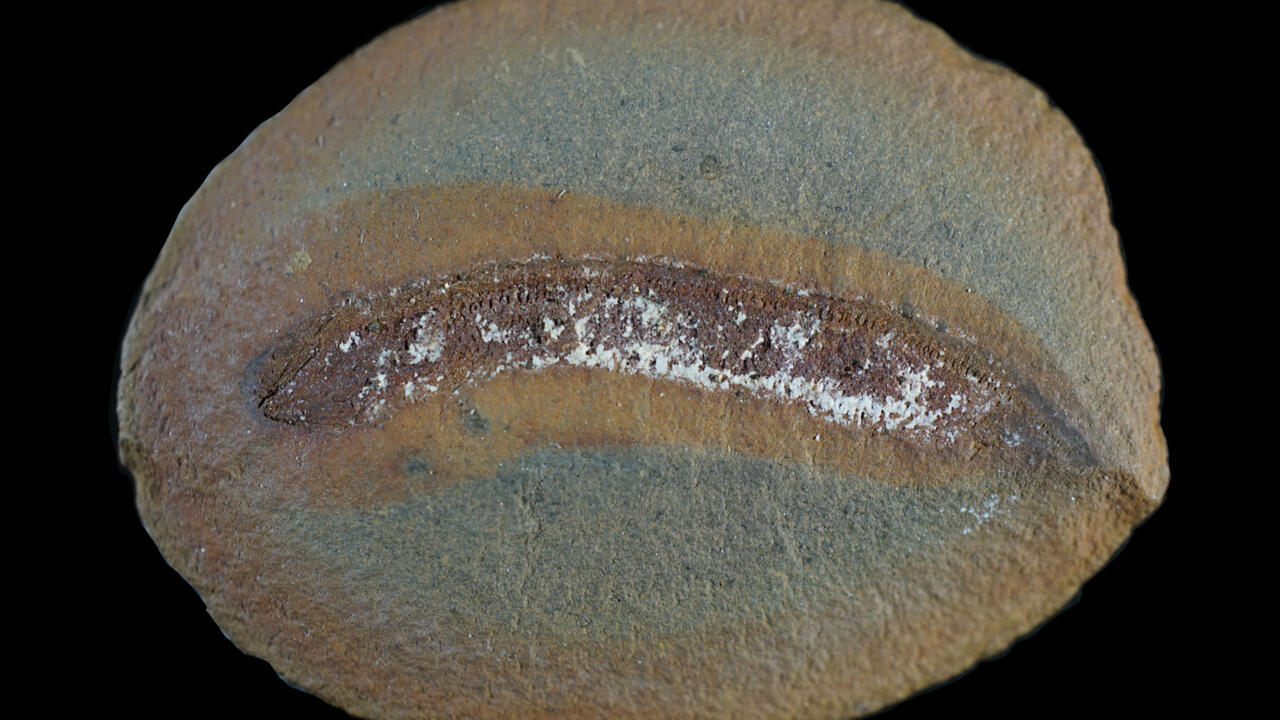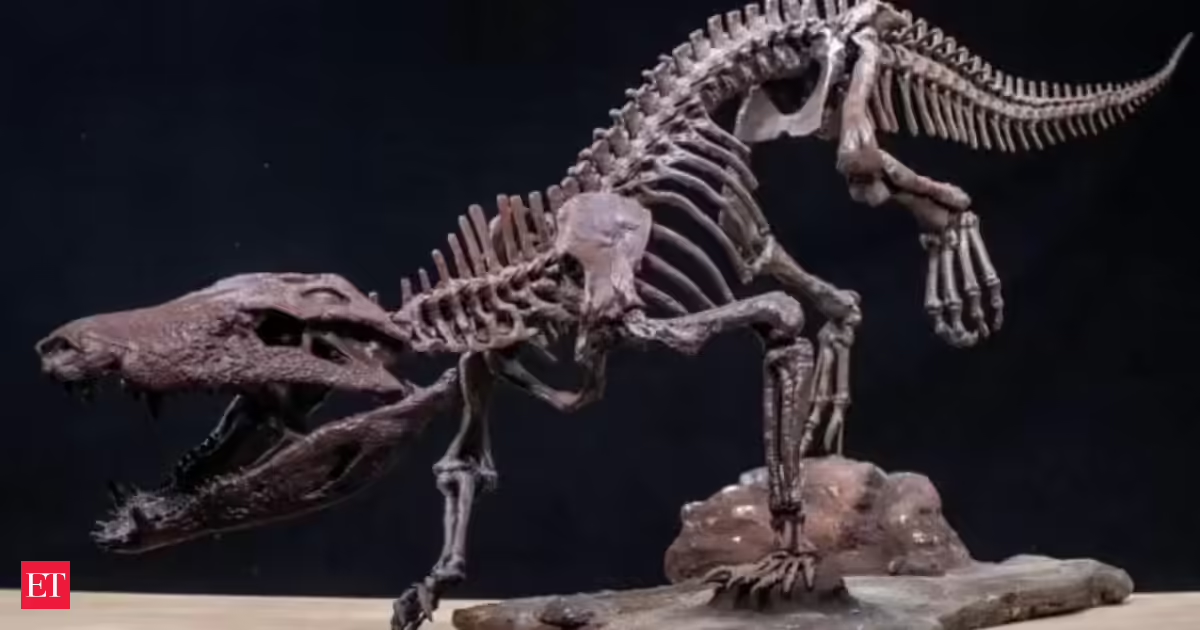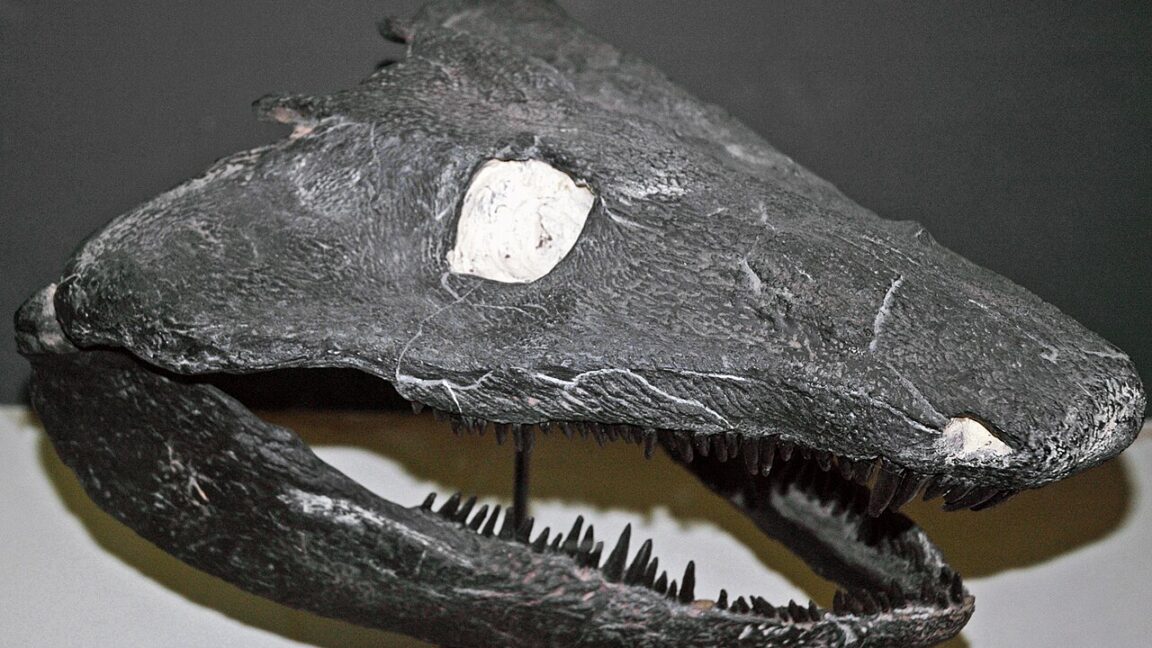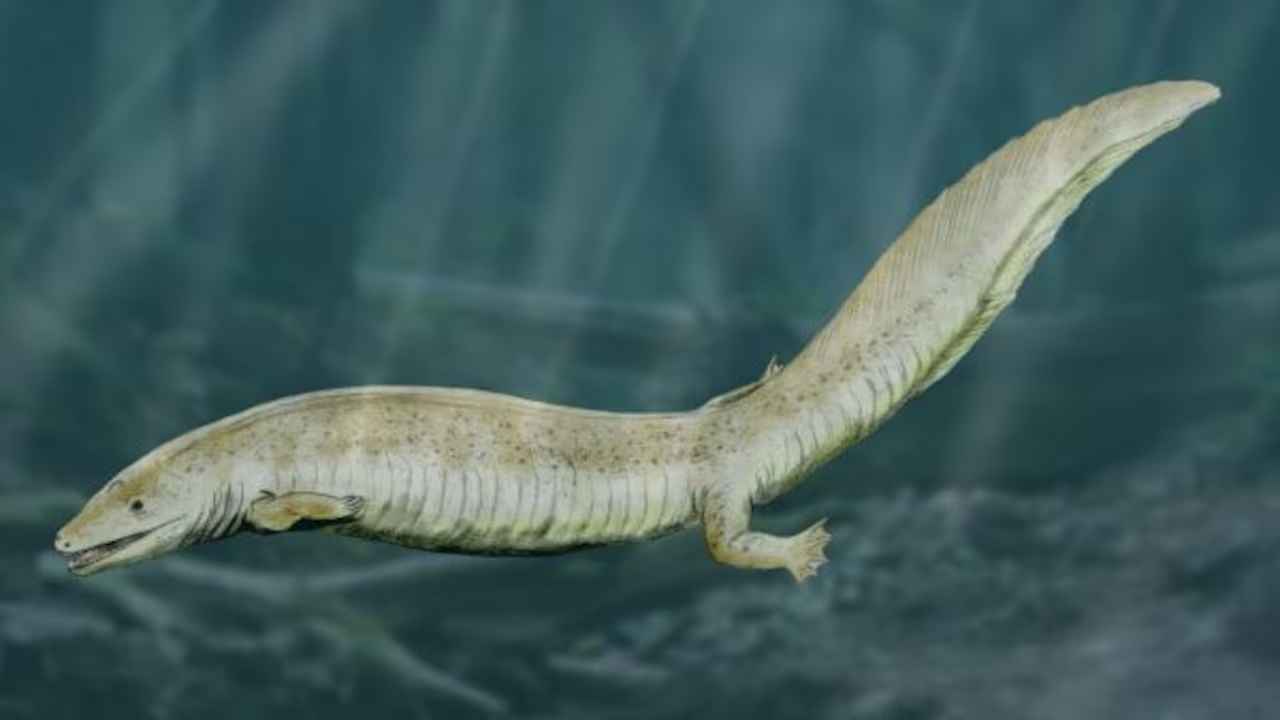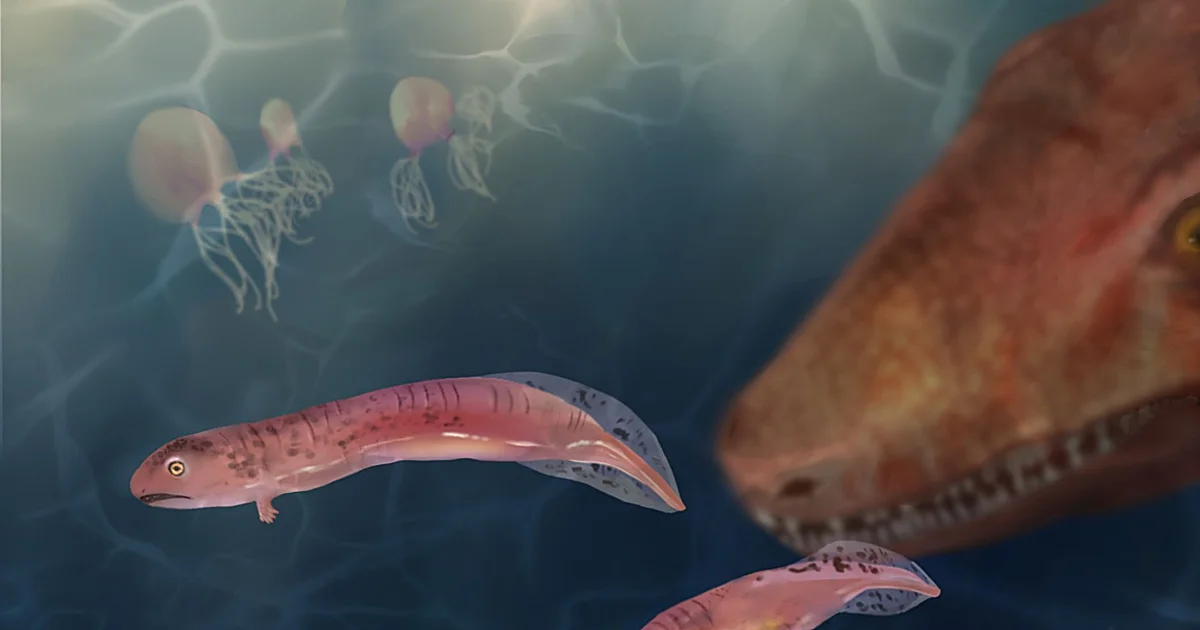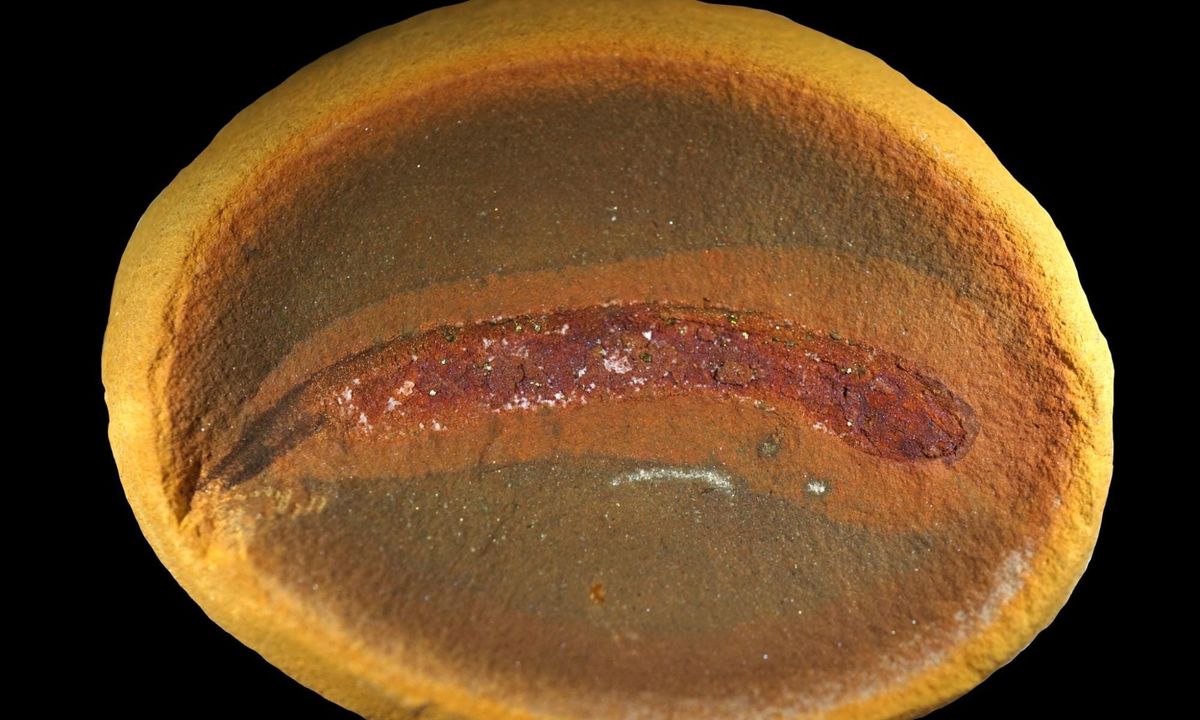
External gills, for instance, are a telltale feature of the metamorphosis observed in frogs and toads. They appear on freshly hatched tadpoles and are slowly absorbed into the body to become lungs. But the hatchlings showed no signs of these gills, or anything else on the “checklist” of a transient larval phase, Pardo said. “It was very striking that none of the structures that we would look at seemed like larval features that we would expect to see,” he said. “It was quite hard to make sense of at first because, at this point, there’s a 150-year tradition of treating these animals as amphibians.”Some of the early hatchling fossils studied by the team, including detailed preservation of eyes and soft tissues. The scale bar is 10 millimeters. Image: Jason Pardo, Arjann Mann, Lauer Foundation.“What we ended up finding is that we can't actually justify any claim of metamorphosis in those animals that are transitioning across that water-to-land transition,” he added.The results suggest that early tetrapods had the same basic anatomy, more or less, throughout their life cycle. This evolutionary strategy may have delayed the transition to land for much longer than previously assumed, as tetrapods slowly acclimated to life in a terrestrial habitat. Amphibian-style metamorphosis probably emerged well after tetrapods established their foothold on land, perhaps to maximize their colonization of diverse new land environments, rather than as a condition for getting out of the seas in the first place.In addition to overturning conventional wisdom, the fossils offer a glimpse of the ancient trailblazers that took the first steps into a new realm hundreds of millions of years ago, paving the way for the rest of us. As a result of them gradually expanding onto land, these tetrapods became the progenitors of all vertebrate land animals. The exquisite fossils even include eerily preserved eyes in some cases, gazing out from a long-lost past.“They look like they were around yesterday,” Pardo said. “You can see skin. Sometimes the animals have color patterns preserved. You can see the lenses in their eyes. You can see these really intricate and intimate details of these animals. You can understand this was a living animal. It's there.”🌘Subscribe to 404 Media to get The Abstract, our newsletter about the most exciting and mind-boggling science news and studies of the week.
A New Fossil Discovery Just Rewrote 150 Years of Evolutionary Theory
For 150 years, paleontologists assumed that the first vertebrates to leave the sea for land evolved a tadpole phase, similar to modern frogs. Immaculately-preserved fossils disprove that, scientists say.
384 words~2 min read