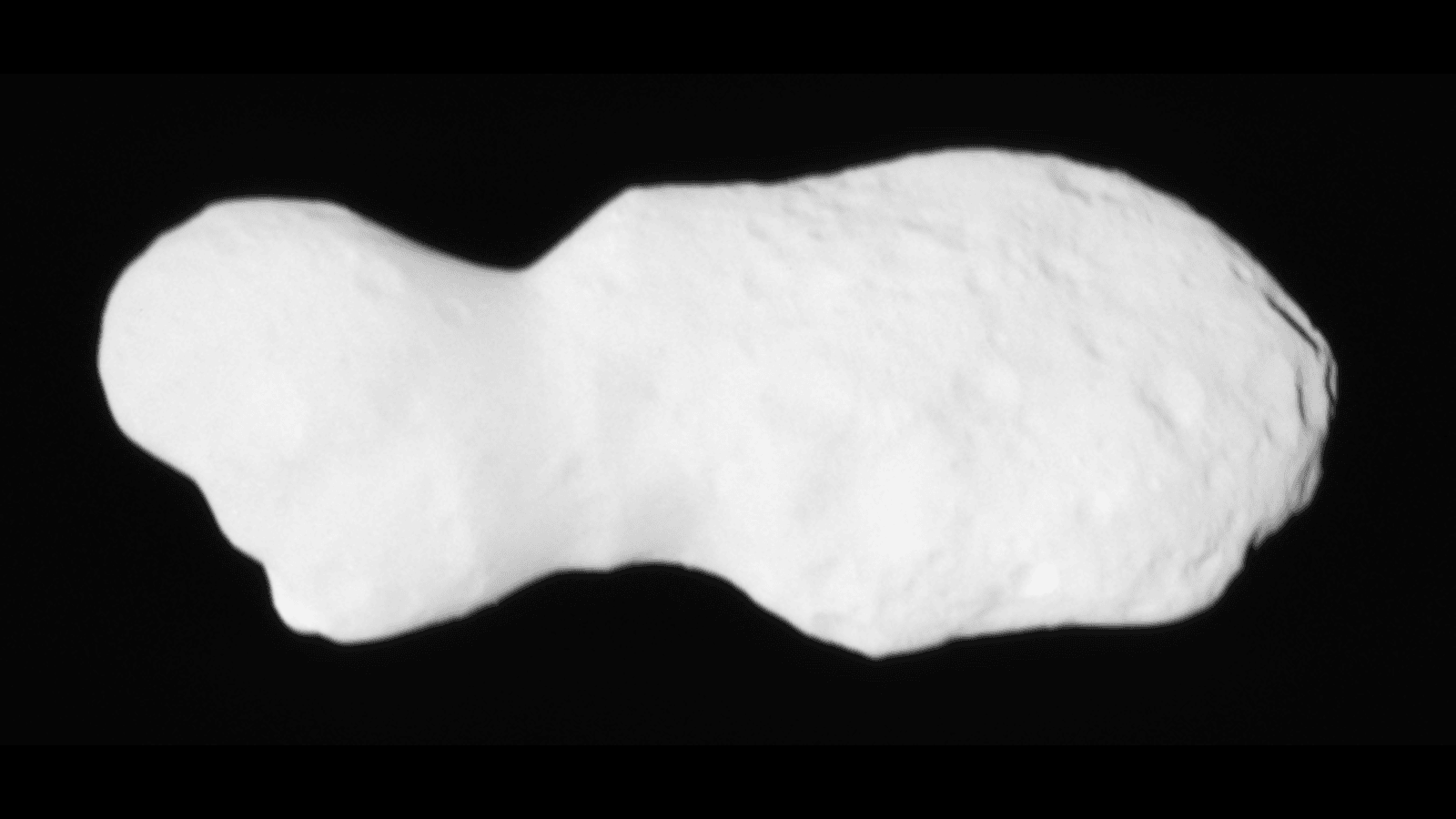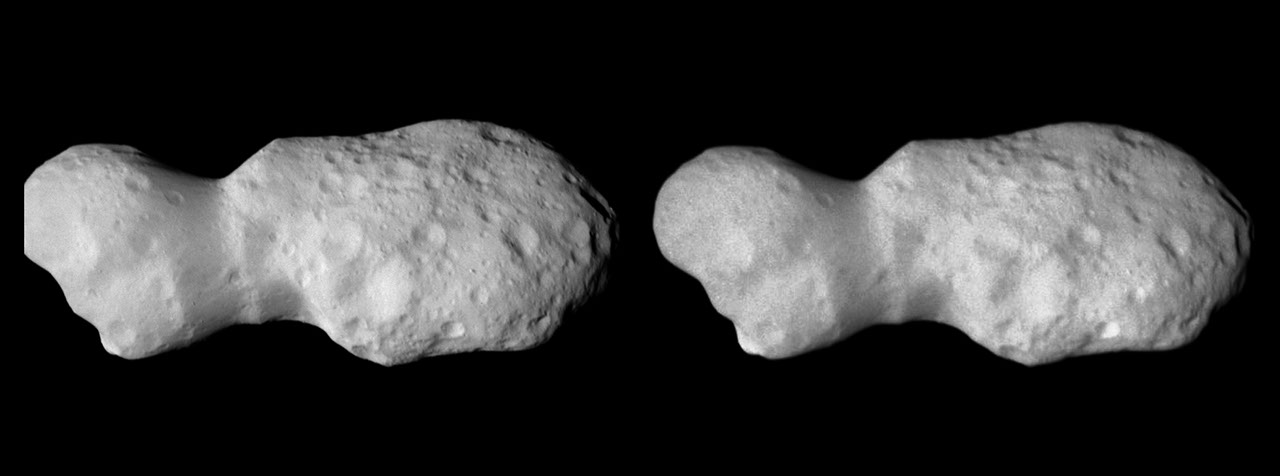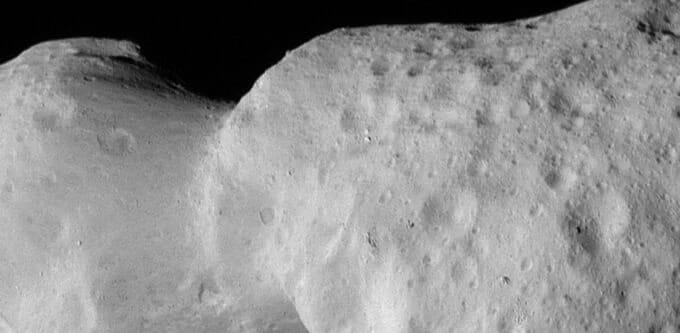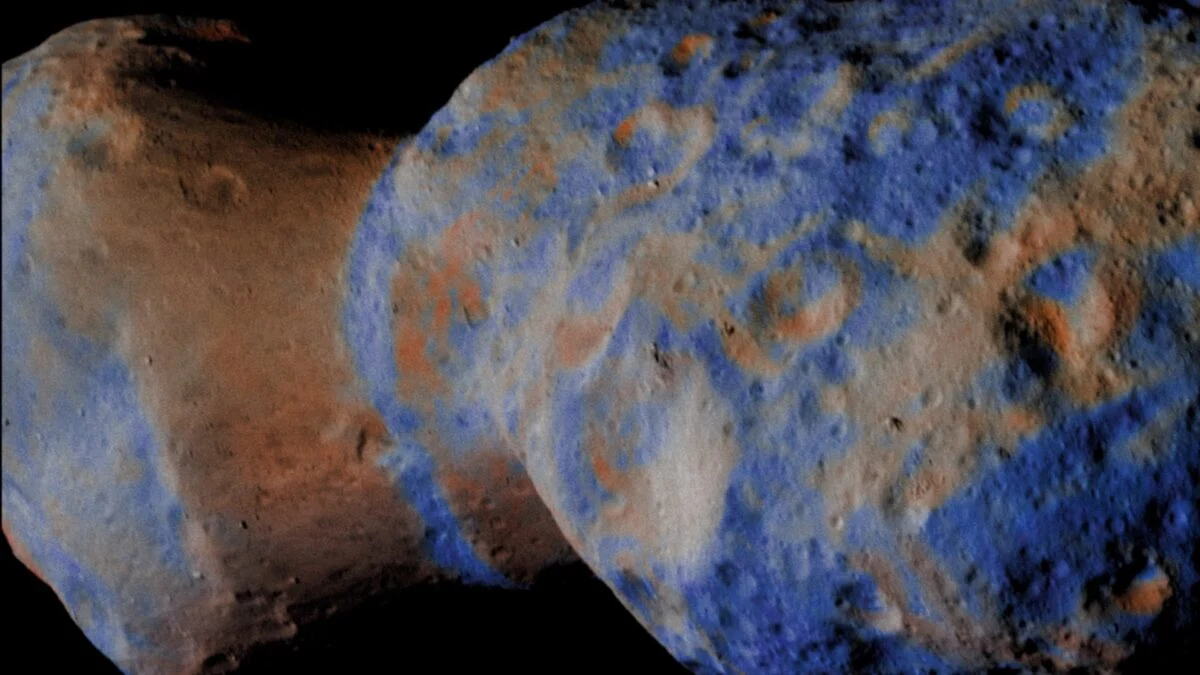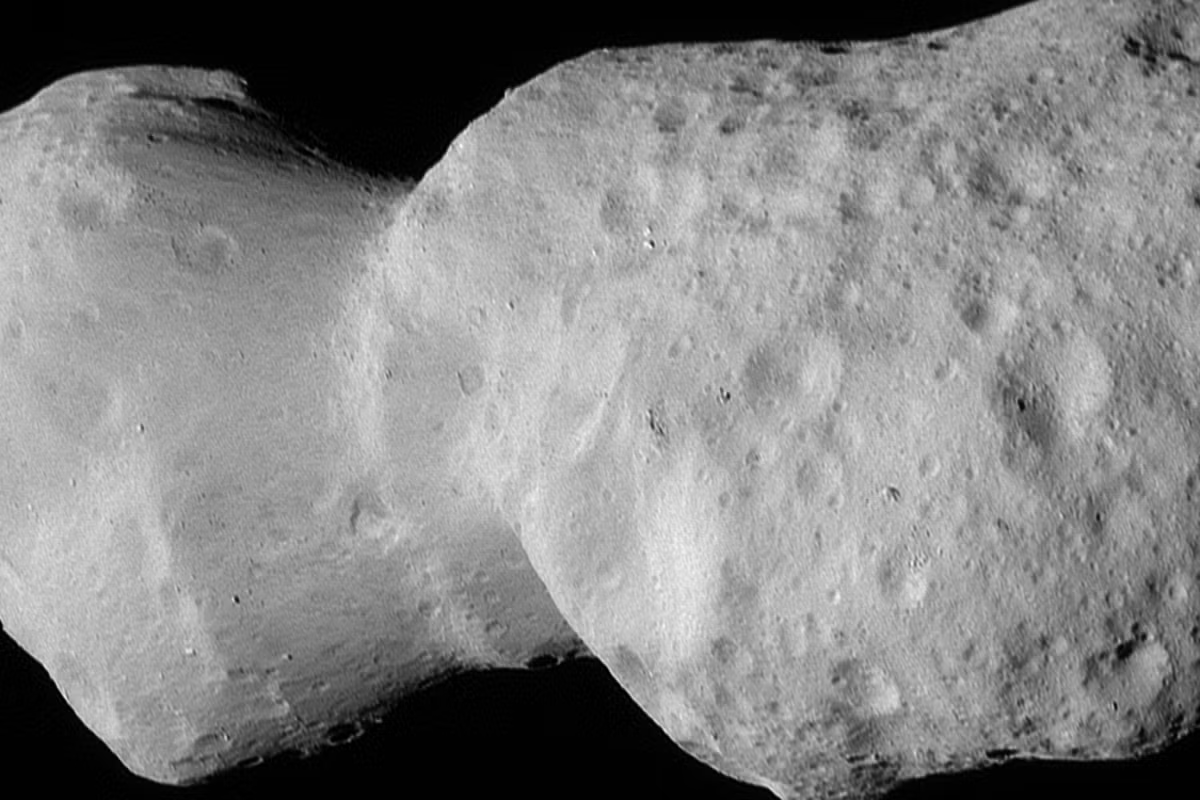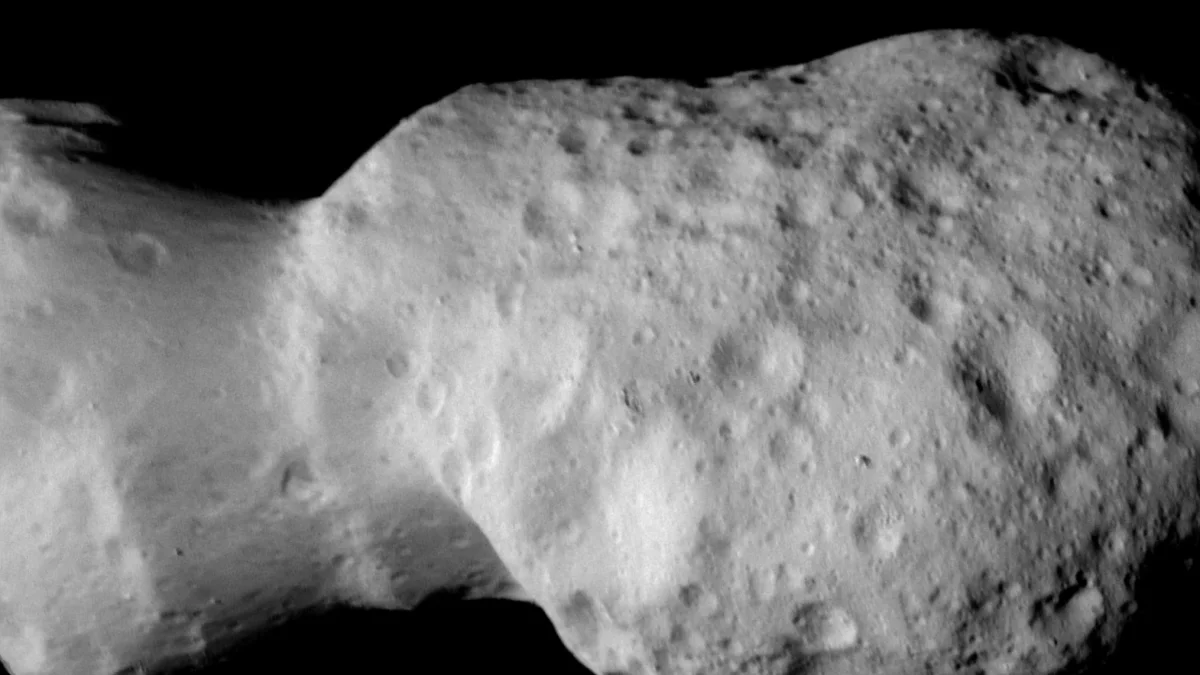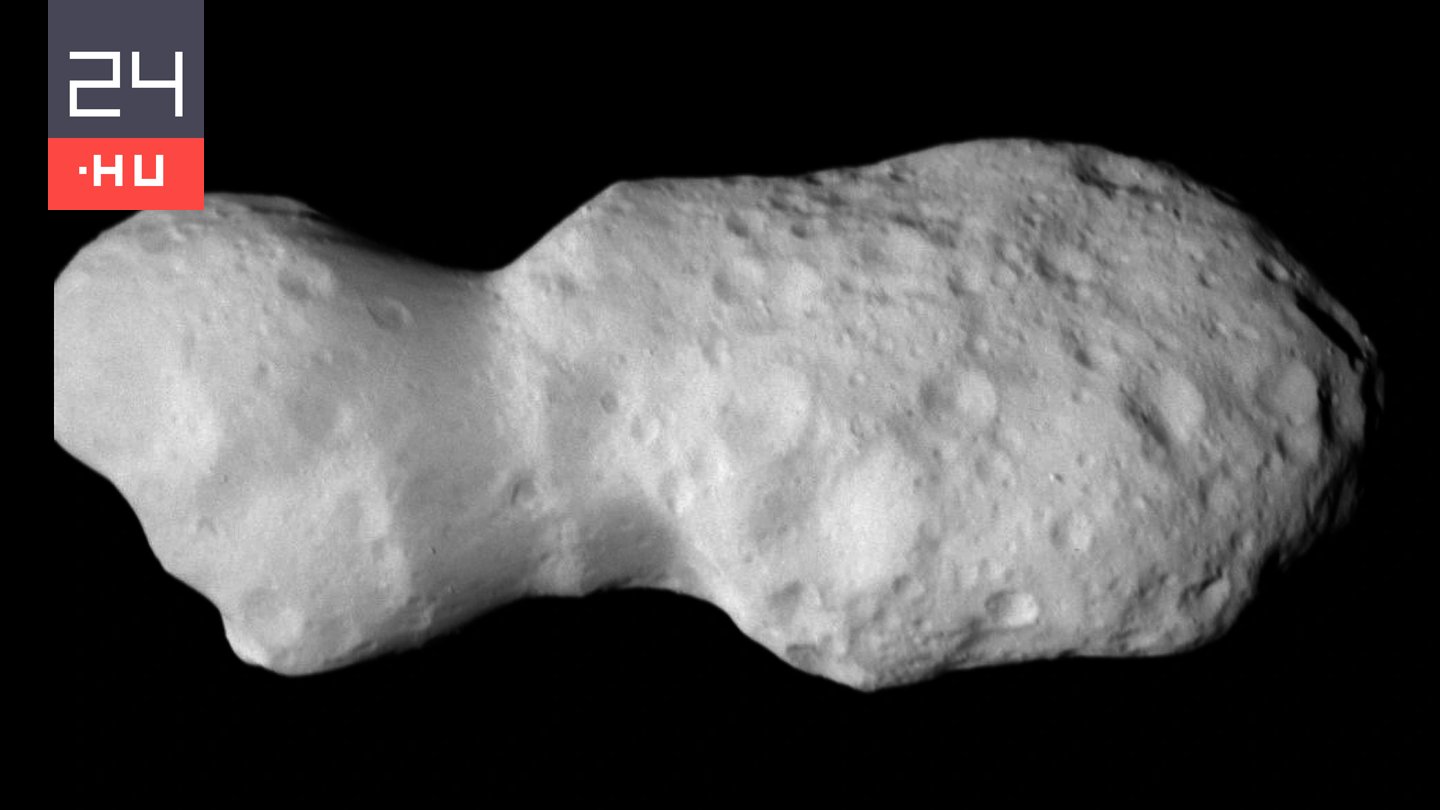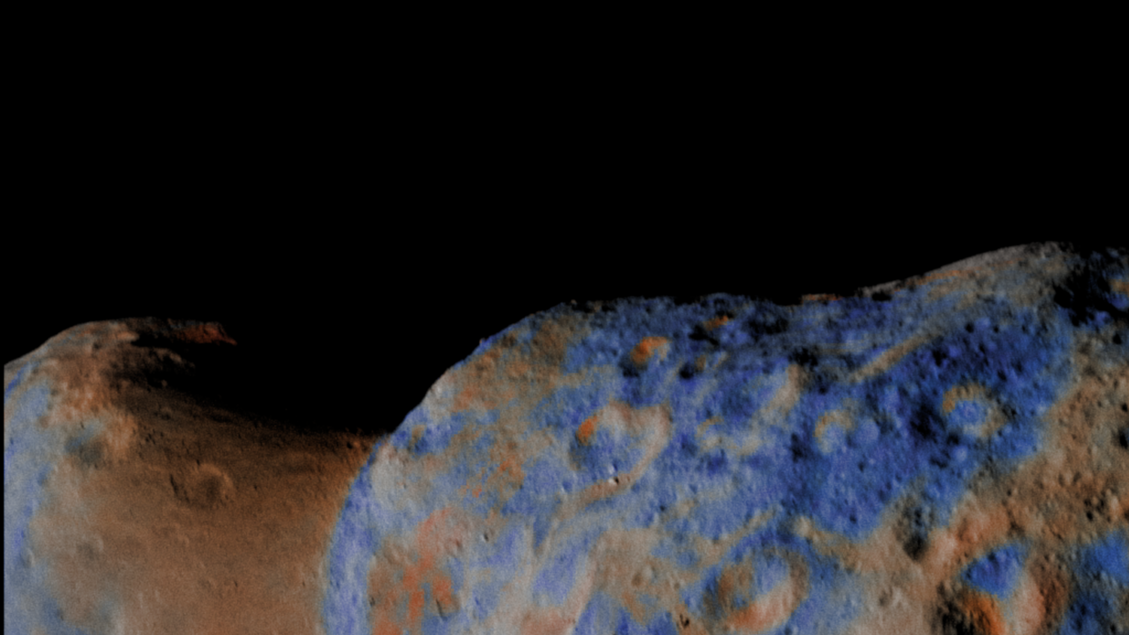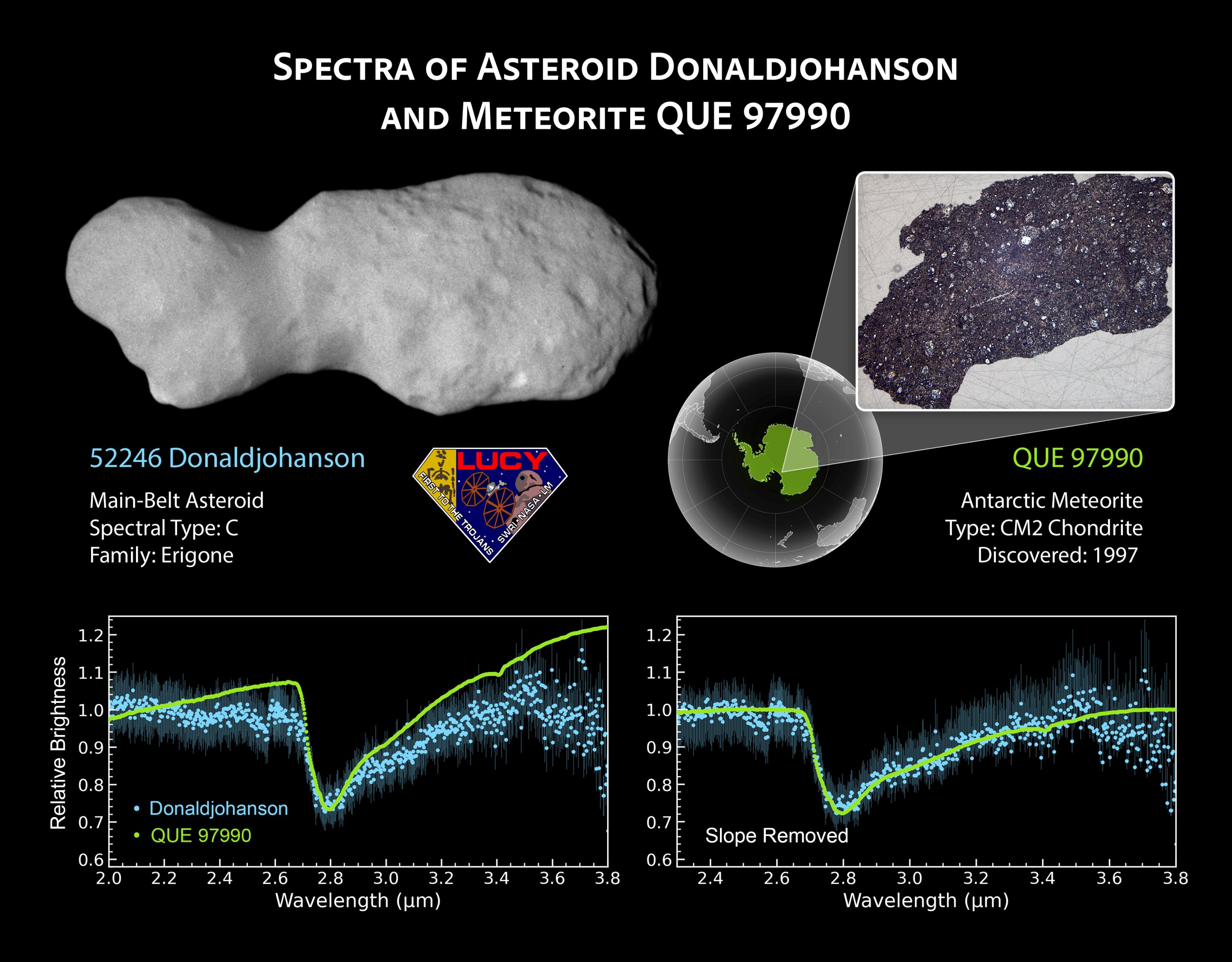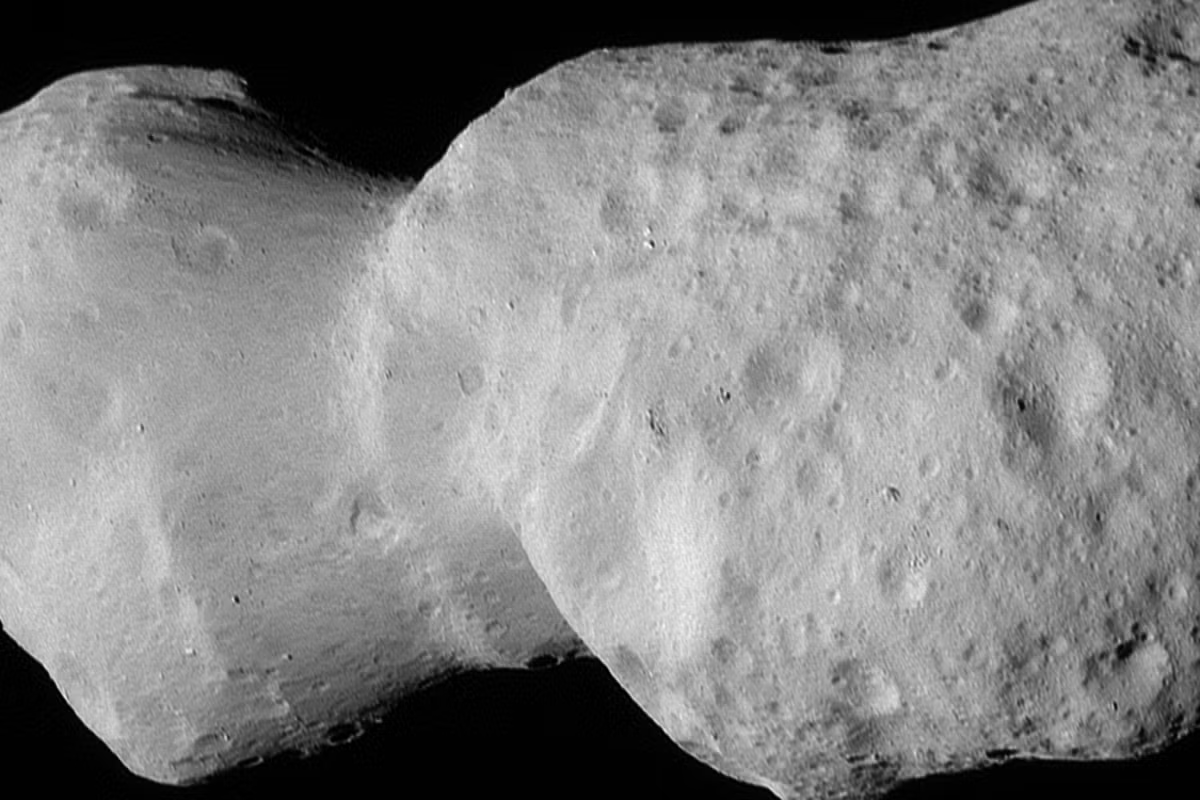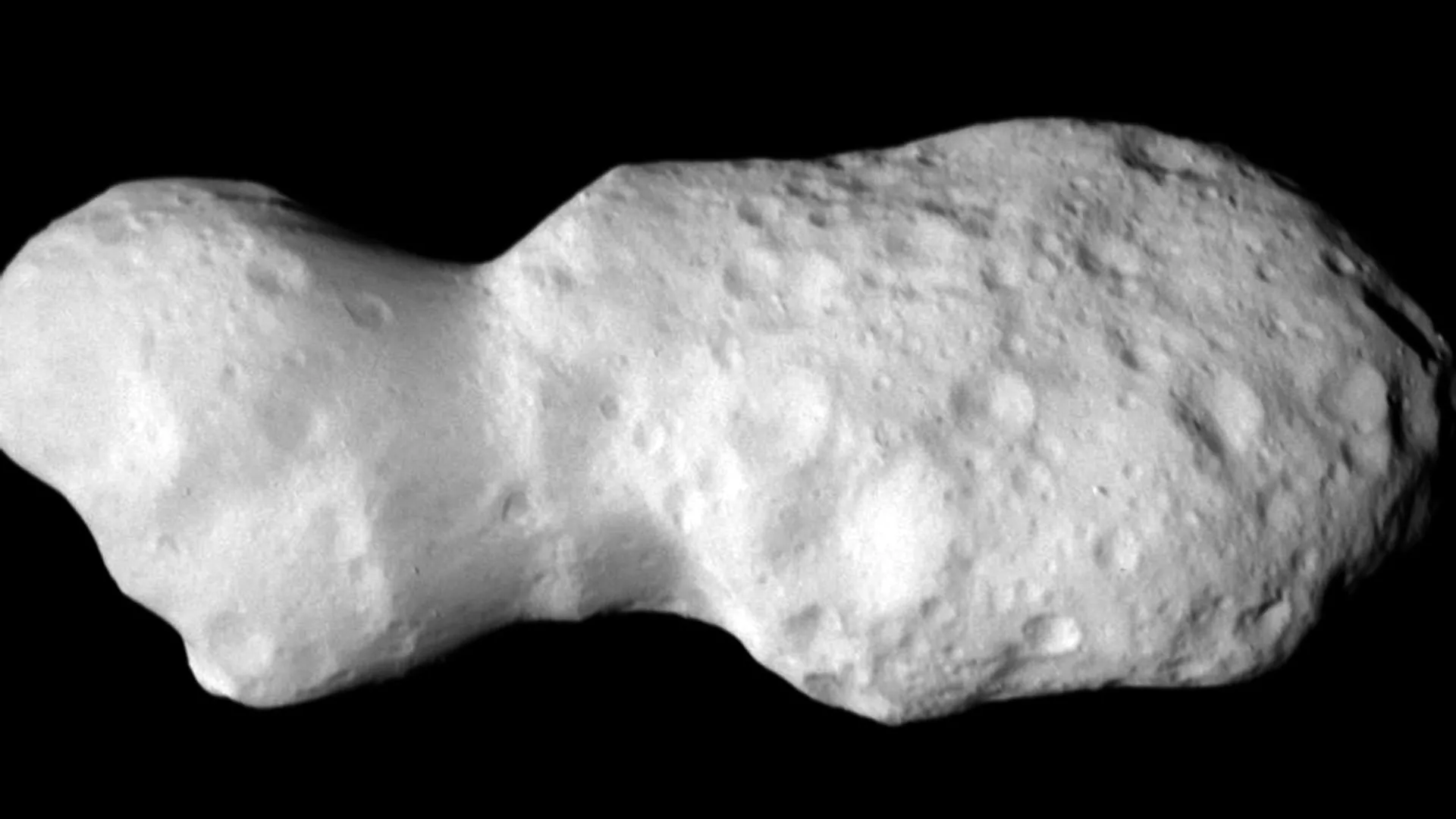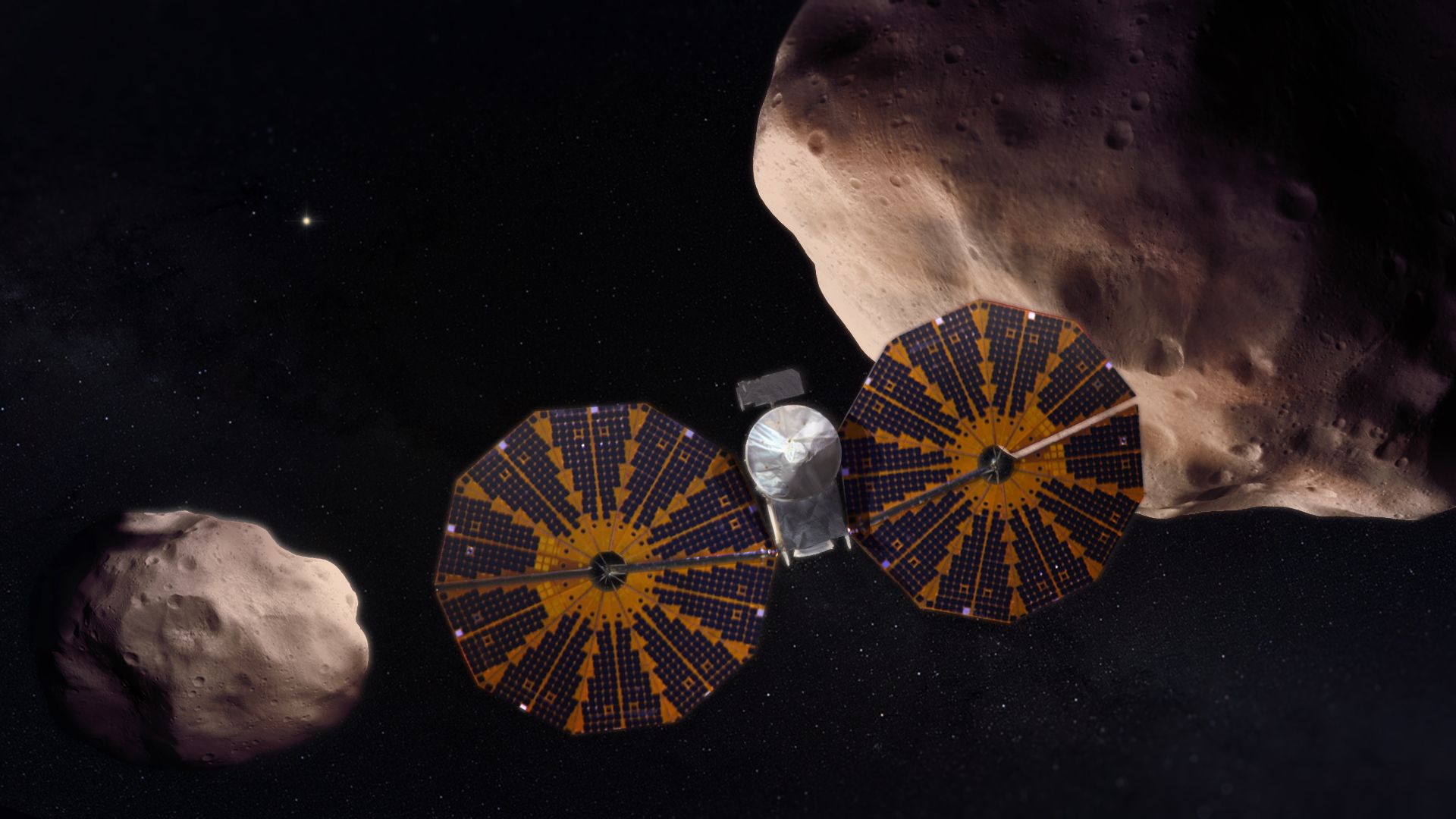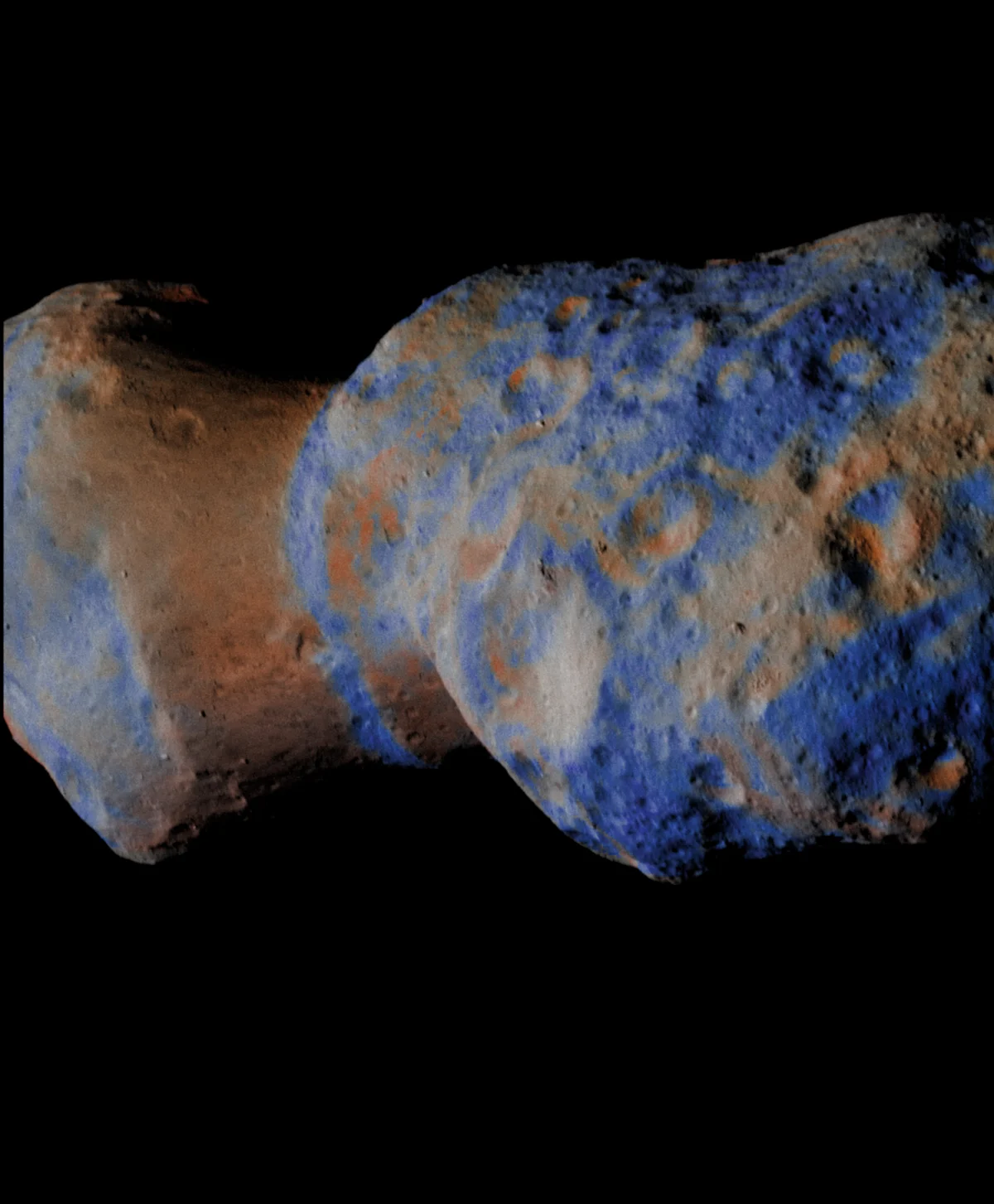
Next summer, NASA’s Lucy spacecraft will start sidling up to several asteroids near Jupiter. On its way there, it has studied another space rock up closeBy Lee Billings edited by Claire CameronThe asteroid Donaldjohanson as observed by NASA’s Lucy Spacecraft on April 20, 2025. The grey-scale optical image is overlain by a false-color map indicating the gravitational slopes on the asteroid’s surface. NASA/GSFC/SwRI/JHU-APL/DLRNASA’s Lucy spacecraft is on a long-haul, first-of-its-kind voyage to unlock the secret history of our solar system, but it’s also filling in more details about more ordinary space rocks along the way.Launched with minimal fanfare in the autumn of 2021, as the COVID pandemic dominated world news, the mission has been quietly plying interplanetary space ever since on a six-year trip to the vicinity of Jupiter. In August 2027 it will arrive at the first of its half-dozen primary targets— “Trojan” asteroids, which swarm by the millions around Jupiter in two great clouds, one ahead of the planet and the other trailing behind.The Trojans are thought to be “fossils” from the solar system’s rough-and-tumble early days, ancient relics pushed into their current locales by violent gravitational interactions between the giant planets. Earth-impacting shrapnel from those primordial upheavals may have helped seed our planet with the precursors for life, delivering water and organic compounds from the dark, icy depths of the outer solar system.On supporting science journalismIf you're enjoying this article, consider supporting our award-winning journalism by subscribing. By purchasing a subscription you are helping to ensure the future of impactful stories about the discoveries and ideas shaping our world today.On it way to the Trojans, the spacecraft has tested its instruments in opportunistic studies of main-belt asteroids, which lie between Mars and Jupiter. Lucy flew by one called Dinkinesh in 2023 and then another called Donaldjohanson in 2025. (The latter object is a slowly tumbling, peanut-shaped space rock that is about twice as long as Central Park. Its name honors paleoanthropologist Donald Johanson, who discovered the “Lucy” hominin fossils that transformed our understanding of human origins and inspired the mission’s moniker.)And now, in a study published today in Science, the Lucy team is reporting what it learned from that second asteroid flyby.The results aren’t necessarily surprising, but they demonstrate how much information Lucy can gain even from a brief encounter, previewing some of the spectacular science the probe will perform in the Trojan clouds, which no spacecraft has ever visited before.Donaldjohanson wasn’t just “a target of opportunity” to assess Lucy’s instruments, says Simone Marchi, an astrophysicist at the Southwest Research Institute. Marchi is the Lucy mission’s deputy principal investigator and lead author of the new study. That’s because scientists already had a good idea of the asteroid’s provenance: it is a likely member of the Erigone family, a group of asteroids thought to be fragments of a larger body that shattered from a great impact about 150 million years ago.“In terms of the solar system’s history, that’s practically yesterday,” Marchi says, which makes Donaldjohanson a relatively fresh “anchor point” for understanding the subtle ways that asteroids change over time.“On billion-year timescales it’s really hard to tell apart one process from the other, because there are so many things intervening and happening,” Marchi says. “Here, we had an almost ideal situation to test our knowledge and learn more about these processes, some of which will be applicable at the Trojans as well.”Collisions, Marchi says, are the dominant agent of change for asteroids, and Donaldjohanson proved to be no exception. Lucy’s measurements of the asteroid’s composition show Donaldjohanson is similar to other carbon-rich Erigone asteroids and revealed water-altered minerals that likely formed within the Erigone family’s parent body before it was shattered by a collision.More importantly, images from Lucy allowed Marchi and colleagues to carefully count the craters pocking Donaldjohnson’s surface and sort them by size, giving the asteroid an estimated age of 155 million years based on the collisional weathering. The space rock’s peanutlike shape and slow tumble, the researchers concluded, are likely related to warming by sunlight: Over millions of years, this can add slight torques to an asteroid’s spin, changing its rate and redistributing materials across the surface.Curiously, the asteroid’s tapered “neck” between its two lobes is almost bereft of craters less than about half a kilometer in size—a sign, Marchi says, of crater-erasing landslides as Donaldjohanson’s spin slowed, as well as a possible asteroid-shaking impact about 40 million years ago.“It’s remarkable that we can come up with this sort of holistic evolutionary picture,” Marchi says. “We’re not able to do this for most other asteroids, because we don’t know as much about how and when they formed… We’re not claiming we now understand everything [about Donaldjohanson], but what we know so far is a nice story that makes sense with our previous understanding.”Lucy’s next stop will be the 68-kilometer-wide Trojan asteroid Eurybates and its satellite rock, Queta, which the spacecraft will swoop by on August 12, 2027. It will pass by three other Trojans in the asteroid cloud ahead of Jupiter, before flying by Earth in 2031. The probe will then use our planet’s gravity to pick up speed for an encounter with another binary asteroid in the Trojan cloud trailing Jupiter in 2033.It’s Time to Stand Up for ScienceIf you enjoyed this article, I’d like to ask for your support. Scientific American has served as an advocate for science and industry for 180 years, and right now may be the most critical moment in that two-century history.I’ve been a Scientific American subscriber since I was 12 years old, and it helped shape the way I look at the world. SciAm always educates and delights me, and inspires a sense of awe for our vast, beautiful universe. I hope it does that for you, too.If you subscribe to Scientific American, you help ensure that our coverage is centered on meaningful research and discovery; that we have the resources to report on the decisions that threaten labs across the U.S.; and that we support both budding and working scientists at a time when the value of science itself too often goes unrecognized.In return, you get essential news, captivating podcasts, brilliant infographics, can't-miss newsletters, must-watch videos, challenging games, and the science world's best writing and reporting. You can even gift someone a subscription.There has never been a more important time for us to stand up and show why science matters. I hope you’ll support us in that mission.
NASA’s Lucy mission reveals an asteroid’s hidden history
Next summer, NASA’s Lucy spacecraft will start sidling up to several asteroids near Jupiter. On its way there, it has studied another space rock up close
1,071 words~5 min read