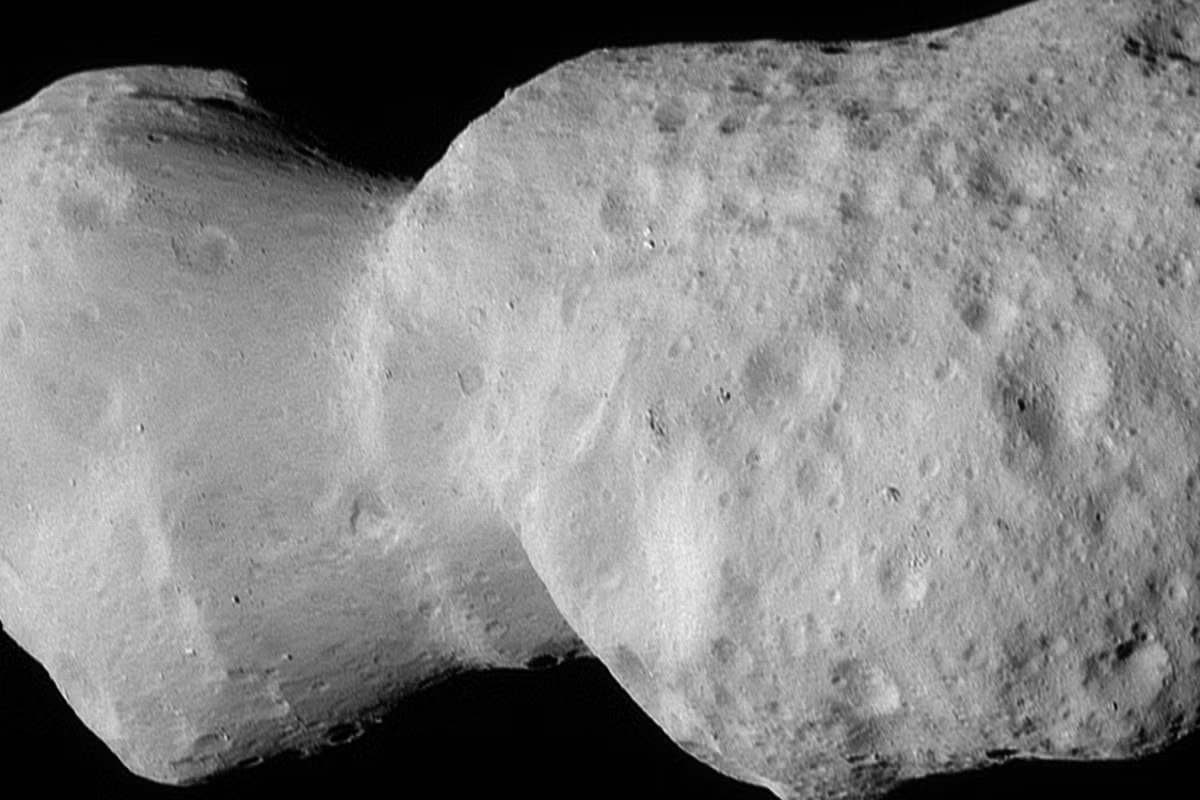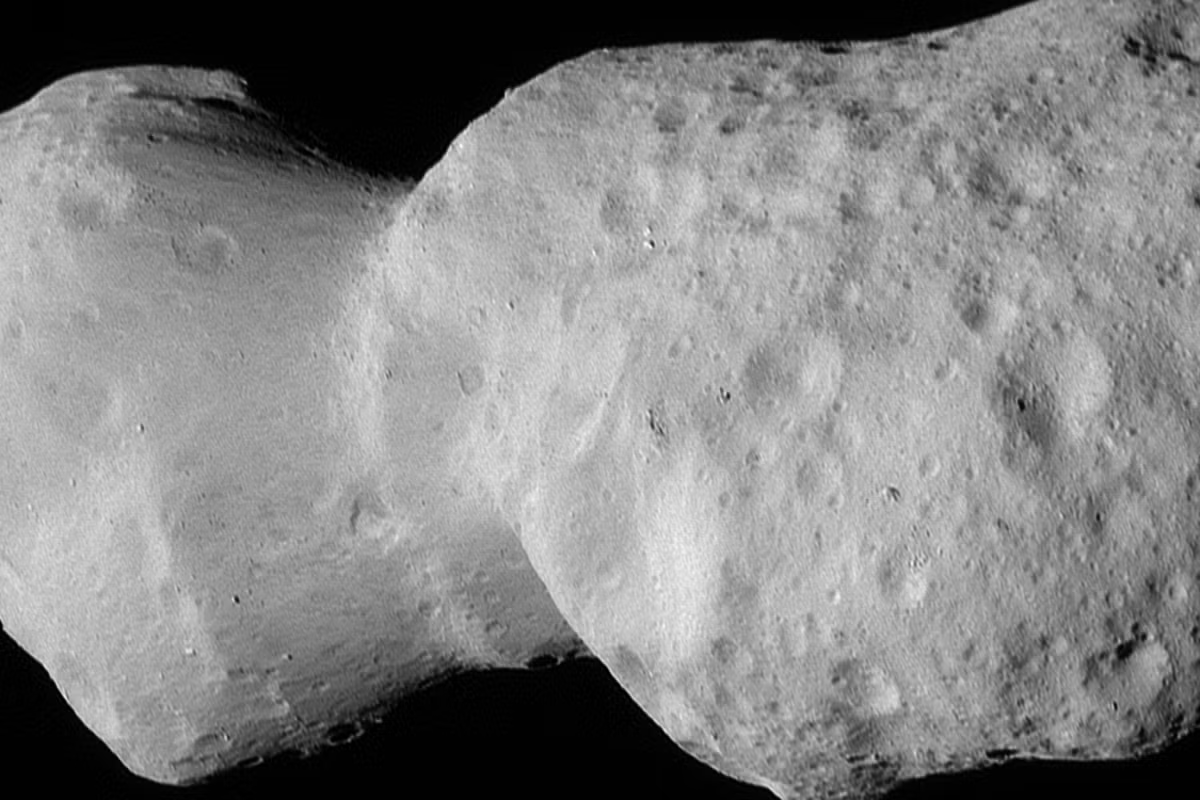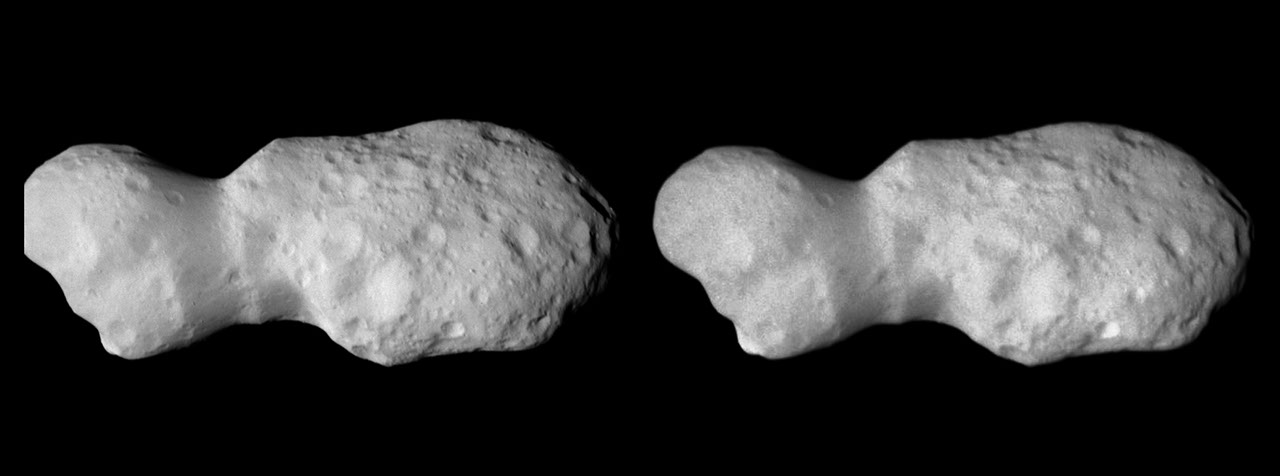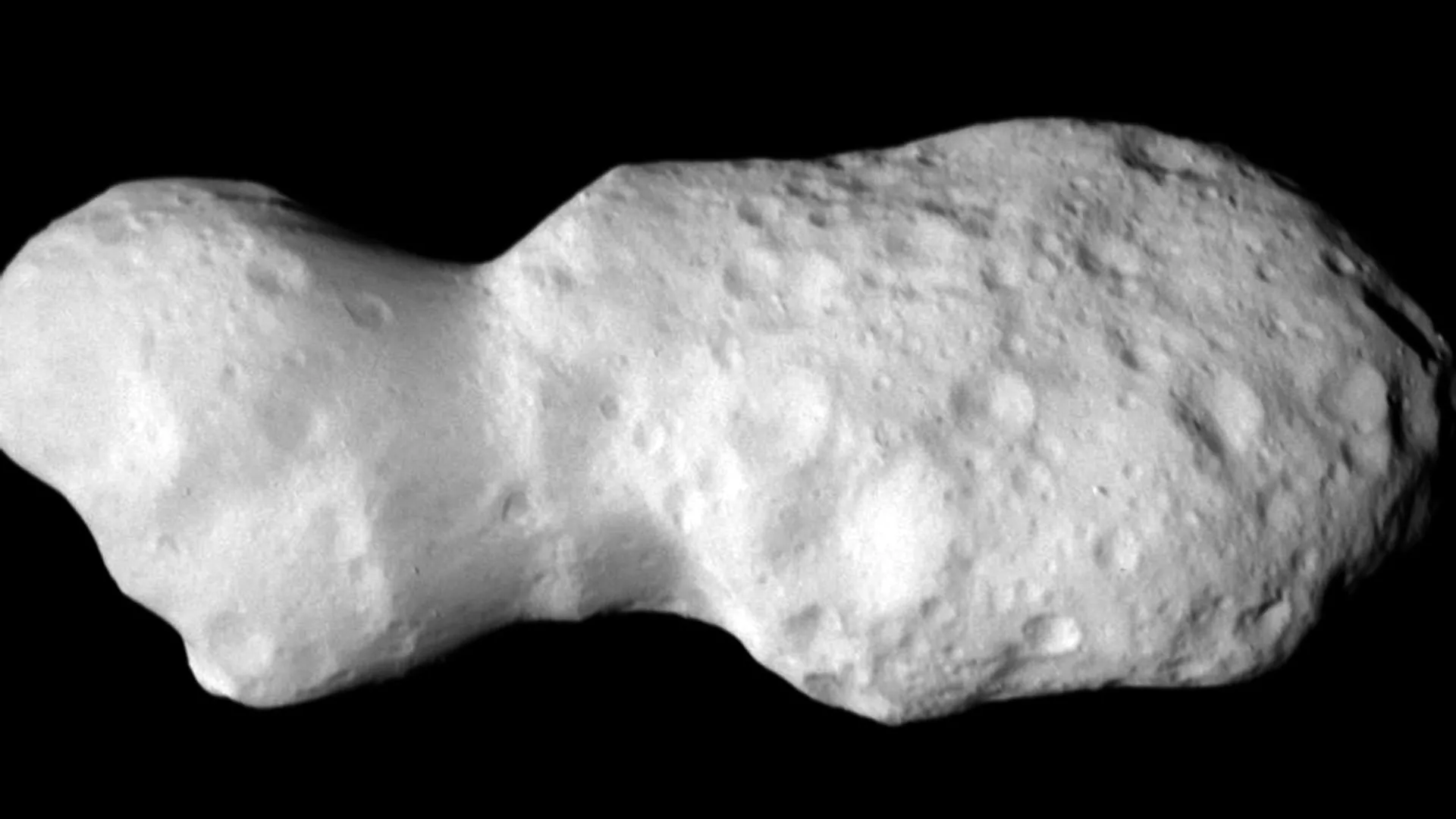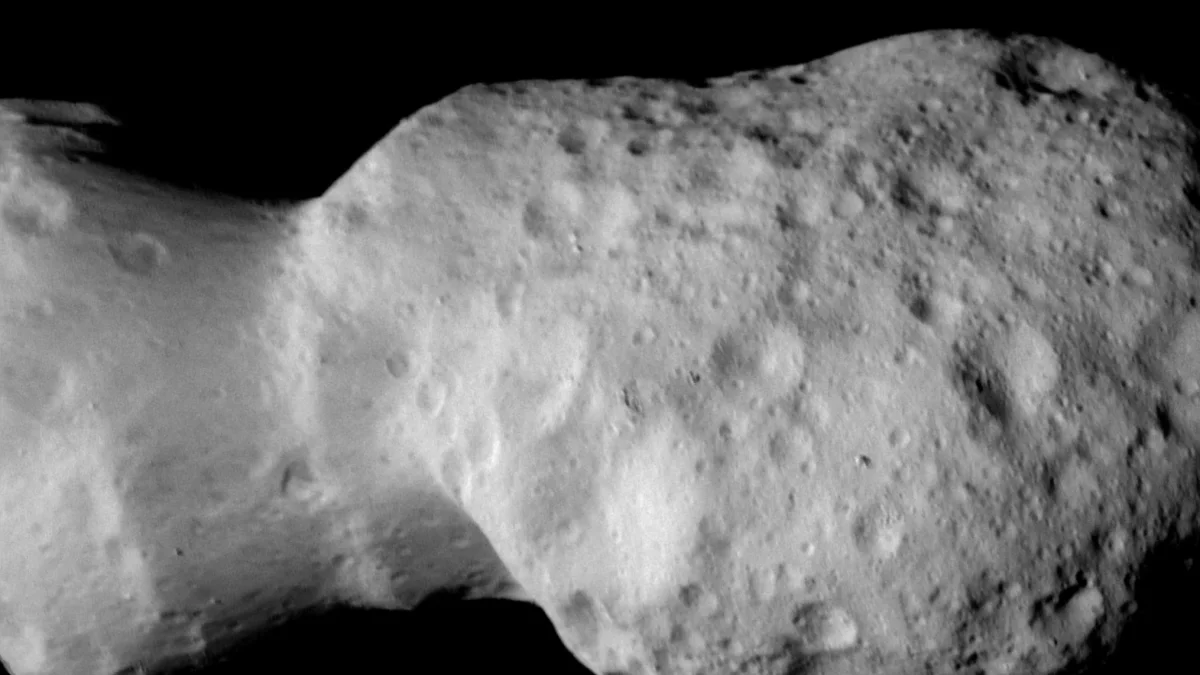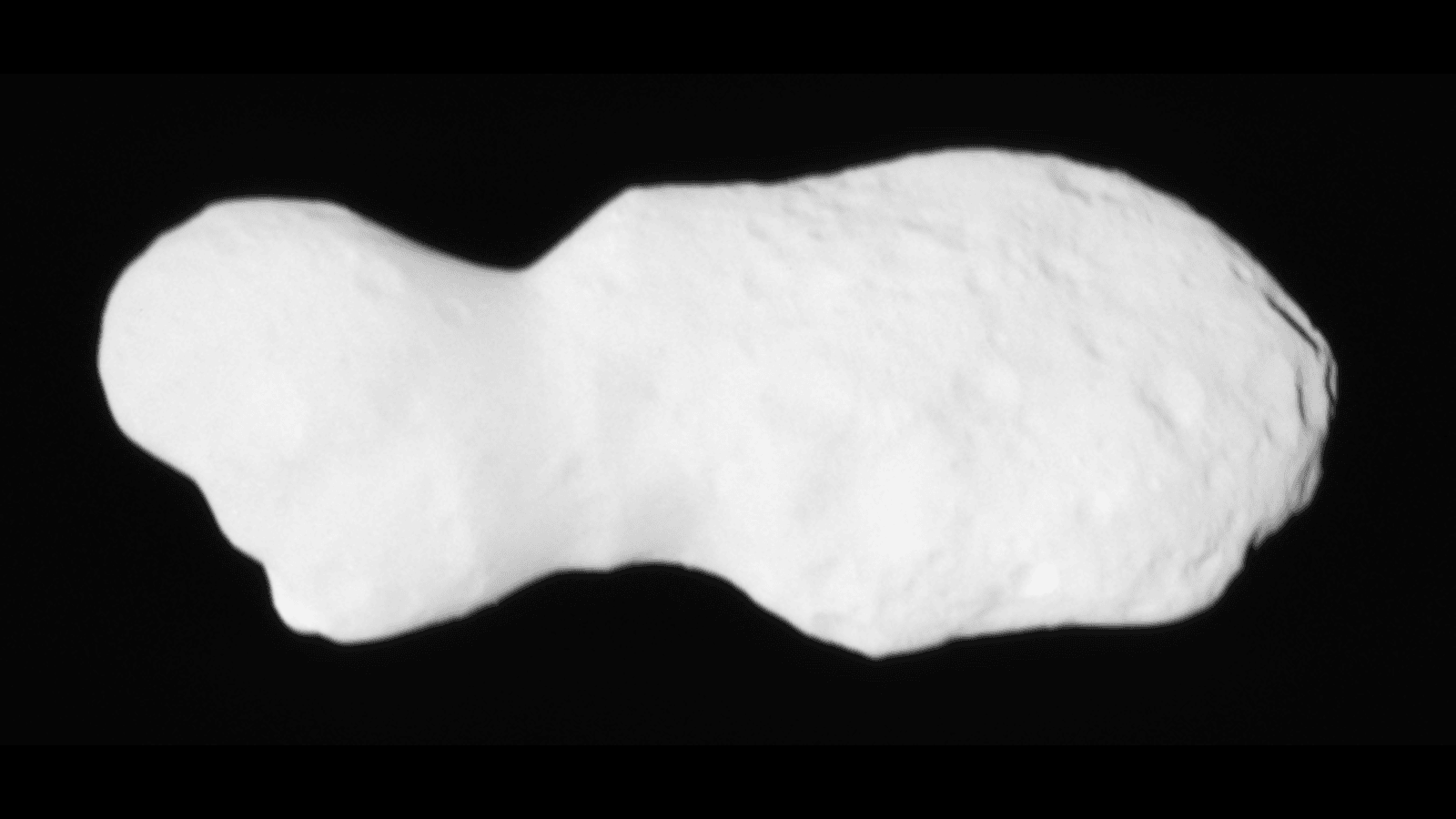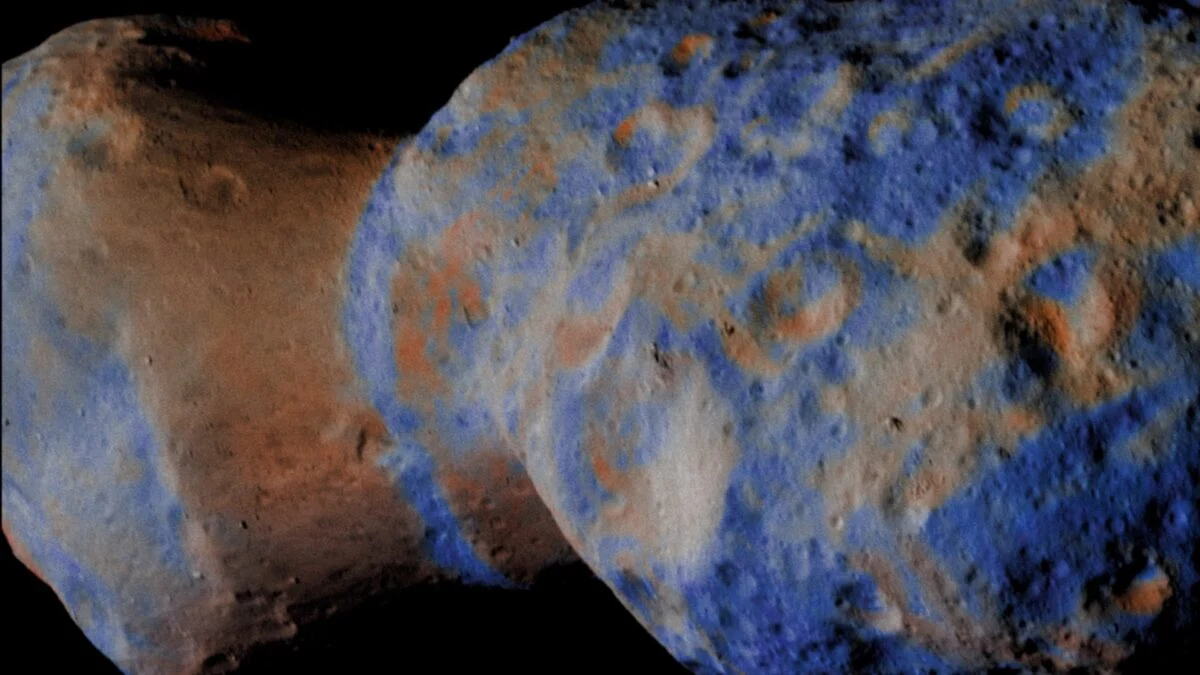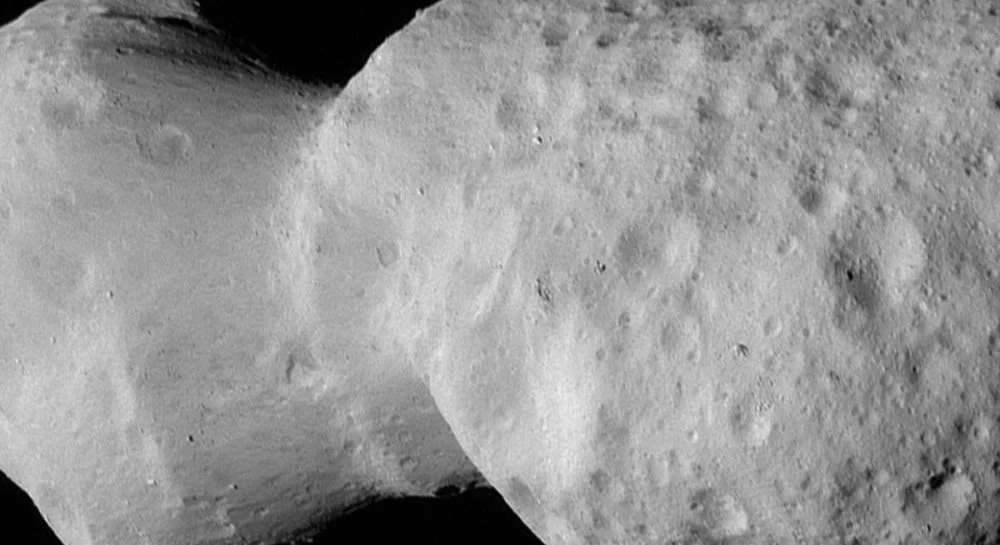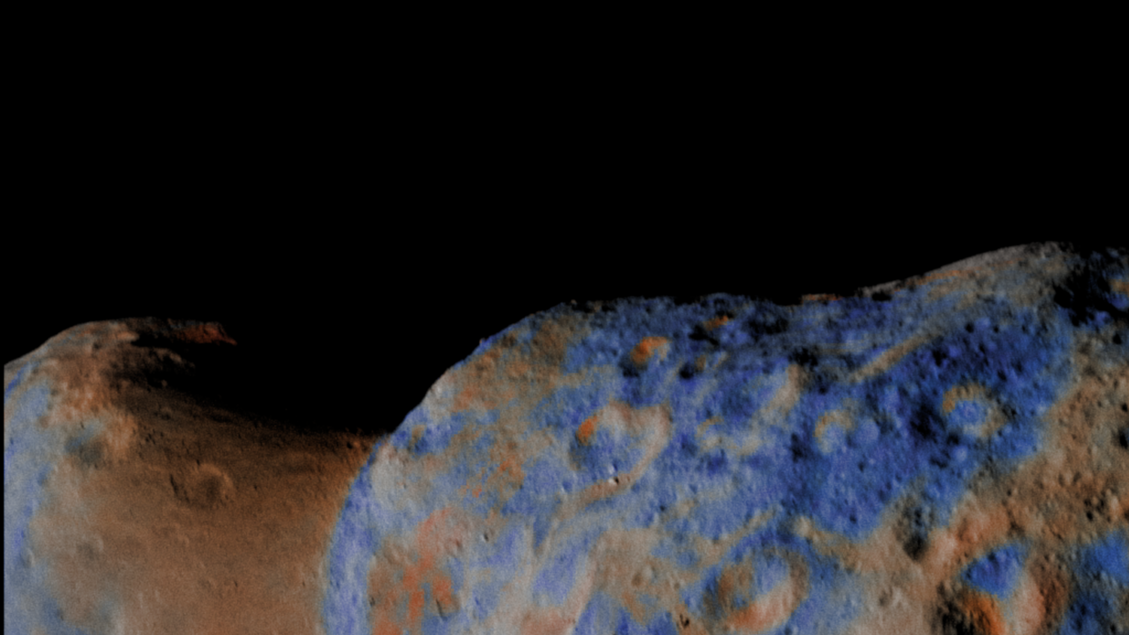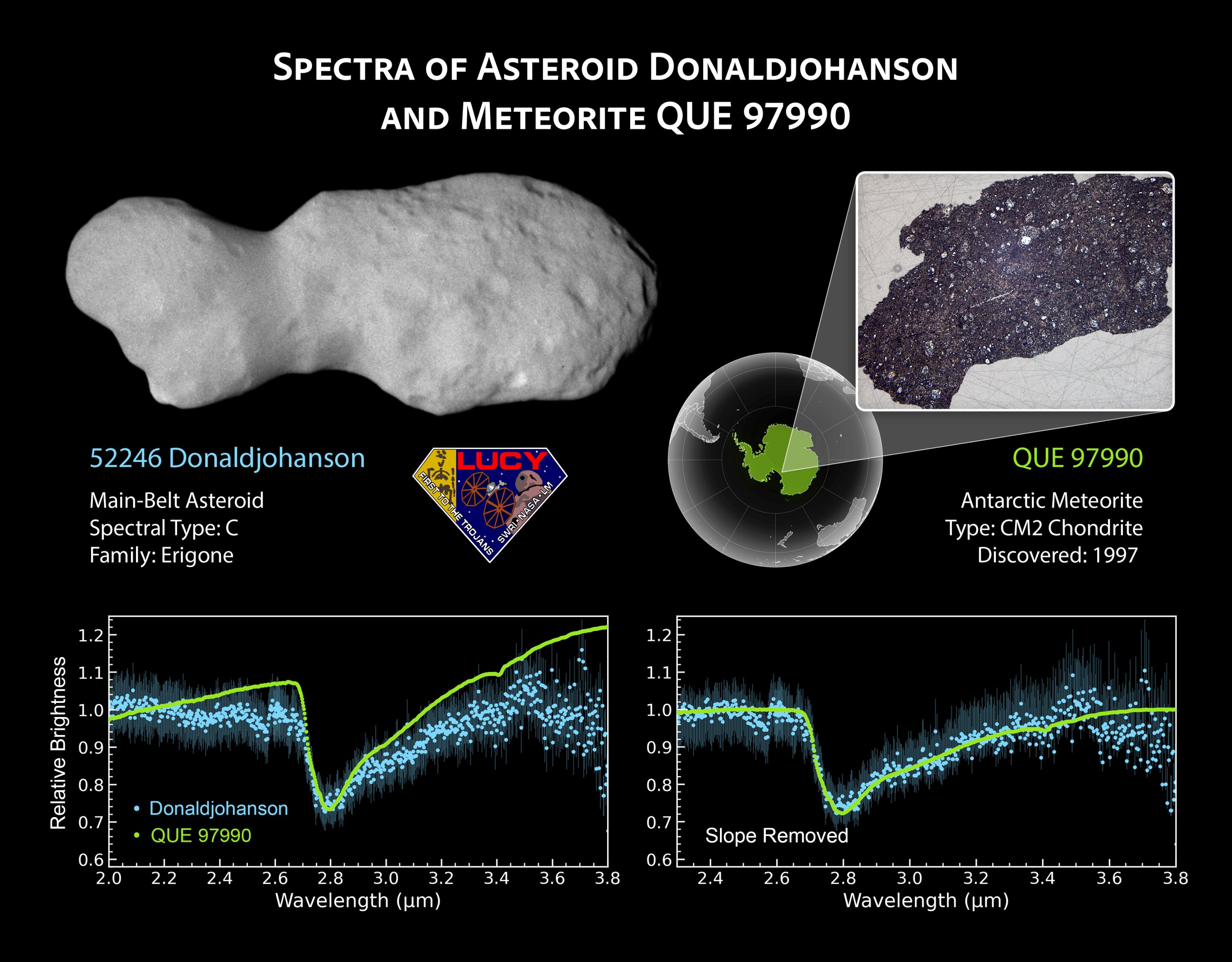
During its April 20, 2025, encounter with the main belt asteroid Donaldjohanson, NASA's Lucy spacecraft discovered evidence for iron-rich clays on the surface of the asteroid using its infrared spectrometer. Recent studies led by SwRI scientists have found that the clays are similar to those found in carbon-rich meteorites such as QUE 97990 and indicate the presence of water on the asteroid in the distant past. Credit: NASA / Goddard / SwRI / Dan Gallagher, JHU-APL
Southwest Research Institute (SwRI) scientists studying the inner main-belt asteroid Donaldjohanson have found that its rotation wobbles. Rather than rolling through space in a steady pattern, Donaldjohanson turns on two axes, rotating end over end once every 10.5 Earth days while wobbling around its horizontal axis every 26.5 days. The findings are published in the journal Science.
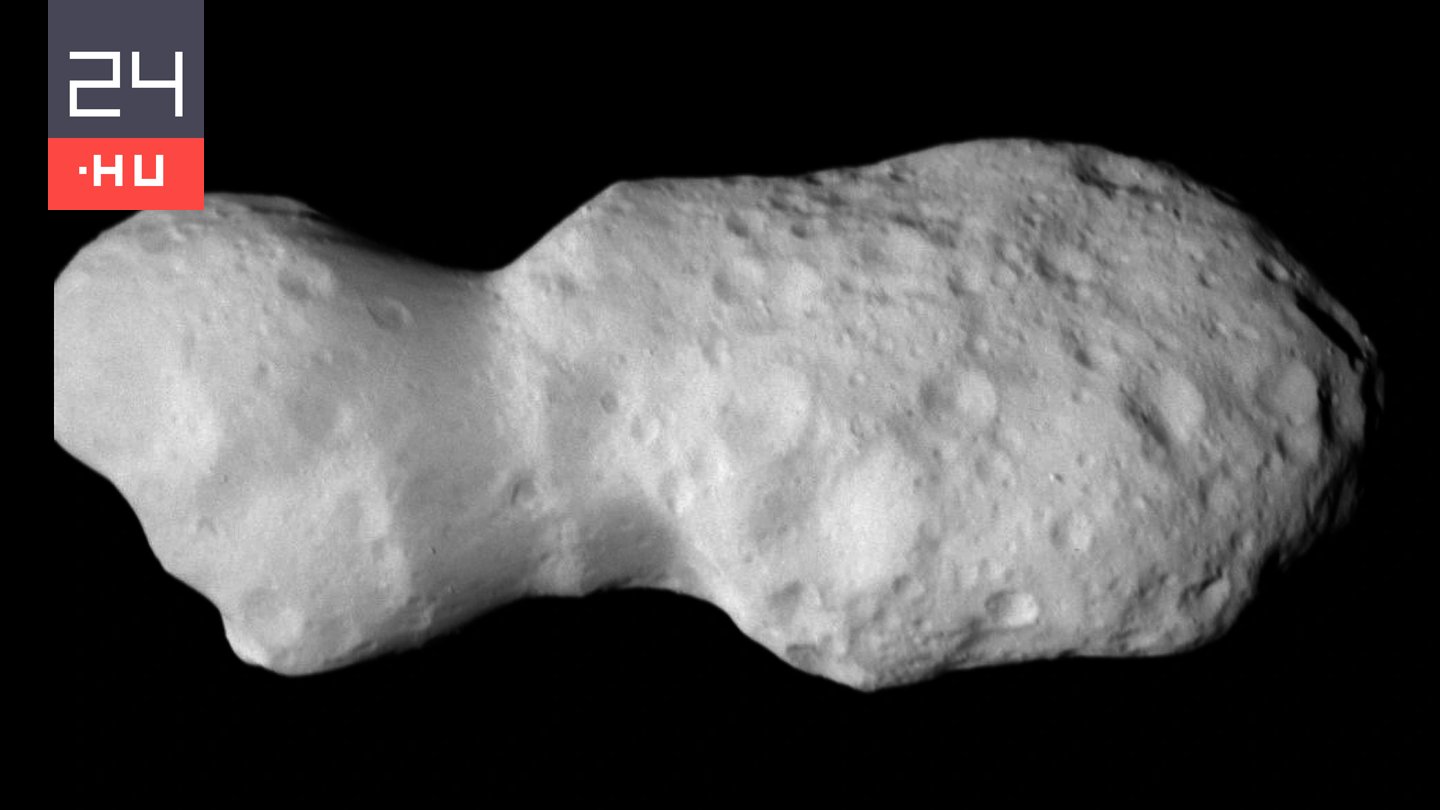
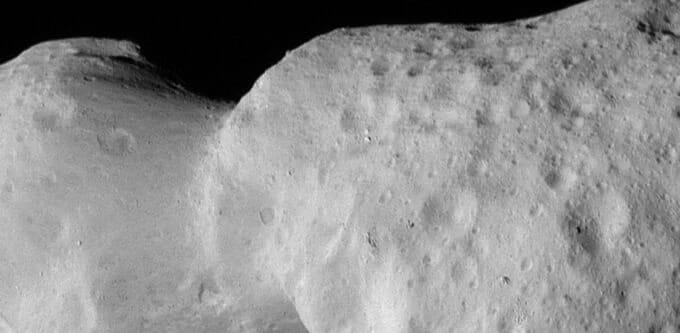
"This is just one of many surprising things learned since NASA's Lucy spacecraft flew by Donaldjohanson on April 20, 2025," said SwRI's Dr. Simone Marchi, deputy principal investigator of the Lucy mission and the study's lead author. "Lucy images confirmed its elongated shape, initially suggested by Earth-based telescope observations. The flyby revealed that the small asteroid, 0.8 kilometer (half a mile) in diameter, resembles a peanut, with a two-lobed structure connected by a narrower neck."