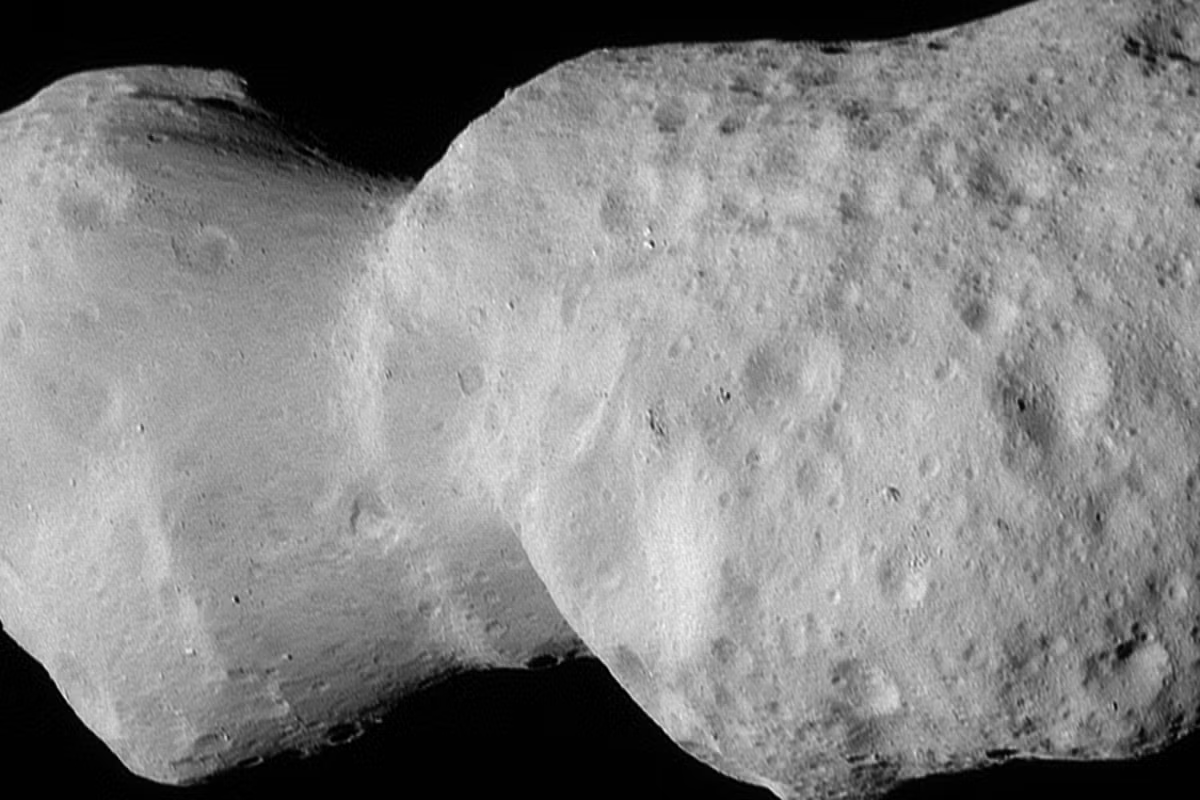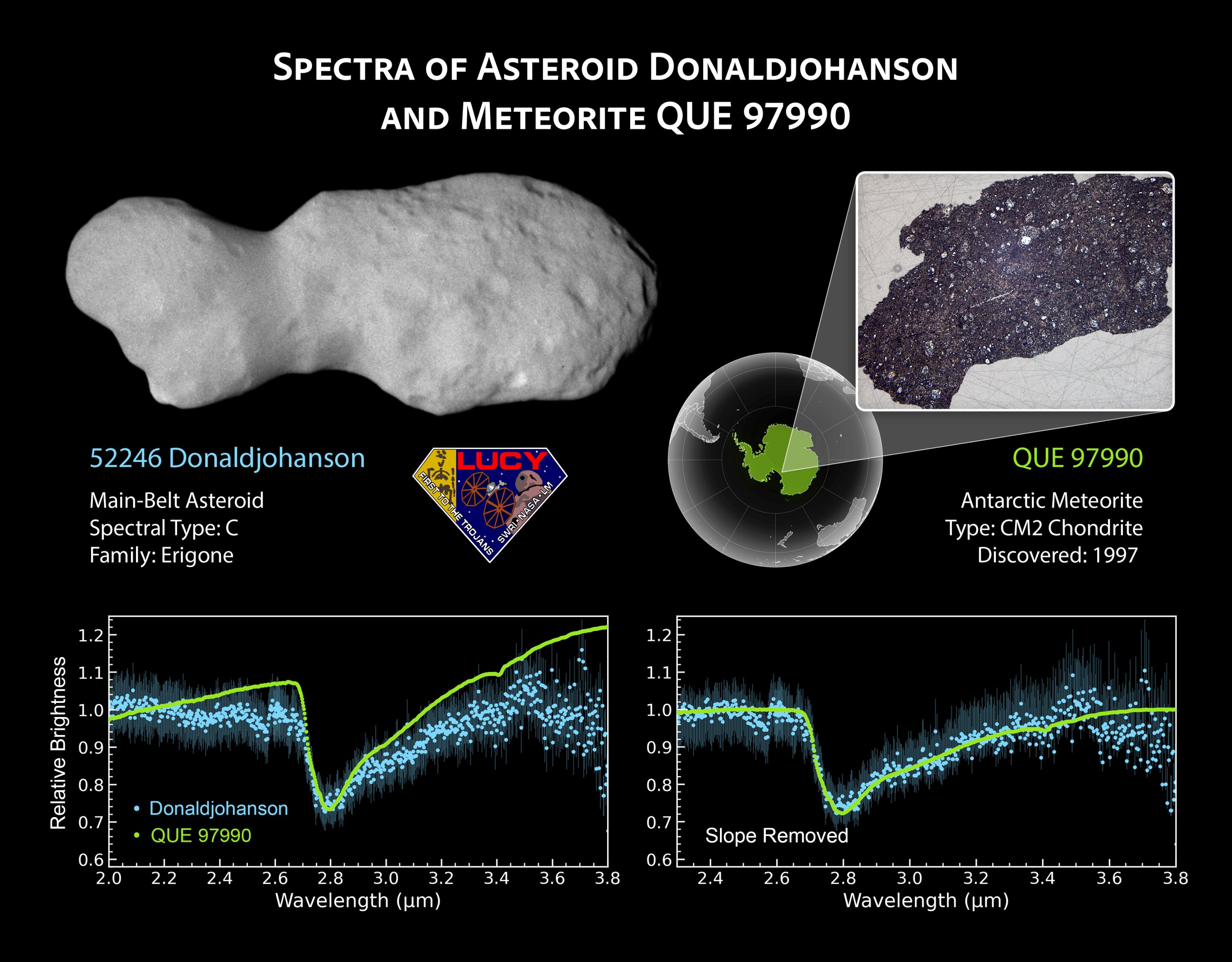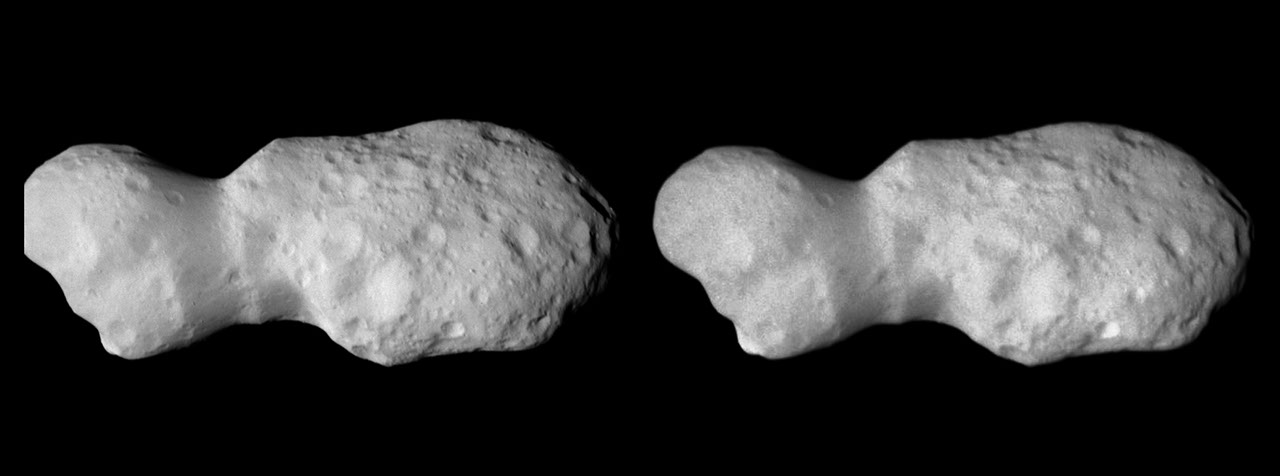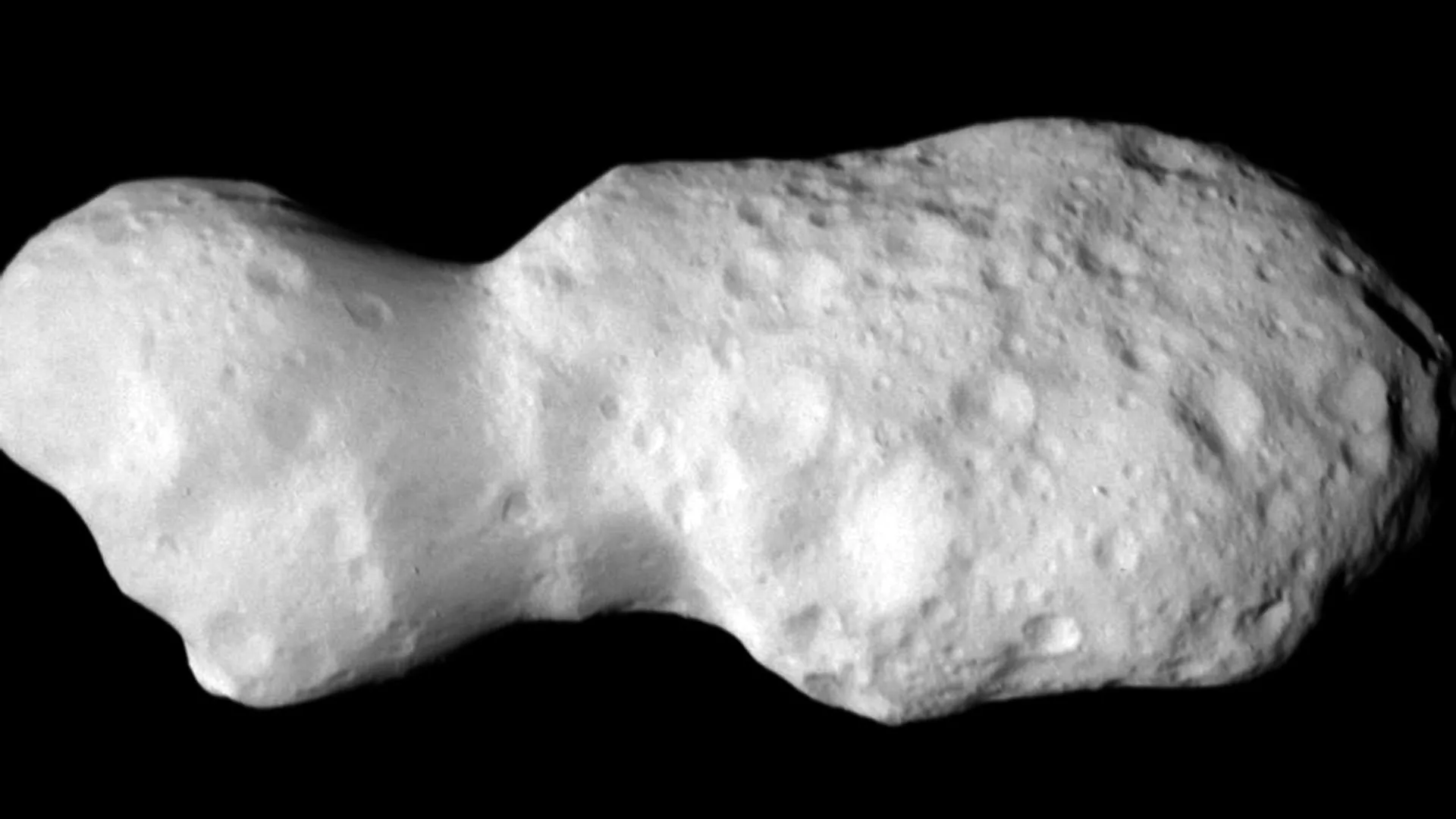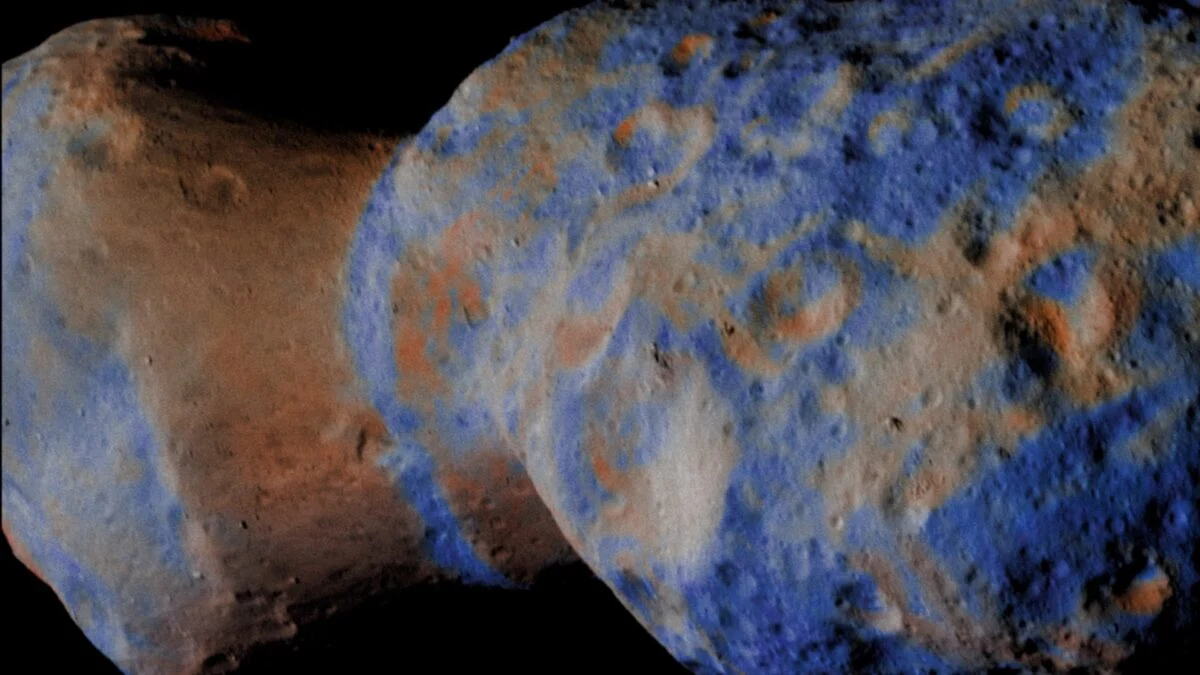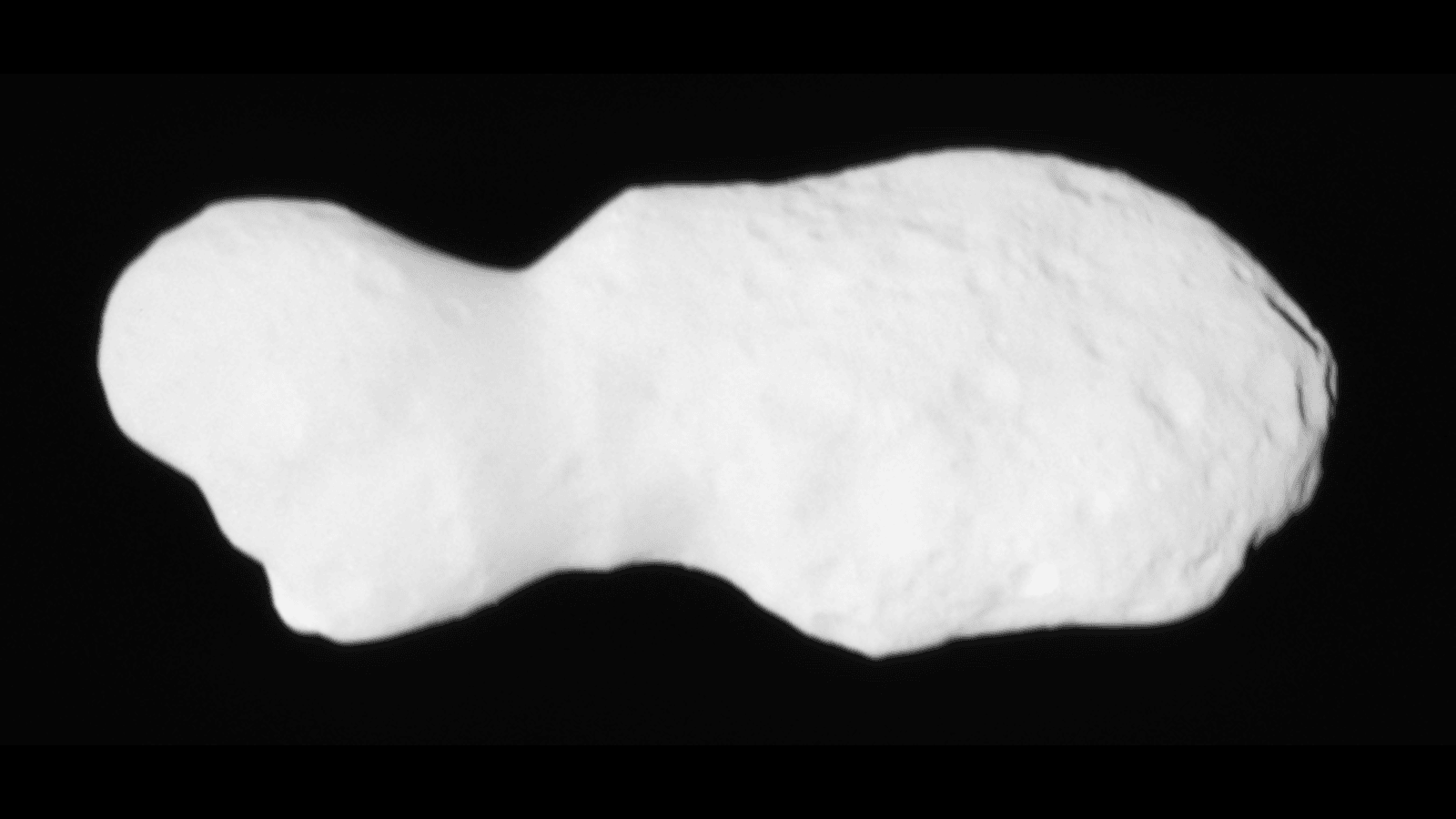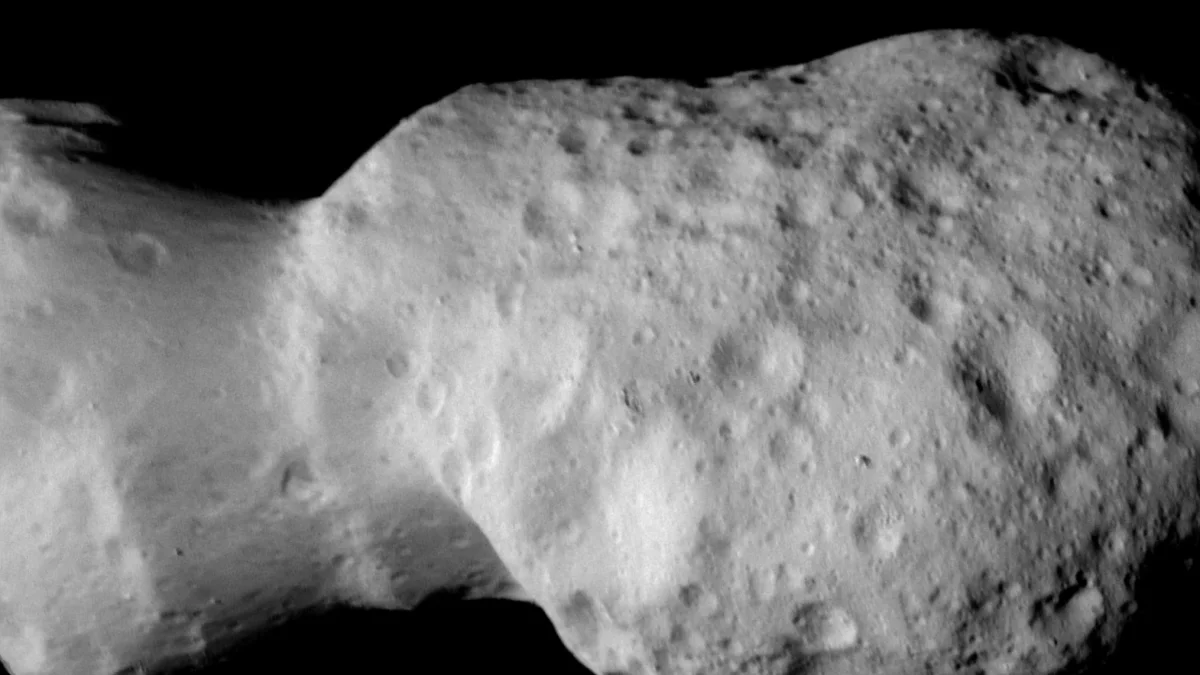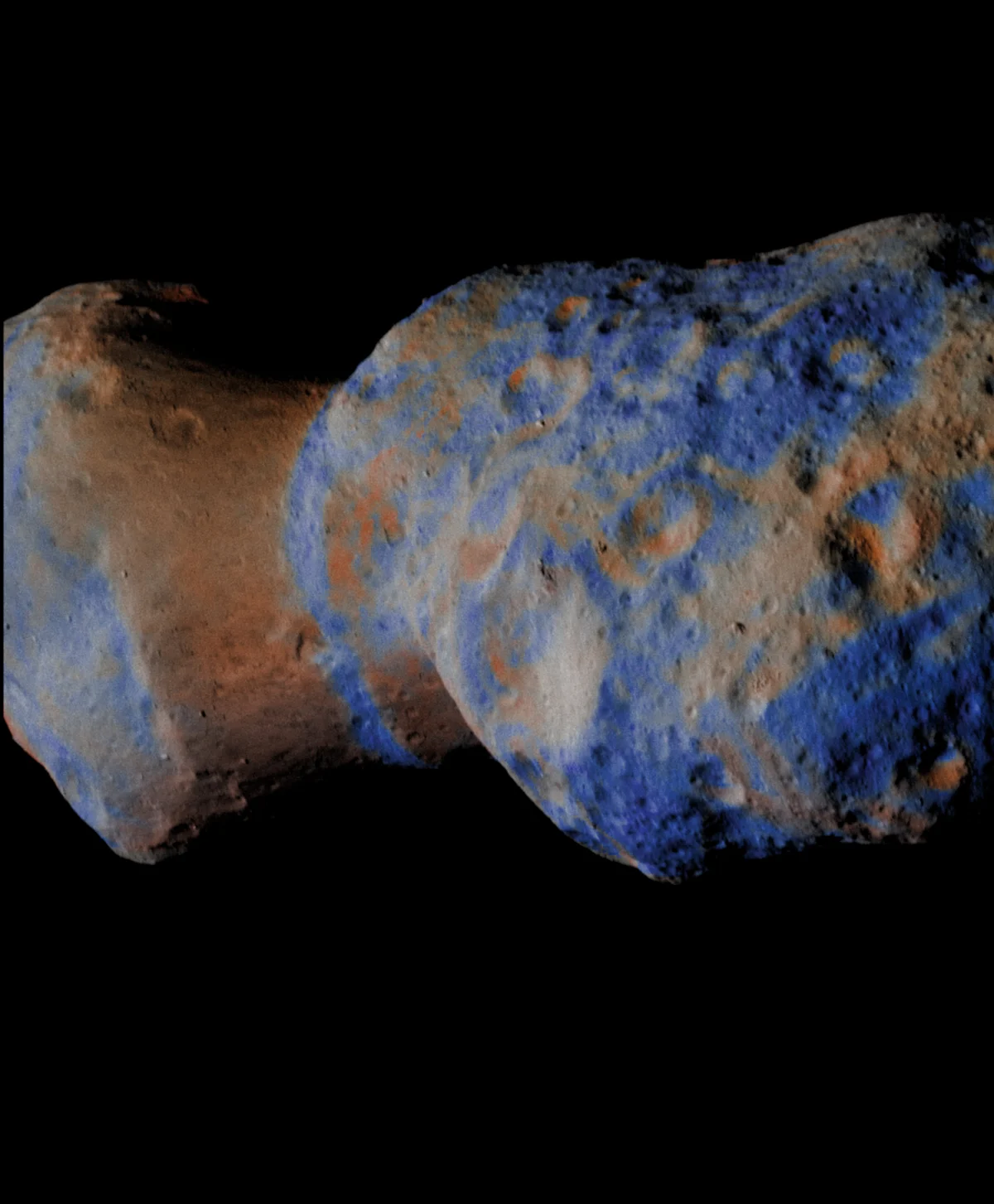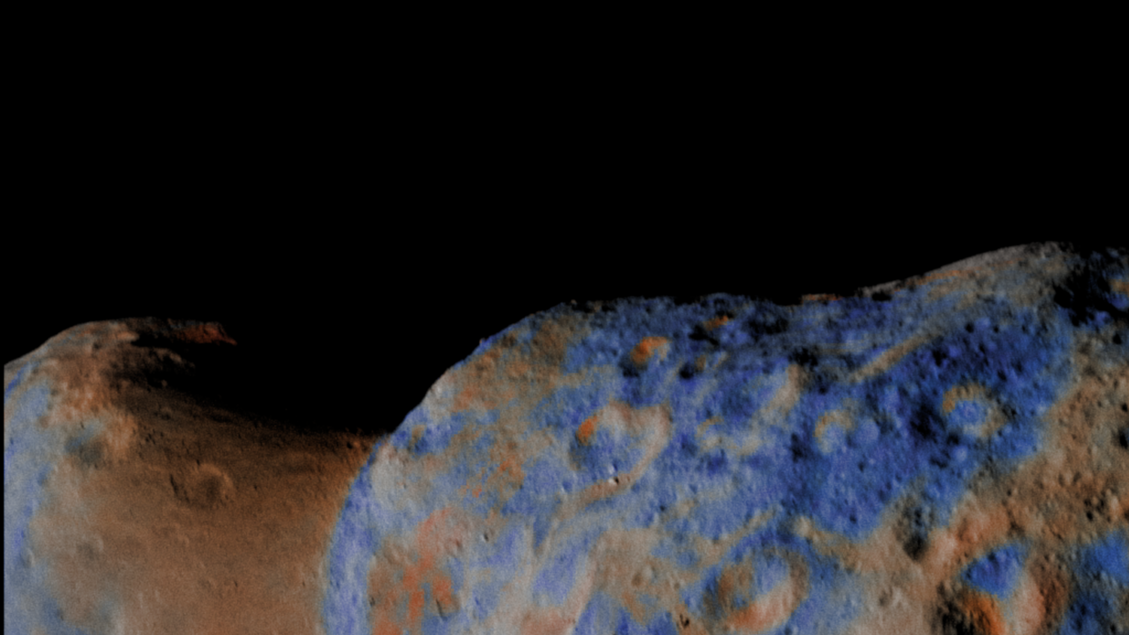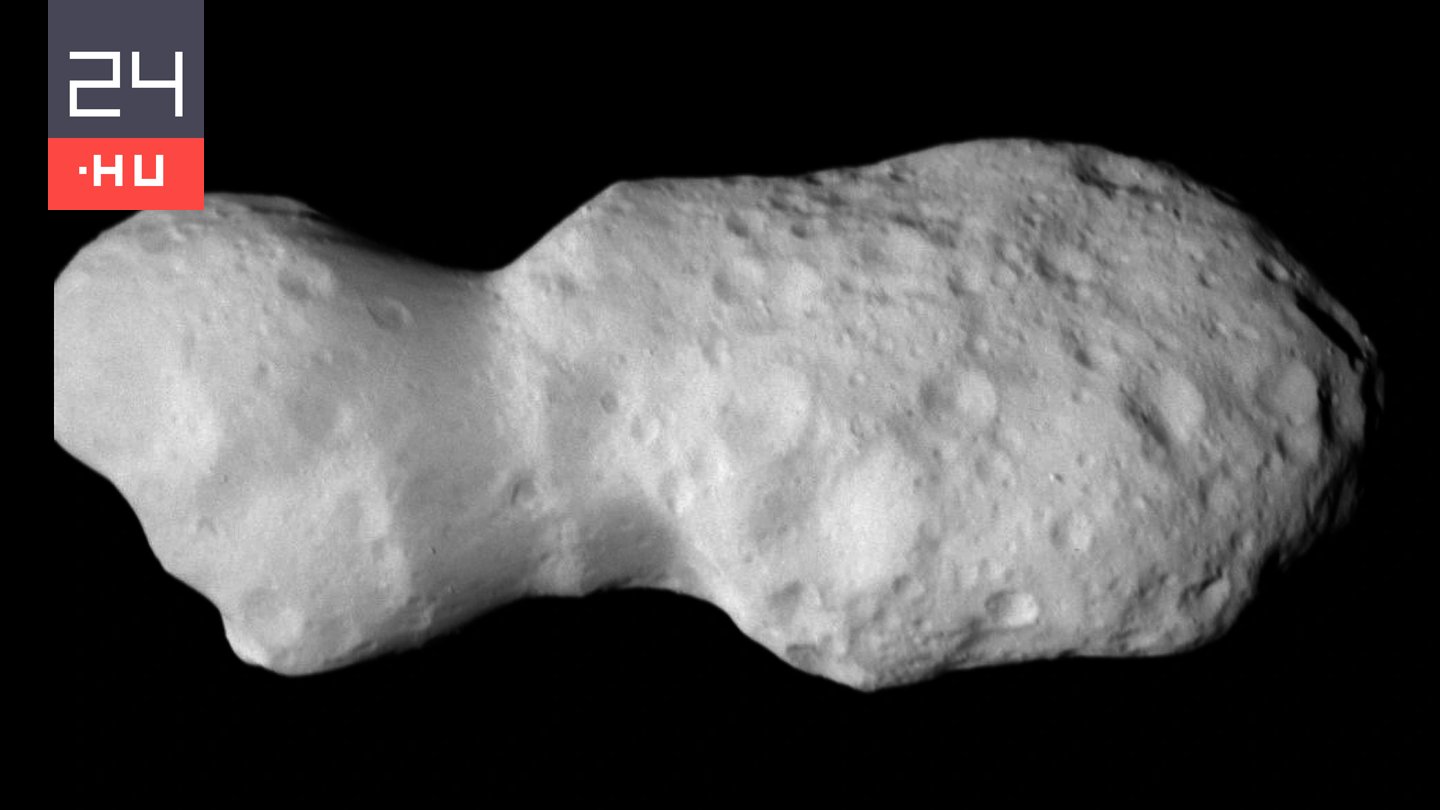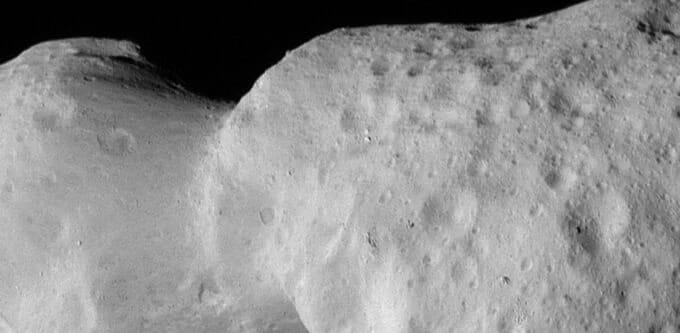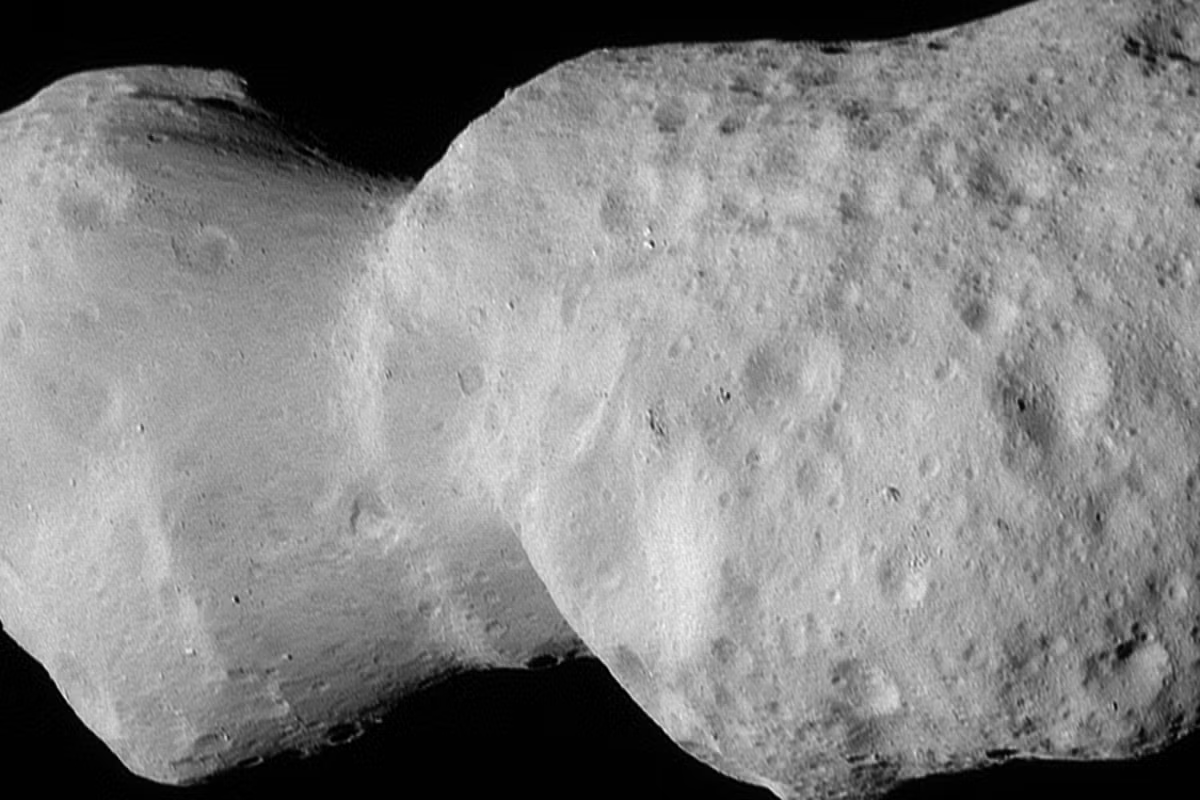
Stay up to date with notifications from The IndependentNotifications can be managed in browser preferences.Jump to contentThank you for registeringPlease refresh the page or navigate to another page on the site to be automatically logged inPlease refresh your browser to be logged inAllNewsSportCultureLifestyleThe asteroid Donaldjohanson as seen by the Lucy Long-Range Reconnaissance Imager (L’LORRI) (NASA/Goddard/SwRI/Johns Hopkins APL/NOIRLab)Scientists have discovered that the asteroid Donaldjohanson has a "wobbling peanut" shape, rotating on two axes as it travels through space. The discovery was made by researchers at the Southwest Research Institute using NASA's Lucy spacecraft during a flyby on 20 April 2025. The asteroid, approximately half a mile in diameter, was found to contain iron-rich clay minerals, suggesting it formed from pieces of a larger, carbon- and water-rich asteroid that broke up 155 million years ago. The flyby served as a crucial test for the Lucy mission's instruments and procedures before its encounters with the Trojan asteroids orbiting Jupiter. Studying the Trojan asteroids is expected to provide insights into the early formation of our solar system, potentially challenging current understandings. In fullNasa finds ‘wobbling peanut’ in spaceThank you for registeringPlease refresh the page or navigate to another page on the site to be automatically logged inPlease refresh your browser to be logged in
Nasa discovers asteroid ‘wobbling’ through the solar system
Stay up to date with notifications from The IndependentNotifications can be managed in browser preferences.Jump to contentThank you for registeringPlease refresh the page or navigate to another page on the site to be automatically logged inPlease refresh your browser to be logged inAllNewsSportCultureLifestyleThe asteroid Donaldjohanson as seen by the Lucy Long-Range Reconnaissance Imager (L’LORRI) (NASA/Goddard/SwRI/Johns Hopkins APL/NOIRLab)Scientists have discovered that the asteroid Donaldjohanson has a "wobbling peanut" shape, rotating on two axes as it travels through space. The discovery was made by researchers at the Southwest Research Institute using NASA's Lucy spacecraft during a flyby on 20 April 2025. The asteroid, approximately half a mile in diameter, was found to contain iron-rich clay minerals, suggesting it formed from pieces of a larger, carbon- and water-rich asteroid that broke up 155 million years ago. The flyby served as a crucial test for the Lucy mission's instruments and procedures before its encounters with the Trojan asteroids orbiting Jupiter. Studying the Trojan asteroids is expected to provide insights into the early formation of our solar system, potentially challenging current understandings. In fullNasa finds ‘wobbling peanut’ in spaceThank you for registeringPlease refresh the page or navigate to another page on the site to be automatically logged inPlease refresh your browser to be logged in