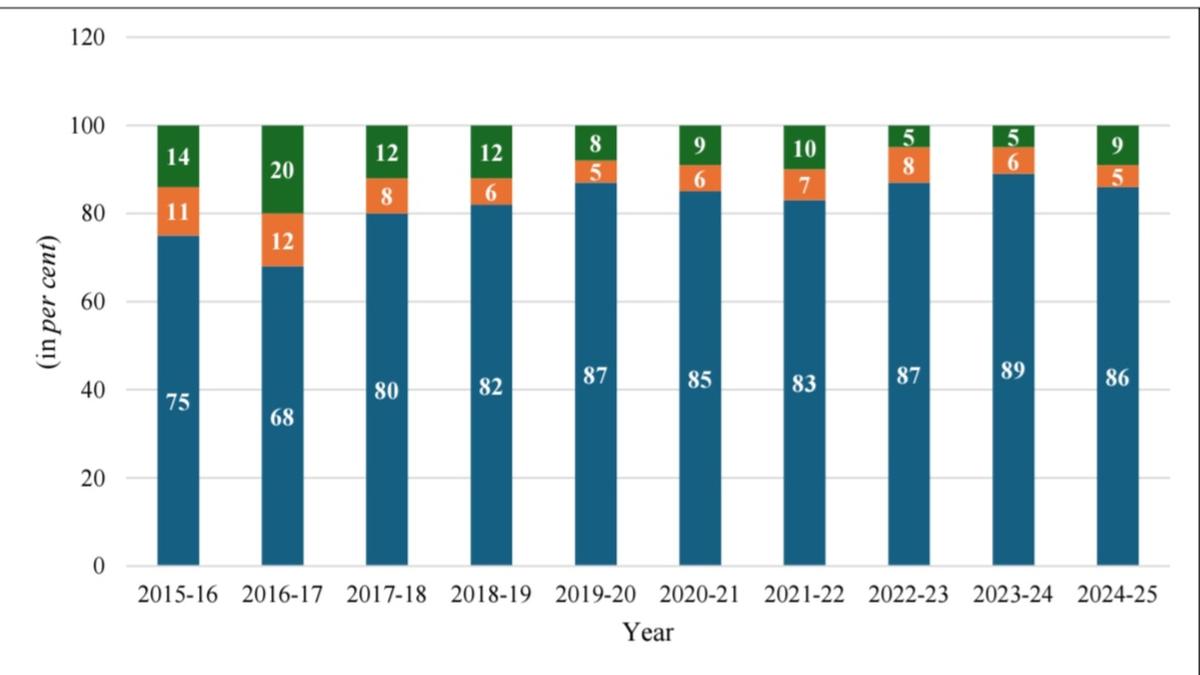
SynopsisThe Comptroller and Auditor General of India has issued a cautionary note regarding the surging state subsidies that are beginning to weigh heavily on fiscal stability. The variation in how different states allocate funds has led to urgent calls for improved financial transparency.Capture entire cost, explicit and implicitComptroller and auditor general (CAG) has flagged a surge in collective state subsidies that is contributing to fiscal rigidity. The performance is uneven, with some states being more profligate than others. There have been calls for transparent reporting. Principally, states direct subsidies for agricultural inputs, such as electricity for irrigation and distribution of fertilisers and seeds. So, a wide variation is expected. Separately, there is also a diversity in states' ability to pay subsidies from their revenues. But the big spenders in absolute and relative terms comprise a common bunch of states. This suggests some harmonisation may be possible in how states approach subsidies. Irrigation and fertiliser use can be managed efficiently to make agriculture less resource exploitative. Industrialisation can improve states' capability to carry larger subsidy bills without adding to fiscal stress.Subsidies have their uses in supporting economic activity, stabilising prices and improving social welfare. But they distort markets, promote inefficiency and increase the taxpayer burden. Since these are in the form of cross-subsidies - with industry subsidising agriculture - they tend to affect productivity. And, in India's case, subsidised farming leads to greater dependence on imported energy and fertilisers. Cheap electricity to farms chokes investments in the power sector by blocking price signals.Yet, states can justify subsidies so long as these are not causing stress on finances. The main arguments are addressing market failure in agriculture, protection of livelihoods and providing affordable public services. However, effectiveness of subsidies depends on their design. They need to be audited for effects like poor targeting or environmental costs. Apart from cleaner accounting, state subsidies would benefit from better design. The entire cost of a subsidy, both explicit and implicit elements, needs to be captured. That could be a starting point to a holistic appraisal of the range of state subsidies. ...moreElevate your knowledge and leadership skills at a cost cheaper than your daily tea.Subscribe Now
Designer subsidies must be the fashion - The Economic Times
The Comptroller and Auditor General of India has issued a cautionary note regarding the surging state subsidies that are beginning to weigh heavily on fiscal stability. The variation in how different states allocate funds has led to urgent calls for improved financial transparency.
361 words~2 min read