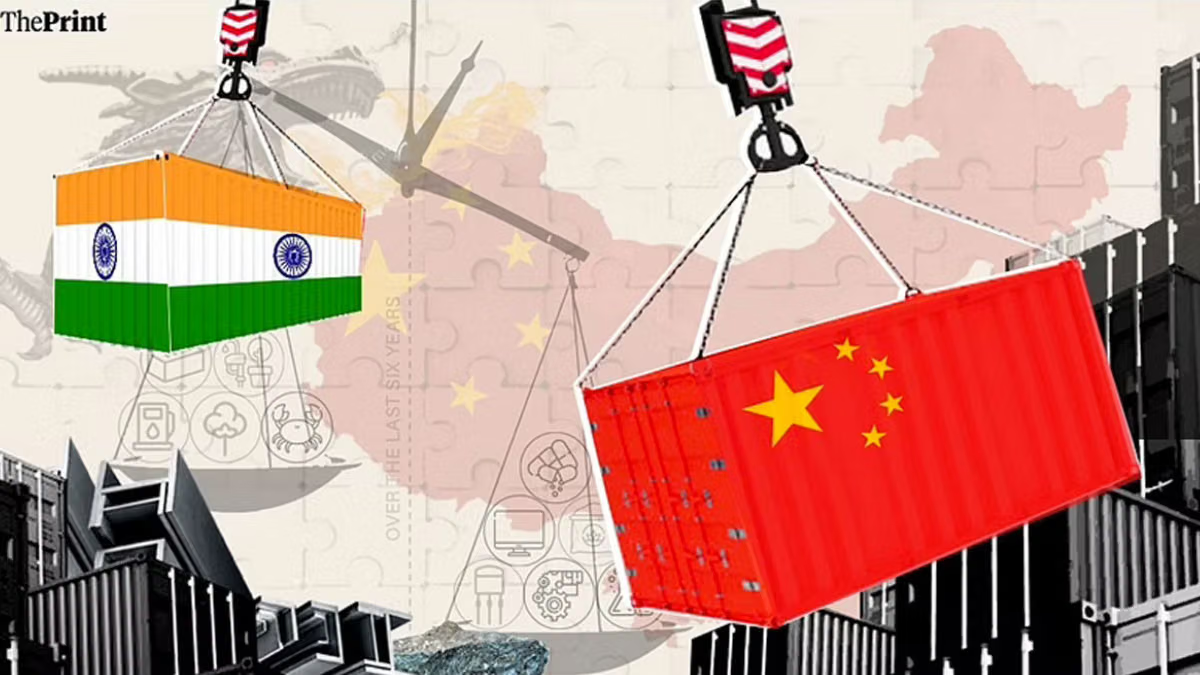
For three decades, India has been advised on the importance of fiscal discipline, with recommendations to maintain tight deficits, rationalise subsidies and allow market-driven allocations. India has largely adhered to these guidelines, often with difficulty and under close observation. In contrast, the world’s second-largest economy has been implementing one of the largest industrial subsidy programmes in history, which international bodies have not openly addressed.
The data presented in the OECD’s newly released MAGIC database, which provides a comprehensive audit of industrial subsidies among 525 of the world’s largest manufacturers from 2005 to 2024, offers a compelling analogy. It likens industrial subsidies to doping in sports, suggesting that subsidised firms may achieve success not due to superior capabilities but because of state-provided enhancements. While the achievements are tangible, the fairness of the competition is questionable.The subsidy distortion
The data are unequivocal. In 2024, global industrial subsidies amounted to $108 billion, marking the second-highest level on record, exceeded only during the crisis year of 2009. Notably, the 2009 peak was a mechanical outcome, as a 15 per cent year-on-year decline in sales artificially inflated the subsidy-to-revenue ratio. In contrast, the current increase is structurally different. The ratio has risen to 1.3 per cent of firm revenues in 2024 without a corresponding decline in revenue. Governments are not providing subsidies out of panic; rather, they are implementing them as a deliberate peacetime industrial policy, framing them as a measure of competitiveness.