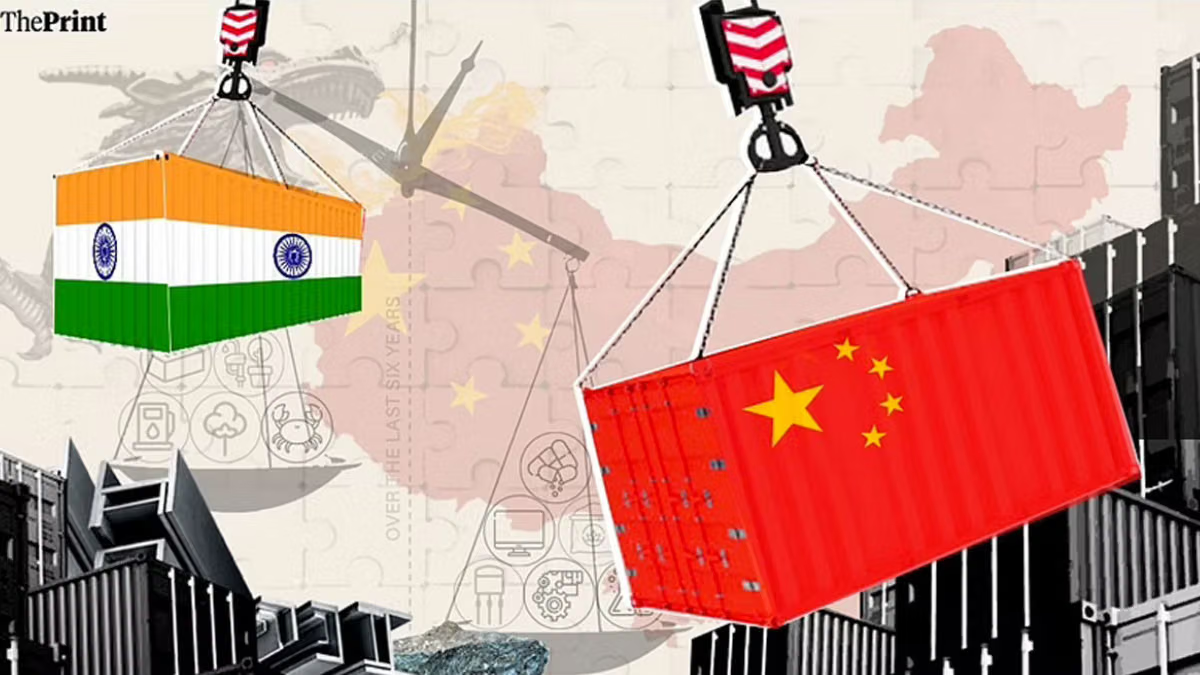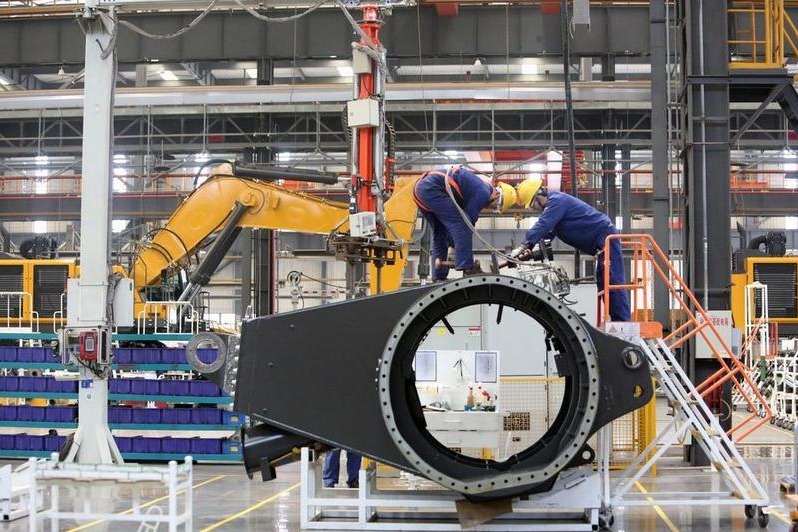
For years, Indian manufacturers have argued that competing with Chinese firms is not simply a contest of productivity, tech or scale, but also one between two different economic systems in which only one provides huge state support. OECD's June MAGIC (Manufacturing Groups and Industrial Corporations) database provides evidence that this is, indeed, the case.Covering 525 of the world's largest manufacturing firms between 2005 and 2024, the report finds Chinese manufacturers consistently receiving state support relative to revenue at levels far higher than firms in India and most OECD economies. In some cases, it exceeds those levels by as much as 500%.The study identifies 3 major channels of sustained state support: direct state grants, preferential tax treatment and access to below-market borrowing through state-backed financial institutions. Together, these reduce costs, lower investment risks and allow firms to expand more aggressively than competitors operating under commercial conditions.For 'Make in India', this means competing against firms whose cost structures have been systematically shaped by public policy. GoI support to manufacturing remains modest, leaving domestic firms at a disadvantage when competing against Chinese ones.The broader lesson is that competitiveness increasingly depends on access to finance, incentives and supportive industrial ecosystems as much as factory-floor efficiency. India's PLI scheme is an important step in recognising this reality. But it remains largely focused on output-linked incentives, and doesn't fully address higher cost of capital faced by manufacturers.Over two decades, such support has helped build powerful industrial ecosystems in sectors including steel, chemicals, batteries, shipbuilding and solar energy. Nearly 60% of Chinese firms' gains in global market share between 2005 and 2023 can be attributed to subsidies, compared with a global average of around 22%.Take solar. Chinese firms have expanded from roughly 1/5th of global solar module share in 2005 to more than 90% today. This suggests that a substantial share of China's industrial expansion was driven not only by productivity or tech advantages but also by policy-enabled cost benefits.The distinction is important. Productivity-driven competition encourages innovation and efficiency. Subsidy-driven competition can contribute to excess capacity and aggressive price undercutting.The solution is not for India to replicate China's model. India's fiscal constraints, institutional framework and development priorities are different. Instead, a more targeted and strategic approach to industrial policy is needed.Manufacturing competitiveness depends on far more than a single incentive programme. Access to affordable finance, taxation, infrastructure, logistics, tech adoption and market access all shape outcomes and form part of an integrated policy framework. Equally important is updating India's trade-remedy toolkit.Traditional anti-dumping and countervailing duty mechanisms were designed for more transparent subsidy systems. Preferential financing and indirect forms of support are often harder to identify and require more sophisticated responses.India should also play a more active role in global discussions on subsidy transparency. One of the OECD study's most important contributions is highlighting the gap between what governments report and what firms receive. Strengthening disclosure standards should become an important objective in future WTO reform discussions.India must also be selective about where it competes. In sectors characterised by chronic global overcapacity, attempting to match subsidised production may prove difficult and expensive. Greater emphasis on specialised products, downstream manufacturing, domestic demand creation and higher-value segments may offer more sustainable opportunities.OECD data doesn't suggest that Indian manufacturing is inherently uncompetitive. Nor does it imply that success requires copying China's state-capitalist model. What it shows is that global manufacturing is increasingly shaped not only by comparative advantage but also by comparative subsidy regimes. The question is no longer whether governments should support manufacturing, but how they can do so effectively and sustainably.For 'Make in India' to achieve its full potential, firms must continue becoming efficient through innovation and scale. But policymakers must also recognise that global competition is not taking place on a level playing field. Understanding the extent of the subsidy gap is the first step towards designing a response that strengthens India's long-term manufacturing ambitions.(Disclaimer: The opinions expressed in this column are that of the writer. The facts and opinions expressed here do not reflect the views of www.economictimes.com.)
China's subsidy edge poses biggest challenge to Make in India - The Economic Times
As Indian manufacturers navigate the challenging waters of global trade, they find themselves increasingly overshadowed by Chinese businesses that enjoy significant state backing. An OECD report underscores the disparity, revealing that Chinese firms are often recipients of extensive subsidies, tax incentives, and affordable credit, which gives them a much-needed edge.
671 words~3 min read