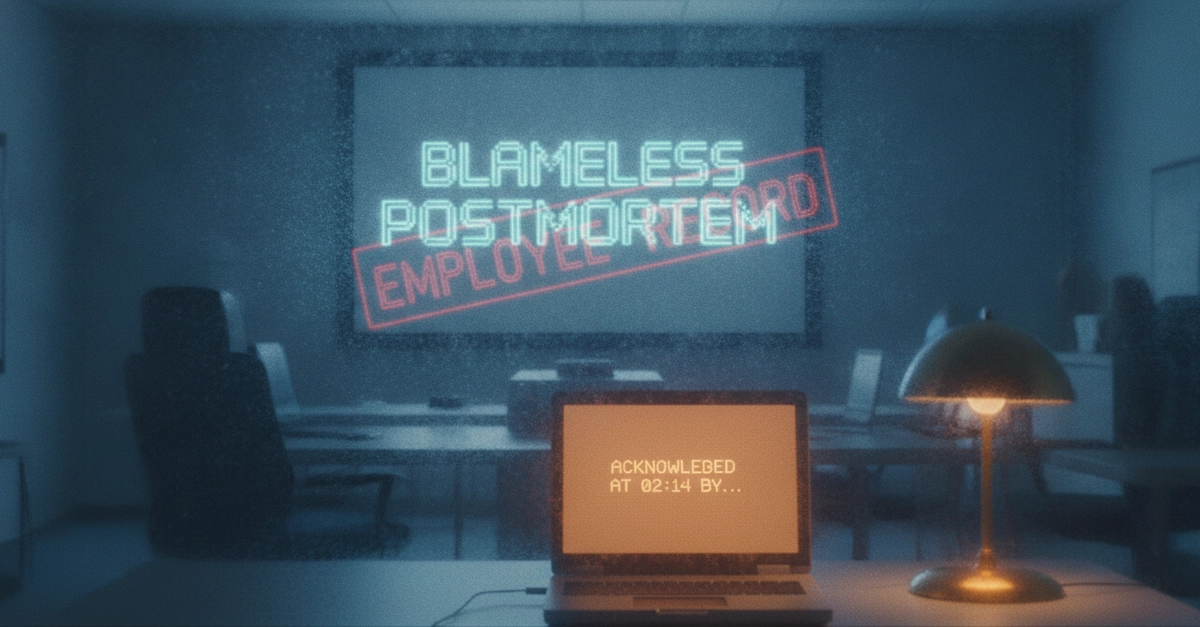
You’ve been in that retro. The slide already says This is a blameless postmortem. Someone pastes a Slack timeline, a facilitator reminds the room to focus on systems not people, and a fresh Jira epic swallows the action items. You nod along, camera off, and you think the same thing you’ve been thinking for six months: I still feel like I’m being written up.
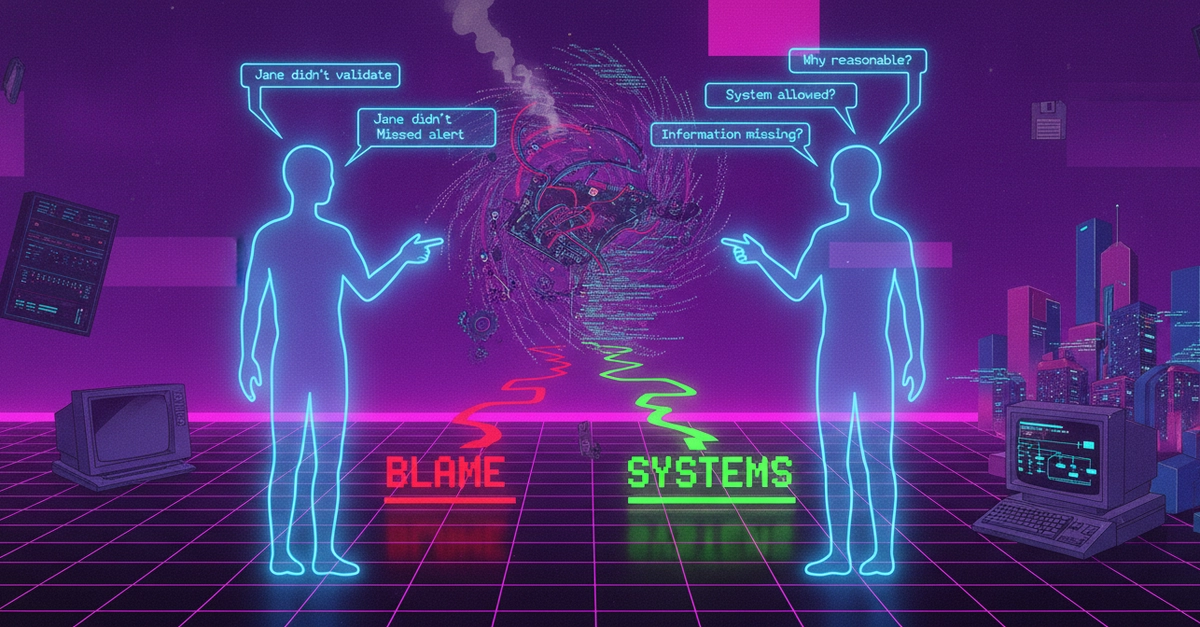
We got fluent in the vocabulary of psychological safety years ago. Nobody asks “who broke this?” anymore. We ask “what allowed this failure mode?” and we mean it. Yet for a lot of engineers — especially the ones quietly absorbing operational chaos — the postmortem has shape-shifted into something uglier. It’s become a surveillance document that wears a learning-opportunity mask.
Here’s how it actually works. The incident timeline lands in a shared folder, and an innocent question floats up in the thread: “Was the alert acknowledged before the escalation policy triggered?” Sounds factual. But it’s really a timestamp with your name on it, and it’s sitting there while your manager drafts quarterly feedback. The system doesn’t have to point a finger. It just has to record who touched what, and when, and let a well-trained imagination fill in the rest.