Long before antique dealers set up shop in the winding streets of Istanbul's historic bazaar districts, a guild of wanderers known as "arayıcılar" roamed the city's neighborhoods, baskets strapped to their backs, calling out for unwanted goods.
The word translates roughly as "seekers" or "searchers," and their trade, documented in Ottoman records dating back centuries, bears a striking resemblance to what collectors and dealers do today.
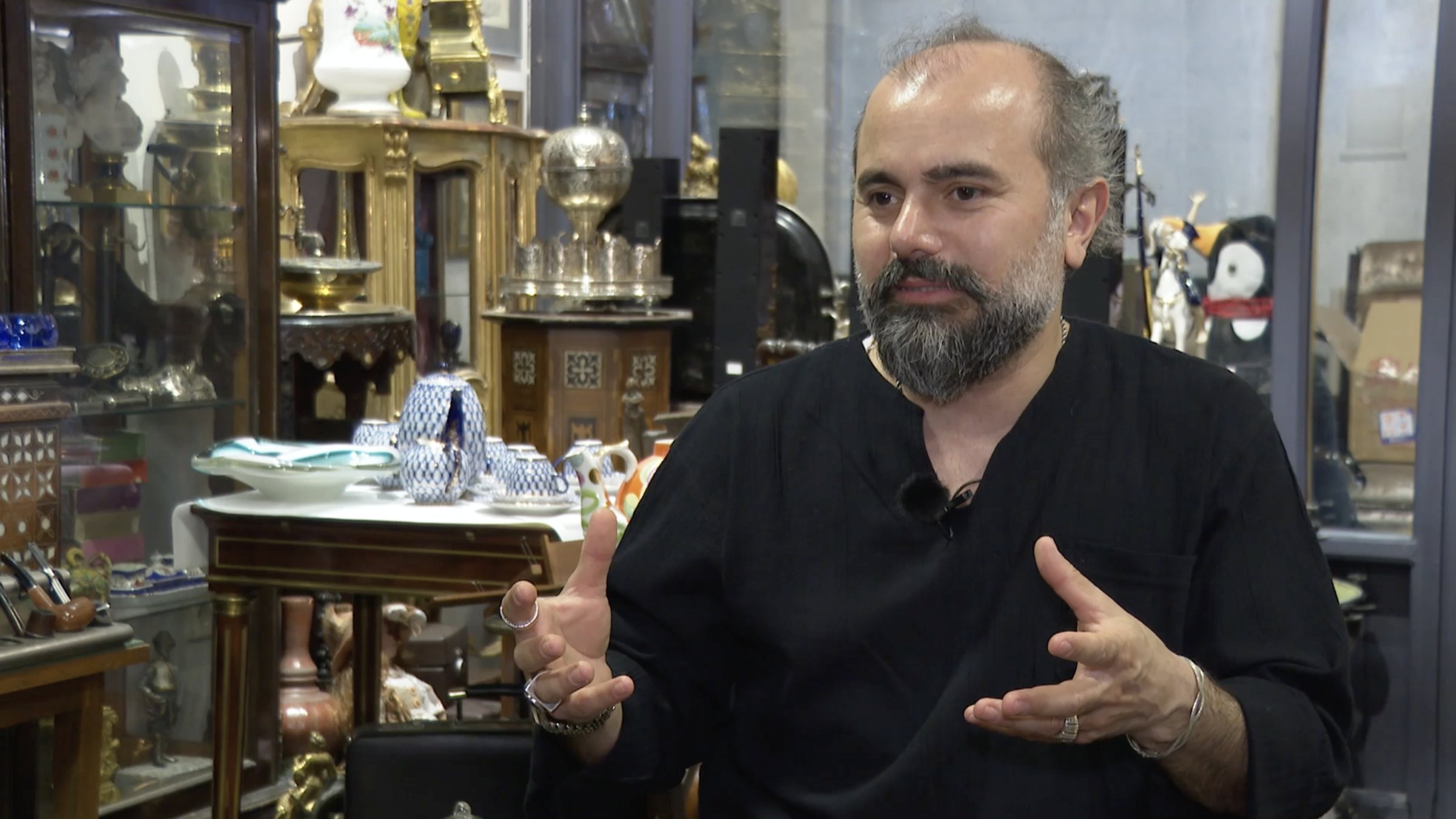
"If I had been doing this profession 300 years ago, you would not have invited me as an antique dealer," Hamza Demirkapu, an Istanbul-based antiques expert, said in a recent exclusive interview to Daily Sabah. "You would have invited me as an arayıcı."
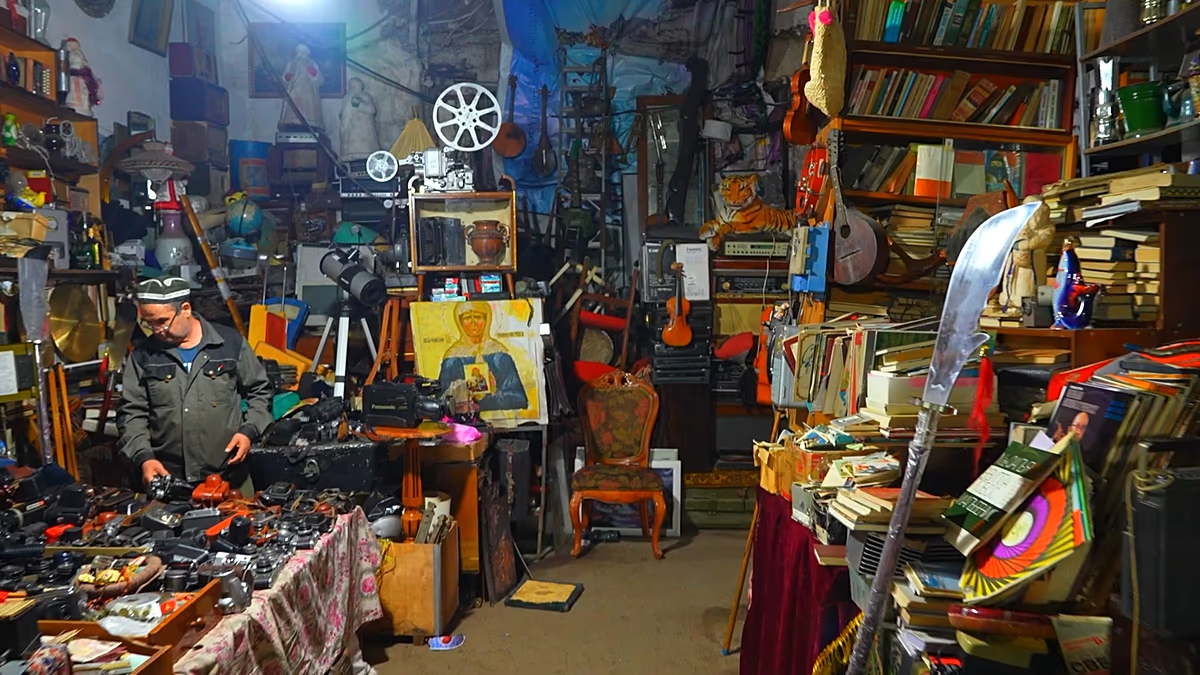
Hamza Demirkapu, an antiques expert and collector, speaks during an interview at his shop in Istanbul, Türkiye, on April 27, 2026. (Photo by Senat Destanoğlu)
According to Demirkapu, the guild numbered around 500 members in Istanbul alone and appears in some of the most significant texts of Ottoman urban history, including the 17th-century travel writings of the Ottoman Turkish explorer Evliya Çelebi and the late historian Reşat Ekrem Koçu's encyclopedic account of Istanbul. Some historians considered the arayıcılar sanitation workers. Others, Demirkapu argues, got it right: they were the antique dealers of their era.