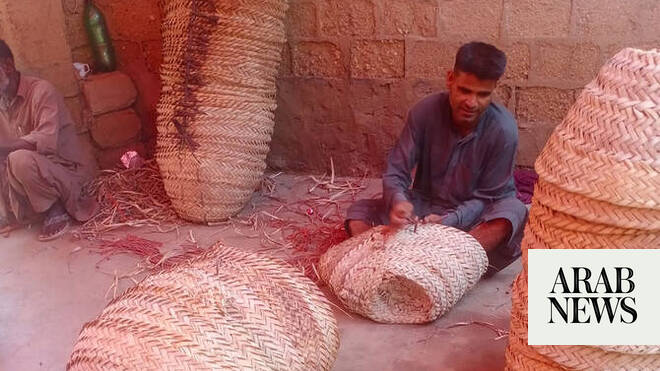
KARACHI: In the narrow streets of Karachi’s historic Lyari neighborhood, stacks of handwoven baskets sit outside homes and workshops as elderly Baloch men and women bend over strips of dried reeds and palm leaves, weaving patterns passed down over generations.
And in the days before Eid Al-Adha, the pace quickens.
Before sunrise, piles of freshly woven baskets are loaded onto motorcycles, rickshaws and small delivery vehicles bound for markets across Pakistan’s largest city, where families use them to carry sacrificial meat, traditional flatbreads and flowers during one of the country’s busiest religious festivals.
For many artisans in Lyari’s Ali Mohammad Mohalla area, the seasonal rush offers a brief financial lifeline for a craft that has steadily declined over the years as younger Pakistanis move toward urban jobs and factory work.
The basket-weaving tradition traces back to the 19th century, when members of the Nigori and Dashti Baloch communities migrated from southwestern Balochistan province to Karachi in search of work. Over decades, weaving became both a livelihood and a marker of cultural identity for those who settled in Lyari and nearby areas.