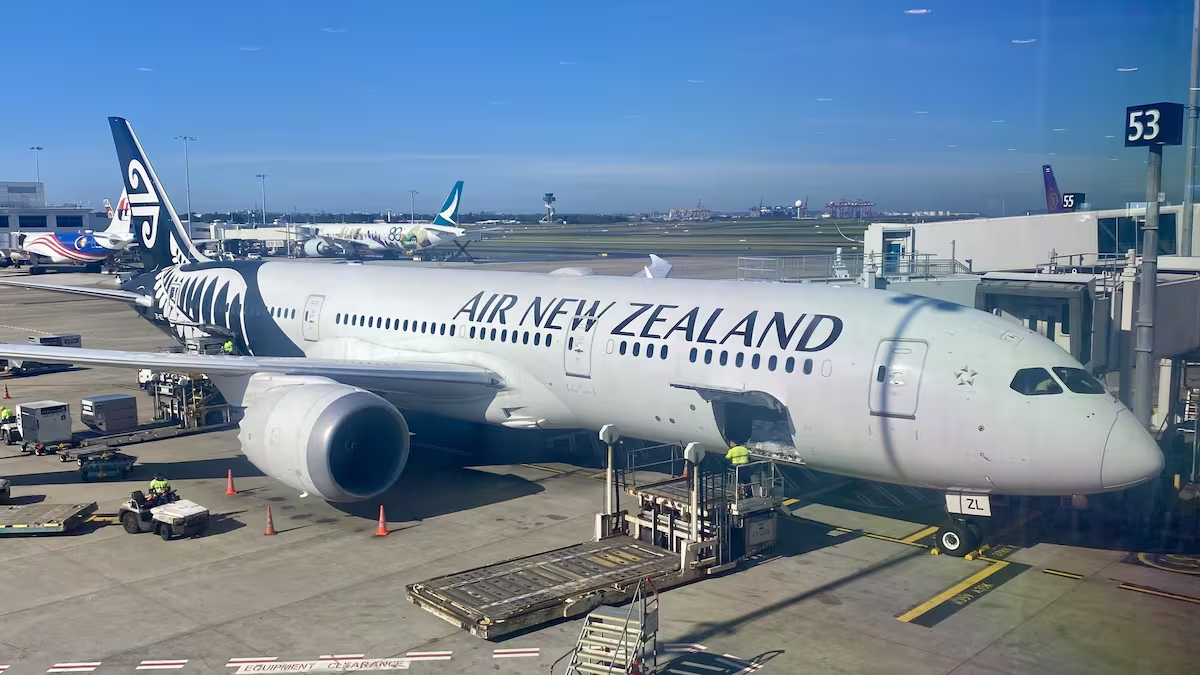
Airfares seem to already be falling, as oil prices ease.The price of a barrel of oil has dropped significantly in recent days as the conflict in the Middle East came to an end.It prompted the Commerce Commission to issue a warning on Wednesday that it expected the retail price that customers pay at petrol pumps to drop, too, and for businesses to reassess any surcharges or other fees they had added to cover their costs.University of Otago marketing lecturer Damien Mather said he expected airfares would ease, too.Airlines have had to grapple with sharp increases in jet fuel price.In March, Air New Zealand said it would lift its domestic flights by $10, short-haul international by $20 and long-haul by $90 in response to a surge in fuel price.Mather said he had looked at domestic flights this week and it seemed they were falling."The one I was looking at was the Dunedin-Auckland return. And the cost of that was lower than what I was lower than what I expected … this is just a small sample, but the cost of the flights I could have booked were lower than what they would have cost me all last year."He said Air New Zealand had taken a sound approach to its pricing strategy."When the war broke out in the Middle East, they got around the table and drew some lines on the graph and went, 'oh, we're probably going to do this'. So let's work on that assumption and let's do our pricing. But then going into that, it will depend on things like demand models. They know when they put their price up, that demand drops off to some extent and not all customers are the same."Some customers will react to prices and others won't. The businesspeople continue to travel, generally speaking. Travel for domestic rather than business purposes will react differently. They have models for all this sort of stuff ... I don't think the normal passenger or customer knows enough about how these things are done in big businesses. And they probably don't have realistic expectations about how things should go up or go down in terms of a price."Economist Benje Patterson agreed domestic fares had already shown signs of falling."Statistics New Zealand's monthly price indexes show that domestic airfares fell 11.4 percent in May 2026 from their April 2026 and are now just 2.8 percent higher than a year ago. International airfares also fell a slightly smaller 5.5 percent during the month, but still sit 8.2 percent higher than they were a year ago."It's pleasing to see that the airlines are unwinding some of the fare increases that we saw through March and April as oil prices and the cost of jet fuel moderate."Air New Zealand said the easing in fuel prices was encouraging, but jet fuel was still more than 30 percent above what it would normally pay, after a sustained period of exceptionally high costs."Fuel is one of our largest operating costs, and fare increases to date have not recovered the additional costs incurred. While recent price reductions help reduce the shortfall, they do not eliminate it. We will continue to review pricing as cost pressures ease and work with suppliers to ensure any sustained reductions are recognised."
Oil price falls, will airfares follow?
Airfares seem to already be falling, as oil prices ease.
541 words~2 min read