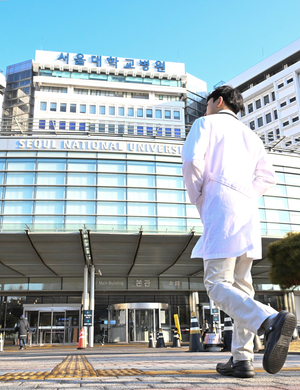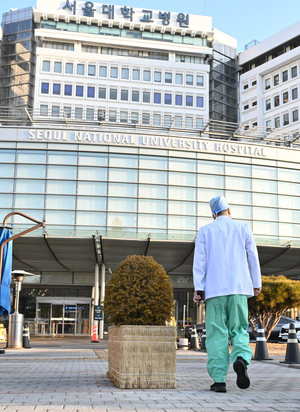
Limited private insurance access leaves poorer families more vulnerable when costly treatment is needed A medical staff worker walks toward Seoul National University Hospital in this Feb. 25, 2025 file photo. (Im Se-jun/The Korea Herald) Low-income households are far more likely to be pushed into poverty by medical expenses because they have limited access to private insurance and other health-related financial protections, a study showed Thursday.A low income was identified as a major risk factor that can drive households into chronic poverty due to long-term medical expenses, according to the study conducted by researchers from the National Health Insurance Service and Kyung Hee University.Other risk factors included chronic illness in the household and a decline in income.The study tracked long-term medical expenses among 6,373 Korean households, identifying those with what is known as “catastrophic health expenditures,” or CHE. The term refers to households that spend at least 40 percent of their disposable income on medical expenses.Households in the bottom 20 percent income bracket were 25.81 times more likely than those in the top 20 percent to face financial risk due to persistent CHE.The low-income group was also 12.12 times more likely than the high-income group to persistently spend at least 20 percent of their disposable income on medical expenses.Korea provides a range of safety nets for residents, including the state-run health insurance program, which is available to all Korean nationals and some foreign residents who qualify. But the report showed that low-income households have limited access to private health insurance.The national health insurance program covers a portion of medical expenses, while some out-of-pocket costs can be covered by private insurance. But for low-income families without private insurance coverage, medical expenses can rise sharply when a family member becomes ill and needs costly treatment.Researchers found that the state health insurance program reduced medical expenses by 0.8 percent for households in the bottom 20 percent income bracket, significantly higher than the 0.1 percent decrease for those in the top 20 percent.By contrast, the reduction in medical expenses through private health insurance was 0.5 percent for the lowest-income group, substantially lower than the 1.5 percent for the highest-income group.“These findings imply that financial and health vulnerabilities can lead to entrenched medical expenditure burdens. Therefore, policy interventions need to focus not only on direct support for medical expenses but also on strengthening income security and employment stability to enhance the financial resilience of vulnerable households,” the researchers said.The study was published in the latest issue of Korean Social Security Studies, a journal published by the Korea Social Security Association.
Medical costs push low-income households deeper into poverty: study
Low-income households are far more likely to be pushed into poverty by medical expenses because they have limited access to private insurance and other health-r
426 words~2 min read