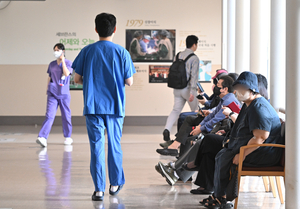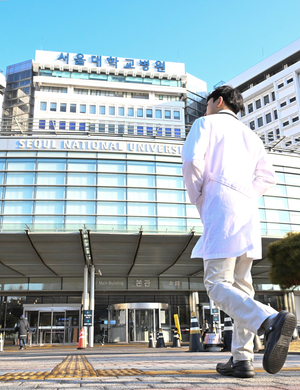
Hospital ships serve as lifelines for islanders, but remain outside legal framework A doctor walks into Seoul National University Hospital in Seoul, Feb. 25, 2025. (Im Se-jun/The Korea Herald) Six in 10 inhabited islands in South Korea have no medical facilities, leaving residents in many areas dependent on medical service vessels, government data showed Tuesday.Only 192 of the 480 islands with permanent populations had either public or private facilities providing medical care in 2024, according to a report compiled by the National Assembly Research Service based on data from the Korea Island Development Institute. Medical facilities as defined by the report do not include pharmacies.The other 288 islands without clinics or hospitals included Sinjindo of Taean-gun, South Chungcheong Province, where a single pharmacy handles the immediate medical needs of 840 residents.Islanders living outside the reach of the medical system rely mostly on five medical service vessels, or hospital ships, operated by South Gyeongsang, South Jeolla and South Chungcheong provinces, as well as the Incheon metropolitan government.Each ship covers between 17 and 90 islands and treated between 5,000 and 25,000 island residents in 2025.Legislation needed for hospital shipsHospital ships provide essential medical services to residents of remote islands, but their legal status remains unclear.They are not recognized as medical institutions under the Medical Service Act, according to a report by the National Assembly Research Service.Instead, their operation is based on ministry directives and ordinances set by their respective provincial or metropolitan government, leaving them outside the core legal framework that governs hospitals and clinics.That gap has already had practical consequences. A December revision to the Medical Service Act created a legal basis for telemedicine at clinics, but hospital ships were excluded because they are not classified as medical facilities.Hospital ships are also not linked to the Public Health Information System, an integrated system covering the administrative duties of 3,600 public health centers across the country.This means staff working on the ships do not have access to patient information kept by the state, and each regional government must establish a separate database.There is also a possibility of disputes concerning insurance coverage and compensation for residents who board the vessels, as hospital ships remain in a regulatory blind spot."A hospital ship's role must be redefined within the regional medical system, as medical services for island residents are provided through connections among the ships, public health centers and pharmacies," the report said. "Considering that a hospital ship is a resource providing public health care for island residents, it needs to be legally defined as a type of regional health care center."
Medical care out of reach on 60% of inhabited islands
Six in 10 inhabited islands in South Korea have no medical facilities, leaving residents in many areas dependent on medical service vessels, government data sho
428 words~2 min read