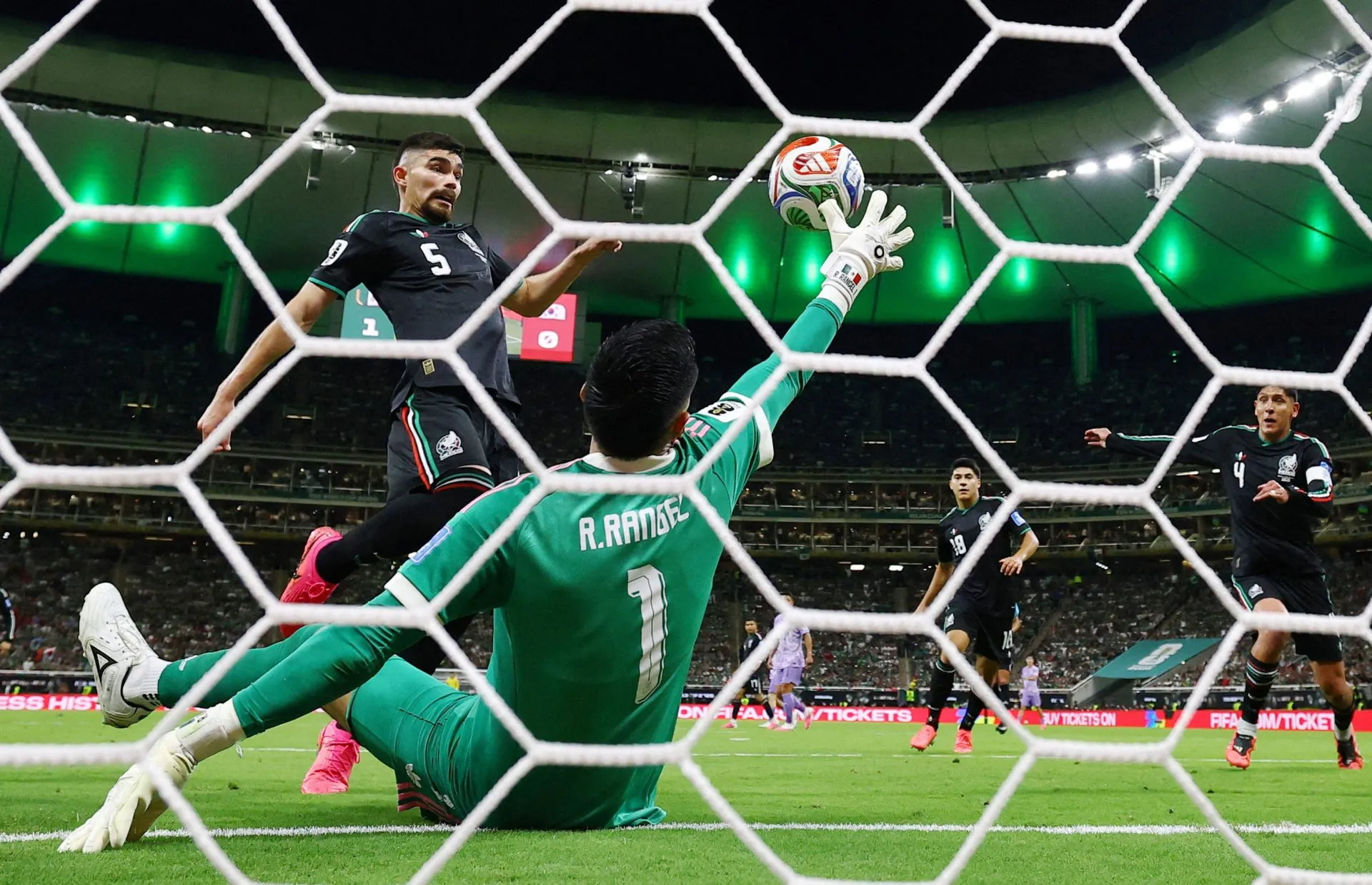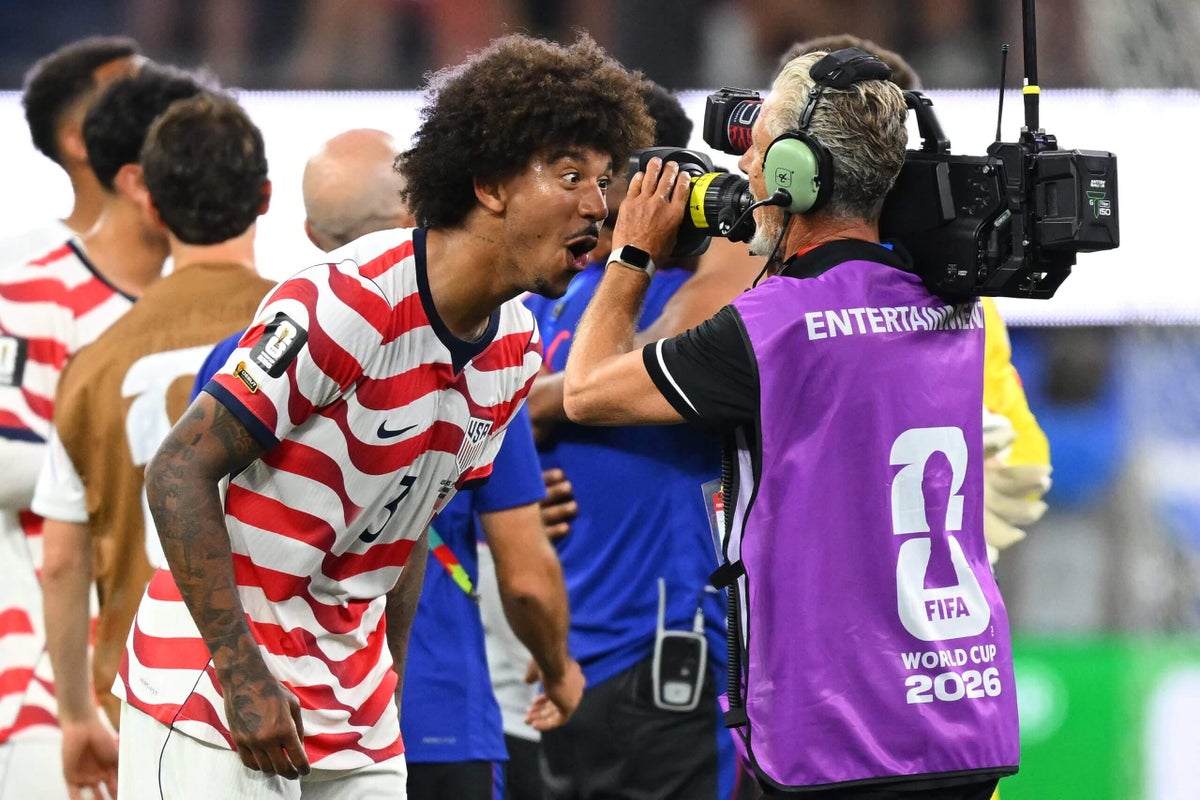
For all the pre-launch Chicken Little-ing about America’s seeming disinterest in the World Cup, the TV and streaming audiences thus far have surpassed even the expectations of FIFA’s network partners. With less than a week’s worth of ratings data to pick through, five matches already seem poised to secure spots on this year’s list of the top 100 most-watched telecasts here in the States—and since the USMNT on Friday can punch its ticket to the knockout stage with a victory over Australia, there’s bound to be more to come as the tournament progresses.
According to Nielsen Big Data + Panel readouts, last week’s primetime U.S.-Paraguay match averaged a combined 27.5 million viewers on Fox/Tubi and Telemundo/Peacock, with the English-language broadcast accounting for 18 million impressions. Fox’s presentation of the U.S. team’s decisive 4-1 victory peaked at 21.5 million viewers, and now stands as the most-watched men’s group stage match in history.
Fox’s deliveries include the impressions gleaned during its pre-match coverage, whereas previous rights holders limited their reporting to the actual match windows.As expected, Fox saw a heady lift care of out-of-home deliveries, as approximately 3.6 million viewers, or 20% of the total audience, took in Friday night’s action from various bars, restaurants and other public venues. All told, the bonus impressions boosted Fox’s in-home average (14.4 million viewers) by 25%.Bear in mind that the Fox’s out-of-home lift is expected to be even more significant when the U.S. squares off with the Aussies on Friday at 3 p.m. ET. The combination of the Juneteenth holiday and the mid-afternoon start time suggests that Fox may see its live audience grow by 30% upon application of the out-of-home data, as fans look to take advantage of their day off. As Fox Sports president of insights and analytics Mike Mulvihill noted in a phone interview, OOH deliveries accounted for 29% of Thursday afternoon’s Mexico-South Africa opener, which averaged 7.19 million viewers.“I really think out-of-home is the most impactful thing to happen in the industry over the last 25 years,” Mulvihill said. “Prior to the introduction of out-of-home, these big public viewing events were a negative for us. You don’t want people to come out and watch a match in a public place when you’re not getting credit for it, but now we have a real incentive to be supportive of those gatherings. We want people to go out to the Fan Fest; I think they had 100,000 people at the LA Coliseum for the opening match with Mexico.”As Mulvihill notes, Nielsen’s shift to incorporate OOH impressions with its vanilla TV measurement in 2020 has made the promotion of watch parties a much more viable element of Fox’s overall World Cup gameplan.“Fifteen years ago, that big Coliseum crowd would’ve been kind of a bad thing for the World Cup rights holder,” he said. “Now you look at that and you think, ‘That’s fantastic—we wish it was 200,000.’ Those public gatherings and that group viewing experience is such an important part of soccer culture in the U.S., and we now have a really clear business incentive to support those gatherings as much as we can.”Naturally, the added OOH impressions have been a boon to the advertisers who are taking advantage of FIFA’s new hydration breaks. While diehards have grumbled about the two intervals, which enable media partners to air as many as 10 in-match commercials per game, the opportunity to squeeze some extra revenue out of the FIFA mandate has been too lucrative for Fox to pass up.According to media buyers, the average 30-second hydration spot is fetching some $275,000 on Fox, with units in the U.S.-Paraguay broadcast commanding around $850,000 a throw. Thus, Fox is booking on the order of an additional $2.5 million in ad revenue for each of its non-USMNT matches, while the three U.S. group stage matches should rake in an extra $23 million during the mandatory respites.Telemundo, for its part, is not airing commercials during the hydration breaks. While the network’s ratio of viewers to household ratings suggests that its out-of-home deliveries are proportionate to the Fox OOH numbers, the company did not respond to a request to comment on those added impressions.Through Sunday’s matches, Fox/Tubi/FS1 have scared up 54.9 million total World Cup viewers, and with an average draw of 6.66 million viewers per outing, its deliveries are up 152% versus the analogous period of the 2022 World Cup in Qatar. Aside from the U.S. opener, Brazil-Morocco accounted for Fox’s biggest delivery thus far, with 10 million viewers.For its part, Telemundo drew its largest audience of the tournament with Mexico’s 2-0 victory over South Africa, as a record 13.4 million viewers caught the match via its Spanish-language feed. (Note that Telemundo’s figures exclude pre-match coverage.) With an average turnout of 7.5 million viewers through the first 12 matches, Telemundo and Peacock have captured 53% of the stateside World Cup audience.