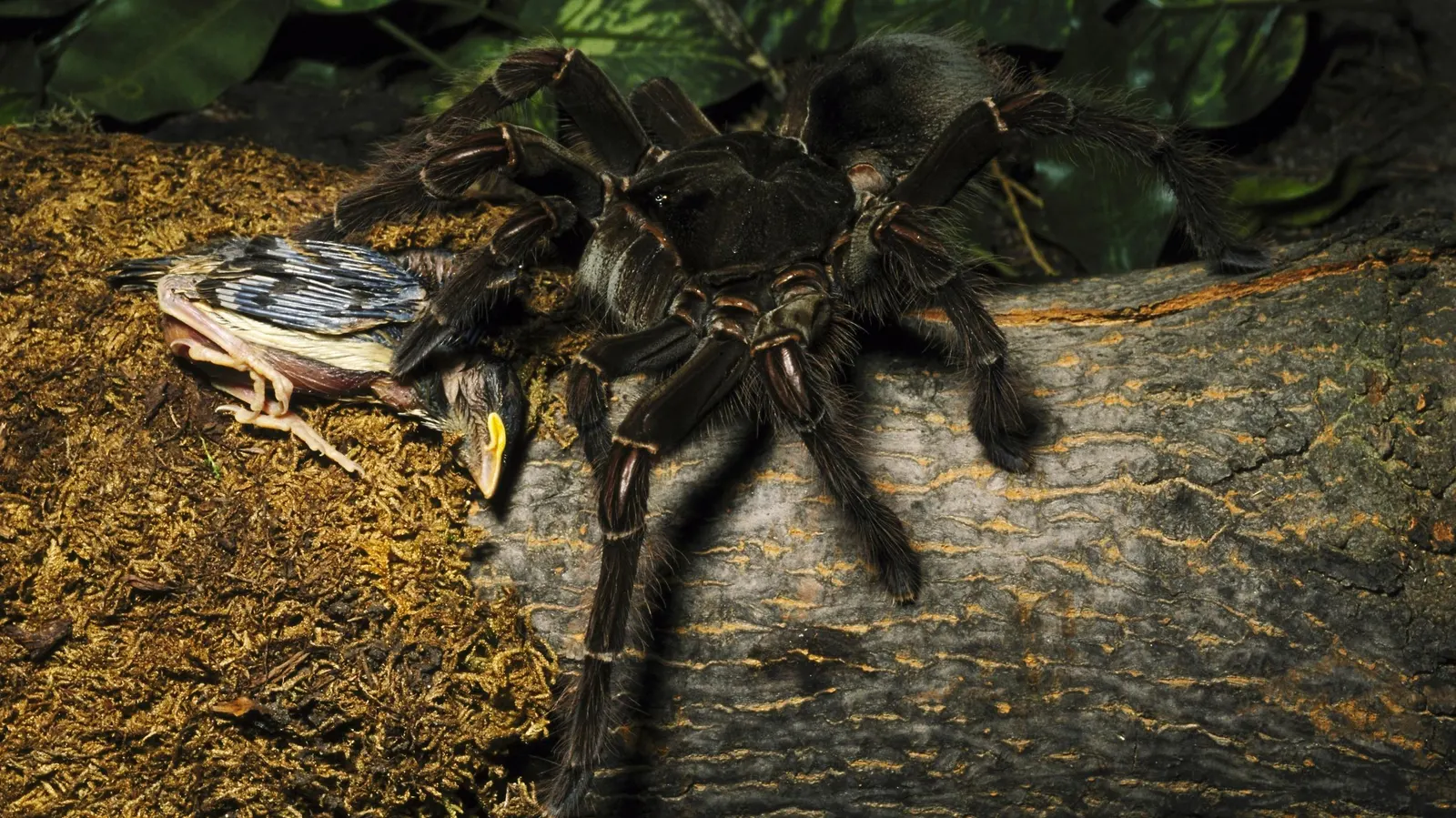
Why did evolution produce a spider the size of a dinner plate? The Goliath birdeater offers a fascinating glimpse into life on the Amazon forest floor.gettyThe Goliath birdeater (Theraphosa blondi) has a public relations problem — or, depending on your perspective, an exceptionally good one.As the world’s largest spider by mass, it already has all the ingredients of a nightmare: it’s the size of a dinner plate, with fangs capable of puncturing skin and a defense mechanism that involves launching clouds of barbed hairs into the air. Yet what truly cements its reputation is its name: “Goliath birdeater” makes you picture a giant arachnid stalking birds through the rainforest canopy, snatching them from branches with alarming regularity.The reality is a little less dramatic, but arguably just as terrifying. The species is a master of the rainforest floor; it’s a patient ambush predator with an arsenal of defenses that have helped it thrive in one of the world’s most competitive ecosystems. The better question, then, is how did it become the largest spider on Earth? And what exactly does a creature of that size do with all those legs?Yes, The Goliath Birdeater Sometimes Eats BirdsThe Goliath birdeater, part of the tarantula family Theraphosidae, is native to the tropical rainforests of northern South America, particularly throughout the Amazon Basin and surrounding regions of Guyana, Suriname, French Guiana, Venezuela and northern Brazil. There, it spends most of its life hidden away in deep burrows excavated beneath roots, logs or other sheltered areas of the forest floor.But unlike many other spiders, the Goliath birdeater doesn’t rely on speed or webs to capture prey; it’s an ambusher. Instead, once it’s dark, it waits for vibrations to reveal the presence of a passing animal before lunging with terrifying force.MORE FOR YOUIts size is difficult to overstate. Adult females can reach leg spans of around 30 centimeters (12 inches) and weigh more than 170 grams (6 ounces), which makes them the heaviest spiders known to science. Encountering one in the wild is like discovering a small mammal with eight legs.Yet despite its intimidating name, birds aren’t the primary target of the Goliath birdeater's hunting efforts. Its diet is remarkably varied and includes insects, earthworms, frogs, toads, lizards, snakes and small mammals. Like many large predators, it tends to be an opportunist rather than a specialist. That said, the bird-eating reputation is not undeserved, either.In a 2016 study published in Studies on Neotropical Fauna and Environment, researchers documented a female Common Scale-backed Antbird (Willisornis poecilinotus) being preyed upon by a Goliath birdeater in the Brazilian Amazon. Importantly, the bird was not captured during a typical hunting encounter. It had become entangled in a mist-net used by researchers, and it was left vulnerable near the forest floor at dusk — precisely when the largely nocturnal spider begins its nightly activity. The researchers suggested that the predation event was likely the result of an unfortunate convergence of circumstances (or fortunate, if you look at it from the spider’s perspective). Goliath birdeaters are common in the area; the trapped bird remained accessible close to the ground, and the encounter occurred during the spider’s active period.This case is a testament to the spider’s opportunistic nature. It doesn’t showcase Goliath birdeaters as routine bird-hunters, but rather suggests they are willing to take advantage of a substantial meal when the opportunity presents itself. Like many successful predators, their primary concern is whether or not prey can be safely subdued and eaten; what the prey is, whether bird, insect, amphibian or reptile, is secondary.What Makes The Goliath Birdeater So FormidableIts size alone isn’t why the Goliath birdeater commands so much respect. Much of its reputation comes from the collection of defensive tools it carries.The first are its fangs. These downward-pointing structures can exceed a terrifying 2 centimeters (0.78 inches) in length, and they’re powerful enough to pierce through skin with ease. Its venom, however, is not considered medically significant to healthy humans — still, a bite can be extremely painful due to the sheer mechanical damage involved.Yet the spider’s most effective defense surprisingly isn’t its fangs. Like many New World tarantulas, the Goliath birdeater has highly specialized urticating hairs on its legs and abdomen. Should the spider feel threatened, it will rapidly rub its hind legs across its body, launching thousands of these microscopic hairs toward an attacker.A 2011 study published in Annual Review of Entomology examined the structure and hairs in arthropods, as well as their medical significance. The authors describe the hairs, also known as setae, as being covered in backward-facing barbs. These barbs are what allow them to lodge effectively in skin and mucous membranes. Once embedded, they can lead to intense irritation, inflammation and prolonged discomfort.For small mammals, which are among the spider’s natural predators, the hairs are an effective deterrent. A curious nose investigating a burrow entrance can quickly become riddled with barbs. In turn, the mammal’s discomfort becomes an important life lesson about sticking its nose (literally) where it doesn’t belong.Why Evolution Built Made The Goliath Birdeater Into A GiantWhenever an animal evolves an extreme trait — whether it is a giraffe’s long neck, a bird’s showy tailfeathers or the Goliath birdeater’s extraordinary size — the obvious question is why. But unfortunately, there isn’t a singular study that can definitively identify a simple reason. Evolutionary biology rarely offers such tidy answers. What scientists can do, however, is piece together likely explanations from the animal’s ecology, behavior, and environment. The first and most obvious advantage of such a large size is access to larger prey. A giant tarantula can exploit food sources unavailable to smaller spiders, like frogs, reptiles, rodents and, occasionally, birds. Since resource availability fluctuates regularly in the rainforest, dietary flexibility can provide a significant survival advantage.Large size may also reduce vulnerability to predators. Many animals that might happily consume a small spider become considerably more cautious when confronted with a tarantula the size of a dinner plate, armed with fangs and irritating hairs. The spider’s defensive arsenal appears to fit this pattern. Urticating hairs likely evolved because they offer a relatively low-cost method of deterring predators before physical contact occurs. Even its intimidating appearance probably adds to predator deterrence.Its rainforest habitat is likely what helped make all of this possible. Warm, humid conditions of the Amazon reduce the risk of dehydration (a major challenge for large arthropods) and provide a steady supply of potential prey. Environments like these are historically well-known for supporting gigantic body sizes that might be more difficult to sustain elsewhere.Take these many factors into consideration at once, and the Goliath birdeater’s traits make a lot more sense. It became enormous because, in its particular corner of the Amazon, being large, heavily defended and opportunistic just so happened to be the winning strategy.Does the Goliath birdeater make your skin crawl — or does it spark your curiosity? Take the Spider Fear Questionnaire to see where you fall on the arachnophobia spectrum.
Meet The Goliath Birdeater — The Biggest Spider In The World
Why did evolution produce a spider the size of a dinner plate? The Goliath birdeater offers a fascinating glimpse into life on the Amazon forest floor.
1,157 words~5 min read