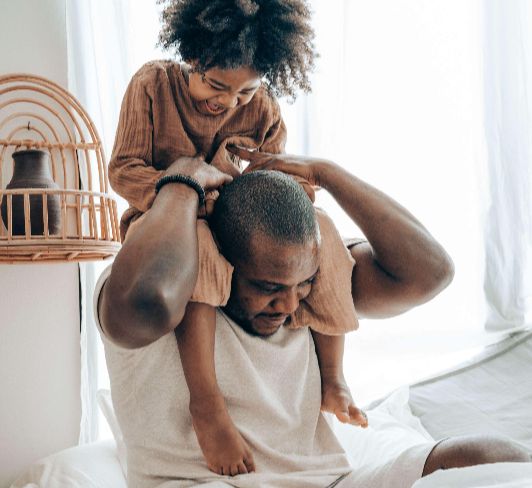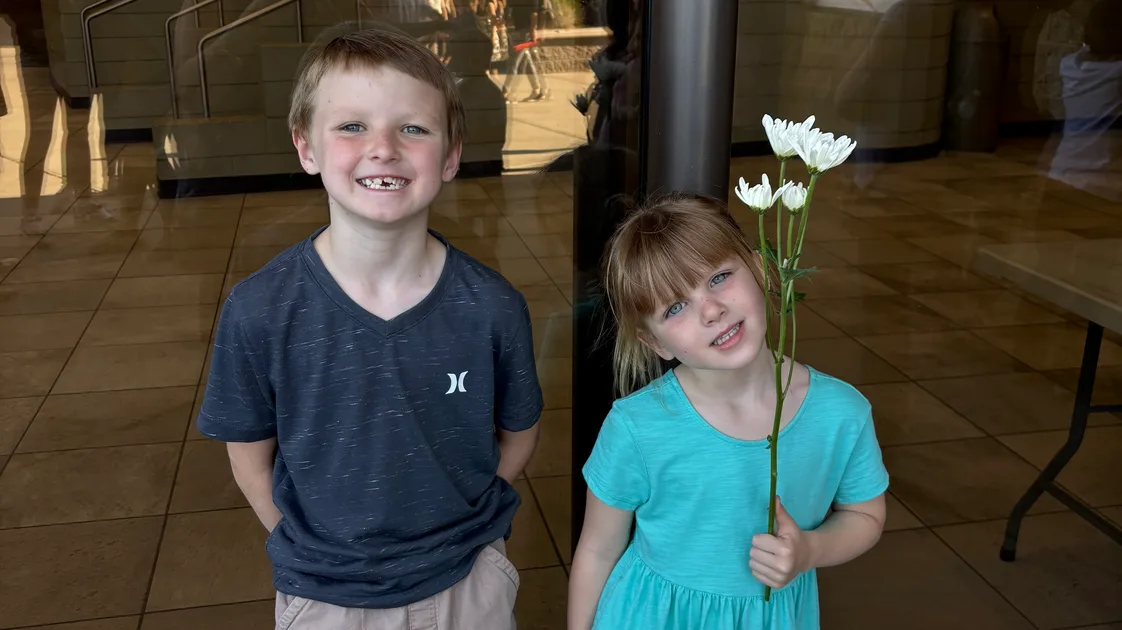
When my divorce lawyer told me in 2020 that I might only see my children every other weekend, I wasn’t just afraid of losing time with my kids. I was terrified of becoming the kind of father mine had been.“[Your ex wife] is filing for primary physical custody. In this set up, you would be granted limited parenting time every other weekend from Thursday evening until Monday morning,” my lawyer informed me.The words “limited parenting time” sent a cold shiver down my spine.“No,” I said firmly into the phone speaker, my voice cracking. “I will do whatever it takes to get equal custody.”I stood up and started pacing around the kitchen island as one thought played on loop in my head: “I can’t repeat the cycle. I can’t be an absent parent to Lydia and Peter, just like he was to me.”Mere months before that phone call with my lawyer, I had flown to Ghana, to ask my own father why he didn’t fight for me. The decision to visit him had been partly spurred by Father’s Day in 2019. Father’s Day was always one of my worst days of the year, as it would bring up feelings of abandonment and rejection, and there were no Hallmark cards that said, “You weren’t present, but thanks for being a part of my birth!”A few years after my father and my mother divorced, he remarried and eventually moved to Kenya with his new family. Meanwhile, my mom, stepbrother and I struggled with a period of being unhoused and living on welfare.The author and his mom in 1990 when he was 8 years old.Photo Courtesy Of Justin Jones-FosuWhen I visited Ghana, my father’s answer to my question about his absenteeism surprised me: He said he had never intended to leave me behind. He’d had custody struggles and interpersonal conflicts with my mother, and he decided that the best thing was to let me find him when I was ready. Minus the last part, it sounded eerily similar to what I was facing today.I forgave him, but I have never stopped wishing he had fought for me.And now, pacing around the granite kitchen countertop of the apartment I’d rented to be close to my kids after my ex-wife and I separated, it felt like history was repeating itself. Knowing my own father’s story, I was plagued by the thought that giving up equal custody was a slippery slope. First, it’s custody. And then, it might become easier to skip a weekend here and there, or let a new marriage or job relocate me to a new state (or worse, like my own father, a new country). Thankfully, my ex-wife and I were able to decide on a shared custody agreement. I would live in the same school district, and we’d alternate one week off, one week on with the kids.This solved the main problem. But, as I soon discovered, my fear of repeating the cycle couldn’t be solved with just a custody agreement.The author with Lydia and Peter, after completing a race.Photo Courtesy Of Justin Jones-FosuBefore the divorce, I was traveling almost 100 times a year as a keynote speaker. My ex-wife, on the other hand, had left her job to study full-time, so she had been more hands-on with the kids’ bedtime routines, dinner schedules and school drop-offs.Honestly, I was terrified. Was I cut out for the job? Dinners, packing school lunches, doing Lydia’s hair (I’d never done a girl’s hair before), supervising homework and making sure they didn’t stay up too late watching TV ― could I do it all? Were they actually better off staying with their mother, and just joining me for fun weekends and holidays? I’d be lying if I said I didn’t have these thoughts almost daily.Every time the kids and I had a disagreement, or they refused to do their homework or put their electronics away, I’d wonder: “Is this just normal development? Or is it because they’re not in a two-parent household?”And then, there were the times I messed up. Like when I cut Peter’s hair, and I did such a bad job that he was almost bald. Or the time when Lydia stubbed her toe and instead of just offering comfort, I jumped into, “What did you learn from this?” I could see it in their faces: In that moment, they wished I had shown up differently.The author and Peter after accidentally shaving all his hair off.Photo Courtesy Of Justin Jones-FosuOn top of my fears, I had to fight to be included as a parent. Since the cultural norm is that moms are the primary caregiver, the schools never included me in emails about upcoming field trips or sports events. And when I showed up to my kid’s games or church or parent-teacher conferences, I always imagined I felt eyes on my back. “People think you’re weird, showing up here alone,” I thought to myself. But then I’d see Peter running through the field or Lydia at a dance practice catch my eye, and I just knew that them looking into the stands and seeing me made it all worth it.Still, when I went to bed at night, the negative thoughts would suffocate me. Can I do it? Are they better off without me?I started going to therapy. Sitting on my therapist’s brown leather couch, the words caught in my throat, like they’d been stuck there for years and were struggling to get dislodged. “I am afraid I’m the same as my dad,” I told him.My therapist leaned forward on his chair and said, “You are not your father.”He said this is evident by the fact that I’ve made different decisions to those that he’d made, all those years ago. He said that making mistakes is a part of parenting, but the important thing is that unlike my own father, I am there for my kids, and I am learning along the way. My eyes felt hot before the tears came, as a mixture of pain and relief poured out of me. My chest involuntarily started heaving in sobs.My therapist didn’t wave a magical wand and fixed me, but after that session, something shifted in how I approached fatherhood. I still had self-doubt and, almost weekly, I was pushed into a new zone of discomfort. The change showed up in how I managed the self-doubt.Ironically, the answer to my problems laid in a single line of a keynote that I’d been delivering dozens of times a year at the time: “When you know your ‘why,’ it helps you overcome obstacles, to be more resilient, to engage, even when there are more challenging moments to come.”My ‘why’ was Lydia and Peter. The rest? I could figure it out. The first question I had to ask when arranging shared custody was, “How do I travel less?” I rearranged my work schedule to make sure that I was more present for my kids during our time together. We also started quarterly “fine dining with Daddy” classes. It was part-etiquette training, but mostly, it was a time for me to ask questions like, “How am I doing as a dad?” and “What is one thing I can change or do better?”My kids shared some feedback that was difficult to hear, like the time they told me that when I am stressed about work, they can feel like they’re walking on eggshells around me. They asked that I am more open and honest, and share that I’m stressed with them. I thanked them for their feedback, and now I do my best to catch myself when I am stressed, regulate my emotions and openly share what is bothering me (when appropriate).But other times, they surprised me with their feedback.“You are firm but fair,” Peter once told me. “I love that you do the Daddy-Daughter dances with me,” Lydia shared on another day. This brought tears to my eyes, as I loved that she appreciated the playfulness that I inherited from my own mother.The author and Lydia at a Daddy-Daughter dance.Photo Courtesy Of Justin Jones-FosuThere are still hard days. Days when I’m overworking myself, or exhausted from travel or when I lose my patience and snap. When this happens, my self-doubt kicks in. But then I think back to the statement my therapist shared in his office that day, that I am not my father. This experience — the divorce, reckoning with the possibility of not having equal custody of my children, and navigating the uncertainty of life as a solo parent — came with one silver lining.I have a new perspective on my own father’s decision to be a largely absent parent. I now see just how hard it can be to stay present when it feels like everything is an uphill battle. Experiencing this firsthand, and knowing that my grandfather (my father’s parent) was largely absent from my own dad’s life, has helped me see that my dad probably truly believed that leaving me in the care of my mother was the best decision for me.It has been seven years since I became a part-time solo dad. I have since remarried (my wife and I are doing long distance for now), and there isn’t a day where I don’t feel doubt or guilt for raising my kids in a home without both of their parents. However, there also isn’t a day where I am not overcome with love for my children ― and gratitude that I get to be there with them as they grow up. Father’s Day has also changed from being my worst day of the year to my favorite day of the year. Every Father’s Day, Peter and Lydia make me cards. Sometimes they’re funny. Sometimes they’re heartfelt. Sometimes they’re covered in inside jokes that only we understand. And every year, when I read them, I think about the little boy who wished his father had fought harder to stay connected.Then I look at my own children and realize that breaking the cycle was never about being a perfect father. It was about being a present one.The author and his new wife, and their four children.Photo Courtesy Of Justin Jones-FosuJustin Jones-Fosu is a husband, full-time daddy, keynote speaker, and author of the newly-released book, “Stop Chasing, Start Creating: A Timeless Fable on Mindset, Resilience, and Meaningful Work.” Do you have a compelling personal story you’d like to see published on HuffPost? Find out what we’re looking for here and send us a pitch at pitch@huffpost.com.RelatedParenting divorcefatherhood
I Had An Absent Father. When My Ex And I Divorced, I Was Terrified I’d Repeat The Cycle.
"My fear of repeating the cycle couldn’t be solved with just a custody agreement."
1,750 words~8 min read