Back in the day, especially where I come from, fathers were not dads. They were certainly not friends. They were stoic, strict strangers with whom a direct conversation might arrive once in a lifetime.
Mine never did. One November morning, he was gone. There was no warning of what was coming or what would come next. I was 13, old enough to miss and mourn him, and young enough to still have memories of him, relive them in my head and, when needed, slide into them for comfort.The only thing was, I drew a blank. I began my hunt for memories of him and kept drawing a blank. I knew he had been there all along, but my mind was unable to place us in a conversation together. I never dared approach him and he, perhaps, didn’t find any reason or need to speak to me directly. Clueless and in desperate need for something, I turned to my mother, but she too couldn’t produce anything that I could use as a portal to my childhood.
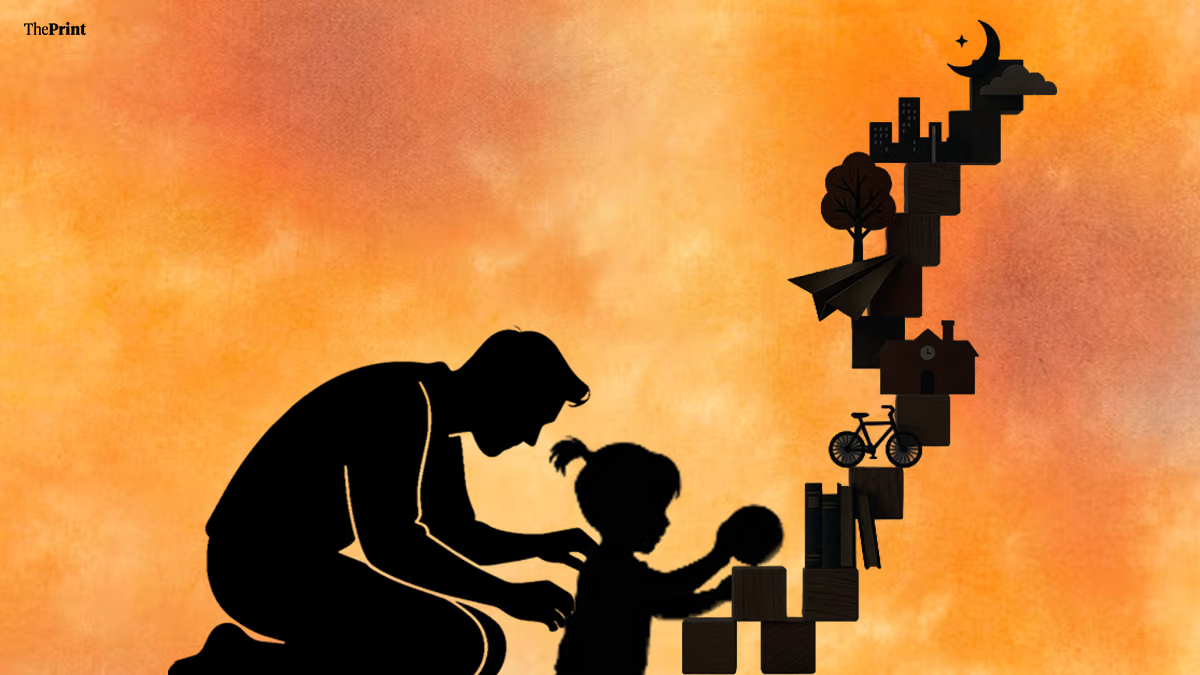
So where was he?I kept probing my brain, poring over the few photographs for clues. Nothing. As time wore on and days turned into decades, the intensity dropped. Then it stopped. There was no point in pining.Today, I am a father to a two-year-old girl. And I am not waiting for a memory of my own childhood to land in my sleep or hit me like déjà vu. I am here, building myself into my daughter’s memory as much as I can, so that she wouldn’t draw a blank two decades from now.Men of every generation have generally approached childcare as the mother’s responsibility. Whether it involves feeding, bathing, changing nappies, playing, putting them to bed, or waking up in the middle of the night, they withdraw because ‘it’s not my job’. And men who do all that are celebrated and eulogised as different—‘he is unlike others’. Here’s your medal. Some are mocked too, but that is hardly a price to pay for being present.The result is a glut of men who watch their kids grow from a distance. They are present, but not for the tasks that test patience. Any routine instilled in a child is the mother’s achievement. Someone at a gathering mentioned that his six-year-old daughter was ‘screen-free’. How did they manage it? ‘My wife does it.’ Good job, father.Don’t watch it from a distance. Get in there and get your brain fried and heart melted. To let the wonder of a life pass you by, even as it plucks words and thoughts from you that you yourself don’t register, would be a colossal mistake. Not because your child would seek answers from you; they won’t at two or three. But because it will start hurting when you find yourself taken aback every other moment.If my past two years are any indication, my father — like many others — kept himself bereft of the joy of knowing what being there with your child truly means. Should it have mattered to him that his son’s memory of him is a blank slate? He could choose what to be remembered with, but was blankness his choice? I don’t want to be my father. It’s not a cruel thing to say. I don’t want to be him because I now see what he missed.Men typically write themselves out of the daily acts of raising because somewhere they know society gives them the freedom to stay out. What they do with that freedom is leave the difficult moments to their wife, the child’s mother, comfortable in the belief that there is nothing they can do.But we can and we should. We must face the hardships of handling a tantrum, negotiating the unpredictability of a child’s behaviour, matching their endless energy, running after them to put a morsel in their mouth, and engaging endlessly until our backs and bones start pleading for a break. We must do everything, because someone already is.What kind of freedom is it, if it’s built on absence?We know that feeling quite well: okay, she is handling it; what a relief that I don’t have to get up to deal with it; I will go in when the moment has been taken care of; I will give directions on what needs to be done, without ever finding out how it is done.But becoming an involved father shouldn’t be an exercise in guilt. Do it for your own sake.Yes, we can count ourselves out by doing ‘everything else’. We are men; we ‘take care’ of things. Why not take care of our child? You may just find your child fills in something you never knew was missing.I asked my 2 if she had any ideas for this column.“Penguin.”Well, welcome to Fatherland.