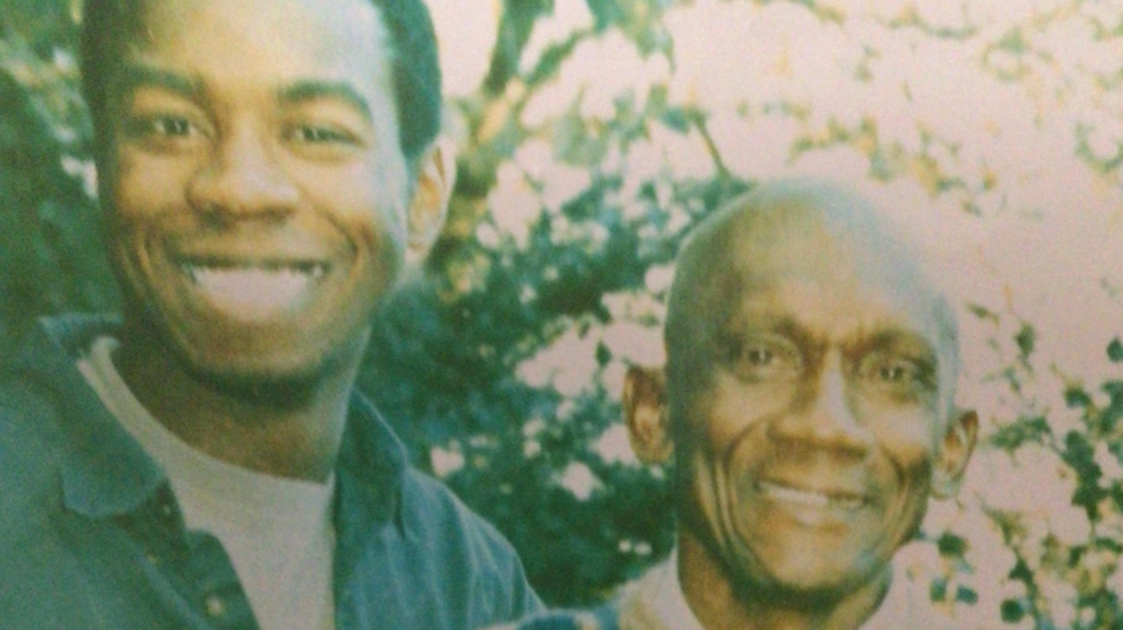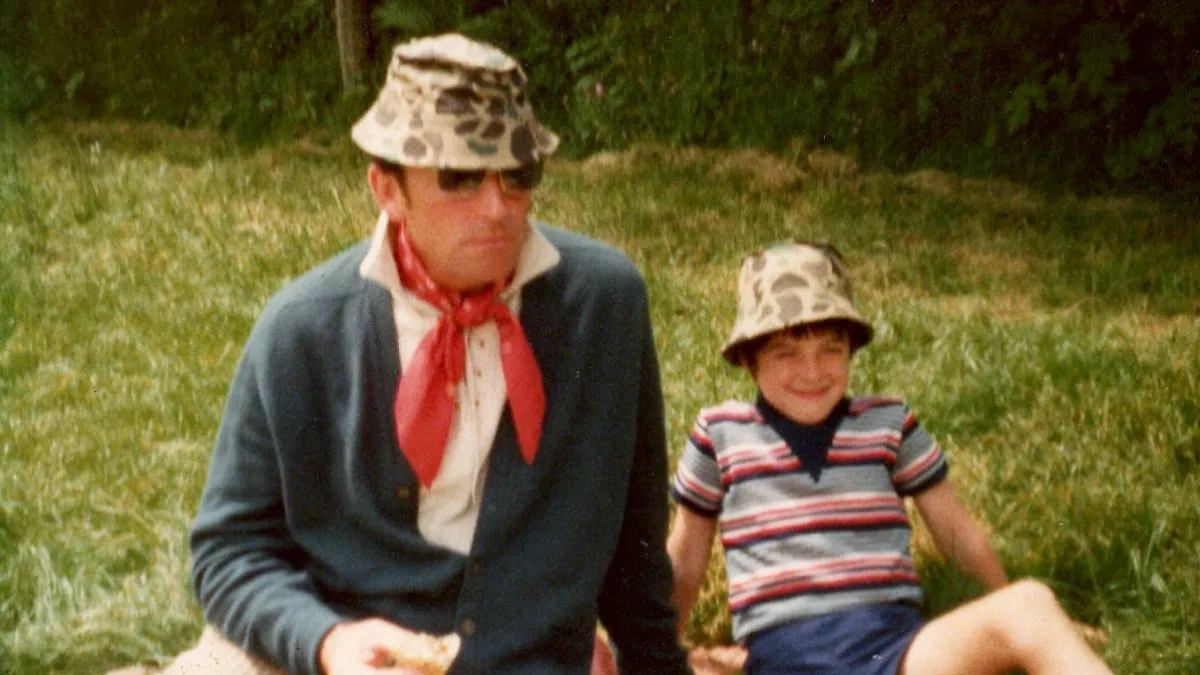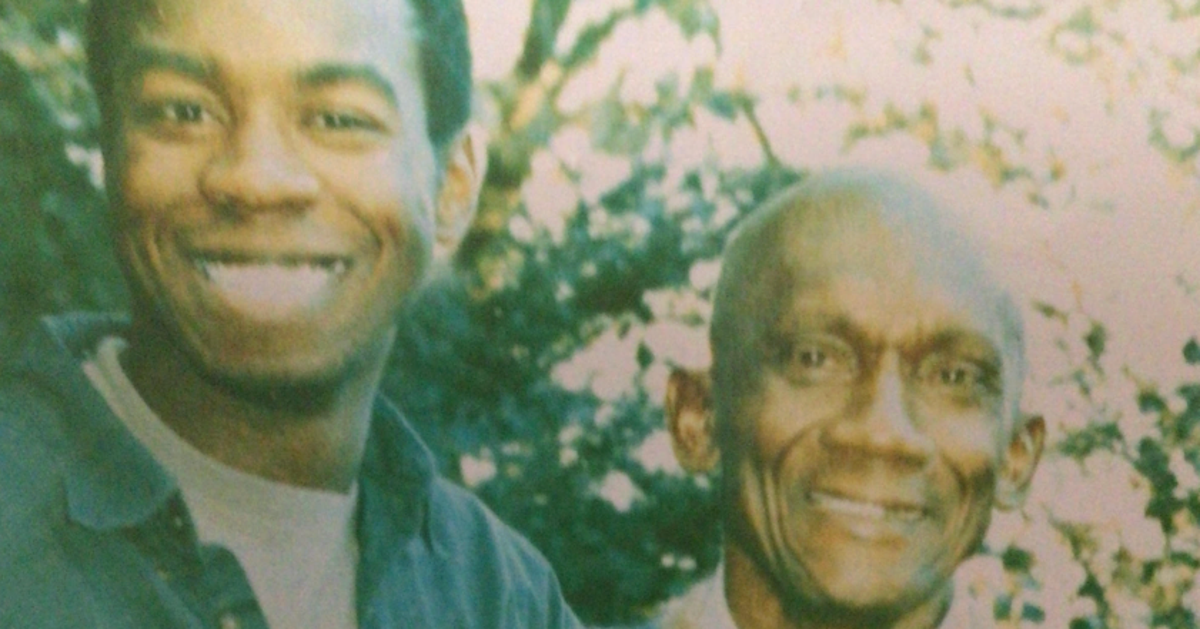
I stood in the center of my parents’ Valley Stream, Long Island, living room, heatedly yelling at my 90-year-old West Indian father — a U.S. veteran with advanced Alzheimer’s-related dementia — and wondered how we had regressed to this familiar, hostile place.Looking back, I should have known better. I’m a 54-year-old Black, queer man who recently moved back from California to help care for Dad, who also has severe hearing loss. I’ve read up on caretaking for someone suffering the disease known as “the long goodbye,” so I know you aren’t supposed to contradict them. You most certainly are not supposed to manhandle them. Yet that was precisely what I had done.My mother, the primary caregiver for my father, had left the house to run some errands. She went without my dad, which sent him into an anxiety spiral. (He has unfortunately reached a stage where he follows my mother around as if she is black clothing and he is lint.) As a result of her absence, Dad transformed into Bizarro Daddy — his alter ego, who is quiet, cantankerous and manic whenever something is amiss and I try to engage him.It feels a lot like walking on bubble wrap whenever that version of my dad is around and I never know what my next move is going to set off. So it came as a surprise when my own temper overtook me after I learned he had escaped from the house. I raced through the open front door and found him standing undressed on the porch steps, staring out onto the lawn. “What the hell are you doing out here, Dad? Where are your pants?” I asked.“I don’t know.”“OK, well, we have to go back inside.”“No!”“‘No!’ is not an option, Daddy!”Then I did what the books and experts say you should never do: I ruptured his dementia bubble by wrapping my fingers around his shoulders and firmly shoving him back into the house before he could even consider resisting me. My frustration at having lost track of him left me panicked by the thought of losing him. However, that was not how Dad took it. Instead of seeing things from my perspective, he exploded into an expletive-filled rage. I had never in my 54 years heard my father drop an f-bomb — not even when he was with his buddies at the racetrack. The fact that his anger was being directed at me suddenly triggered long-forgotten post-traumatic angst. It was autumn 1984, and I had been speaking with my cousins, Camille and Brian, upstairs in Brian’s bedroom when Dad, a native of Saint Vincent and the Grenadines, appeared in the doorway. The rage in his eyes made it clear something was very wrong. “Boy, didn’t you hear me calling you?” he asked.“No, Daddy, I — ”He struck me in the face, grabbed me by the collar, dragged me out of Brian’s bedroom, and down the 17 stairs from their second-floor East Flatbush, Brooklyn, apartment to ours. Once we were home, he continued to beat me — not with his hands but with words like “fool,” “lying” and “ridiculous” — all because I had not heard him call me.The rest of that traumatic conversation — or even why he had initially summoned me — lay tucked far away in the recesses of my psyche, like a mango seed inside a pit. Left with no other choice, I drifted away to the safe, psychic space 13-year-olds inhabit when their parents rebuke them. Just like that, the boundaries separating the years between when I was 13 and 54 shattered. Everything around me was that night and that staircase. It was the powerlessness of yesterday. It was everything I could not return to.Beneath decades of forgiveness lay untamed rage — so I cursed back at him, and before long, we were face-to-face, and I was full-blown yelling about the way he was talking to me. However, instead of arguing his case, he responded by parroting my every word, like a child might do. For his protection — and my own — I locked the doors and retreated to my bedroom. I bit into a tab of Klonopin from my emergency stash. Then I sat down in the middle of my childhood bedroom — I’d recently replaced the Janet Jackson posters and Marvel comic books with my own abstract paintings — and closed my eyes to recenter myself.My father no longer had access to his right mind, so it was I who needed to adjust. I had not practiced meditation in years, yet there I was, leaning into the rhythm of my own adrenalized breathing and humming in an attempt to self-soothe. Before long, numbness crept in from the corners of my consciousness, saturated my center, and diluted my anger enough for me to face my father. The night when my dad dragged me home from my cousins’ house marked one of the lowest moments in our relationship and set off an era of deep discord between us. Gone was the daddy who tucked me in with bedtime stories, took my side over Mom’s, and let me stay home from school when I faked being sick. Instead of apologizing for his brutality, he badgered me about getting into college. I couldn’t have cared less: I was being molested by a family member, and rather than turn to my father for help, I kept my shame to myself and turned inward toward artistic self-expression and the safety of solitude. Even that roiled my dad, and he constantly questioned my interests and my academic pursuits, as well as my curly ’80s perm and spandex pants.Once I was in high school, we barely spoke to each other. He was frustrated with my grades, and I was busy struggling with my sexuality. After I came out in college, he would say something insensitive about my fine-art major or homoerotic self-portraiture, and I would do something provocative like register with the Republican Party. After I told my mom what the family member had done to me and she relayed it to my father, he raged to her but said little to me about it. Exasperated with everything, I moved to San Francisco to escape. Free from the intrusive gaze of judgmental family members and father-son tension, I enjoyed the freewheeling queer liberation I hadn’t known I needed. Unfortunately, it was undercut by an untended resentment that manifested itself in my romantic relationships, which consisted of one-night stands. When I did date, I either mistreated the older men I went out with by taking my anger out on them, or they mistreated me by using me to serve their twink or Black fetishes. About a month after I’d moved westward, I received a letter from my father. In it, Dad apologized for his role in our estrangement:“To put things honestly,” Dad wrote, “I stayed on your case, because I wanted the best for you.”For the first time in my life, Dad opened up about his stormy relationship with his own womanizing father, and revealed his deep scar tissue. Tears streamed down my face as I read his letter in Alta Vista Park, while overlooking the foggy Northern Californian city I called home. He followed up the letter with an hourlong long-distance call, in which he apologized for not protecting me from my abusive family member — and for not being more supportive. Later, when I made my first trip home that year to attend a friend’s wedding, my father actually hugged me — both when I arrived and when he dropped me off at the airport. He even said, “I love you.”That was 30 years ago, and our relationship over the past three decades has been as bounteous as the mango tree in my Aunt Vida’s front yard in Saint Vincent. We sat under it during a homeland pilgrimage in 1999 and ate the sweet fruit with our bare hands until our bellies distended. However, as I descended the stairs to check in on my 94-year-old father, I worried those years of goodwill would mean nothing to the man I lived with now. Dad was sleeping on the couch in pajama pants when I found him in the living room, and I was envious. I wanted a nap, too. His need for around-the-clock care had kept me up until 4 a.m., when my bartender brother came home from work and took over. (Mom covered the day shift.) Between the three of us, there was always someone to keep him from fleeing — something he had attempted several times prior. But I was going to have to figure out a way to get through his tantrums without traumatizing either — or both — of us. It was then that it hit me: It was completely unfair that our parents should require more grace than we kids had been given. “Lawrence,” he grunted groggily.“Yes, Dad?”“You OK?”“Yeah. How about you?”“I don’t know.”And just like that, our big fight was a memory that only I had to live with. Dad didn’t remember what happened and I didn’t see the point in bringing it back up. This left us free to start anew yet again. Dad and I share a complicated past, but what defines us most is the progress we’ve made in the years since our contentious era. Far too many of my male (heterosexual and LGBTQ) friends still suffer from unresolved paternal trauma, so I’m grateful for the hard-won healing he and I have achieved. It’s our reward for growing closer together instead of further apart over the decades.Seeing my father so frail and vulnerable is truly devastating, because he is the first man I ever loved — and the first man whose love ever mattered. I cannot imagine being anywhere else but by his side at this point, when he needs me most. It feels like both the least and best I can do to grant him the end-of-life dignity he deserves. I won’t always get it right, but I will always keep showing up for him and the people I love. My father taught me that.Lawrence Everett Forbes is a 2025 Lambda Literary fellow. He is working on a father-son memoir. Do you have a compelling personal story you’d like to see published on HuffPost? Find out what we’re looking for here and send us a pitch at pitch@huffpost.com.
As A Teen, My Relationship With My Dad Was A Nightmare. Then He Sent Me A Letter That Changed The Course Of Our Lives.
"Gone was the daddy who tucked me in with bedtime stories, took my side over Mom’s, and let me stay home from school when I faked being sick."
1,728 words~8 min read