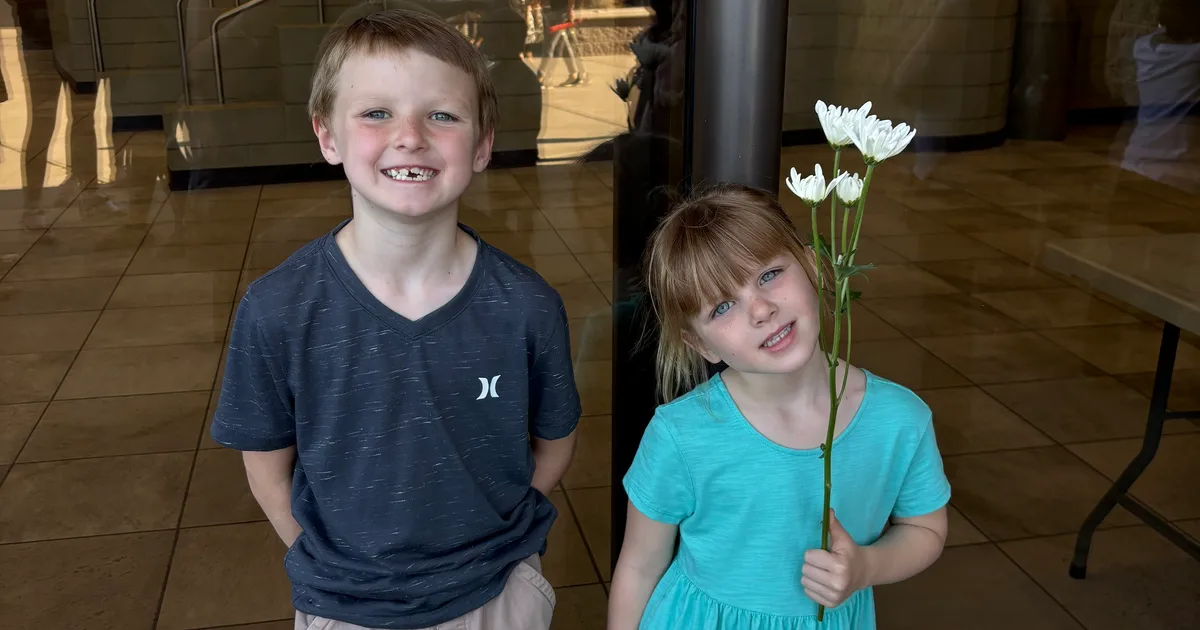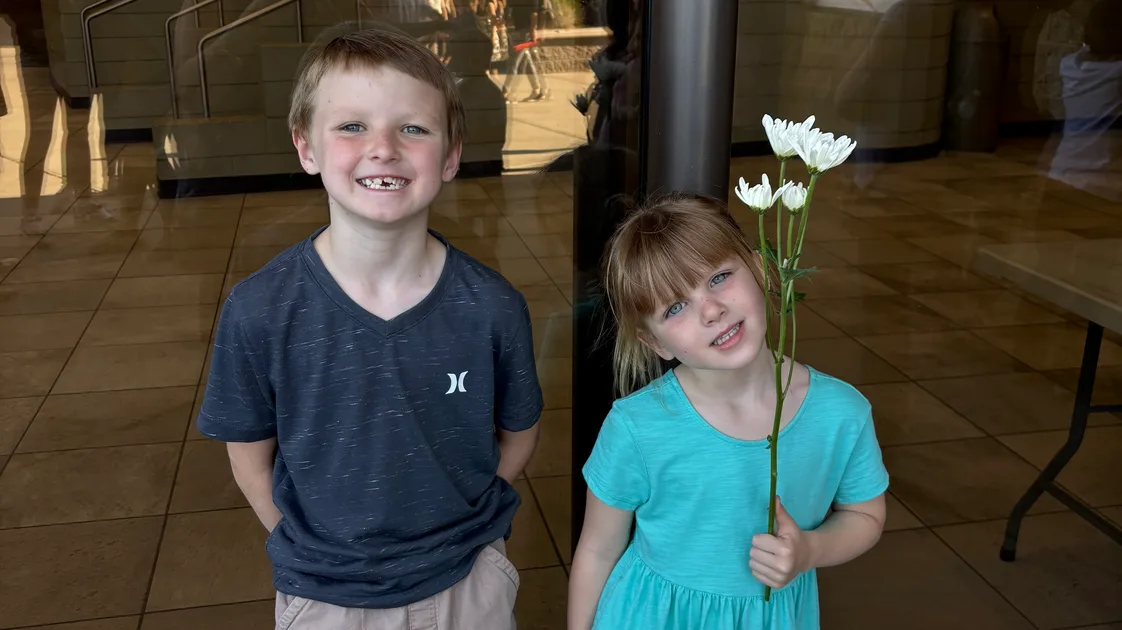
If you had walked into my living room a few years ago, you probably would have paused at the doorway for a moment just to take it all in.You would have seen Magna-Tiles scattered across the floor, Pokémon cards spread across the coffee table because an important game had been paused, Lego bricks tucked into every corner, and blankets draped over chairs and couches to create elaborate forts. Somewhere in the background, you might hear laughter coming from whichever room my two children, Alec and Lydia, had transformed into their newest adventure.Before the world knew Alec and Lydia because of tragedy, they were simply my children.Alec was 7 years old, and from the day he became a big brother, he embraced the role completely. Lydia was his best friend, his sidekick and his greatest responsibility. She called him “Brother,” and he called her “Sissy” because, when Lydia was born, he couldn’t pronounce her name.Wherever Brother went, Sissy wasn’t far behind.Alec loved Pokémon, basketball, soccer, swimming, singing, dancing and anything that let him burn off energy outdoors. Helping people came as naturally to him as breathing. If I was folding laundry, he wanted to fold towels beside me. If I was carrying groceries, he’d insist on taking as many bags as his little arms could manage. If I was outside working in the yard, he’d grab gloves and join me without being asked.One afternoon, he looked at me with complete sincerity and said, “Mommy, I love you to the last planet and back.”He made that up all on his own. I’ve never found a better way to describe who Alec was. His love was never small. Everything about him was wholehearted.Lydia was 6 years old and every bit as joyful as her brother.She adored unicorns, sparkles, pink, purple, arts and crafts, swimming and riding her scooter. She could spend hours coloring or creating little projects that she couldn’t wait to bring me. Every afternoon after school, she’d burst through the door excited to tell me about her day. One of my favorite memories is her running full speed into my arms for hugs that nearly knocked me over.Both of my children had the brightest blue eyes and the kind of laughter that could fill an entire house.Before I became their mom, I thought I understood love. Alec and Lydia taught me that love is so much bigger than I ever imagined.Looking back now, I realize the moments I thought were ordinary became the memories I treasure most. Making homemade macaroni and cheese together in the Instant Pot. Listening to Alec sing while Lydia danced beside him. Spending warm Arizona evenings swimming until the sun slipped below the horizon.What I didn’t know then was that another story was quietly unfolding beneath the surface of our family. One that would eventually change all of our lives forever.I met their father in college. Like so many abusive relationships, ours didn’t begin with violence. We shared dreams for the future, moved to Arizona, bought a home and started our family. From the outside, we probably looked like countless other young families building a life together.In retrospect, I can see the warning signs much more clearly. But at the time, I didn’t have the language for what I was experiencing. Today I know it’s called coercive control.It didn’t begin with dramatic arguments or obvious abuse. He would ask where I wanted to go for dinner. I’d give him a few ideas, and one by one, he’d dismiss every suggestion until we ended up where he wanted to go, because none of my suggestions were good enough. At the time, I thought we were compromising.Looking back, I realize my voice slowly disappeared.After we moved to Arizona, the criticism became more constant. It was how I folded laundry. How I made the bed. How I cleaned the kitchen. How I organized the house. No matter how hard I tried, nothing ever seemed to be quite right.What made that especially painful was that I’ve been legally blind since birth. Instead of supporting me, he used my visual impairment as another way to diminish me. Because I couldn’t drive, transportation became another form of control. Whether I could go to church, buy groceries, visit friends or simply leave the house often depended on whether he was willing to take me. My world quietly became smaller.There were still good days. We celebrated birthdays. We watched our children grow. We laughed together. We went to church. Those moments were real. But so was the fear. Eventually, the emotional abuse became physical, and the threats and assaults heightened that fear.Leaving the marriage was one of the hardest decisions I’ve ever made, but I believed it would finally mean safety for my children and me. I trusted that if I documented what had happened, followed every court order, cooperated with every professional and simply told the truth, the family court system would protect Alec and Lydia.During the court process, I documented my concerns. I answered every question honestly. I complied with every request. I believed that if I kept providing the necessary information, someone would recognize the danger. Instead, much of the responsibility was being placed back on me.At one point, I was expected to make sure their father was taking his medication as directed. No one told me what that entailed or what I should do if he wasn’t. That remains one of the hardest things for me to understand. I had already survived the abuse. I was trying to protect our children while rebuilding my own life. Monitoring whether my abuser was following his treatment plan should never have been my responsibility.I wasn’t asking anyone to punish their father. I was asking them to recognize the warning signs and keep my children safe. I truly believed someone would.Then came May 19, 2024, the day that divided my life into before and after. On that night, during an unsupervised custody visit ordered by the courts, their father killed my children, Alec and Lydia, before he took his own life. I had no idea anything was wrong until the next morning, May 20, 2024, when their school called to tell me they had an unexcused absence. Unable to reach their father, I contacted the police because I knew something was wrong. Officers conducted a welfare check at the home and found Alec, Lydia and their father deceased inside. In a single moment, my entire world was shattered. People sometimes ask me how I’ve survived. The truth is, there were days I wasn’t sure I would.The grief was overwhelming, but so was the silence. The laughter that had once filled our home was gone. No more hearing Alec singing from another room while he played. No more Lydia calling, “Mommy, come look!” because she’d made another drawing she couldn’t wait to show me. So many times I’d wished they would pick up their toys, but I would have given anything to step over another Lego brick or find another Pokémon card tucked between the couch cushions.As impossible as it was to comprehend losing Alec and Lydia, another realization slowly settled in. This wasn’t simply an unimaginable tragedy. It was a preventable one. There had been documented domestic violence and mental health issues. There were clear warning signs. There were many opportunities to recognize the risk before it was too late. I believed in and trusted the professionals in my case, because I thought the system was built to protect children. I truly believed they would do what was necessary to keep my children safe. Instead, I was left asking questions no parent should ever have to ask. How did every warning sign and plea for help get ignored and lead to my precious babies being placed in a situation where they were taken from this world?For a long time, I couldn’t imagine what my future would look like. Eventually, I realized I had a choice. I couldn’t change what had happened to my family. But I could fight to keep another parent from standing where I now stand if something could have been done to prevent it.That decision changed the direction of my life.I wrote my book, “There’s Still Hope: A Journey of Adversity, Tragedy, and Unshakable Faith,” because I wanted people to understand that domestic violence is about far more than bruises. Coercive control, intimidation, manipulation, isolation and psychological abuse can be just as dangerous, even when there are no visible injuries.I launched the “Voices Against Filicide” podcast because I wanted survivors, bereaved parents, advocates, attorneys, judges, researchers and mental health professionals to have honest conversations about child safety, domestic violence, coercive control and the warning signs that are too often misunderstood or overlooked.I’ve traveled to speak with advocates, legislators, judges, attorneys and communities because every audience represents another opportunity to help someone recognize those warning signs before another family experiences the same loss.None of those conversations is easy. Every interview asks me to revisit the worst day of my life. Every speech requires me to tell the story of two children I would give anything to still be raising. People often tell me I’m strong. The truth is, strength wasn’t something I chose. It was something grief demanded of me.Every morning, I wake up with the same decision. I can let grief have the final word, or I can honor Alec and Lydia by continuing to fight for children who still have a chance to be protected. That journey eventually led somewhere I never imagined: the Arizona Capitol. I carried their story into legislative offices, committee hearings and conversations with lawmakers, because I believed their lives could still make a difference.Alongside legislators, advocates, domestic violence organizations, attorneys, survivors and many others who believed children deserved better, I had the privilege of helping champion the Alec and Lydia Act.The Alec and Lydia Act strengthens protections for children by requiring courts to more carefully consider domestic violence and coercive control when making decisions that affect children’s safety. It promotes greater accountability and encourages courts to clearly explain how they reached decisions in cases where children’s lives may be at risk.To many people, those may sound like technical legal changes. To me, they represent children being seen. Parents being heard. Warning signs being taken seriously before tragedy happens instead of after.Every time I testified, I carried Alec and Lydia with me. They were the reason I kept walking into another office. They were the reason I answered one more difficult question. They were the reason I found the strength to tell our story again.On June 22, 2026, Gov. Katie Hobbs signed the Alec and Lydia Act into law. It was one of the proudest and most heartbreaking moments of my life. As people celebrated, my mind wasn’t on the cameras or the ceremony. I was thinking about the living room that had once been filled with forts, laughter and two little children who should have been there to see what their names had accomplished. No law will ever bring my children home. I will never hold them again. If I could trade every interview, every speech, every podcast episode, every legislative hearing, every television appearance and every law for one more ordinary afternoon with my children, I would do it without hesitation. But because I can’t change the past, I’ve chosen to devote my life to changing the future.My hope is that the work doesn’t end in Arizona. That other states will continue strengthening protections for children and learning from families like mine. I hope professionals continue asking difficult questions when something doesn’t feel right. Most of all, I hope Alec and Lydia are remembered for far more than the way they died.I hope people remember Alec’s enormous heart, his willingness to help anyone who needed him and the little boy who loved me “to the last planet and back.” I hope they remember Lydia’s creativity, her bright smile, her unicorns, her sparkles and the running hugs that could brighten even the hardest day. As long as I have breath, I’ll keep telling Alec and Lydia’s story. Because every child deserves to come home safely. That’s what hope means to me now — it isn’t pretending tragedy never happened. Hope is believing that love can continue changing lives long after we’re gone. Hope Hooton is the author of “There’s Still Hope” and host of the “Voices Against Filicide” podcast. After losing her two children in a tragedy tied to an unsupervised custody situation, Hope has become a leading advocate raising awareness around filicide, coercive control and gaps in the family court system.Need help? In the U.S., call 1-800-799-SAFE (7233) for the National Domestic Violence Hotline.Do you have a compelling personal story you’d like to see published on HuffPost? Find out what we’re looking for here and send us a pitch at pitch@huffpost.com.
My Abuser Was Granted Unsupervised Time With Our Kids. I’m Haunted By The Tragedy That Followed.
“Then came May 19, 2024, the day that divided my life into before and after.”
2,136 words~10 min read