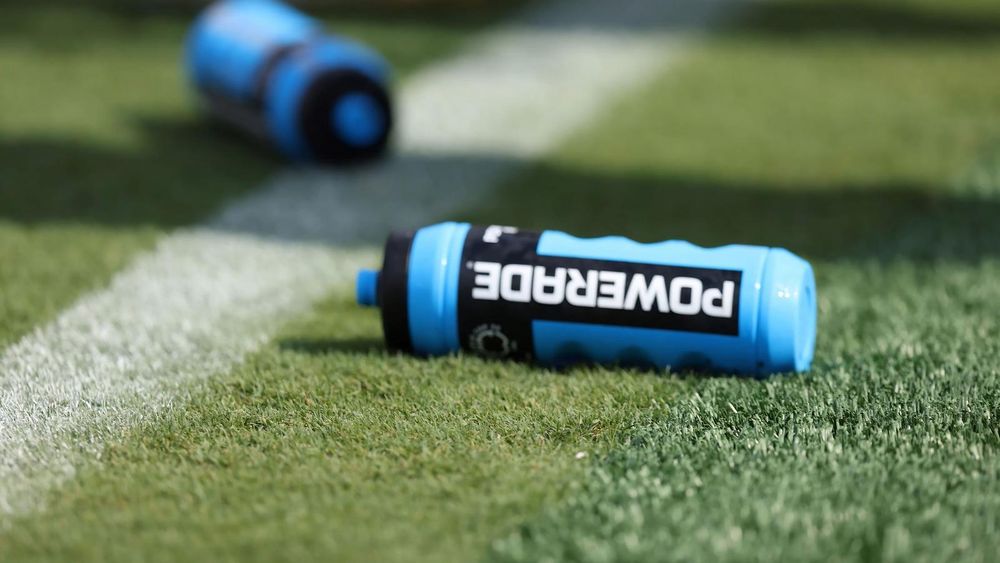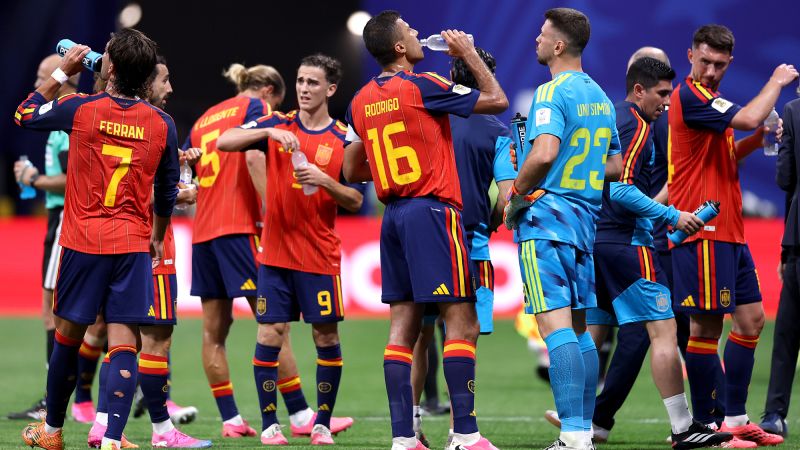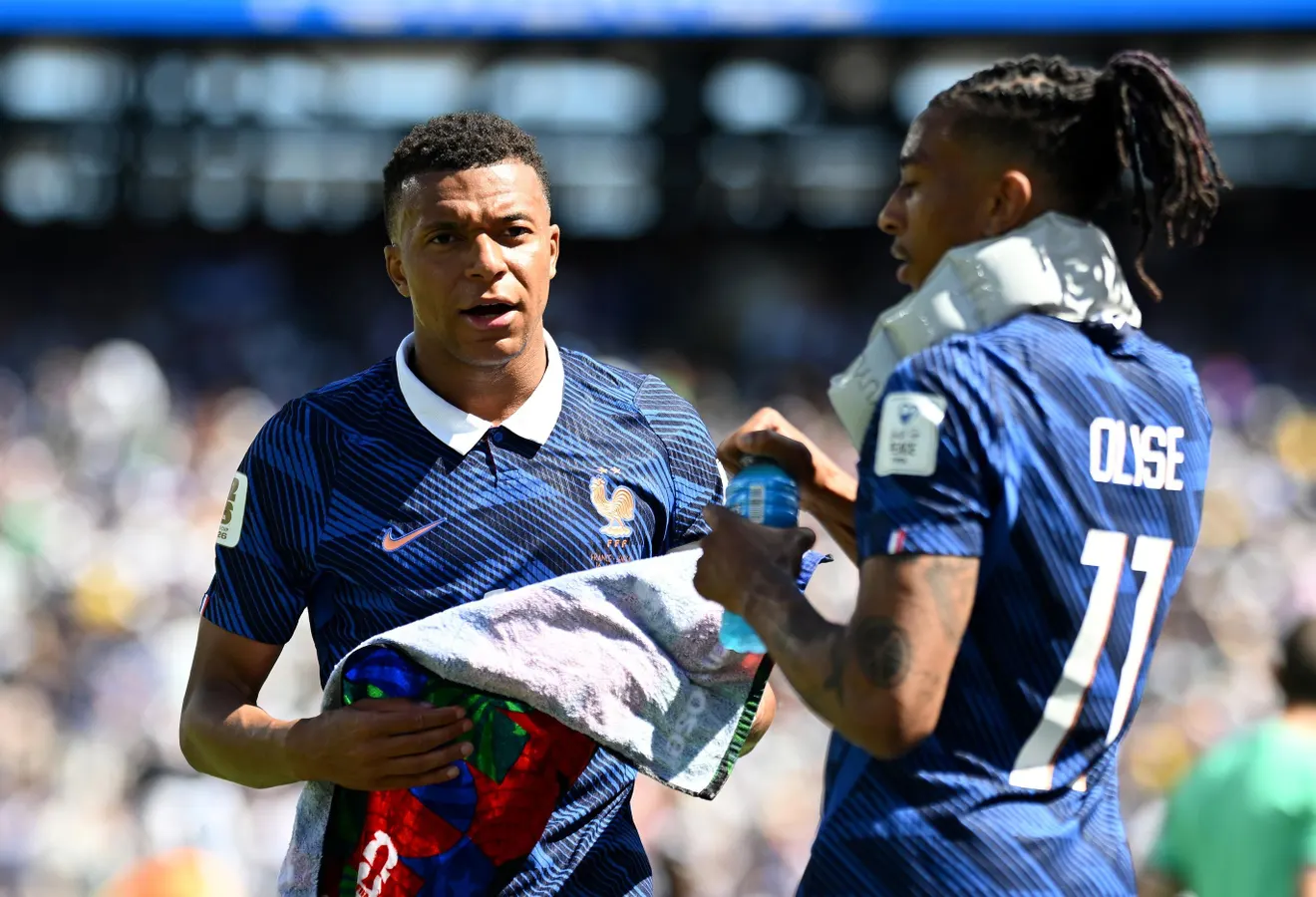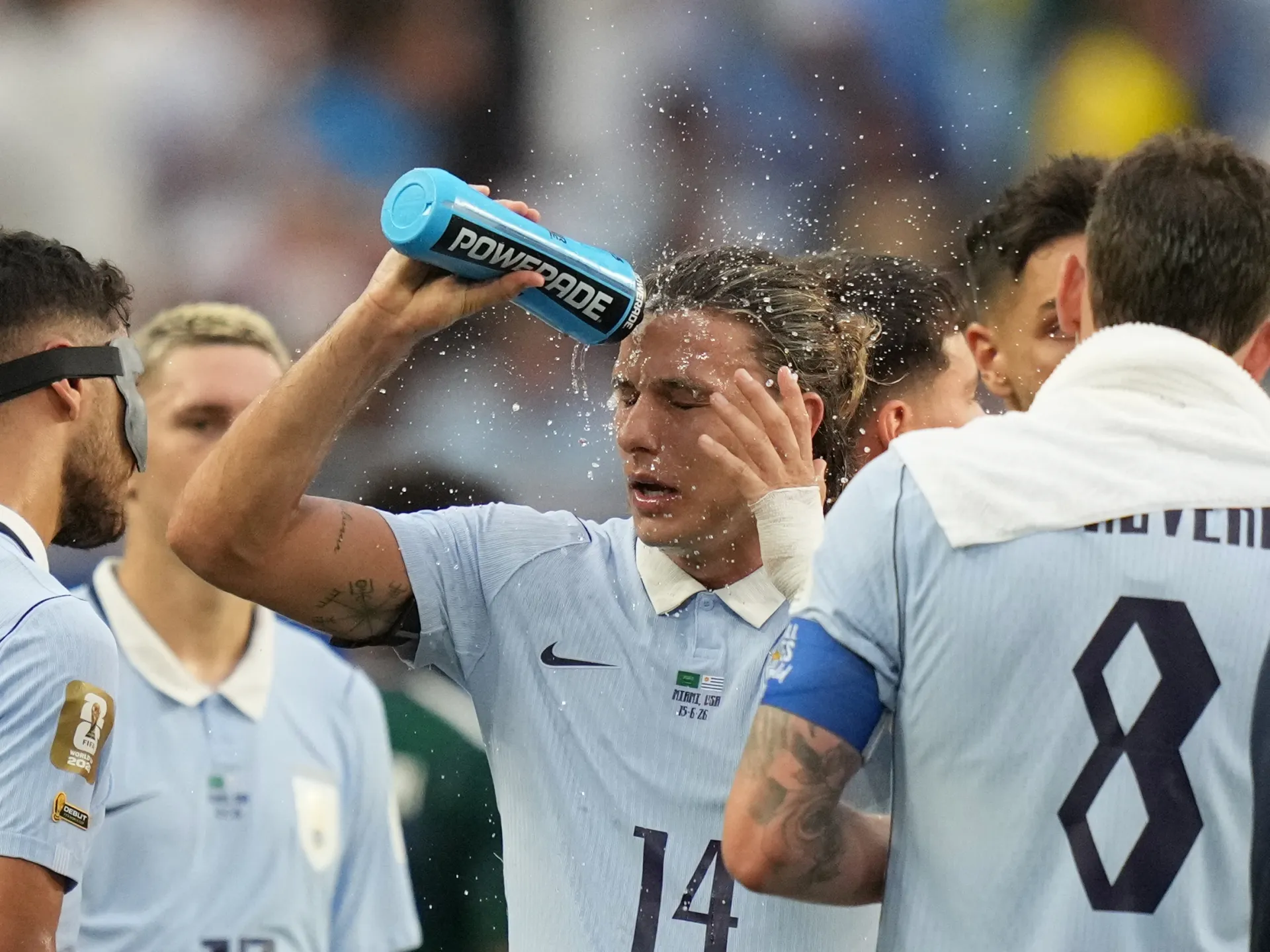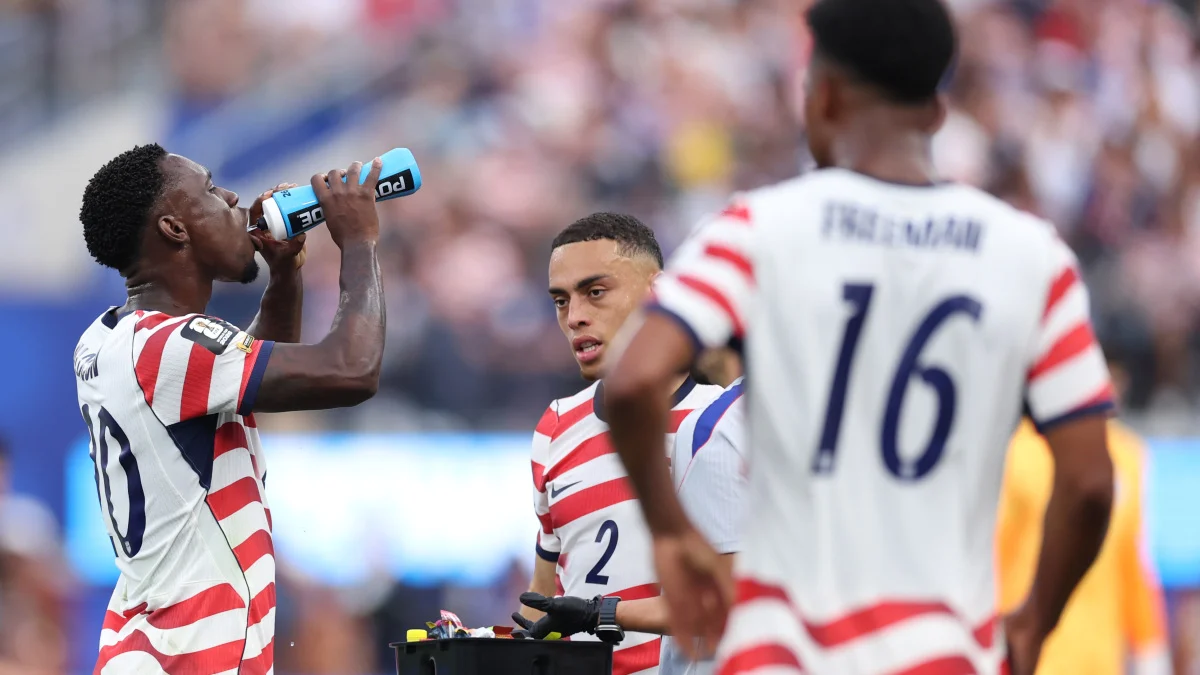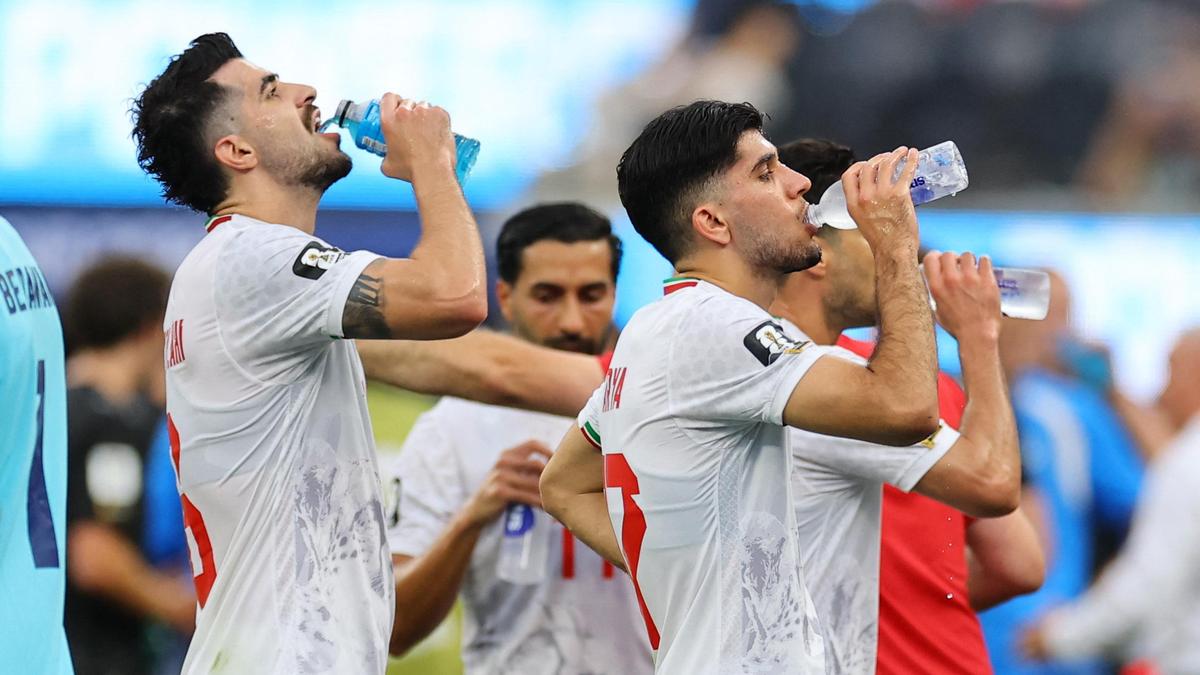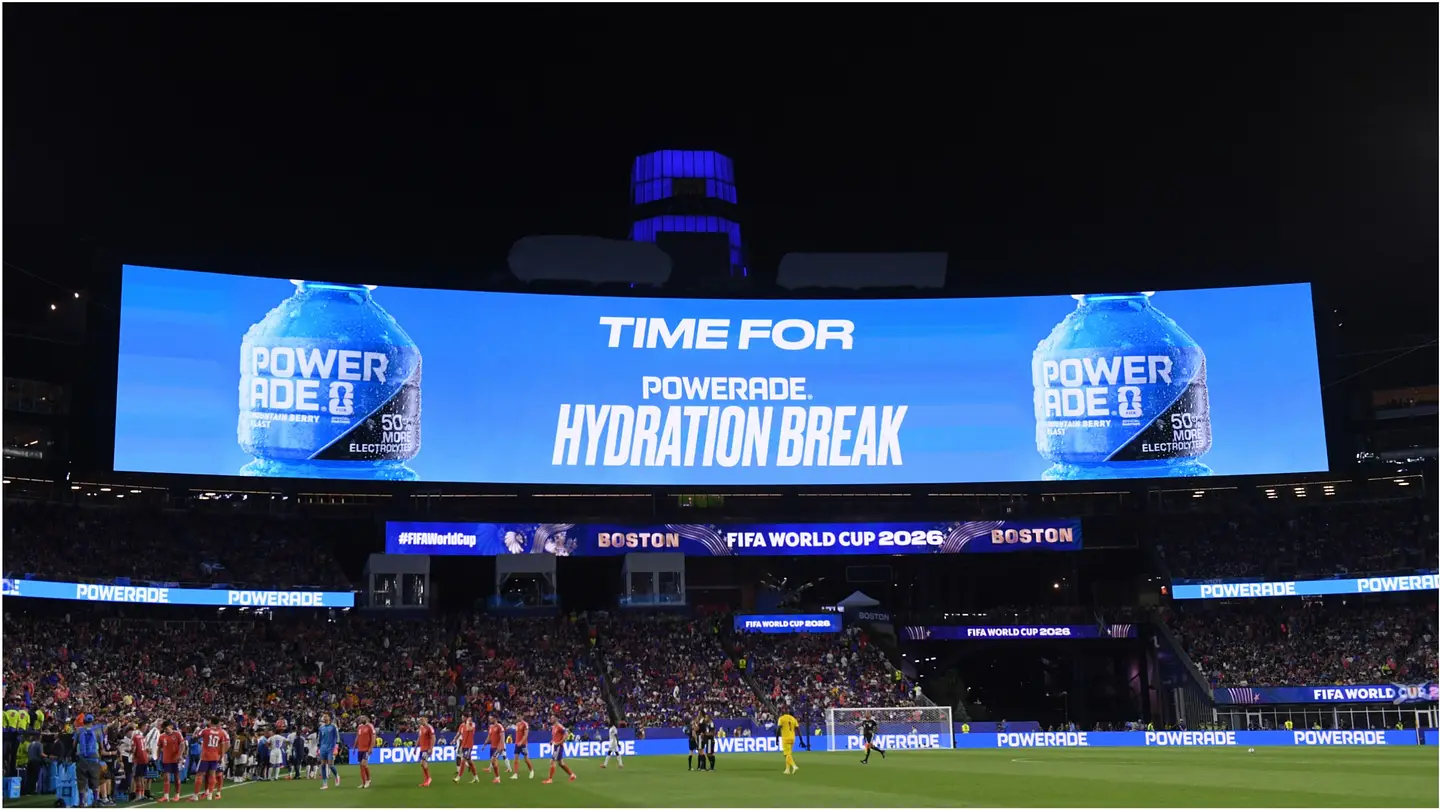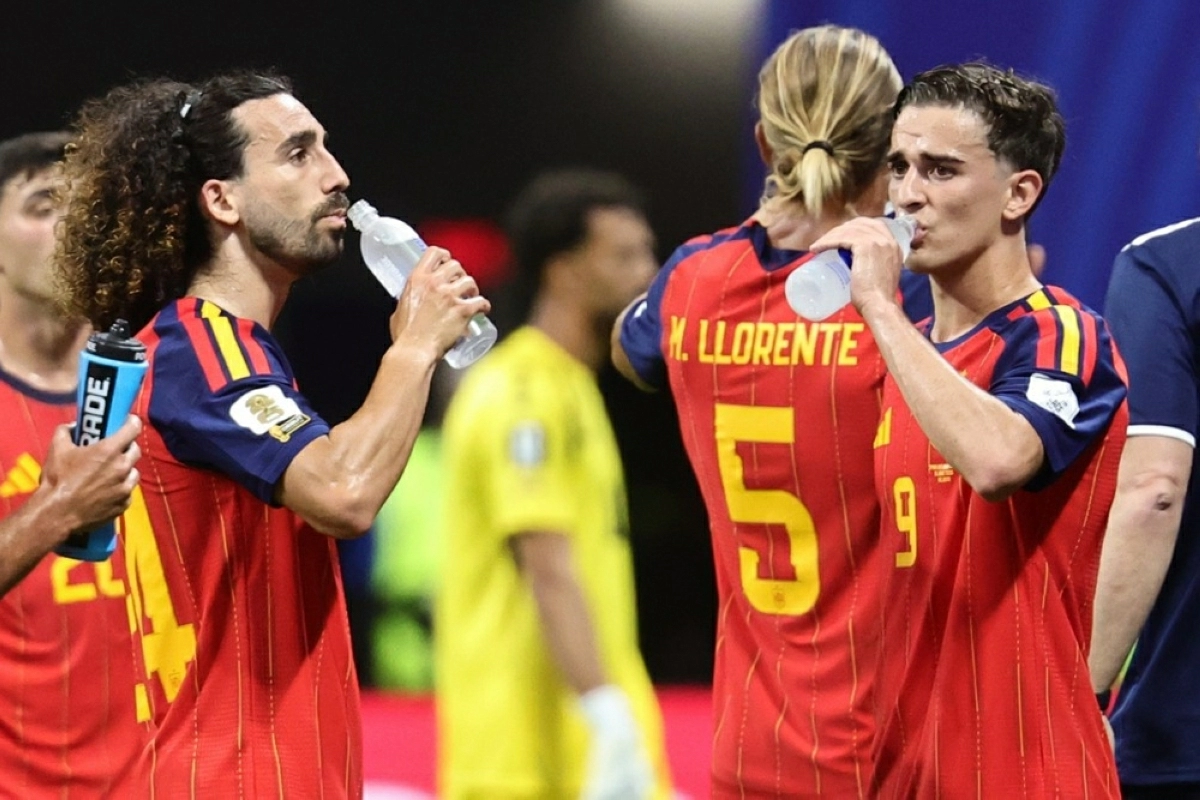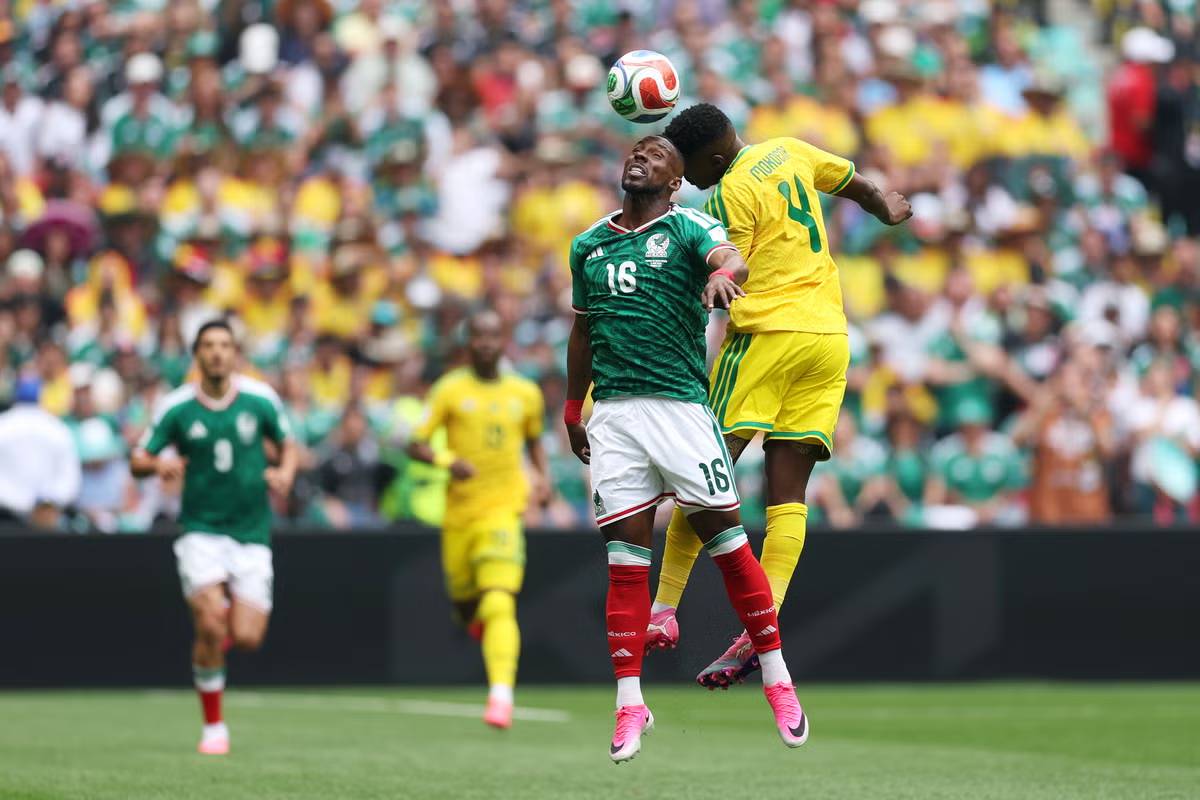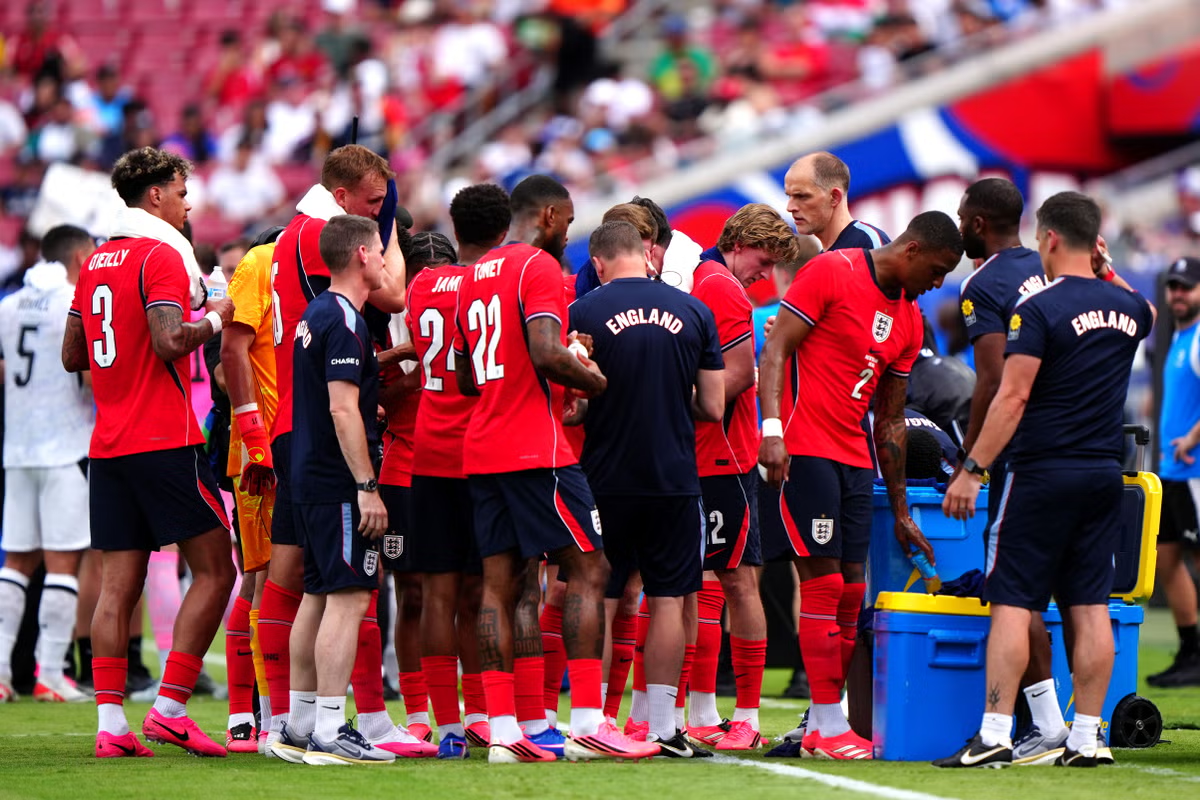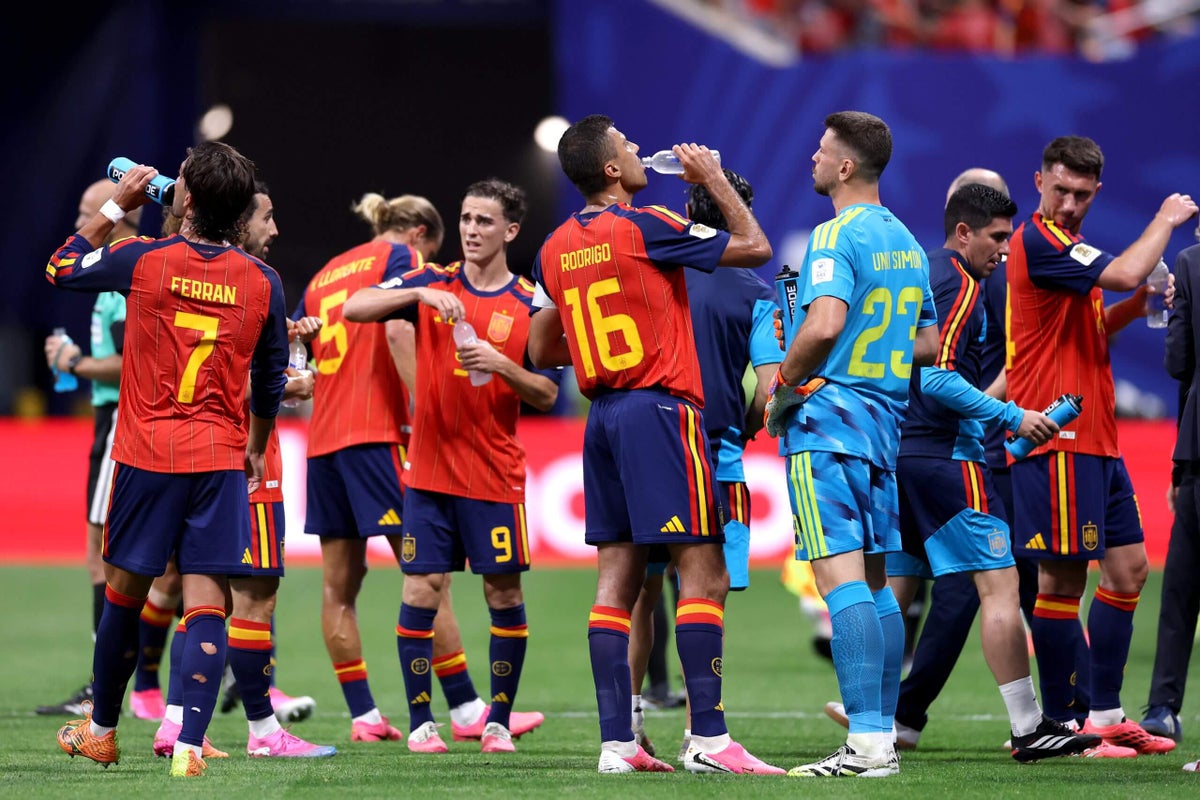
It has become one of the major talking points at this summer’s World Cup — attracting criticism from the likes of Virgil van Dijk and Mauricio Pochettino.For the tournament, FIFA has introduced a three-minute hydration break in each half, effectively turning the game into four quarters.Announcing the news in December, FIFA claimed the decision was taken as part of its “commitment to player welfare at the tournament”.Hydration breaks occur at every game of the competition, irrespective of the conditions.However, with many broadcasters across the world, including Fox Sports in the United States, cutting to commercials during that window, it appears there is more to this than FIFA’s official line.The opportunity to cut to commercial breaks affords media companies a way of increasing their revenue streams. That duly benefits FIFA as it can boost the value of its future TV rights.Speaking after the Netherlands’ 2-2 draw with Japan on Sunday, Dutch captain Van Dijk told reporters: “I was obviously watching almost all the games up until today. Every time going to a commercial, it’s a bit, not really that I like it. I think for the neutral watchers on TV, it’s also not great. So if it’s really hot, obviously it will be good to put them in, but I think you have to look at it in every game separately in my opinion.”“I don’t like it,” Pochettino, the USMNT’s head coach, told reporters at a press conference before the Paraguay match. “I only like it when the conditions are extreme.”With hydration breaks provoking debate across the game, The Athletic looked at how different broadcasters are approaching them and spoke to industry experts to discuss why they have been introduced, and whether there is a chance they are here to stay.Fox Sports, America’s English-language broadcaster for the tournament, has shown adverts during the hydration breaks since the tournament began.In the opening game, between Mexico and South Africa, Fox cut to commercial breaks. Commentator Ian Darke announced they were “powered to you by Powerade”.In the second half, there was frustration when viewers missed a few seconds of the game as Fox returned to the action after play had resumed.In March, FIFA advised broadcasters they could cut to a commercial 20 seconds after the referee called a cooling break, but needed to return to the match 30 seconds before it resumed.As well as Powerade, owned by the Coca-Cola Company, Fox’s in-game adverts have also been sponsored by Lenovo, another official FIFA sponsor.Yet Telemundo, the Spanish-language broadcaster showing games in the U.S., has not switched to adverts.“I’m not a fan of these water breaks,” former West Ham United captain Nigel Reo-Coker said on CBS Sports Golazo. “Let’s be real, it’s not for the welfare of the players. It’s about advertising and making money. And it’s sad, because it does take away from how a game flows. Because if it was for the welfare of the players, there would be other things being done as well, not just these water breaks.”As referenced by Reo-Coker, there has been some frustration that the breaks have impacted the momentum of a game. For example, when Curacao played Germany, the World Cup newcomers equalised just before the first hydration break. When the action returned, Germany found their rhythm and ended up winning 7-1.This graphic shows how momentum changed during the first half of the Germany-Curacao game, with a huge swing away from Curacao after the hydration breakOne of the rare few who has spoken out in favour of the hydration breaks has been former U.S. player Alexi Lalas.“I have no problem with hydration breaks,” Lalas, who is now a pundit on Fox Sports, wrote on X. “It benefits players and advertisers. Win/win. Yes, it changes how you play/coach/watch, but so did substitutions, 3 pts for win, VAR, etc. Evolve and adapt. There will be a generation whose version of the beautiful game includes quarters.”In Mexico, TV channels showing the matches, including Vix, operated by TelevisaUnivision, and TUDN, have cut away to adverts. On Vix, one of the adverts shown was a MercadoLibre commercial with Brazil’s all-time top scorer Neymar.In Canada, TSN has also shown commercials during the breaks. That has included adverts featuring Michelob Ultra beer and BMO, the official bank sponsor of Canada Soccer.Elsewhere, the majority of TV stations broadcasting matches in Europe are also showing commercials.In Spain, for example, both DAZN (all the games) and public service broadcaster TVE (the most high-profile ones) have adverts in the cooling breaks, including an Uber Eats commercial with Gordon Ramsay. RAI, in Italy, has cut to commercials, as have M6 and beIN Sports in France.In the Republic of Ireland, RTE has shown commercials during the breaks, even though former player Richard Sadlier was critical of that live on air during Mexico vs South Africa. “I understand there’s a water break, I know that’s a decision taken externally, but ads during a match is wrong,” he told the broadcaster.In a statement, RTE told The Journal it was attempting to strike a balance “between generating revenue and delivering a high-quality viewing experience”.In Germany, subscription service Magenta is using the breaks for commercials, but ARD and ZDF are not. As public service broadcasters, ARD and ZDF cannot show adverts after 8pm, or at any time on Sunday.In the UK, the BBC does not show adverts, while ITV has also chosen not to do so. The Athletic has been told that is influenced by strict limits, regulated by the communications services watchdog OFCOM, on how many adverts and how many total minutes of advertising ITV can show.During the Spain vs Cape Verde game on Monday, ITV showed how the breaks can be used in a different way. Emma Hayes, the head coach of the United States’ women’s team, provided tactical analysis, expertly delivered in just 70 seconds.In Australia, there have been commercials during the water breaks on SBS — and they have their own sponsor in McDonald’s — referred to as the ‘Maccas Match Break.’beIN Sports MENA, showing the matches in the Middle East and North Africa region, has been cutting to commercials.But in Brazil, the main terrestrial broadcaster, Globo, has avoided advertising.“Officially, this is about player welfare, and there is a clear case for protecting players in extreme conditions,” Paolo Pescatore, a media and technology analyst at PP Foresight, told The Athletic. “But it would be naive to ignore the commercial reality.“What is different now is turning what was previously an emergency welfare measure into a scheduled feature of every World Cup match, regardless of temperature. That creates valuable new advertising inventory during the biggest sporting event on the planet.“This decision would not have been taken in isolation. FIFA will have considered player welfare, medical advice, tournament conditions, broadcasters, and commercial partners. The welfare case gives the decision legitimacy, but the commercial upside makes it far easier to implement and standardise across every match. Two things can be true at once: it can support player welfare and create another revenue opportunity.“It’s potentially very lucrative. The World Cup delivers huge global audiences, and even a few extra minutes per match creates a significant amount of premium advertising inventory across the tournament. Broadcasters benefit directly from selling those slots. FIFA benefits indirectly because it makes the overall media-rights package more valuable.”The Wall Street Journal quoted one ad buyer as saying that a 30-second commercial during early World Cup games “costs some brands roughly $200,000 (£150,000), but jumps to around $750,000 when the U.S. national team is playing”.Misha Sher, a sports marketing expert and founder of One of Not Many, agreed. He said running commercials during the hydration breaks provided a highly-lucrative opportunity.“Whether we like it or not, I think it’s the reality of how sport is evolving and how major events, like the World Cup, are being commercialised,” he said. “If you look at most markets, particularly in the U.S., the biggest draw is live sport. We know live sport draws audiences like nothing else and when we talk about the World Cup, we’re talking about audiences on an unimaginable scale.”He said that had always been a challenge for football compared to the likes of the NBA and NFL in the United States, as the sport has fewer stoppages.However, he explained how this fundamentally changed the commercial picture.“If you only advertise during half-time, it really limits what you can do,” he added. “This provides another two windows. The audience are not going anywhere, they are tuned into the match, so the ability to have two other occasions to show advertising is so valuable.”Are hydration breaks here to stay in future World Cups?FIFA has yet to comment, but Pescatore said: “I would be very surprised if they disappeared.“Once a measure can be justified on welfare grounds and also creates commercial value, it quickly becomes part of the playbook.“The biggest winners are broadcasters, advertisers and FIFA. Players also benefit, particularly in hot conditions. For fans, it is more complicated. Football already has more interruptions than before, largely because of VAR and lengthy stoppages. Adding scheduled hydration breaks risks further disrupting the rhythm and flow of the game.“Fans understand player welfare, particularly in extreme heat, but they will be less forgiving if it feels like another commercial interruption dressed up as a sporting necessity.”
How broadcasters are using hydration breaks – and might they be here to stay?
TV companies around the world are taking different approaches. Some are making big money, others either are not or are unable to do so
1,536 words~7 min read