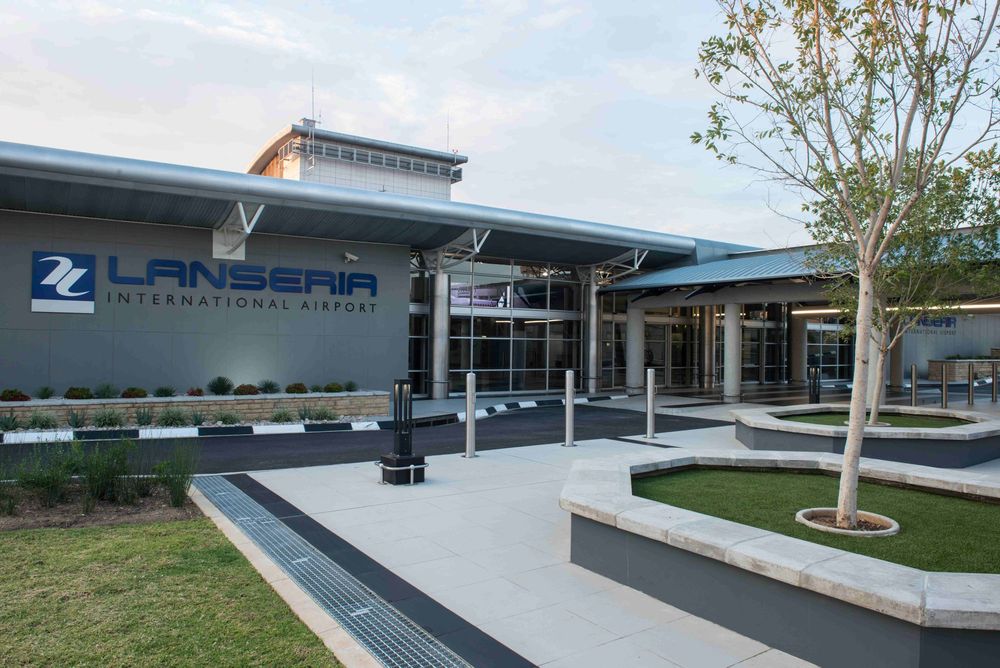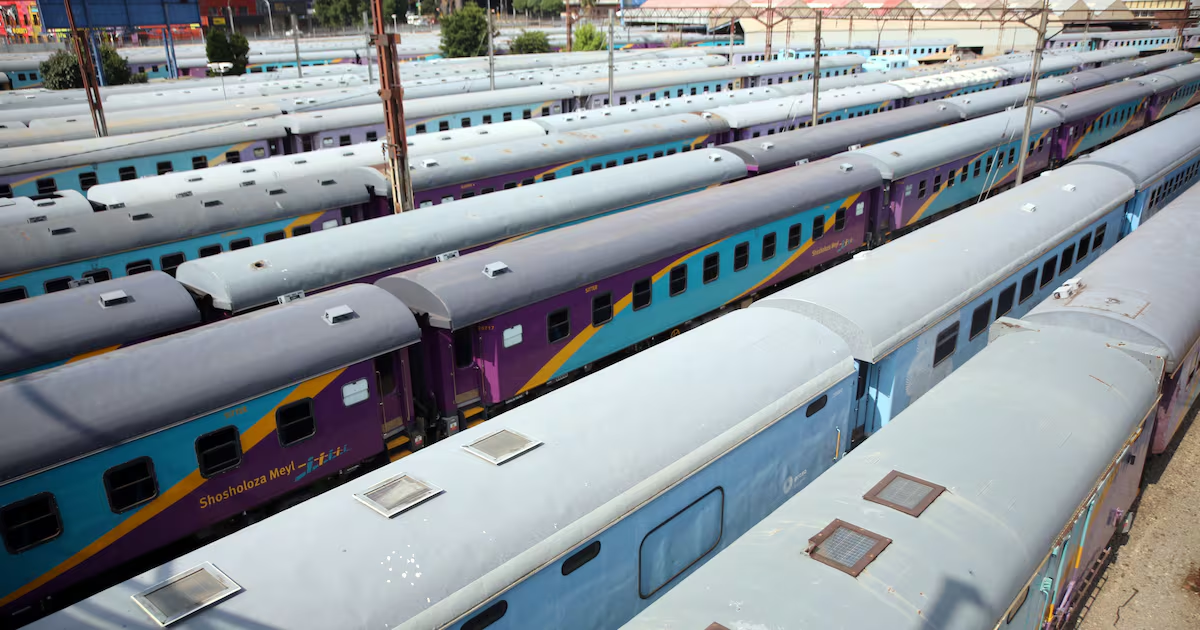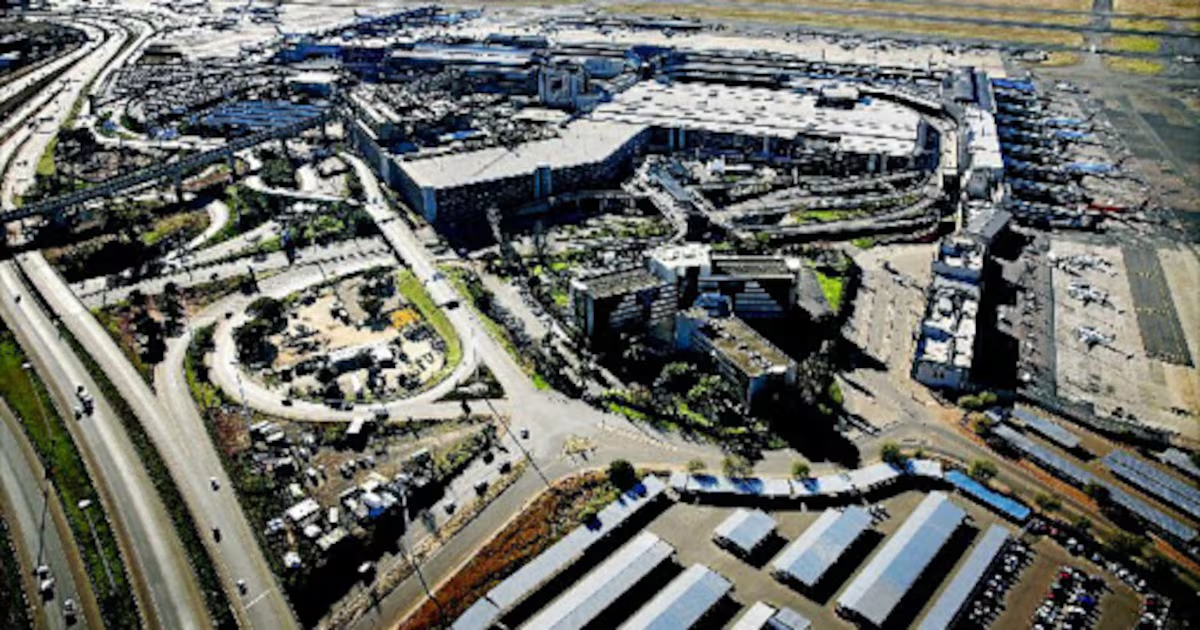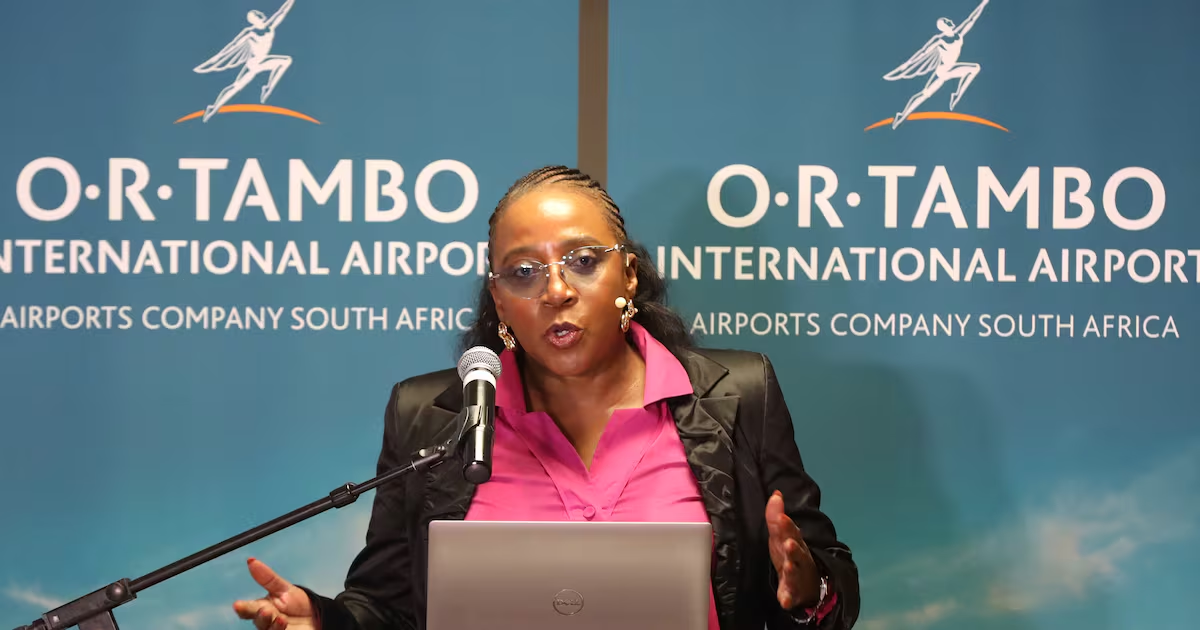
A couple of weeks ago Gauteng lost water. Then it looked like it was losing trains. But planes land on time at OR Tambo International Airport. The Airports Company South Africa (Acsa) posted a R1.8bn profit for the 2025 financial year, earning it a Moody’s rating upgrade on May 25. Meanwhile, the Passenger Rail Agency of South Africa (Prasa) burnt through R39bn in modernisation funds and still runs less than 30% of its peak fleet. Same state, same National Treasury. Wildly different outcomes. The question is not whether state-owned companies can work, it is which mechanics impose discipline and which reward dysfunction. The difference between Acsa and Prasa comes down to three constraints. Acsa has all three. Prasa has none. You can predict state-owned enterprise performance by asking three questions. The answers reveal whether failure is punished or funded. First, who pays for failure? This is revenue discipline. At Acsa customers and lenders pay. In financial 2025 about 60% of revenue came from airlines and 40% from commercial activity such as retail and parking. No planes means no money, and debt costs spike when performance dips. Same state, same National Treasury. Wildly different outcomes. The question is not whether state-owned companies can work, it is which mechanics impose discipline and which reward dysfunction. At Prasa the Treasury pays. Fares cover barely 15% of operating costs. The other 85% comes from transfers. No trains does not mean no money. It means a bigger bailout. Prasa received R3.5bn in 2025/26 just to cover salaries. Second, who controls hiring? This is governance insulation. Acsa’s board includes aviation, finance and retail experts. The CEO has been stable since 2021. The minister’s influence is checked because industry partners and lenders hold veto power via covenants and shareholder agreements. Prasa’s board was dissolved twice since 2020. It has had four CEOs in five years. The minister hires and fires at will, and political deployment trumps competence. Third, can customers leave? Acsa’s customers can. Airlines divert to Nairobi or Addis when OR Tambo fails. Retail tenants break leases. Credit covenants trigger if operations collapse. Prasa’s customers cannot leave. Commuters have no alternative. There are no creditors and no penalty for shutdowns. Acsa scores markets, board, yes. Prasa scores Treasury, minister, no. That is the whole game. Acsa behaves like a business because it has no choice. When a fuel line ruptured at OR Tambo in 2022 Acsa paid R60m in rebates to carriers. The loss hit the income statement immediately. The board grilled executives. Lenders reviewed covenants. The feedback loop is brutal and fast. Downtime equals revenue loss, equals expensive debt. For Acsa redundancy is non-negotiable. Downtime kills revenue. Result: clean audits for three straight years, Cape Town expansion on time and Moody’s citing strong liquidity and stable operations in May. Consequence is real because customers can leave. The company answers to commercial reality, not political speeches. Prasa behaves like a department because it can. When cables are stolen and services stop, Prasa loses fare revenue, but that is only 15% of costs. The real pain lands on the Treasury, not Prasa. Indirectly, Prasa gains a media moment to request more security capex. The feedback loop rewards failure. Downtime equals news cycle equals emergency grant. No-one is fired. In 2015-24 Prasa spent R39bn on modernisation. Since May 2026 key Gauteng corridors remain closed and stations have been vandalised again. The auditor-general issued disclaimers or qualified audits for five straight years.Consequence is absent because commuters are captive. When Prasa fails the Treasury sends more cash. There is no market test. No lender asking questions. Failure is funded. The logical step to restore Prasa is to ringfence the Acsa model. Create a separate track-owning company funded by access fees from operators. Bring in private minority equity and impose debt covenants. When trains do not run, the track company loses revenue and breaches debt terms. Make failure expensive. Stop Prasa’s capital transfers until Metrorail runs 80% of its 2010 timetable. Until then we are not funding public transport. We are subsidising the absence of consequence. Acsa proves the state can run commercial infrastructure. Prasa shows what happens when we ignore the mechanics that make Acsa work. The framework is not ideological. It is accounting.• Maseko is an independent political economy researcher.
PHILIP MASEKO | Why Acsa thrives while Prasa implodes
Airports Company SA behaves like a business while the state bails out the rail agency
711 words~3 min read