Story audio is generated using AI
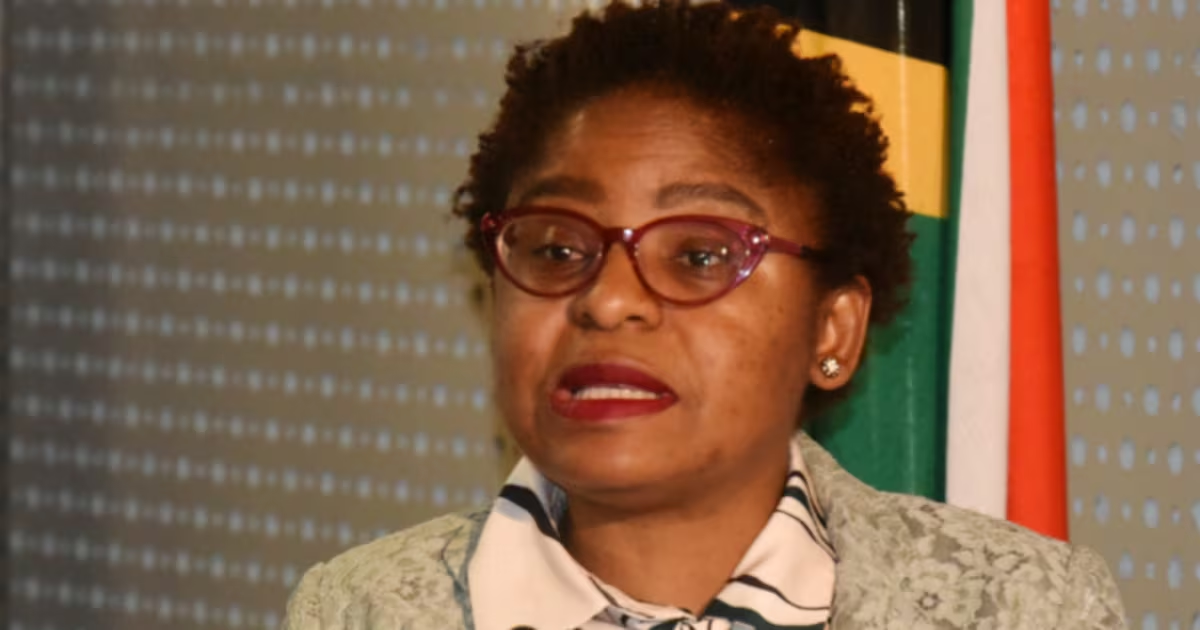
The government continues to implement wide-ranging reforms aimed at turning around state-owned enterprises (SOEs). Parastatals including power utility Eskom, ports and rail operator Transnet, national carrier SAA and arms manufacturer Denel were part of major looting during the state capture era under former president Jacob Zuma. In a media briefing on Friday to announce the outcomes of the cabinet meeting held on July 1, minister in the presidency Khumbudzo Ntshavheni said the cabinet received a progress report on the implementation of reforms aimed at strengthening SOEs “to ensure that they are fit for purpose”. “Ongoing progress in driving implementation of the SOE reform programme includes key initiatives that focus on strengthening governance, enhancing sustainability and increasing accountability across SOEs,” Ntshavheni said. “A key initiative is the National State Enterprise Bill, which provides for the establishment of a centralised entity to co-ordinate SOE reforms, standardise governance practices and remuneration guidelines, and support improved performance across the SOE portfolio.” Business Leadership South Africa (BLSA) CEO Busi Mavuso recently hailed the country’s reform agenda, saying it remains on a positive trajectory, showing measurable progress across economic, criminal justice and governance streams. The government launched Operation Vulindlela, a joint initiative between the presidency and the Treasury, in October 2020, in a bid to accelerate structural reforms to drive rapid, inclusive economic growth, job creation and improved service delivery. “Through the SOE Performance Monitoring Framework, the performance of 72 Schedule 2, Schedule 3A and Schedule 3B entities was assessed during the 2025/26 financial year. The assessment identified several governance challenges requiring targeted interventions,” Ntshavheni said. “The framework remains a critical instrument for strengthening oversight, improving governance and enhancing organisational performance across SOEs through the assessment of planning, reporting and performance management processes.” The minister said complementing these reforms “is the process of rationalisation and repositioning of SOEs, building on the work of the Presidential State-Owned Enterprises Council, which submitted its recommendations to the president in April 2024”. Read: Mantashe aims for 60-day strategic fuel reserve buffer against shocksMeanwhile, the cabinet approved the publication of the draft Strategic Petroleum Stocks Policy for public comment. The policy, said Ntshavheni, “aims to strengthen South Africa’s energy security and minimise the economic impact of supply shocks”. “It follows a comprehensive study commissioned by government in 2024 on the country’s strategic petroleum stocks, which identified areas requiring attention, including the need to strengthen stockholding arrangements and increase domestic refining capacity,” she said. “The policy proposes a mixed stockholding model under which the South African National Petroleum Company (SANPC) will maintain strategic reserves equivalent to 60 days of net imports for both crude oil and refined petroleum products, with a phased increase to 90 days over the long term.” She said the policy would contribute to safeguarding national energy security, improving resilience against global supply shocks and supporting sustainable economic growth. Business Day