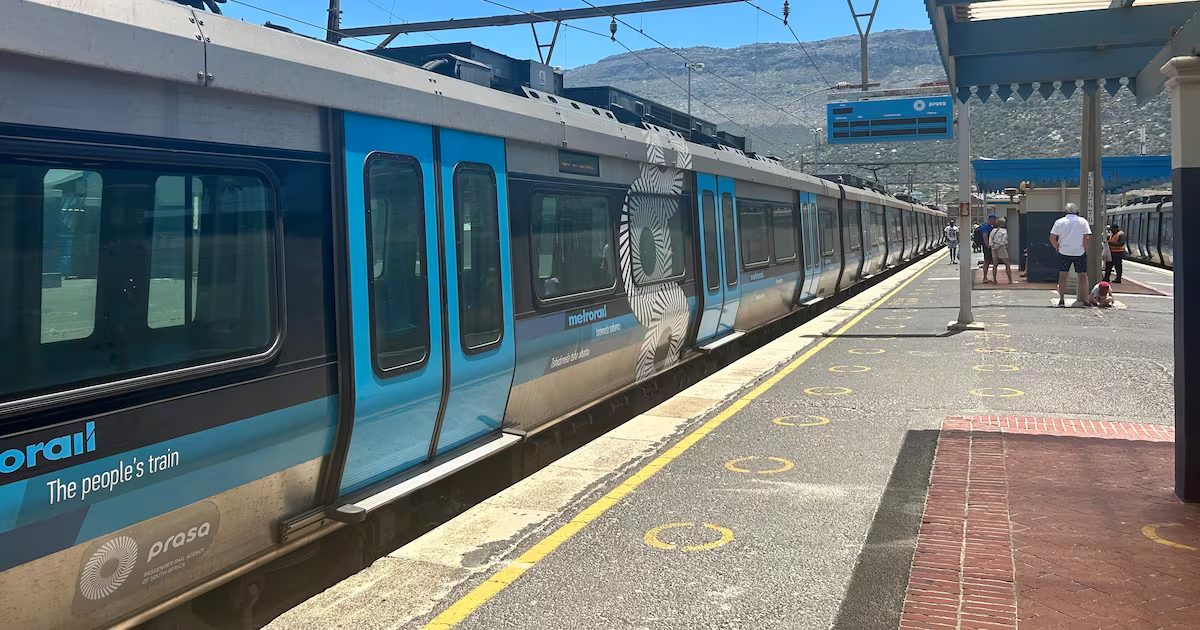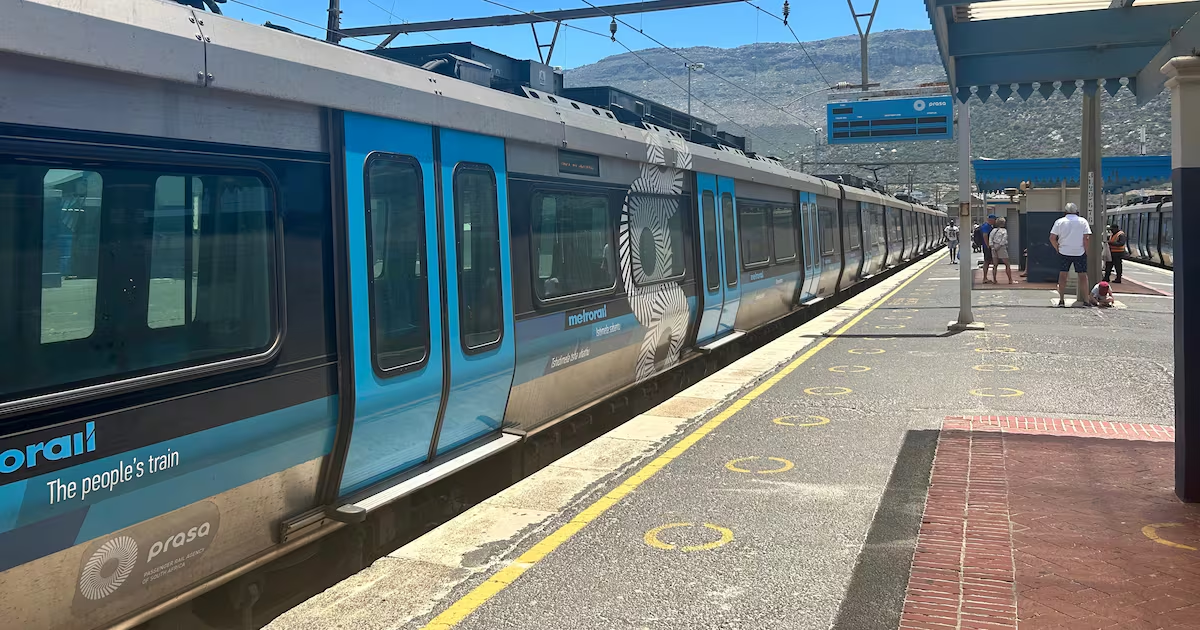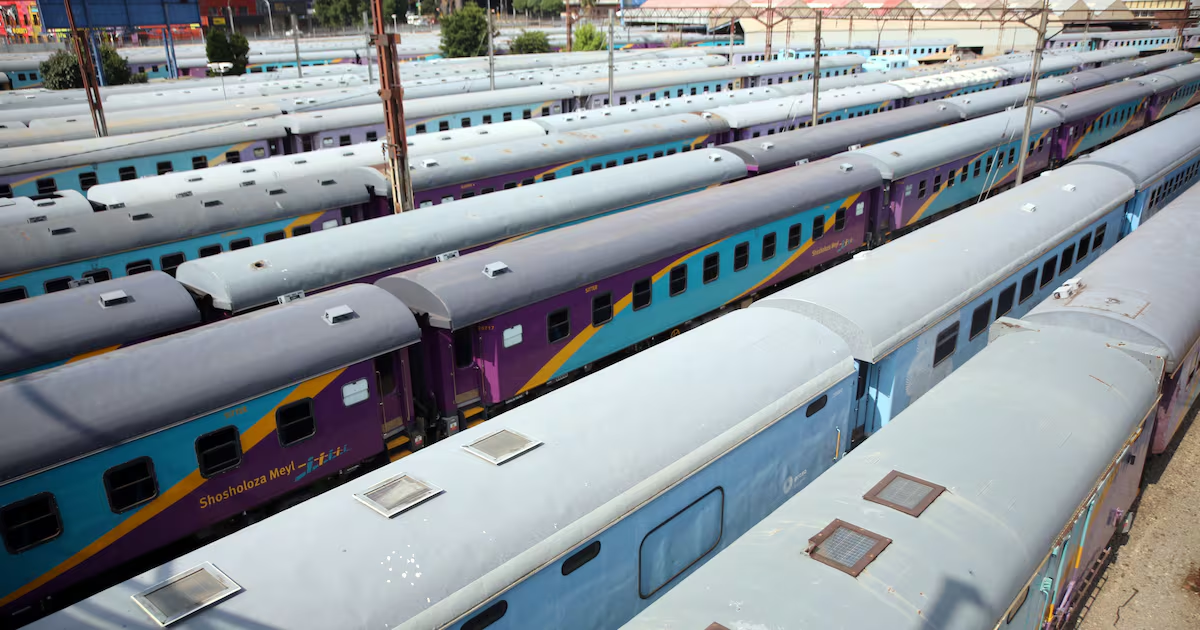
The Passenger Rail Agency of South Africa (Prasa) welcomes scrutiny of its performance. The opinion piece, “Why Acsa thrives while Prasa implodes” (June 17), does not meet that standard. It rests on a flawed comparison and factually incorrect claims. The piece claims Prasa’s board has been dissolved twice since 2020 and that Prasa has had four CEOs in five years, evidence, it says, of political interference Acsa does not face. Neither claim is accurate: the board has been in place since October 2020 and Group CEO Hishaam Emeran has led Prasa since September 2022. This matters to the piece’s central argument.The piece’s central claim is that Prasa should be as financially self-sufficient as the Airports Company South Africa (Acsa), treating two different entities as comparable. Acsa serves airlines and travellers able to fund their own access, so its business model does not require a subsidy. Prasa serves commuters who cannot absorb the true capital cost of passenger rail. This subsidy is not unique to South Africa; it is the global norm for infrastructure of this scale.Language such as “implosion”, “reward for failure” and “bailout for dysfunction” is not grounded in an objective view of Prasa’s present state. Over the past four years, Prasa’s executive and board have focused on a measurably positive delivery of its mandate: affordable, everyday mobility for commuters.Prasa’s record, judged on its own terms, is one of recovery, not the implosion the piece describes. Passenger trips fell from 516-million in 2014/15 to 10-million in 2020/21 after state capture, Covid-19 and mass infrastructure vandalism. Passenger trips have since risen to 101-million by the end of 2025/26 and 35 of Prasa’s 40 service lines have been fully or partially restored. Prasa is on track to meet its target of 600-million passenger trips a year by 2030/31.Prasa’s record, judged on its own terms, is one of recovery, not the implosion the piece describes.Financial governance shows a similar trajectory. After nine consecutive years of disclaimed or qualified audit opinions, Prasa received an unqualified opinion in the most recent financial year. Matters remain, as the auditor-general has noted, but the trajectory is not the one the piece describes.The R39bn the piece cites is not money spent for no return. It is spent in Prasa’s rolling stock modernisation programme, a credible industrial success story. More than 320 modern X’Trapolis Mega trains have been delivered under the programme, built at a purpose-built factory in Nigel, Ekurhuleni. It is the first train manufacturing plant of its kind on the continent, employing more than 1,000 people directly at the Gibela plant, most of whom are from surrounding communities.Local content requirements have anchored a supply chain of South African component manufacturers, with skills transfer, artisan training and technology localisation that has boosted South Africa’s wider rail and manufacturing sectors.Prasa’s core constituency is commuters for whom commuting connects them to economic opportunity, jobs and education. Independent cost comparisons put average monthly commuting spend at about R220 for a monthly ticket by rail against R1,120 by bus and R1,820 by minibus taxi, the alternatives most riders face. Even after last year’s fare adjustment, the first in a decade, passenger rail remains the most affordable mode available: a saving, month after month, returned directly to households that need it the most.Prasa is diversifying beyond fares and subsidy. Its property arm, Intersite, is turning station precincts into commercial and community assets, with developments in Gauteng, KwaZulu-Natal and the Western Cape creating jobs and anchoring local economic activity. Prasa’s secondary mandate delivered more than R700m to the entity’s coffers in the most recent financial year. Alongside its solar programme reducing reliance on the national grid, these are signs of financial resilience on multiple fronts.Prasa does not ask to be exempt from scrutiny. It asks that scrutiny proceed from accurate facts and an appropriate basis for comparison.• Shozi is Prasa’s senior manager, communications.
LWAZI SHOZI | Prasa defends recovery and rejects comparison with Acsa
Passenger Rail Agency of SA cites rising passenger numbers and improved governance
640 words~3 min read