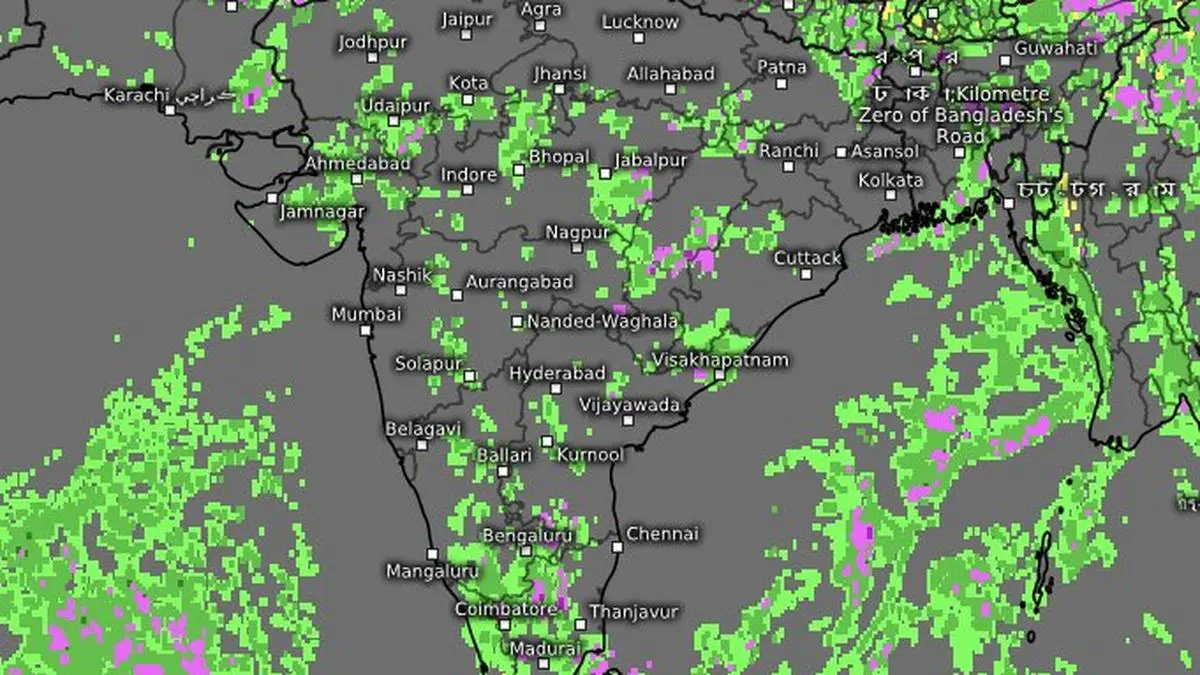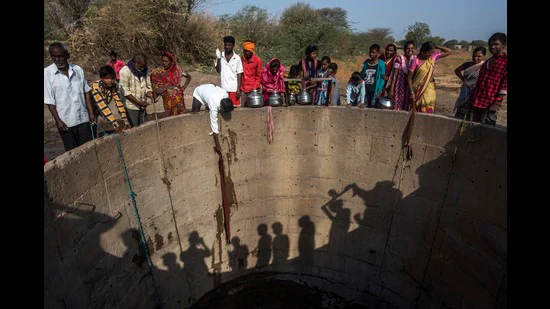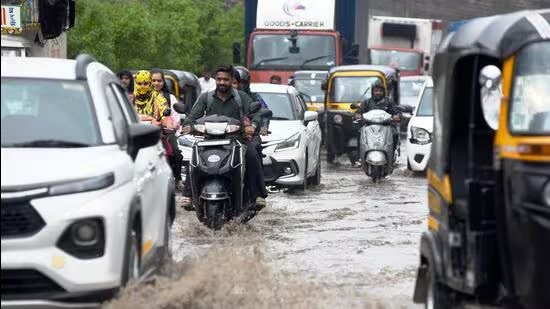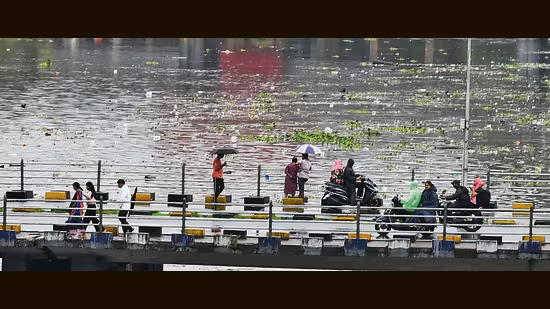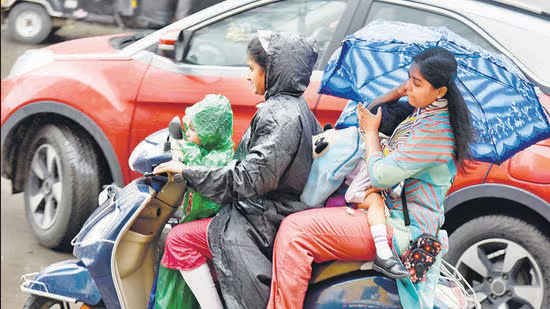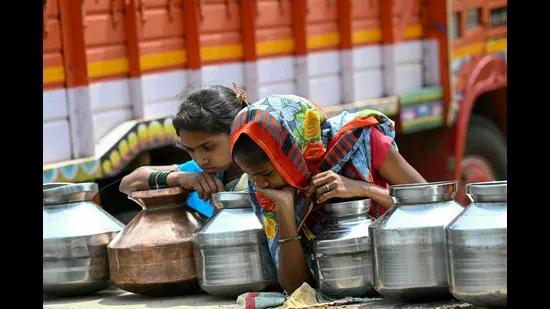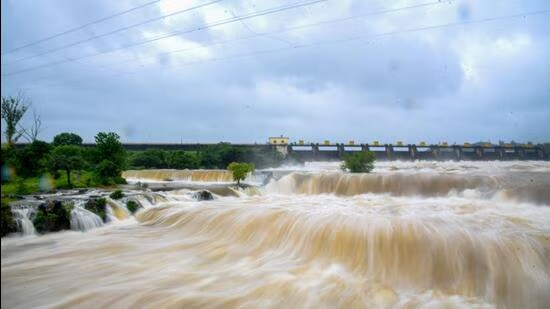
Pune:Gurugram, India- January 08, 2019: The residents of U Block, DLF 3, are worried as many of them are not getting the adequate and regular drinking water supply for the past four days. The residents said that they have been frequently purchasing water from private water suppliers to suffice their daily need and their complaints can be verified at any point of time, in Gurugram, India, on Tuesday, January 08, 2019. (Photo by Yogendra Kumar/Hindustan Times) To go with Dhananjay Jha Story (Yogendra Kumar/HT PHOTO)With the southwest monsoon yet to arrive in Pune district, the region is facing a severe rainfall deficit. Pune district has received only 13.9 mm rainfall thus far in June, resulting in a rainfall deficiency of nearly 83%, raising concerns over water availability and agricultural activities.According to rainfall data released by the India Meteorological Department (IMD), more than half of Maharashtra is currently experiencing rainfall deficiency in the ‘large deficit’ category. At least 20 districts across the state, particularly Konkan, central Maharashtra and Vidarbha, have recorded rainfall deficits of 60 to 90%. By comparison, several districts in south Maharashtra have recorded rainfall deficits of 40 to 60%. Meteorologists point out that some of these areas have received rainfall due to thunderstorm activity associated with pre-monsoon weather systems rather than the southwest monsoon itself. However, since all rainfall received after June 1 is counted towards the monsoon season, these amounts are reflected in the official rainfall statistics.Pune city, meanwhile, is witnessing one of its driest beginnings to June in recent history. Data from the IMD’s Shivajinagar observatory, considered the representative weather station for the city, shows that Pune has recorded its fourth-driest first fortnight of June since 1915. Historical records reveal that the first 15 days of June remained completely dry in 1915, 1932 and 1958, with zero rainfall recorded during that period. Interestingly, despite the delayed start, the monthly rainfall totals eventually reached 362 mm in 1915, 79 mm in 1932, and 65 mm in 1958, indicating that significant rainfall activity can still occur during the latter half of the month. Weather experts therefore believe it is too early to write off June entirely. However, they caution that rainfall patterns this year could remain highly erratic due to evolving large-scale climatic conditions.The historical record also shows that Pune has experienced a delayed monsoon onset beyond June 15 on at least four occasions between 2011 and 2025. The most delayed onset during this period was recorded on June 24 in 2019, a date that was matched again in 2023.Meteorologists have indicated that a revival of monsoon activity over Maharashtra is unlikely over the next four to five days, suggesting that Pune may have to wait longer for widespread rainfall. Until then, hot and humid conditions are expected to prevail across the city and surrounding areas.“There is no indication of monsoon revival over Maharashtra for at least the next four to five days. The IMD is closely monitoring the situation,” said S D Sanap, senior meteorologist at IMD Pune.Another development that has drawn the attention of weather experts is the weakening of monsoon circulation even in regions where the monsoon had already advanced earlier this season.“The monsoon has weakened significantly, which is a matter of concern. However, such situations are not unprecedented and have occurred in the past as well,” Sanap said.The weak monsoon conditions prevailing across parts of southern and central India have effectively stalled further progress of the southwest monsoon.K S Hosalikar, former head of IMD Pune, said that the early development of El Niño-like conditions could influence rainfall patterns during the season. “This year, the El Niño conditions appear to have developed earlier than expected, while the Indian Ocean Dipole (IOD) is likely to remain neutral through much of the monsoon season. The current situation is therefore a matter of concern from the rainfall perspective. It does not mean there will be no rainfall, but the distribution and trend are likely to remain erratic. The evolving conditions need to be monitored carefully,” Hosalikar said.With reservoir levels, agriculture and urban water management closely linked to monsoon performance, authorities and residents alike are now looking towards the second half of June in the hope that monsoon activity regains momentum and helps bridge the growing rainfall deficit.
Pune district faces 83% rainfall deficit as monsoon onset remains delayed
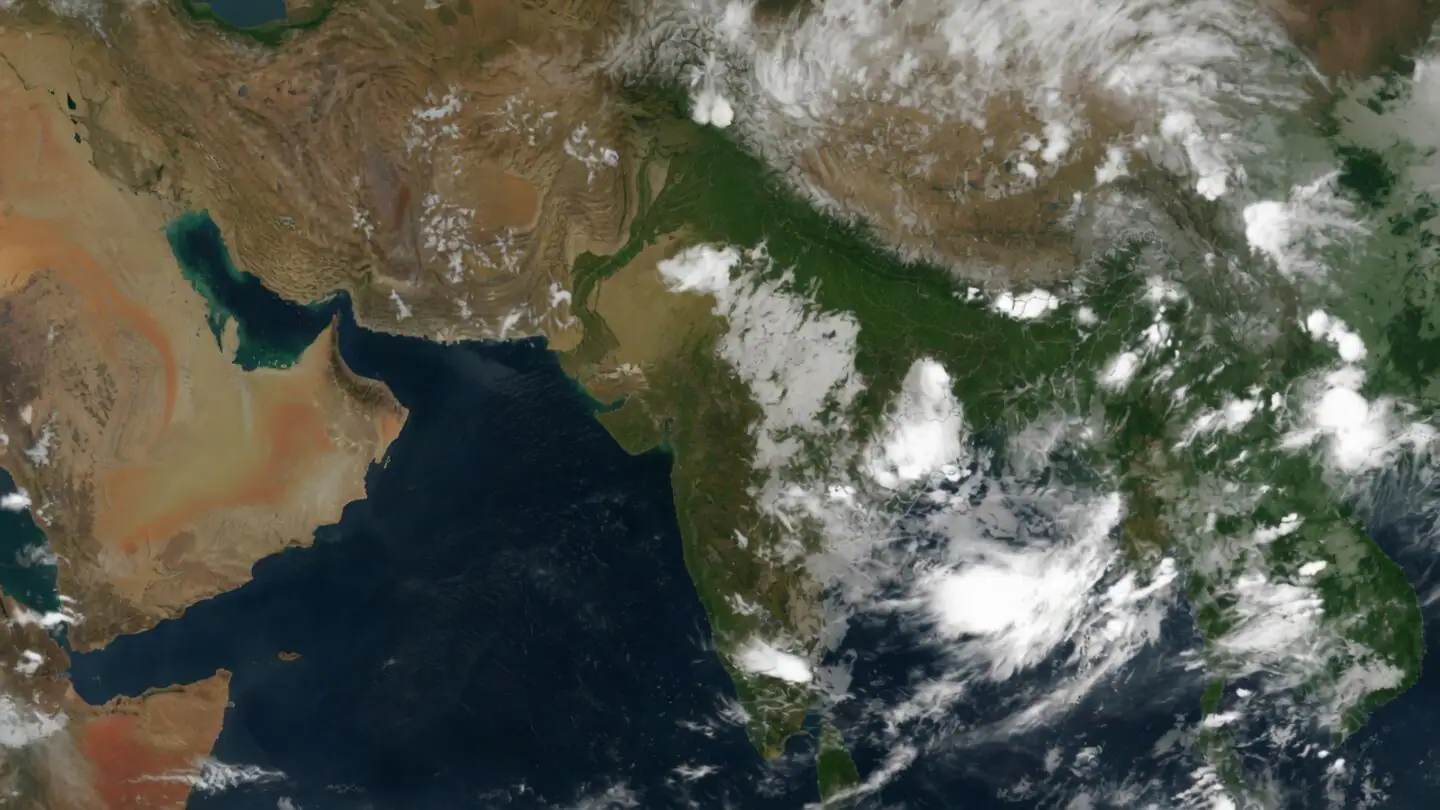
According to rainfall data released by the IMD, more than half of Maharashtra is currently experiencing rainfall deficiency in the ‘large deficit’ category. At least 20 districts across the state, particularly Konkan, central Maharashtra and Vidarbha, have recorded rainfall deficits of 60 to 90%.
709 words~3 min read