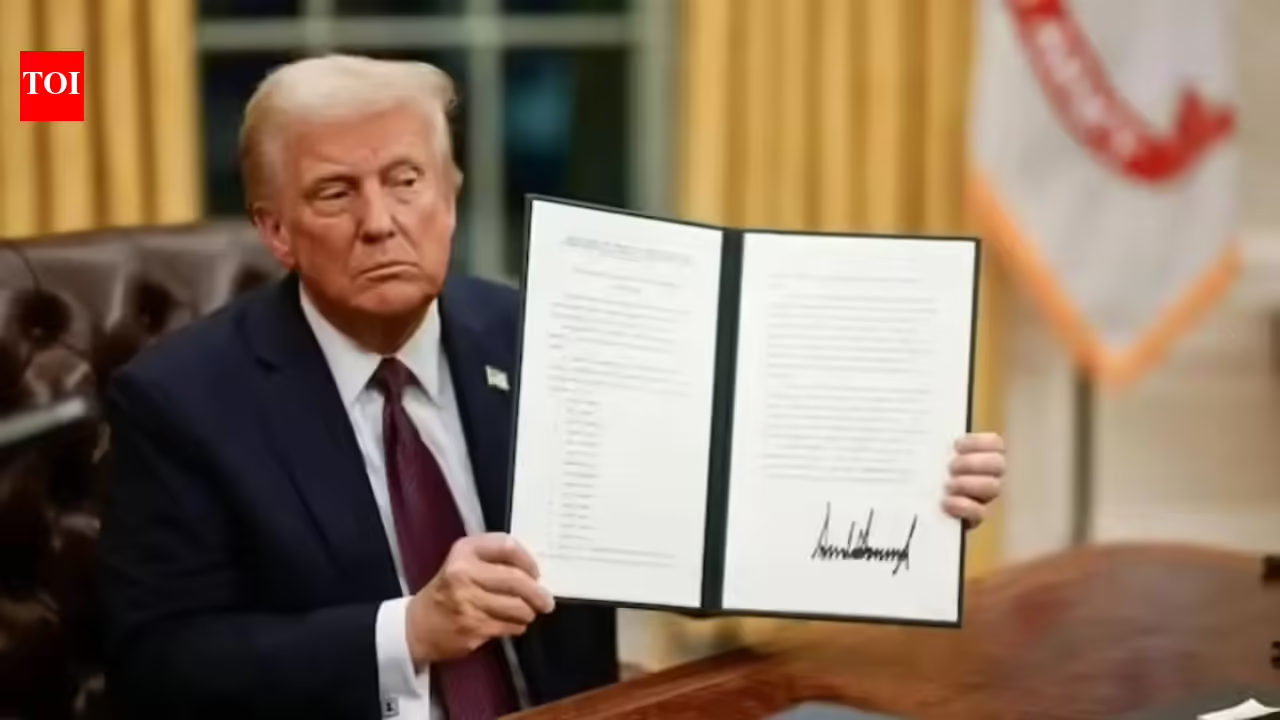
President Trump announced he would send his newly struck US-Iran peace agreement to Congress for review. There’s just one problem: most of Congress has no idea what’s actually in it.
The deal, unveiled on June 15, was described by some lawmakers as roughly “a page and a half” long. Senate Majority Leader John Thune said congressional leaders had received no briefings on the specifics.
What we know about the deal
The framework agreement, structured as a memorandum of understanding, reportedly touches on several major geopolitical pressure points. Those include reopening the Strait of Hormuz, lifting the US naval blockade on Iran, financial incentives tied to specific benchmarks, and new restrictions on Iran’s nuclear program.
A ceremonial signing is scheduled for June 19 in Geneva. Bipartisan frustration has been building since the announcement. Members of Congress are now invoking the Iran Nuclear Agreement Review Act, a legislative tool designed to guarantee that deals of this magnitude face proper scrutiny before taking effect. The act, originally crafted during the Obama-era nuclear negotiations, gives Congress a formal role in reviewing and potentially blocking agreements related to Iran’s nuclear activities.