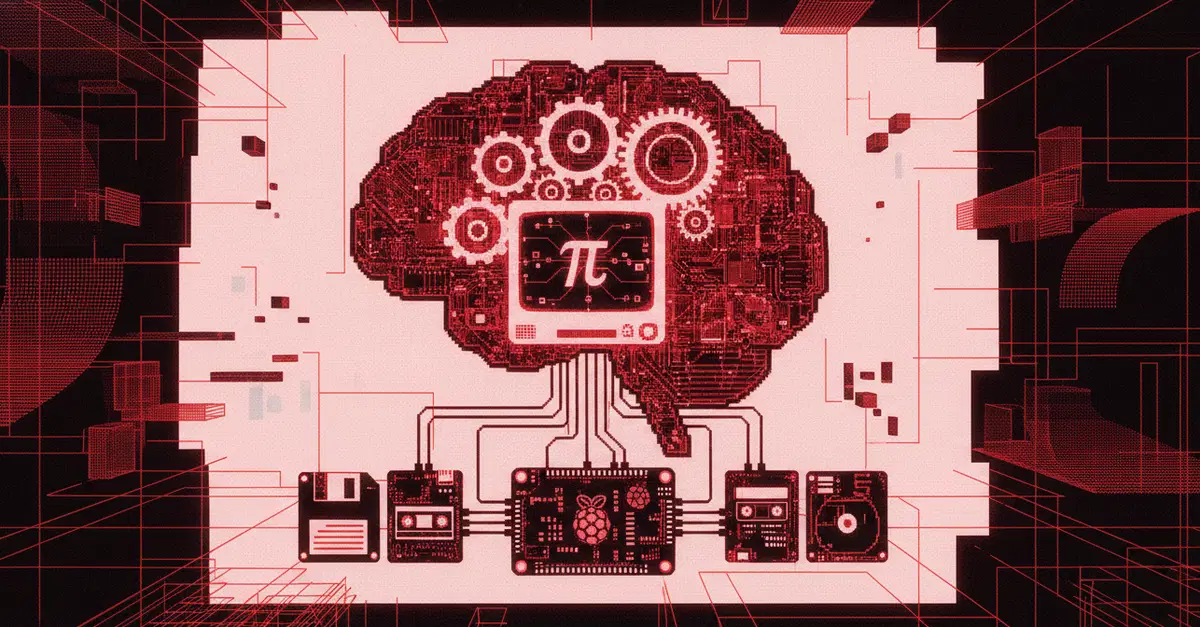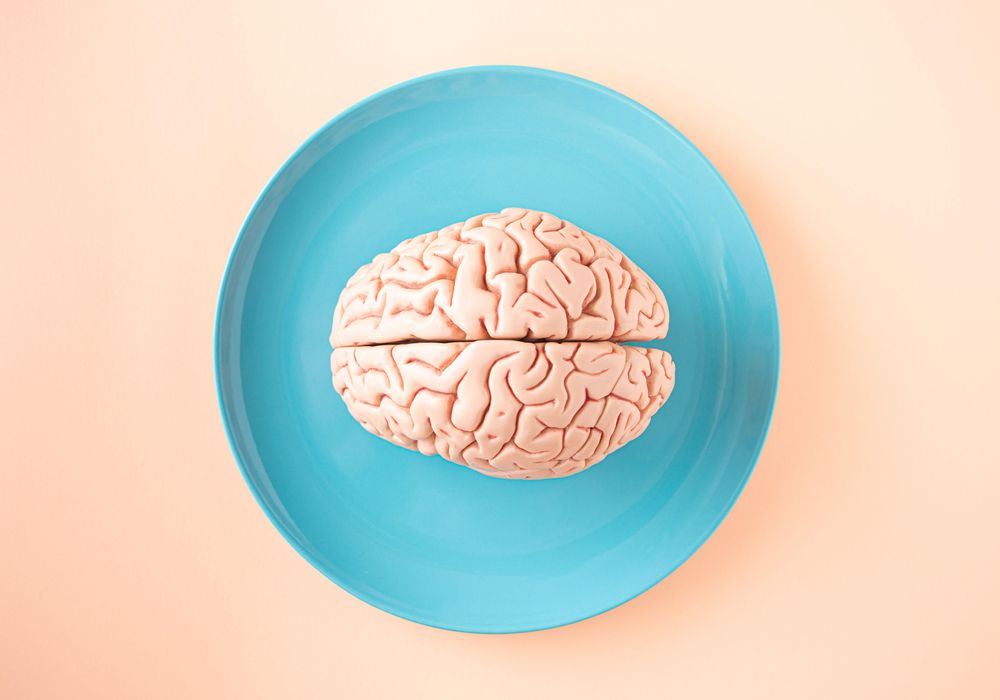
Jacob Mathew is the founder of LINEN Cloud, an AI-powered GTM planning platform helping companies optimize territories, quotas and rev ops.gettyThe brain you are reading this with is the same brain that tracked prey across a savanna 100,000 years ago. Same working memory, attention throughput, dopamine reward wiring and stress response—built for acute physical threats, not the chronic low-grade pressure of unread messages before 9:00 a.m.Unfortunately, we don't talk about it in those terms. Instead, we talk about productivity, hustle culture, burnout, mindfulness and work-life balance. We build apps to manage anxiety on the same devices that generate it, and we tell people to become more resilient.The cognitive hardware running our lives has not meaningfully changed in 300,000 years. The technological demands being placed on that hardware are accelerating exponentially, and we are now facing a species-level mismatch.The Frozen HardwareThe foundations of human cognition emerged 300,000 years ago. And while cognitve transitions have happened between now and then, we seem to have hit a wall when it comes to processing information. Working memory caps out at roughly seven items for nearly everyone. Dunbar’s number—the cognitive limit on stable relationships—sits around 150. In plain terms, humans are structurally bad at processing information at once.For most of human history, that wasn’t a problem. Information arrived slowly enough for the architecture to manage. That relationship no longer holds today.The Runaway CurveComputing power continues to rise. Telecommunications bandwidth followed its own exponential curve, but the most important shift has been the collapse of expected response time.A letter took days, a telegram took hours, a phone call required both people to be present simultaneously. Email introduced asynchronous communication and felt nearly instant. Messaging apps compressed expectations even further and notifications made them effectively continuous.Each transition rewrote the social contract around responsiveness. What was once acceptable—replying tomorrow, later tonight or in an hour—became a signal of disengagement. As the technology moved faster, it also redefined what it means to be present.Humans have adapted to disruptive technologies before. Each wave has arrived faster than the last. We are now inside an exponential curve that may exceed not just genetic evolution, which is far too slow to matter on this timescale, but even the limits of neuroplasticity itself.The average American now checks their phone 352 times per day—once every few minutes—nearly four times more than before the pandemic. Not because they're weak or addicted in any simple sense but because the system they are operating inside was engineered to demand it. Infinite scroll, variable reward notifications and algorithmic feeds target the brain's dopamine reward pathways. The same circuitry that evolved to motivate food-seeking and social bonding is now being activated by devices that never switch off.The result is a system exploiting a 300,000-year-old reward architecture at millisecond speed, at massive scale, continuously.The CollisionOver 60% of U.S. workers reported some form of burnout in 2024. Across Europe, almost 30% of employees report stress, depression or anxiety worsened by work. Depression and anxiety cost the global economy billions of lost workdays annually.More alarming is the trajectory beneath those numbers.Peak burnout age in the U.S. has reportedly fallen from 42 to 25 within a generation. The people burning out earliest are not failing to adapt to the modern world. They are the first generation that never knew anything else. They grew up with the smartphone. They've never experienced a baseline the rest of us can still remember, a Sunday without notifications, a conversation without a second screen, an evening that simply ended.Clinicians are also observing what some describe as digital anhedonia: people who are not clinically depressed but no longer derive pleasure from ordinary experiences like walks, meals or conversation after chronic digital overstimulation. The dopamine baseline has been elevated so far above what natural experience can provide that natural experience struggles to register.These are warning signals from a biological system operating outside the conditions it evolved for.And Then There Is AIEverything described so far was already true before AI entered the picture and accelerated it.The expectation is no longer simply faster responses from other humans. It is continuous output from systems that never sleep and are improving at a pace that makes every previous technology look gradual. For the human on the other end—integrating AI outputs, making AI-assisted decisions, staying current with AI-driven change—the cognitive baseline just moved again. The hardware didn't.If current trajectories hold, the concept of response time may disappear entirely. AI agents will operate continuously across work and life, creating expectations of constant ambient availability. The human brain in 2050 will still have the same working-memory ceiling, the same attentional bottleneck and the same dopamine architecture straining under today's notification economy.The technology curve does not flatten. The biological curve does not rise. The gap between them compounds.What We Owe Each OtherEvery generation inherits the world the previous one built. We are handing the next generation a world of ambient AI, always-on presence expectations, and cognitive demands no human brain (in 300,000 years of existence) has ever evolved to manage.We rightly worry about the physical environment we are leaving behind. We are not having the equivalent conversation about the cognitive environment: what continuous technological acceleration does to a species whose hardware is not accelerating with it.We have treated a systems problem as a personal one—calling it burnout, anxiety, resilience deficit or work-life balance—while handing people apps to manage stress on the same devices generating it.The vast majority of people are being asked to run software their hardware was never designed to support.In the wake of Mental Health Awareness Month, we should do more than raise awareness. We should ask what is actually driving the numbers—and be honest enough to confront the curve. The technology will not wait. The only question left is what we are willing to lose in the meantime.Forbes Technology Council is an invitation-only community for world-class CIOs, CTOs and technology executives. Do I qualify?
Our Brain Is 300,000 Years Old—Our Inbox Is Not
The vast majority of people are being asked to run software their hardware was never designed to support.
979 words~4 min read