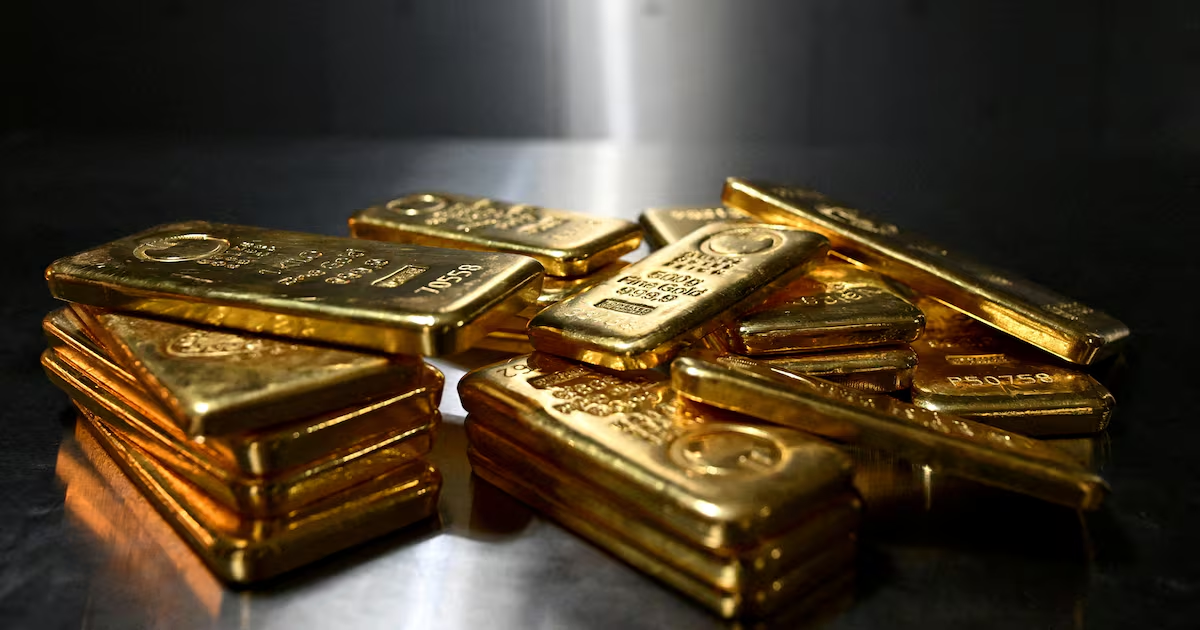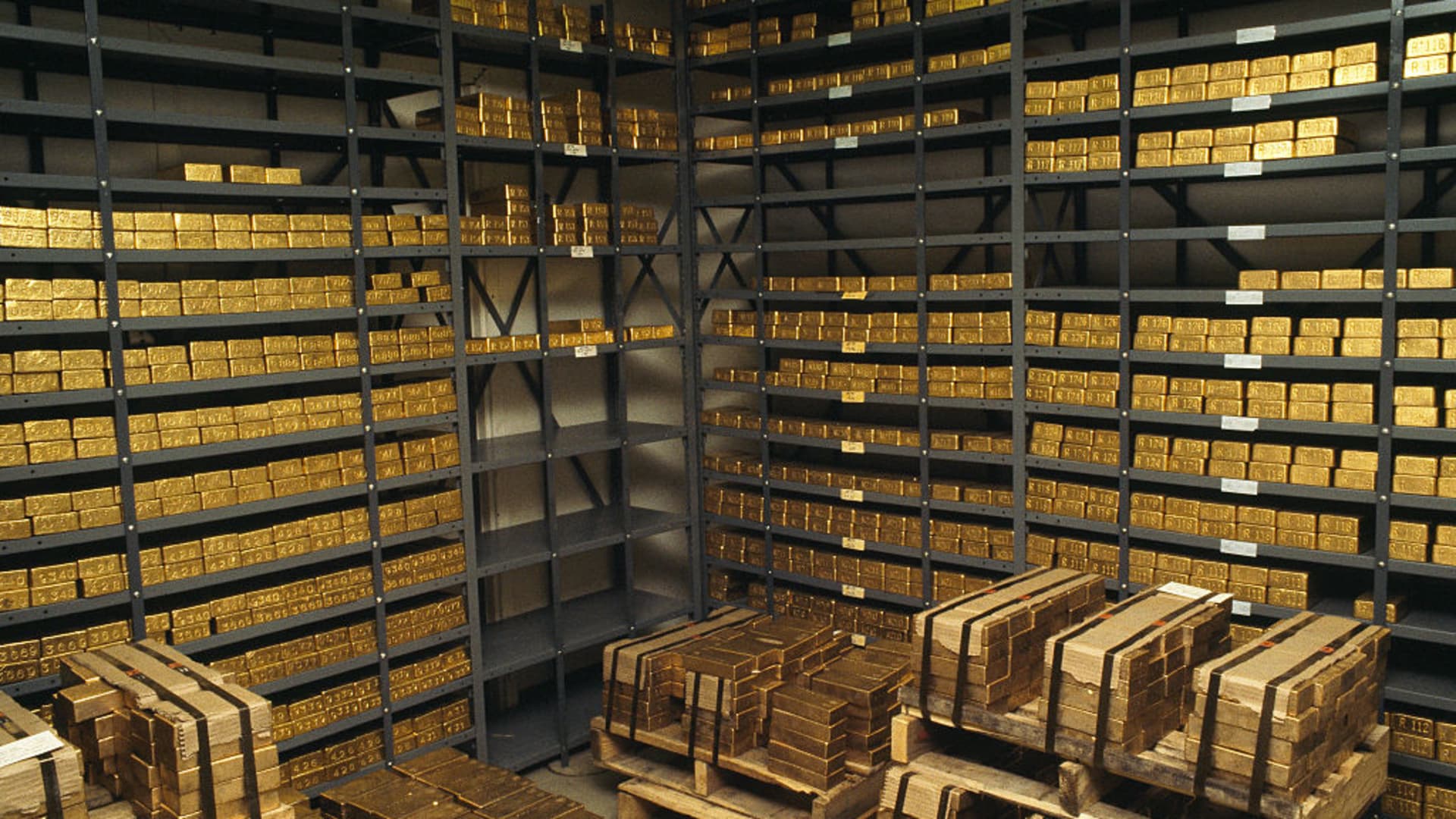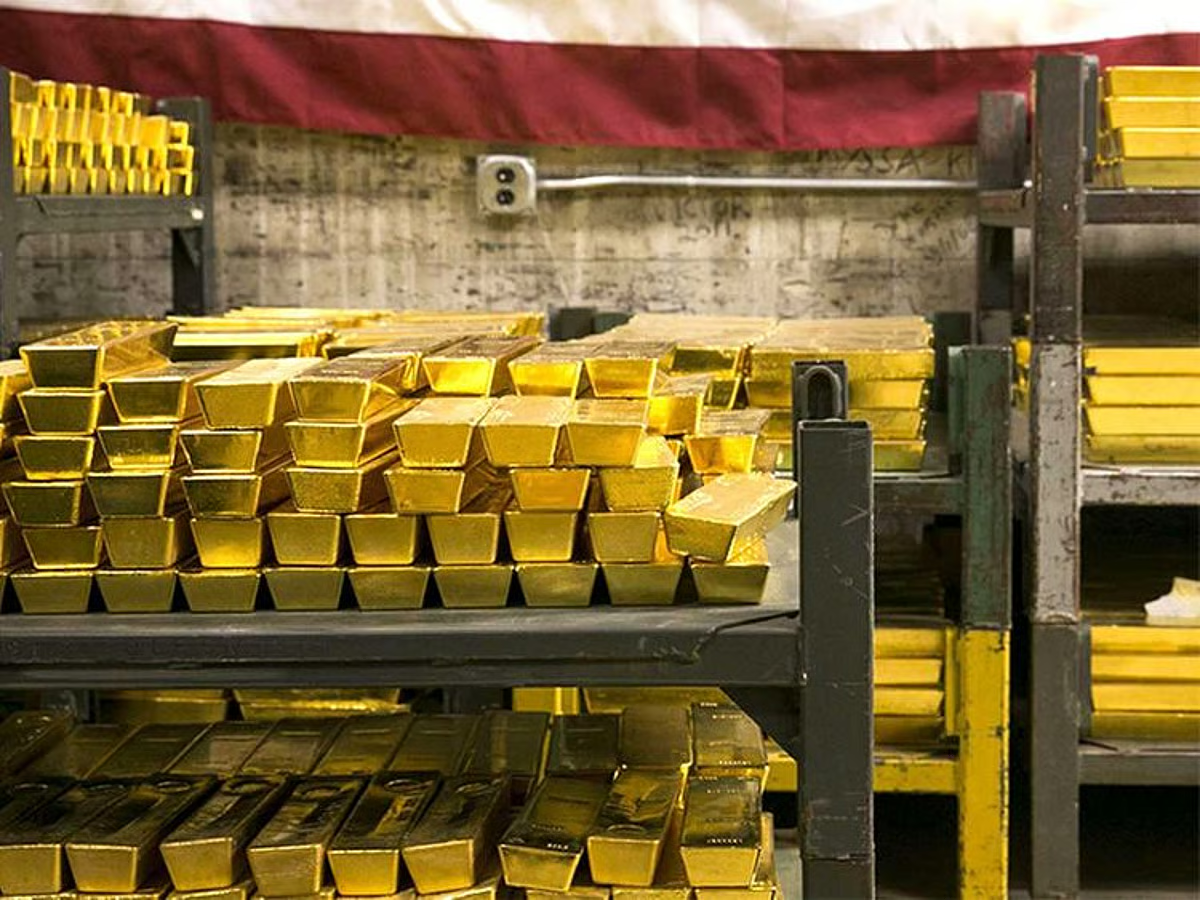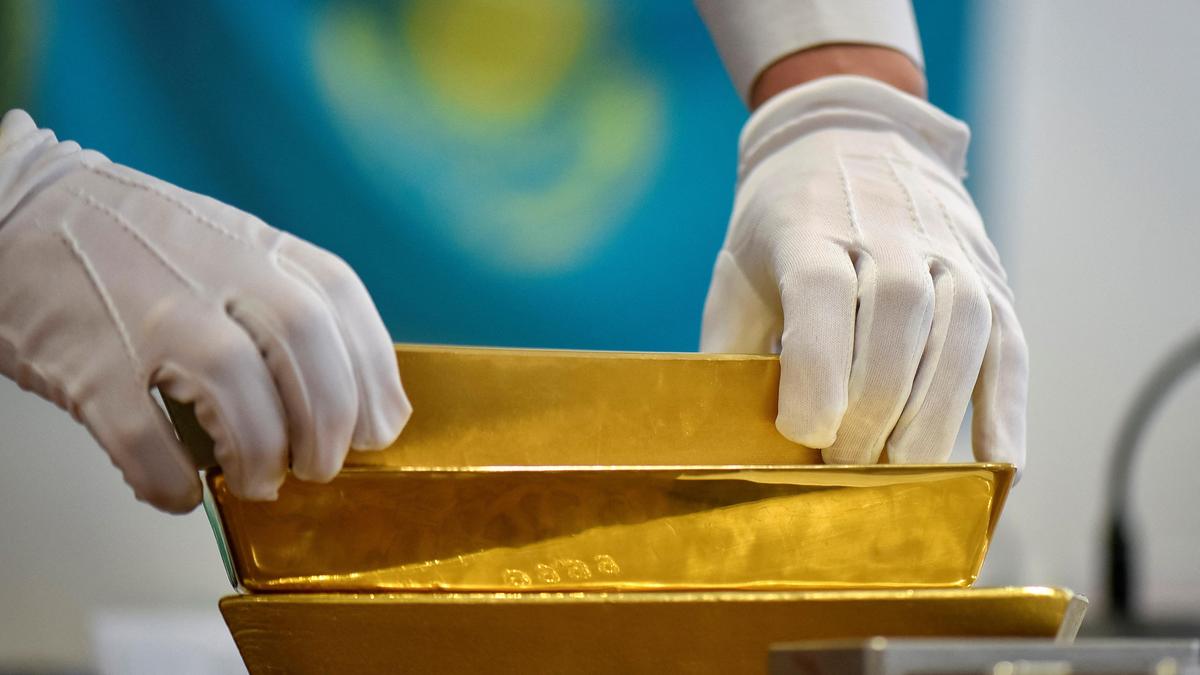
An employee places gold bars in the Kazakhstan's National Bank vault in Almaty, Kazakhstan. File Photo
| Photo Credit: Reuters Staff
World Gold Council’s (WGC) 2026 Central Bank Gold Reserves (CBGR) survey indicate that the central banks around the world would accumulate more gold in the future.This means that the price of the yellow metal will continue to remain high in the future impacting retail customers. Gold prices in India has increased about 40% in 12 months primarily due to buying by central banks and rupee’s depreciation against the U.S. dollar, the determining currency of gold price.As per the survey central banks “remain very positive on gold, highlighting its significance amid a volatile geopolitical and economic environment.”The survey shows a continuation of the trend uncovered in previous years: central banks see gold making up a growing share of their reserve portfolios, WGC said.Central banks have accumulated an average of 1,000 tonnes of gold over the past four years, which is significantly higher from the 500 tonnes average over the preceding decade.“This marked acceleration in the pace of accumulation has occurred against a backdrop of geopolitical and economic uncertainty, which has clouded the outlook for reserve managers,” WGC said in the foreword of the Survey findings report. In India the Reserve Bank of India (RBI) was seen aggressively expanding its gold reserves between FY24 and FY25. Total reserves grew from 822.1 tonnes in FY24 to 879.58 tonnes by the end of FY25 and rose marginally to 880.52 tonnes in FY26.The survey was conducted between 5 February and 19 May, 2026 with the majority of responses coming in after the start of the West Asia conflict.“This year’s survey contains insights on how central bankers view gold in the light of ongoing geopolitical turmoil,” WGC said.Respondents overwhelmingly (89%) believed that global central bank gold reserves will increase over the next 12 months. “This year, a record 45% of respondents expect their own gold reserves will also increase over the same period. The majority of the remaining respondents indicated they expect no change while 1% expect their institution’s gold reserves to decrease,” WGC said.Gold’s performance during times of crisis, portfolio diversification and inflation hedging were some of the main reasons for buying gold.In addition, gold as a geopolitical risk hedge and gold as part of a reserve diversification policy also featured as key reasons for increasing allocations to gold.The majority of respondents (74%) saw moderate or significantly lower US dollar holdings within global reserves over the next five years. Respondents also believed that the share of other currencies, such as the euro and renminbi will remain unchanged over the same period, while gold holdings will increase.The Bank of England remains the most popular vaulting location among respondents at 57%, though central banks continue to diversify their storage across multiple locations.Domestic storage came in second at 49%, followed by the Bank for International Settlements at 16% (a slight uptick from last year).The RBI had also repatriated over 100 tonnes of physical gold from overseas vaults to domestic storage during FY25. The Swiss National Bank saw a notable decline in preference, dropping to 6% from 12% in 2025.Concerns over interest rates, the inflation outlook and geopolitical uncertainty, show that diversification and risk mitigation continue to be key drivers of strategic reserve management decisions.This year’s survey reveals an emergent trend of central banks increasingly looking to diversify gold vaulting locations. And while there are divergences between advanced economy and EMDE central banks in some aspects, they share a common confidence in gold’s role as a reliable store of wealth and a key component in their long-term reserve management strategies, WGC said.“As the world becomes increasingly volatile and unpredictable, gold’s safety, liquidity and return characteristics – the three key investment objectives for central banks – have risen in importance,” it said.“The trends uncovered in our survey suggest that central banks continue to recognise the benefits of an allocation to gold and indicate that their demand for gold will likely remain healthy into the foreseeable future,” it added. Published - June 16, 2026 08:10 pm IST