Nigeria isn’t just dabbling in stablecoins. It’s practically running the sub-Saharan Africa playbook on them, and the International Monetary Fund is now sounding the alarm about what that means for the country’s monetary sovereignty.
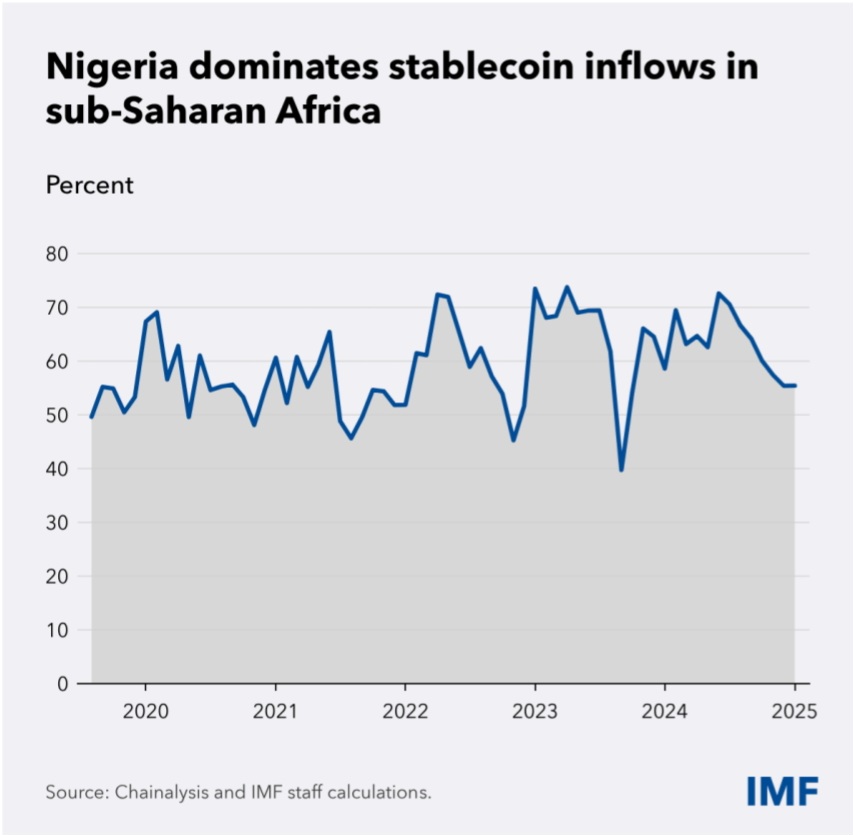
In a June 2026 analysis titled “Stablecoins in Nigeria: A Growing Cross-Border Channel,” IMF researchers laid out the scale of the phenomenon: Nigeria has accounted for approximately 60% of sub-Saharan Africa’s stablecoin inflows since 2019. The country received around $59 billion in crypto-asset inflows between July 2023 and June 2024, with stablecoin transaction volumes alone nearing $22 billion during that same window.
Why Nigerians turned to stablecoins
Nigeria’s naira has been on a prolonged slide, eroding purchasing power and making dollar-denominated assets enormously attractive. The Central Bank of Nigeria made things worse in 2021 by restricting banks from dealing with cryptocurrency firms, which paradoxically pushed more users toward peer-to-peer platforms and self-custodied wallets.
USD-pegged stablecoins became the workaround. Nigerians use them for remittances, cross-border trade, and as a store of value when the naira wobbles. The IMF researchers acknowledged this directly, noting that stablecoins emerged partly as a response to naira depreciation and the CBN’s own restrictive policies.